Trump Slams Chagos Deal, Revives Greenland Argument
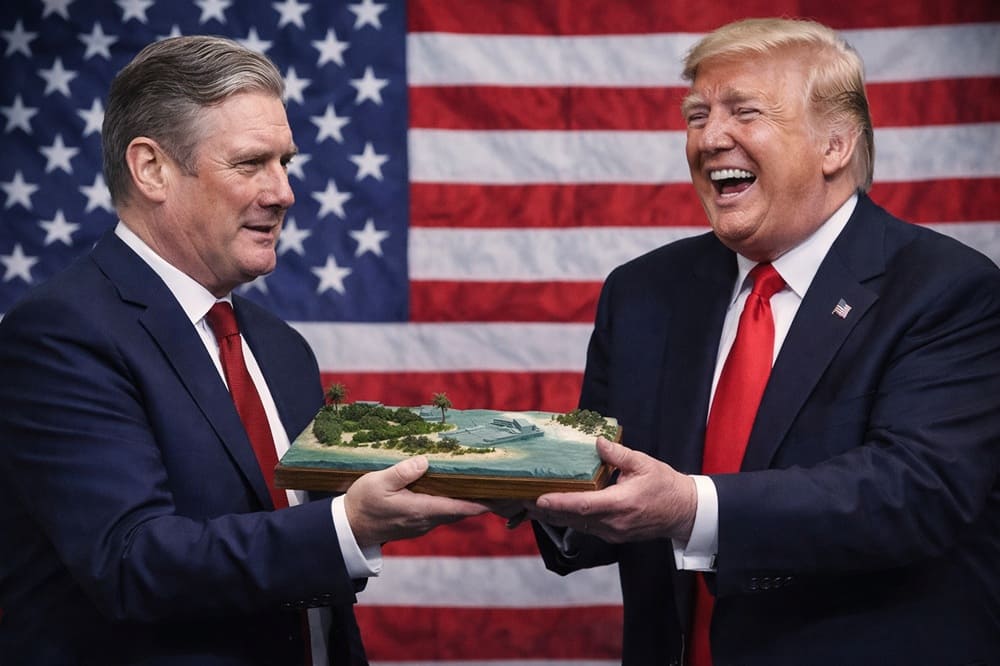
Donald Trump called the UK’s Chagos handover “great stupidity” and linked it to a renewed US push for Greenland. He fused two separate issues into one sharp, headline-friendly argument. Even so, the remark matters because it puts basing access and sovereignty law under public pressure. It also forces defense planners to ask a hard question about “permanent” access when politics turns unstable.
This article moves beyond the soundbite and explains the mechanics behind it. It outlines how the Diego Garcia arrangement is built and protected. It also tracks the legal and diplomatic forces pushing London toward a settlement. Finally, it explains why Greenland keeps returning to US strategic debate. Operationally, the picture looks far less dramatic than the politics suggests. Politics can still, however, alter ratification schedules, postpone approvals, and change budgets.
Chagos Deal, Explained
In May 2025, the UK agreed in principle to hand Chagos sovereignty to Mauritius. However, the UK and US would keep using Diego Garcia under a long-term lease. In simple terms, sovereignty shifts on paper, while the base stays operational. The numbers drive most of the domestic backlash.
The UK outlined annual payments of about £101 million in 2025–26 prices. It also published a net present value estimate near £3.4 billion. That estimate covers an initial 99-year lease for Diego Garcia. Critics say the “nominal” total looks far higher under different assumptions. Therefore, the cost argument remains politically volatile.
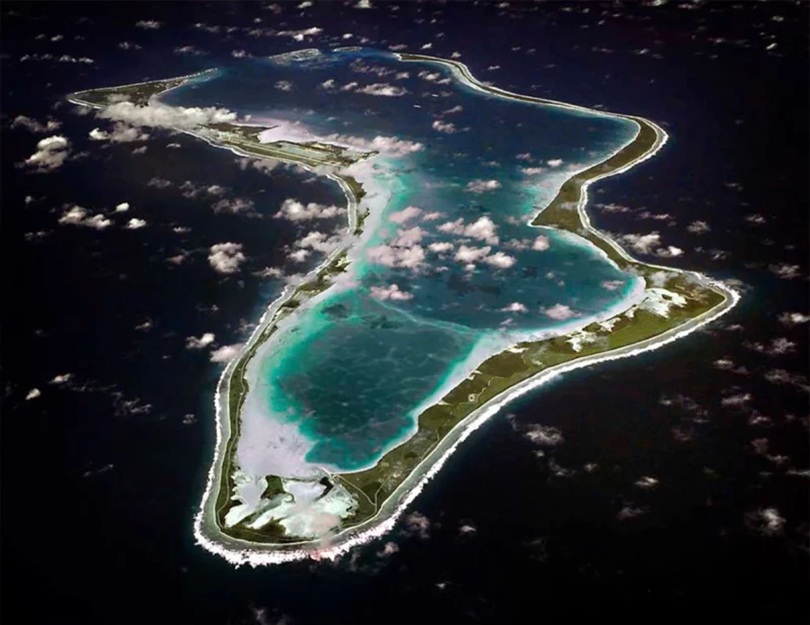
Diego Garcia Is the Strategic Centrepiece
For most defense watchers, the Chagos island story is really a Diego Garcia story. The base underpins long-range logistics, maritime surveillance, bomber operations, and rapid crisis response across the Gulf, East Africa, and South Asia. That is why London and Washington focus less on sovereignty symbolism and more on legal clarity that protects uninterrupted access.
This phenomenon also explains why the United States publicly welcomed the 2025 UK–Mauritius understanding despite not being a treaty party to it. Washington made its support conditional on continued operation of the US Naval Support Facility on Diego Garcia—an explicit signal that the base, not the wider archipelago, sits at the center of US interests.
UK’s Security Rationale
British ministers have presented the settlement as a strategy to dispel a mounting “sovereignty cloud” that could potentially jeopardize the base through legal actions, international pressure, and diplomatic isolation. In that framing, the lease is risk management: it swaps formal sovereignty for long-duration operational control.
Chatham House, for instance, has argued that objections rooted in older US–UK treaty wording miss the purpose and context and that UK ratification would not breach international law. That won’t end political arguments at home, but it strengthens the case that durability and legal resilience—rather than sentiment—sit behind the settlement logic.
Trump’s Chagos Attack: Messaging or Strategy?
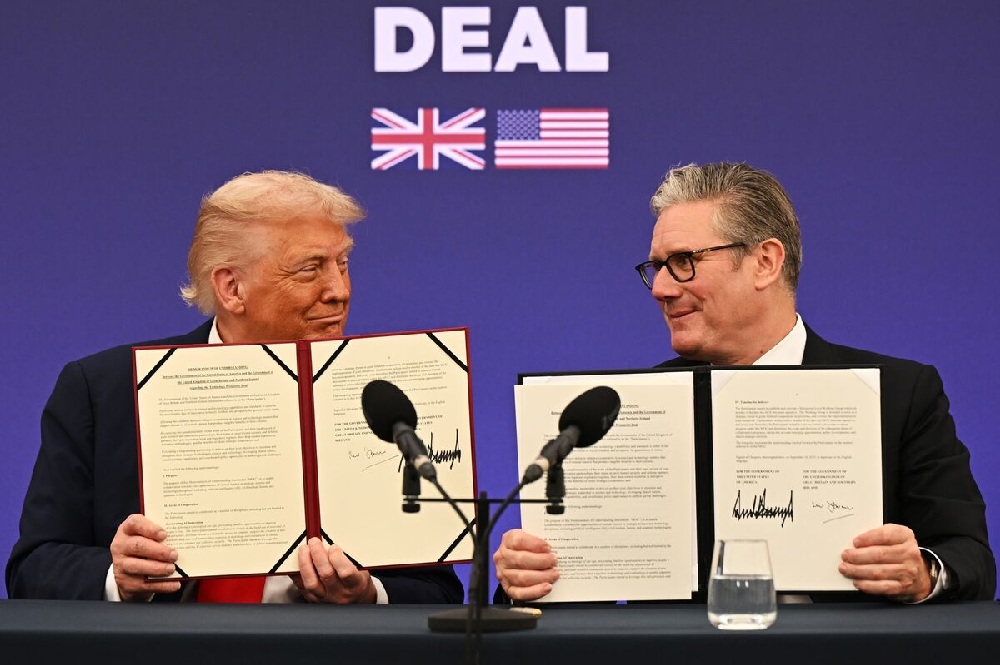
Trump calling the handover “great stupidity” and “weakness” achieves two effects at once. First, it converts a complex sovereignty-and-lease package into a simple “we gave it away” story. Second, it injects political doubt into an arrangement Downing Street assumed already had stable US buy-in at the working level.
Prime Minister Keir Starmer has pushed back by saying US intelligence agencies reviewed the deal and supported it, even as Trump’s public posture changed. Starmer has also confirmed that talks with Washington reopened after the remarks—proof that political messaging can force real-world diplomatic revalidation, even when the underlying plan has not changed.
For analysts, the practical issue is not whether Diego Garcia shuts tomorrow—it doesn’t, under the current design. The sharper question is whether political turbulence slows ratification, raises the cost of reassurance measures, or shifts parliamentary arithmetic. In procurement terms, “noise” can still create a gap if it delays decisions and stretches timelines.
Why Greenland Keeps Coming Up
Greenland and Chagos are not the same problem. Still, Trump’s rhetorical link works because both are about geography that amplifies US military advantage: Arctic access and sensor reach in one case and Indian Ocean basing in the other. If he paints the UK move as strategic softness, he can pitch US control of Greenland as the “strong” alternative.
Yet Greenland’s position is bound up with the Kingdom of Denmark, Greenlandic self-government, alliance politics, and basic questions of legitimacy. By contrast, the Chagos approach is designed to stabilize access through a lease precisely to remove uncertainty. That makes Trump’s comparison feel more like political theater than a clean strategic parallel.
China Risk: Real, Often Overstated
Critics argue Mauritius could tilt toward Beijing over time, creating indirect risks around Diego Garcia. That concern resonates in Westminster, and it helps explain why the ratification path has been rough. But the stated purpose of the agreement is to ring-fence the base via contractual safeguards and security provisions—and the US backed it publicly on that basis.
A more grounded defense takeaway is simple: the lease’s details matter more than slogans. Enforcement clauses, inspection rights, and clear mechanisms for compliance are what will decide whether this becomes a model for future basing settlements—or a cautionary tale.
References
- https://www.reuters.com/world/china/factbox-key-facts-about-chagos-islands-deal-signed-by-uk-mauritius-2026-01-20/
- https://www.lemonde.fr/en/international/article/2026/01/21/trump-calls-uk-s-chagos-islands-handover-act-of-stupidity_6749635_4.html
- https://www.state.gov/u-s-support-for-uk-and-mauritius-agreement-on-chagos-archipelago
- https://www.chathamhouse.org/2026/01/uk-ratification-chagos-archipelago-treaty-will-not-violate-international-law
- https://lordslibrary.parliament.uk/uk-mauritius-treaty-on-the-chagos-archipelago/
About the Author