
Kim Jong-sik Donetsk Visit — KN-23 Combat Testing
South Korean Intelligence Brief
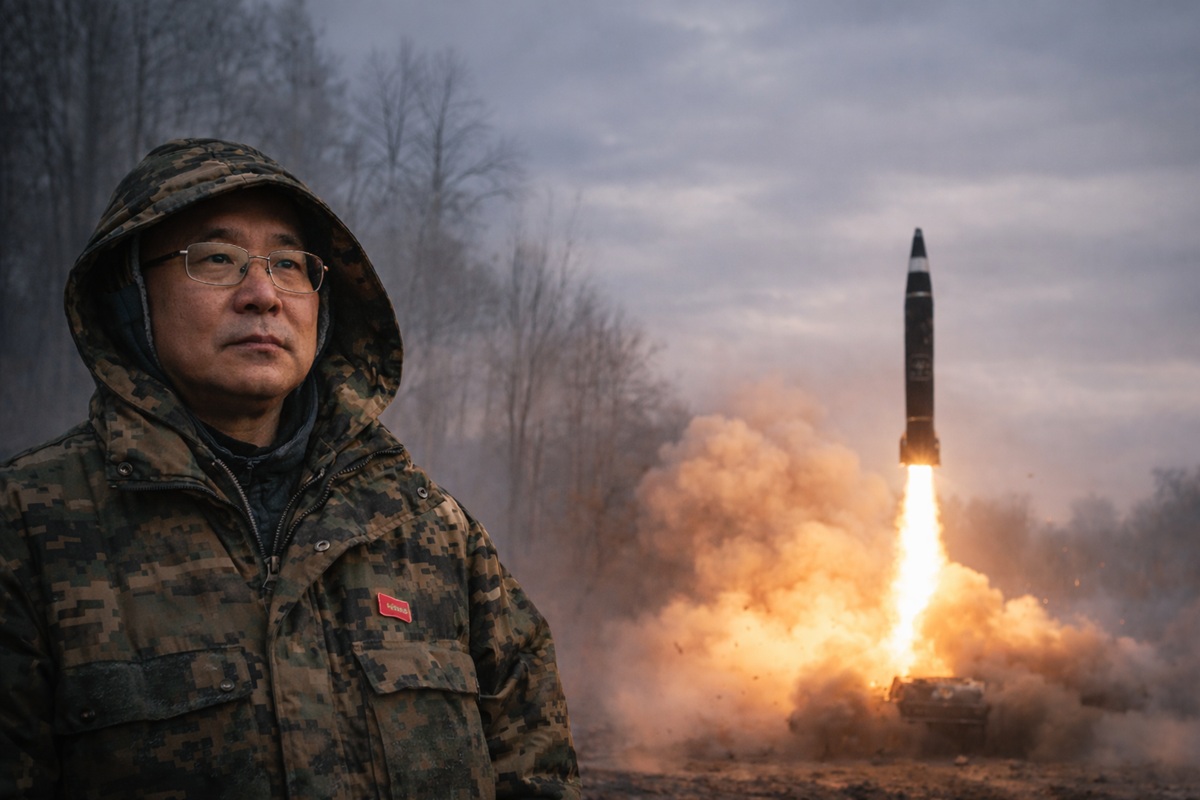
South Korea’s National Intelligence Service (NIS) briefed lawmakers that Kim Jong-sik travelled to Donetsk in early August 2024. The NIS assessment places him at a launch position linked to firing the KN-23, widely described as North Korea’s Iskander-style short-range ballistic missile, near the frontline.
The Kim Jong-sik Donetsk visit matters because it appears operational, not ceremonial. The same briefing said he provided direct guidance to dozens of North Korean personnel stationed in the area. That detail implies a structured effort to learn from real combat conditions.
Crucially, the claim lands in a wider pattern. Public reporting has tied North Korean ballistic missiles to Russian strikes since late 2023. Reuters, for example, reported U.S. and Ukrainian statements that Russia used North Korean-supplied ballistic missiles in early January 2024.
Why Pyongyang Gains From This Visit
North Korea can test at home, but it cannot fully replicate a modern battlefield. Ukraine exposes missiles to air-defense pressure, electronic warfare, rapid target movement, and harsh field handling. Therefore, the Kim Jong-sik Donetsk visit reads like a deliberate attempt to tighten the “design → field use → redesign” loop.
Moreover, a senior engineer on the ground can translate battlefield problems into engineering fixes faster. He can review pre-launch routines, diagnose recurring faults, and refine crew discipline. He can also compare “expected” performance with “actual” performance under stress. That is valuable even if the missile design stays unchanged.
KN-23: Why Analysts Worry
Analysts often link the KN-23 missile to the Hwasong-11 family and compare its concept to the Russian Iskander: a road-mobile SRBM built for rapid launch cycles and more complex intercept geometry than older Scud-era systems.
Range: many open sources cite 400–600 km, which places most of South Korea inside the threat ring. However, estimates vary. CSIS’s Missile Threat database lists an estimated range up to 690 km, which would widen the envelope further.
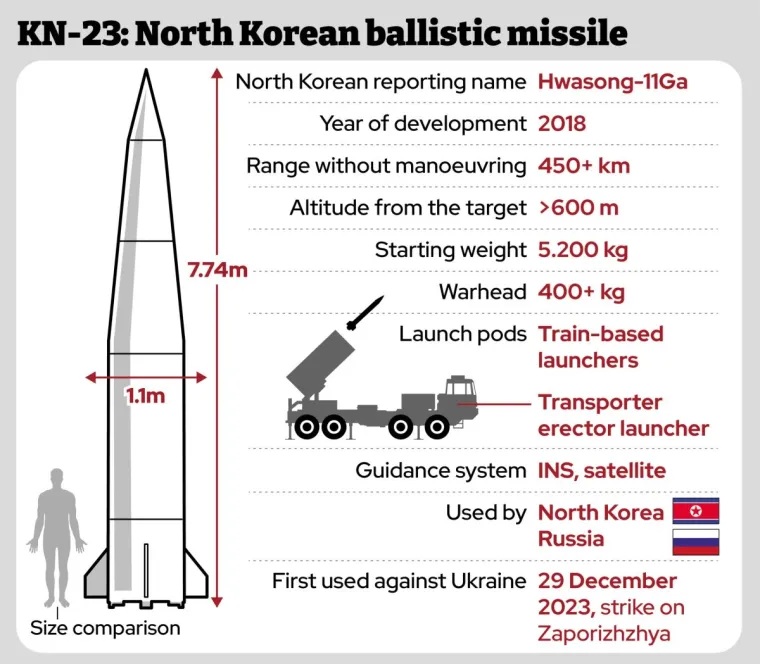
Payload: the same database cites a payload figure up to 500 kg, consistent with a conventional unitary warhead class. It also leaves theoretical room for a nuclear payload. Still, open reporting rarely confirms specific warhead integration on any single variant.
Manoeuvre and Intercept Challenge
The KN-23’s main concern is not headline range. Instead, analysts focus on its quasi-ballistic profile and possible endgame maneuvers. Those features can reduce warning time and complicate missile-defense engagement windows.
Some reporting also claims around Mach 6 performance and a CEP of only a few meters. Treat those figures as claims, not guarantees. Battlefield feedback can challenge peacetime narratives, especially early in a weapon’s combat debut.
What Ukraine and Partners Report
Open reporting indicates Russia has used North Korean ballistic missiles in Ukraine repeatedly. Ukrainian prosecutors said they examined debris from 21 of around 50 North Korean ballistic missiles Russia launched between late December and late February (in an early tranche) while they assessed risk and performance. They also suggested the early failure rate looked high.
In addition, Reuters reported that a Pentagon intelligence agency assessed debris imagery and confirmed Russia had fielded North Korean missiles in the conflict. That matters because it elevates the discussion above social media speculation.
At the same time, the story does not stay static. Reuters later reported Ukrainian officials saw marked improvement in accuracy in newer North Korean missiles compared with early use. If that trend holds, it could reflect better quality control, improved guidance, refined launch procedures, or a combination.
This is where the Kim Jong-sik Donetsk visit becomes more than a headline. If an engineer collects field data and pushes rapid fixes, accuracy and reliability can improve quickly—even without major redesigns.
Other North Korean Missiles in Donetsk
If Russia wants more than one missile type, North Korea has options across ranges and roles. Many of these systems already sit in open-source catalogs.
Short-range and battlefield strike
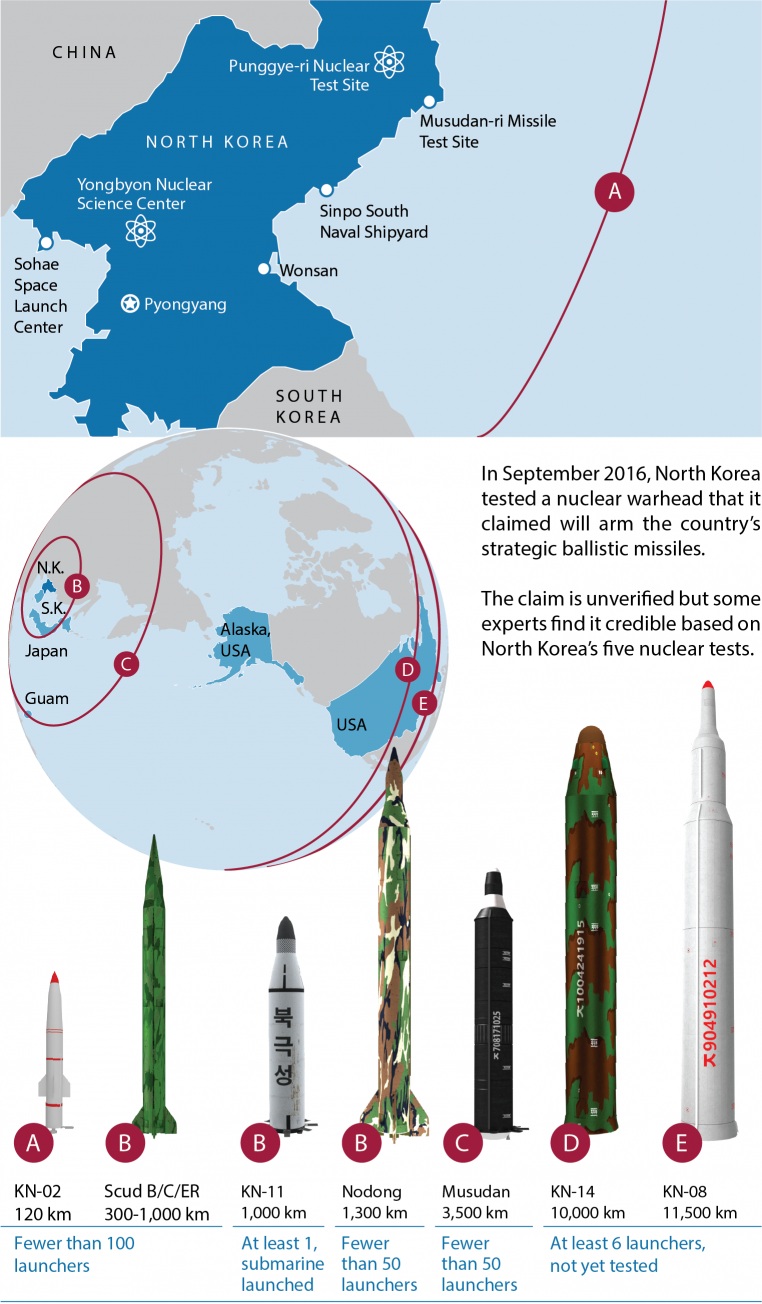
- KN-24: ATACMS-like SRBM; range often cited as ~400 km (CSIS lists ~410 km).
- Hwasong-5 / Hwasong-6 (Scud variants): about 300 km and 500 km range.
- KN-02 (Toksa): roughly 120–160 km (CSIS lists ~120–170 km).
Longer reach and saturation fires
- Hwasong-12 (IRBM): commonly cited up to 4,500 km; using it in Donetsk would signal escalation more than battlefield need.
- Pukkuksong-2: solid-fuel MRBM; often cited as ~1,200–2,000 km.
- KN-25: guided “super-large” rocket system; often cited ~380 km range.
- KN-09: long-range rocket artillery; often cited as having a ~200 km range.
ICBMs as signalling tools
- Hwasong-14: range exceeding 10,000 km (CSIS lists 10,000+ kilometers).
- Hwasong-15: ICBM with an estimated 8,500–13,000 km range (CSIS).
- KN-08 (Hwasong-13): Your source cites “over 11,000 km,” while CSIS lists 8,000–10,000 km and notes deployment uncertainty.
Global Security Impact
Combat feedback can harden a missile force quickly. It can improve maintenance habits, raise crew confidence, and refine tactics. Consequently, South Korea and partners must track the trendline, not just the first battlefield outcomes.
Yet early reporting also pointed to limits. In February 2024, Reuters quoted Ukraine’s prosecutor general saying North Korean missiles hit only two military targets out of two dozen launches in an early period, raising doubts about reliability at that time.
Click the link for more scholarly defense-related articles and news on missiles.
Conclusion
The Kim Jong-sik Donetsk visit, as described by South Korean intelligence, suggests Pyongyang wants battlefield-grade feedback on the KN-23 and related systems. The KN-23’s mobility and flight profile complicate defense planning. However, early Ukrainian assessments also raised questions about reliability and accuracy in initial use.
If North Korea continues to iterate based on combat data, the strategic risk will increase over time. The most serious outcome is not one “perfect” missile. It is a steady improvement curve that tightens pressure on both Europe’s battlefield and the Korean Peninsula.
References
- https://www.twz.com/news-features/north-korean-missile-engineer-went-to-ukraine-according-to-south-korean-intel
- https://www.reuters.com/world/europe/ukraine-examines-nkorean-missile-debris-amid-fears-moscow-pyongyang-axis-2024-05-07/
- https://missilethreat.csis.org/missile/kn-23/
- https://missilethreat.csis.org/missile/kn-24/
About the Author