
India Seeks to Block Dutch Arms Sales to Pakistan
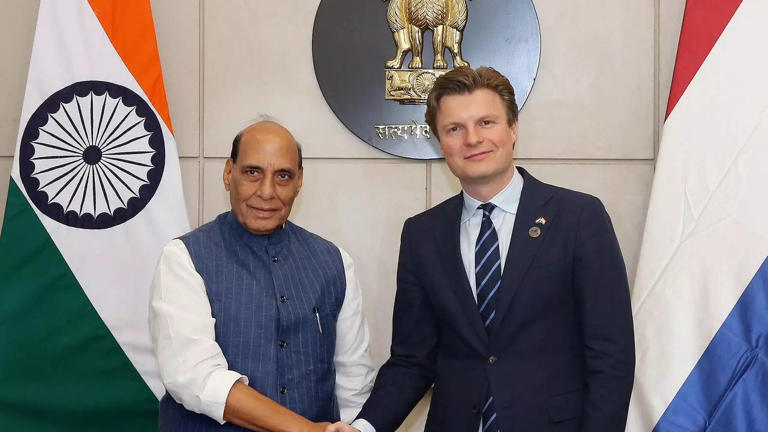
India requested the Netherlands to put on hold the sale of arms to Pakistan in the spirit of regional security threats and support for terrorism during a meeting held on March 18, 2025.
Indian Defence Minister Rajnath Singh called on his Dutch counterpart, Ruben Brekelmans, in New Delhi to reconsider the arms sale, arguing that it enhanced Pakistan’s ability to destabilise the region, particularly India’s borders.
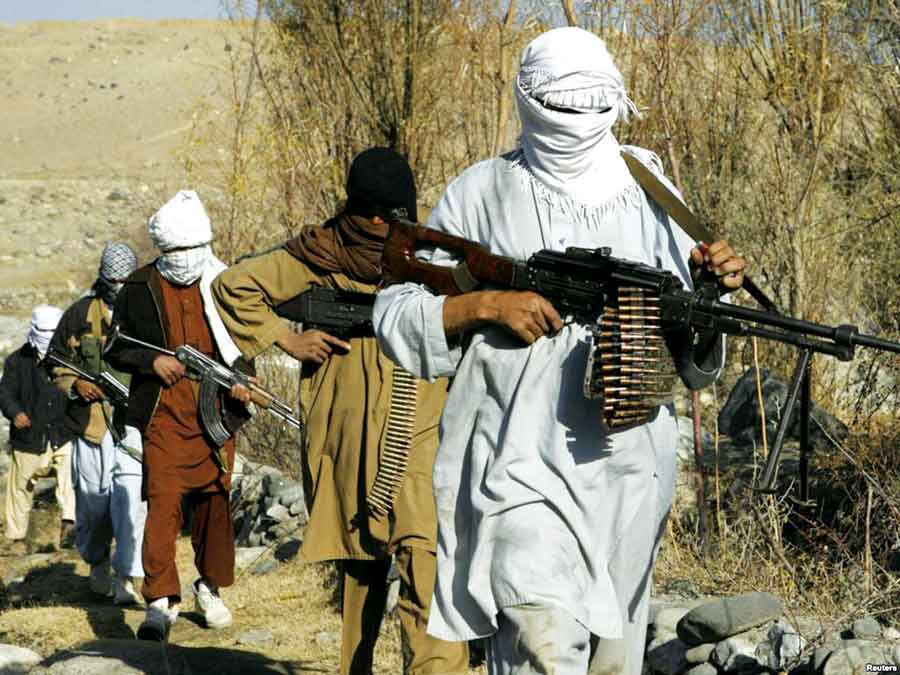
The appeal is based on India’s traditional argument that Pakistan aids militant organisations that target its territory, which Pakistan denies. Although the Netherlands has not officially responded, Singh also suggested that he would like to engage Amsterdam in broader defence collaboration with New Delhi.
The discussion mirrors rising tensions in the South Asian region and their potential impact on European arms exports. The controversy trailed India’s concerns with the military expansion of Pakistan, which New Delhi sees as a direct threat. Singh warned that Dutch gear would be deployed in operations aimed at India, specifically in the disputed Kashmir region.
India’s Defence Ministry told the Hindustan Times that Singh warned Brekelmans, “Arming Pakistan risks destabilising an already fragile region.” This meeting followed months of Indian diplomacy to limit Pakistan’s access to advanced foreign technology.
The move signals India’s ongoing effort to curb Pakistan’s military growth, despite not disclosing the Dutch export numbers. The Netherlands has a modest defence relationship with Pakistan, much smaller than what Pakistan shares with China.
SIPRI estimates
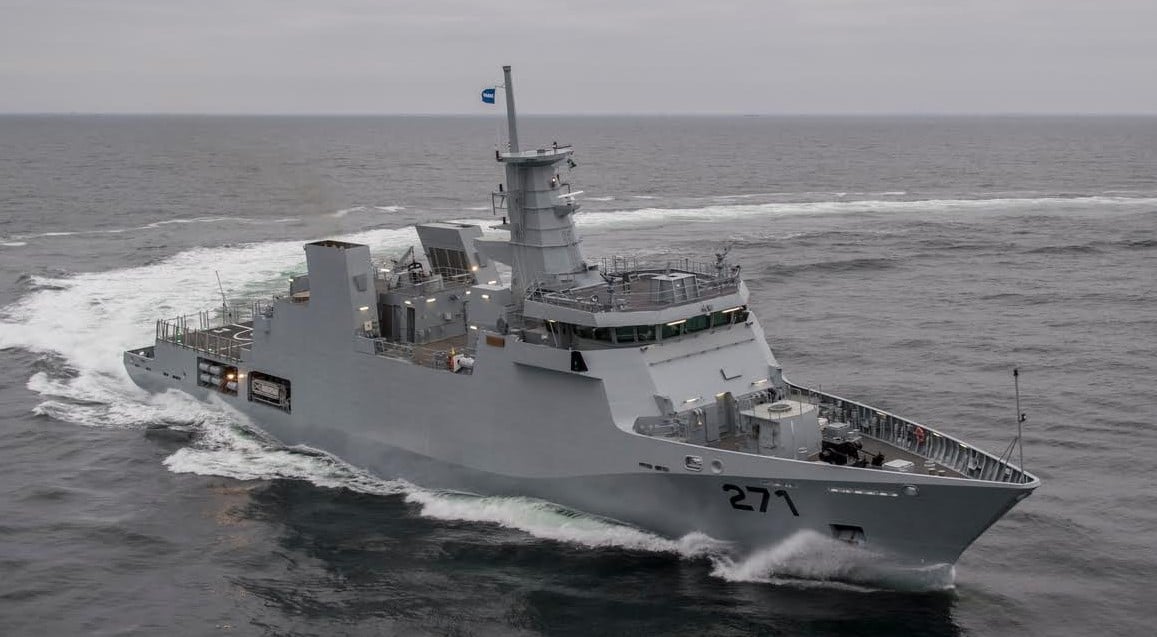
In the 1990s, the Dutch sold four Alkmaar-class minehunters to the Pakistan Navy. Later, Dutch firms like Damen Shipyards supplied patrol boats and armoured vehicles to Pakistan. SIPRI estimates Dutch arms exports to Pakistan between 2010 and 2020 were around $150 million.
Although the amount is relatively small, it still raises concerns for New Delhi due to regional tensions. India reportedly fears new naval deals may boost Pakistan’s maritime power—a sensitive topic given past confrontations.
India often frames Pakistan as a terrorism sponsor, linking it to attacks like Mumbai 2008 and Pulwama 2019. The 2008 Mumbai attacks killed 166 people; Pulwama saw 40 Indian soldiers die in a suicide bombing. In 2024, India’s Home Ministry reported over 300 cross-border infiltration attempts from Pakistan along the Line of Control.
Pakistan denies involvement and claims its military build-up is purely defensive in nature. According to ANI News, Singh shared secret intelligence with Brekelmans but didn’t reveal any specifics publicly.
Besides the warnings, India used the meeting to strengthen defence ties with the Netherlands. Singh suggested collaborative defence projects and provided access to India’s expanding $120-billion defence market. Deloitte projects that India’s defence sector will grow by 5% each year, offering long-term investment opportunities.
Brekelmans heard but refused to give a direct response, sources informed NDTV, and the Netherlands’ action was not apparent. As a NATO ally with a $12 billion defence sector, the Netherlands has to weigh India’s pull against its export business and EU export regulations, which stress stability and human rights.
Mumtaz Zahra Baloch
Pakistan itself remains so far silent on the meeting, but the hints lie in its earlier denials. Last month, Foreign Ministry spokeswoman Mumtaz Zahra Baloch told reporters that “our defence needs are legitimate and sovereign” in response to similar criticisms about Chinese weapons.
Islamabad’s commerce with the Netherlands reached $1.2 billion in 2024, according to its Commerce Ministry, indicating that it will be able to weather disruptions. Experts expect low-key lobbying by Pakistan to keep Dutch support, particularly with India increasing the pressure.
The stakes in South Asia are significant. India and Pakistan, both nuclear-armed nations, have fought four wars and have a strained ceasefire in Kashmir. India’s navy is enormous compared to Pakistan’s—140 warships to 20—but Islamabad’s Chinese-armed frigates and submarines are of concern to New Delhi, the 2024 Military Balance report stated.
Dutch patrol ships can enhance Pakistan’s naval defences, which India dreads after incidents like the 1999 Kargil naval skirmish. Singh’s plea is a bid to prevent such an event.
The Netherlands’ defence sector, led by Damen and Thales, has exported $3.8 billion worth of machinery overseas in the past year, the Ministry of Economic Affairs said. Pakistan’s sales are part of the country’s strategy of backing ocean security in the developing world.
India’s terrorism allegations can provoke more EU examination of the Common Position on Arms Exports, but the Dutch authorities are close-mouthed. The government spokesman told NOS News, “We look at each export case by case,” giving little hint of a decision.
Dutch PM Mark Rutte
India has a track record of pressuring Pakistan’s suppliers. It has criticised China’s $6 billion JF-17 fighter program and U.S. F-16 modernisation for Islamabad as encouraging militancy.
With the Netherlands, Singh combined security interests with economic enticement—co-developing naval systems to entice Dutch companies into India’s shipbuilding boom. This comes after a $5.5 billion Rafale purchase from France last year and negotiations for 26 Rafale-M jets, marking India’s purchasing power.
The summit is a culmination of India’s increasing European outreach. Last month, Prime Minister Narendra Modi and Dutch PM Mark Rutte signed an $8 billion trade agreement, paving the way for defence negotiations.
As the EU considers an €800 billion rearmament strategy in the face of the Russian invasion of Ukraine, India’s approach probes Europe’s geopolitical priorities. The Netherlands, a middle power, has to choose between two South Asian competitors.
Pakistan’s Western security relationships have narrowed since the 1990s, when US aid was more than $1 billion a year. Dutch sales have filled some of the gap, but Indian pressure could push Islamabad towards China, which supplied $2 billion of weapons last year, says SIPRI, or Turkey. This risks sparking an arms race, especially if India ramps up its deals. The Dutch reaction can reshape regional power dynamics.
Conclusion
This brings Dutch politics into the picture. Politicians are engaged in a debate between economic advantage and moral limits, and their disagreements are evident, as reported by De Volkskrant. India is eagerly awaiting a response soon, given its urgency, but Brekelmans’ challenge to evidence is a sign of caution, report NDTV sources. Pakistan presumably depends on trade relations to stay firm, though its bargaining power is weaker than India’s.
Little is known about the talks except for early reports. According to Economic Times sources, India is pursuing negotiations, possibly involving Dutch firms, while Pakistan’s silence reflects backroom politicking. There is no timeline for determining the Netherlands’ stance.
This diplomatic confrontation exposes the vulnerability of South Asia. Indian pressure has the potential to reshape arms flows according to Dutch whims. New Delhi invokes evidence and economics for now, while Pakistan hopes for change. The solution will demonstrate whether Europe wants stability or trade in a volatile region.
References
- Hindustan Times – https://www.hindustantimes.com
- The Times of India – https://timesofindia.indiatimes.com
- ANI News – https://www.aninews.in
- NDTV – https://www.ndtv.com
- Stockholm International Peace Research Institute (SIPRI) – https://www.sipri.org
- De Volkskrant – https://www.volkskrant.nl
- NOS News – https://nos.nl
- Economic Times – https://economictimes.indiatimes.com
- Pakistan Commerce Ministry – https://www.commerce.gov.pk
- Deloitte (Defence Market Analysis) – https://www2.deloitte.com
About the Author