Tejas Mk2 Delays Keep Su-30MKI Central
The Tejas Mk2 delays in India are no longer solely a program-management issue. For the Indian Air Force, this problem is becoming a force-structure issue. The Mk2 was designed to be positioned between heavier frontline fighters and the lighter Tejas family. Rather, as domestic programs struggle for time, engines, and industrial depth, repeated slippage now runs the risk of increasing India’s reliance on imported or Russian-origin combat aircraft. According to Reuters, the IAF is still far short of its authorized fighter strength, with only 31 squadrons compared to a target of 42, making every delivery failure more severe.
Why Tejas Mk2 Matters
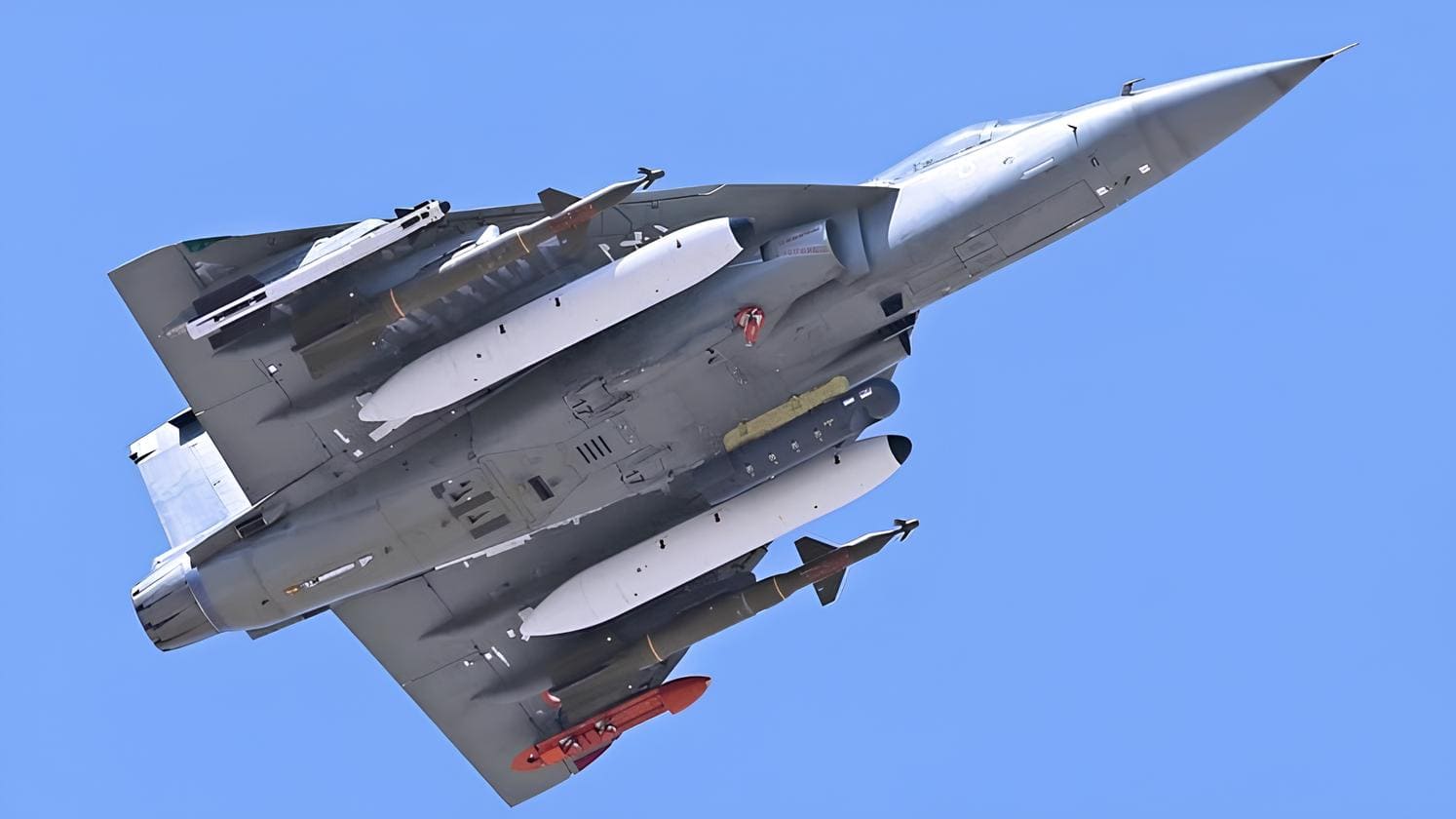
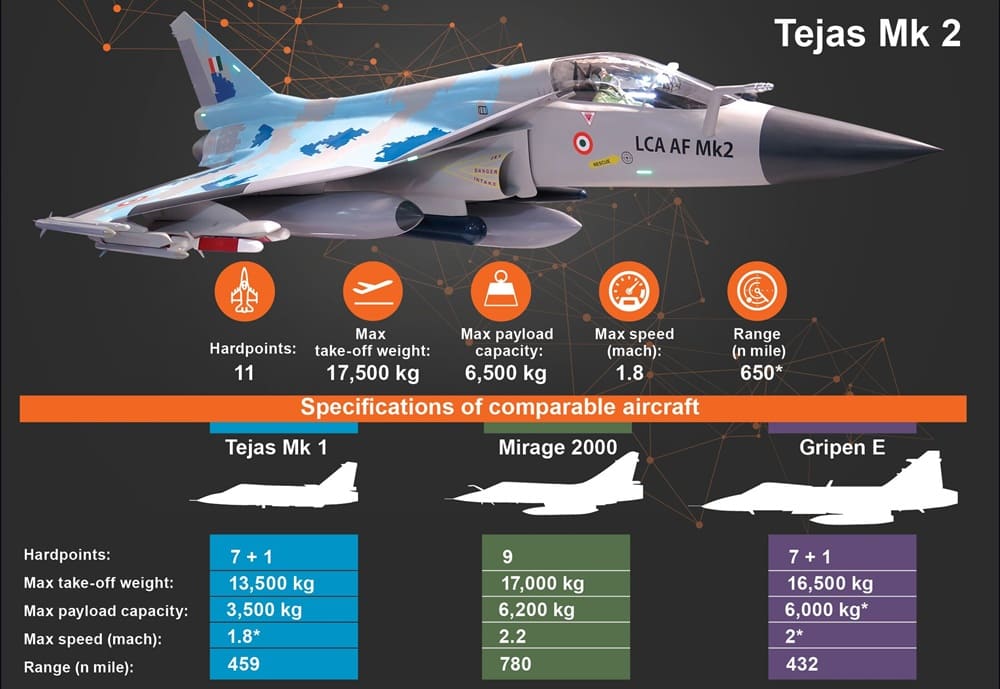
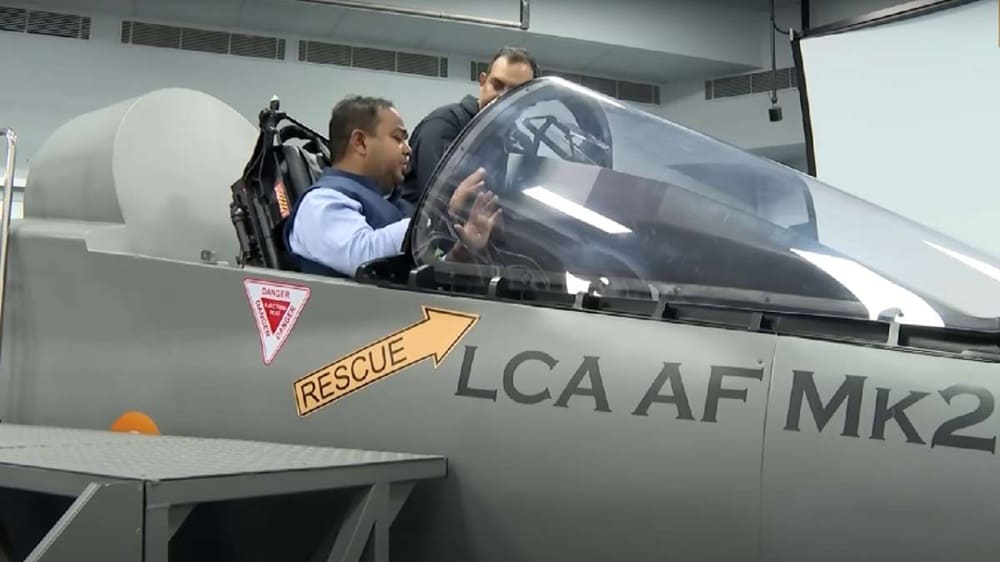
The Tejas Mk2 is a significant change. It has a longer fuselage, canards, a bigger payload capacity, and the more powerful GE F414 engine, making it a bigger and more ambitious plane than the Tejas Mk1A. According to GE, the F414 was chosen for the Tejas Mk2. HAL told investors in May 2025 that the prototype would likely fly in early 2026. The Mk2 is supposed to have a longer range, carry more weapons, and have a wider range of missions than the lighter Tejas models that are already in use.
Tejas Mk2 Shows a Bigger Problem
The bigger problem is that Tejas Mk2 delays are part of a larger pattern. HAL has already had trouble getting the Tejas Mk1A to customers on time. In February 2025, Reuters reported that one of the main reasons was that General Electric was having trouble getting engines. In November 2025, India signed a deal for 113 more GE F404 engines for the Mk1A line. Deliveries were planned to take place between 2027 and 2032. That should take some of the pressure off the current Tejas pipeline. Still, it doesn’t make the bigger problem of getting engines, avionics, testing, and local suppliers ready for multiple fighter programs at the same time any easier.
97 Mk1As Help, But Gaps Remain
On September 25, 2025, India’s Defense Ministry signed its biggest Tejas deal ever. It ordered 97 Tejas Mk1A planes from HAL for more than ₹62,370 crore. Deliveries are set to start in 2027–28 and continue for six years. The package officially includes 68 single-seat fighters, 29 twin-seat fighters, and other necessary equipment. The deal was worth about $7.03 billion, according to Reuters. Based on the headline, the deal amounts to approximately $72 million per plane, but it’s important to note that the package encompasses more than just the airframes. The contract is big and important for politics, but just making it bigger won’t fix a schedule that has already fallen behind many times. See also our Air Force coverage and Asia section.
Tejas Still Bears the Delay Burden
That’s why the program’s history is still important. The first flight of Tejas was on January 4, 2001. The first IAF Tejas squadron, on the other hand, wasn’t formed until July 1, 2016. The long development arc doesn’t mean the plane failed; many military planes take years to get ready for combat. Still, it does explain why the market, the services, and people who are not involved judge new Tejas milestones so harshly. When a successor like the Mk2 slips, critics don’t just see a one-time engineering delay. They see this lapse as another sign that India’s fighter ecosystem still has trouble turning design ideas into squadron-ready mass on time.
Why Russian Fighters Still Matter
This is where Russia’s strategic advantage becomes more pronounced. In the event of a Tejas Mk2 delay, the IAF will rely on familiar planes. The Su-30MKI is still the main fighter in India’s fleet. In June 2025, high-level defense talks between New Delhi and Moscow discussed upgrades to the type. In February 2025, Reuters said Russia was ready to make the Su-57 in India and provide all the necessary tech. India hasn’t decided to go that way yet, but the offer itself shows what the choice looks like. If indigenous projects keep falling behind, Russian-made heavy fighters and their upgrade paths become even more valuable as a way to protect capacity in the short term.
AMCA Promises, But Relief Is Distant
India is also moving forward with the AMCA stealth fighter. In May 2025, the Defense Ministry approved the execution model and then moved on to getting industry involved. That is a big step for the long term. But it’s still a program in the development phase, not a solution to the current shortage of squadrons. The same Reuters report that talked about the AMCA push also talked about the IAF’s shrinking force levels and HAL’s problems keeping up with Tejas deliveries. So, even though AMCA could change the future of India’s airpower, it doesn’t ease the pressure that Tejas Mk2 uncertainty is putting on things in the short term.
What the Delay Means for the IAF
The real meaning of the Tejas Mk2 delays is practical, not symbolic. India still needs a homegrown medium fighter to replace its old fleets and make it less dependent on foreign suppliers in the long run. The IAF must protect combat mass in other ways until the Mk2 goes from promise to prototype to reliable production. That means more upgrades for the Su-30MKI, continued use of the Rafale and Tejas Mk1A pipelines, and a continued interest in fast-track foreign options when local schedules fall behind. The Tejas Mk2 might still become a decent plane. Still, calendars are almost as important as capability when it comes to planning airpower. The calendar is still the program’s biggest enemy right now.
References
- https://www.pib.gov.in/PressReleasePage.aspx?PRID=2171108
- https://www.reuters.com/business/aerospace-defense/indian-warplane-maker-promises-faster-delivery-after-air-chiefs-rebuke-2025-02-12/
- https://hal-india.co.in/backend/wp-content/uploads/2025/05/ElaraSec-HindustanAeronautics-May16-2025-Corrected-1-1.pdf
- https://www.reuters.com/business/aerospace-defense/russia-offers-india-its-most-advanced-su-57-stealth-fighter-jet-2025-02-11/
About the Author