TAYFUN Hypersonic Missile — Range, Precision, Deterrence
Overview: Why TAYFUN Matters Now
TAYFUN hypersonic ballistic missile testing underscores Turkey’s shift from buyer to builder of long-range strike power. The latest October 25, 2025 shot demonstrated land-to-sea accuracy, rapid acceleration, and stable guidance over 500+ km. Moreover, the results signal operational maturity for an indigenous system that compresses decision times and bends deterrence in Ankara’s favour.
Turkey’s defence leadership framed the test as both technical proof and strategic messaging. The flight confirmed previous statements about its accuracy (within 5 metres) and its ability to survive thanks to mobile launchers and solid fuel. Therefore, the TAYFUN hypersonic ballistic missile now anchors a wider push to deny rivals sanctuary across the Eastern Mediterranean and Aegean.
What the 25 October 2025 Test Proved
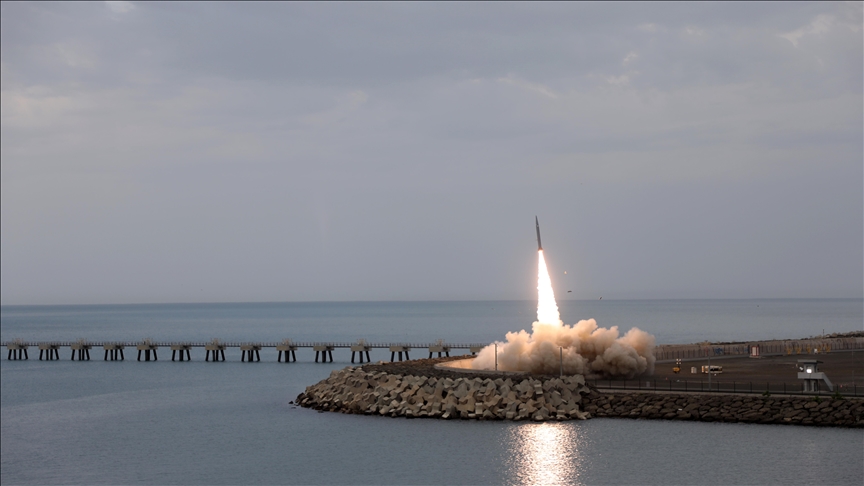
The October trial fired from a road-mobile launcher against a maritime target. Real-time video and drone telemetry showed stable guided flight and a clean terminal hit at extended range. Consequently, the profile confirmed credible anti-ship utility in addition to land-attack roles. The ministry credited Roketsan and the defence ecosystem, while community reactions stressed defence autonomy and credible escalation control.
Crucially, the scenario exercised command-and-control, seeker robustness, and tracking across a dynamic sea engagement. In practice, this means the TAYFUN hypersonic ballistic missile can integrate with airborne and surface sensors to prosecute naval groups, ports, radar fields, and forward airbases.
From Bora to TAYFUN: The Evolution
Turkey’s ballistic lineage runs from Bora to TAYFUN. The initial work emphasised independence from foreign vetoes and technical denials. The first public glimpse arrived on 20 October 2022, when TAYFUN reportedly flew ~561 km in 456 seconds. Since then, follow-on tests have paved the road to production in 2023 and regular trials into 2025. As a result, the program shifted from prototype to inventory item, with expanding mission sets and a doctrine aligned with rapid precision strikes.
Variants at a Glance
Block-1 (SRBM class)
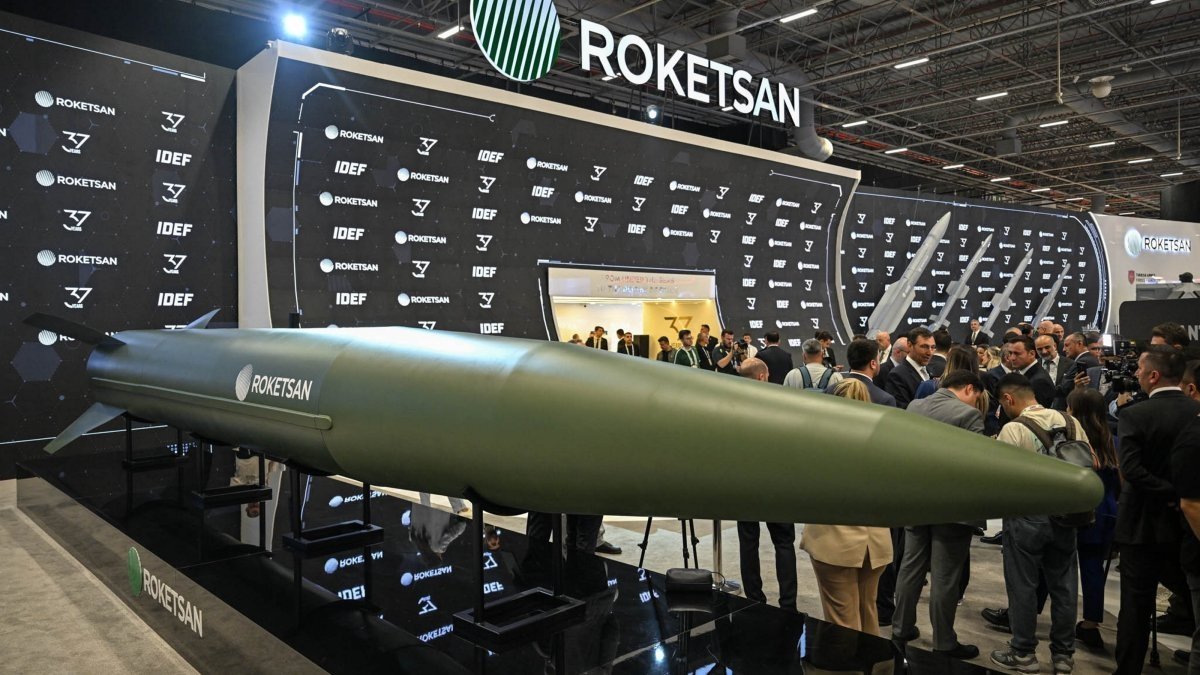
- Length / diameter / mass: ~6.5 m / 610 mm / ~2 t
- Range: up to ~800 km
- Speed: >Mach 5
- Warhead: up to ~500 kg (HE/frag)
- Accuracy: ≤5 m CEP (reported)
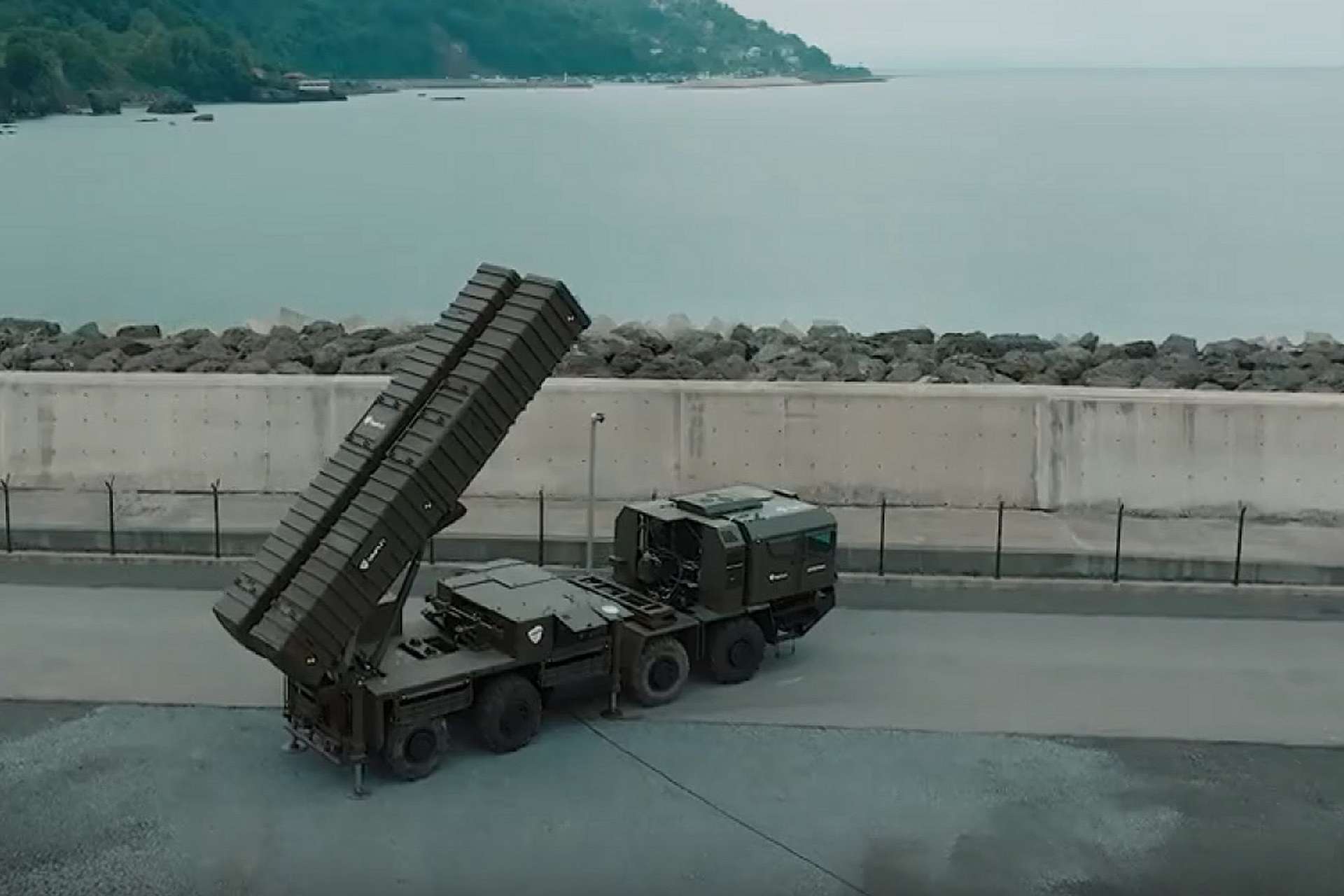
- Launcher: high-mobility VOLAT TEL for shoot-and-scoot
This baseline affords Turkey a compact, mobile, and responsive option to hold regional targets at risk. Additionally, the TAYFUN hypersonic ballistic missile family benefits from solid composite propellant that simplifies logistics and shortens launch timelines.
Block-4 (hypersonic-class MRBM)
- Length / diameter / mass: ~10 m / 938 mm / ~7 t
- Range: ≥1,000 km, with growth potential discussed
- Trajectory: quasi-ballistic, altitude/angle shaping to stress layered defences
- Terminal effects: higher payload volume for penetrative and anti-ship options
- Production path: expanded trials revealed at IDEF 2025, mass production targeted post-2026
Block-4’s hypersonic speed compresses defender reaction time. Furthermore, its flight geometry challenges both mid-tier SAMs and upper-tier exo-atmospheric interceptors, improving the probability of arrival against defended targets.
Guidance, Resilience, and Kill Chain Fit
TAYFUN uses an INS core with secure satellite updates for jam-resistant correction. Consequently, it sustains accuracy under electromagnetic stress. The family’s road-mobile TELs disperse across terrain, launch quickly, and relocate immediately. Because of this, pre-emptive enemy strikes must search a larger area and commit more assets, raising their cost and risk.
In modern kill chains, the TAYFUN hypersonic ballistic missile couples with drones, coastal radars, and maritime patrol assets to cue shots against moving ships. Meanwhile, on land, it targets airbases, C2 nodes, fuel farms, ISR hubs, and logistics choke points. Thus, it fits Turkey’s wider A2/AD logic while enabling quick counter-force and counter-value options.
Regional Impact and Risk Calculus
The Eastern Mediterranean and Aegean are crowded, contested, and politically sensitive. With TAYFUN, Ankara can rapidly threaten targets across Greece, Cyprus, and beyond if conflict escalates. Rivals are therefore forced to spread their resources, harden their bases, and make investments in decoys and layered defences. European capitals also worry about an arms-race spiral, although Turkey frames the capability as defensive and sovereignty-focused.
Comparisons to Russia’s Kinzhal often highlight similar speed regimes but different design choices. Analysts point to TAYFUN’s precision and mobile basing as advantages for first-night, first-strike roles. However, allies will track export controls, MTCR boundaries, and seeker evolution closely.
What to Watch Next
- Seeker upgrades: terminal seekers optimised for maritime strikes, improved clutter rejection, and angle-of-attack control.
- Manoeuvrable re-entry: MaRV features to enhance endgame survivability and aimpoint selection.
- Range growth: incremental steps beyond the 1,000 km class, subject to policy and regional signalling.
- Integration: tighter links with UAVs, ISR satellites, and naval sensors for time-sensitive targeting.
If these developments progress, the TAYFUN hypersonic ballistic missile will enhance Turkey’s ability to manage conflicts and influence situations before large-scale air operations can be launched.
Bottom Line
The TAYFUN hypersonic ballistic missile confirms Turkey’s move into sustained, precision hypersonic-class strikes. With reliable guidance, mobile launchers, and a growing range, it hardens Ankara’s leverage in contested waters and airspace. The October 25, 2025, test demonstrates how the programme is moving from promise to pacing reality, although the technology is still in the early stages of development.
References
About the Author