
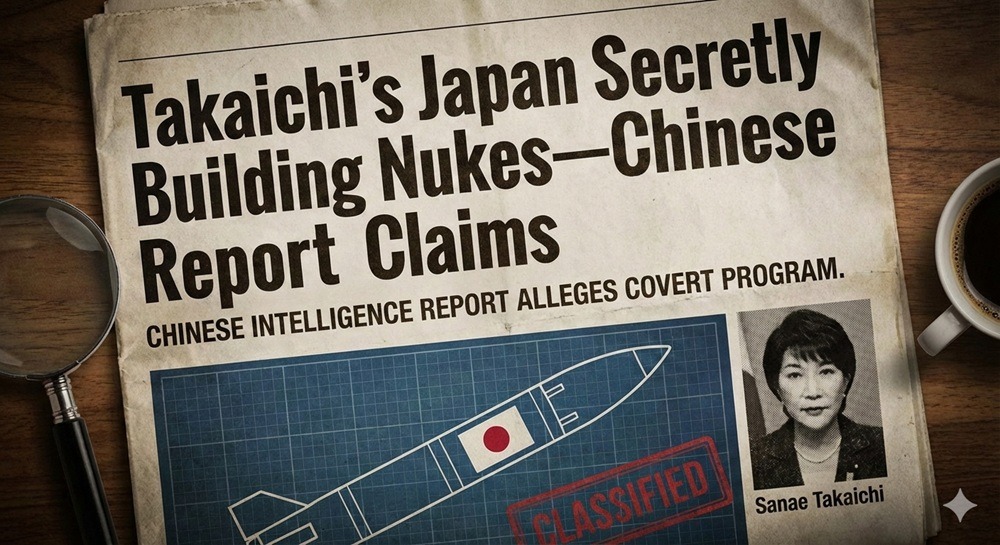
Takaichi’s Japan Secretly Building Nukes—Chinese Report Claims
Japan Could Go Nuclear Overnight
A Chinese report has reopened the debate about Japan’s nuclear options. It claims Tokyo could build nuclear weapons quickly. It also hints Japan may have already started. Beijing bases its case on one core idea. Japan runs one of the world’s most advanced civilian nuclear programs.
That industrial strength creates “nuclear latency” for rapid capability shifts. Countries without that base would take far longer. However, its existence is not proof of a weapons program. Still, the timing is relevant for regional security. North Korea’s nuclear threat keeps rising. Meanwhile, China’s military modernization continues apace. As a result, Japan has honed its defensive posture.
Japan’s public nuclear policy remains anchored to two pillars:
- NPT membership: Japan signed the NPT in February 1970 and ratified it in June 1976, committing to non-possession as a non-nuclear-weapon state.
- The Three Non-Nuclear Principles, articulated by Prime Minister Eisaku Satō in December 1967 and later adopted as a Diet resolution, state that Japan will not possess, produce, or permit the introduction of nuclear weapons into its territory.
Therefore, any actual move towards nuclear weapons would require either a dramatic political rupture, a legal-policy overhaul, or covert action with enormous alliance and economic consequences. For more scholarly articles like these, visit Defense News Today.
Japan’s Security Shift Explained
Even while Tokyo maintains its nuclear principles, it has revised major post-war constraints across defense policy.
2014: Collective Self-Defense Recast
Japan reinterpreted constitutional limits to allow collective self-defense in narrowly defined scenarios—effectively widening the circumstances under which the Japanese Self-Defense Forces could act with allies.
2022: Counterstrike Becomes Doctrine
Japan’s 2022 National Security Strategy explicitly frames counterstrike capabilities as a deterrence tool—integrated with missile defense and standoff systems.
2025–2026: Budget, Missiles, and Scale
Japan’s Cabinet approved a record defense budget exceeding 9 trillion yen (about $58 billion) for FY2026, part of a multi-year plan to lift spending to 2% of GDP.
This matters to the Japan nuclear weapons debate because critics argue that when conventional strike, ISR, and industrial throughput scale up together, they shorten the timeline for any “breakout” decision—if politics ever moved that way.
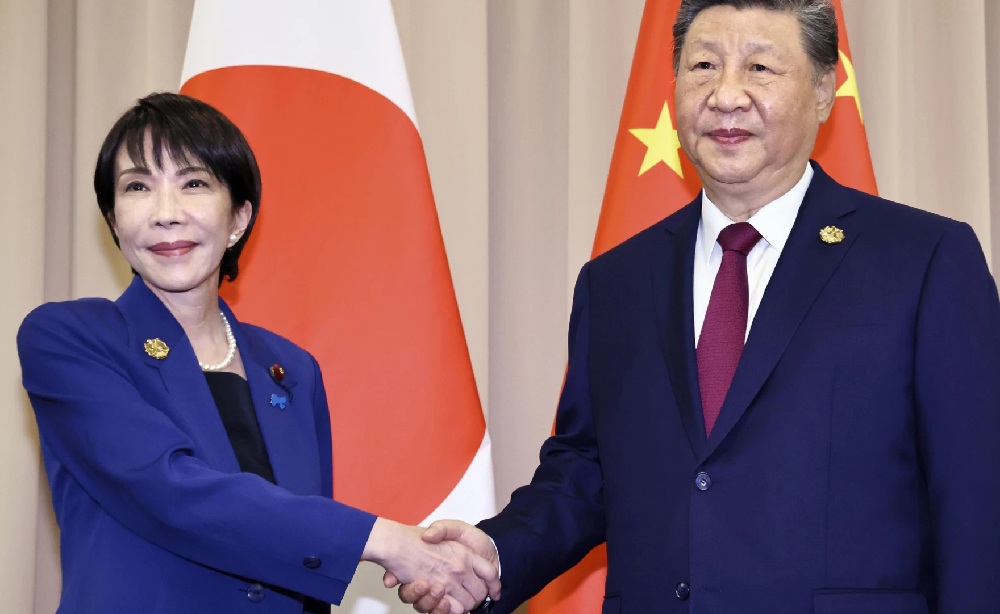
China’s Report: Key Allegations
The report, titled “Nuclear Ambitions of Japan’s Right-Wing Forces: A Serious Threat to World Peace,” was produced by the China Arms Control and Disarmament Association (CACDA) and a think tank linked to China’s nuclear industry.
Its central allegations are
- Japan has pursued nuclear-weapons-related research since World War II (an assertion not independently proven in the report’s public discussion).
- Japan has a complete nuclear fuel cycle and could generate weapons-usable material.
- Political signals from conservative figures indicate a willingness to revisit “non-nuclear” constraints.
Beijing also amplified an older remark attributed to Joe Biden: that Japan has the capacity to go nuclear “virtually overnight.”
Japan’s Plutonium Stockpile Explained
When the Japan nuclear weapons debate turns technical, it usually centers on plutonium and reprocessing. Japan does hold separated plutonium—officially declared for civilian use. According to Japan’s own reporting, separated plutonium stored domestically at end-2024 was about 8.6 tonnes, with about 35.8 tonnes stored overseas (UK/France), for a total near 44 tonnes.
That stockpile fuels persistent concern because plutonium is a dual-use material. Still, “possession” of civilian plutonium is not the same as “weaponization.” Building an actual nuclear arsenal would require additional steps: warhead design work, high-explosive testing regimes, secure command-and-control, delivery integration, and a political decision to accept the blowback from allies and neighbors.
Japan’s declared plutonium stockpile
| Holding location | Amount (tonnes Pu) | Notes |
|---|---|---|
| Total (Japan + overseas) | 44.4 | Total separated plutonium is managed within and outside Japan. |
| Held in Japan (domestic) | 8.6 | Reported as unchanged versus end-2023. |
| Held abroad (total) | 35.8 | Separated plutonium held overseas under utility contracts. |
| United Kingdom (part of overseas total) | 21.7 | Overseas breakdown reported by Japan’s Cabinet Office status report. |
| France (part of overseas total) | 14.1 | Overseas breakdown reported by Japan’s Cabinet Office status report. |
Japan’s Active Reactors
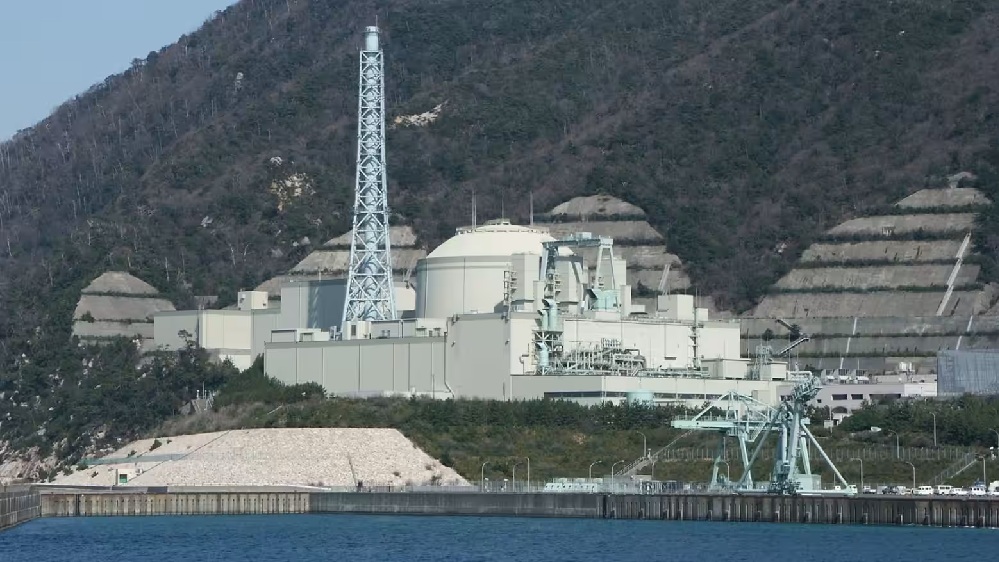
Japan’s active nuclear reactors, mostly pressurized and boiling water plants, create plutonium as a routine side effect of power generation. Inside the reactor core, uranium-238 captures neutrons and gradually transforms into plutonium isotopes. Japan also operates a few research reactors, but they produce far less because they run at much lower power.
Crucially, making plutonium in spent fuel is not the same as running a weapons program. The material stays locked inside highly radioactive fuel assemblies unless a state separates it through reprocessing. For that reason, most scrutiny focuses on safeguards, reporting, and how Japan manages its civilian fuel cycle.
JOYO Reactor: Weapons-Grade Claims?
Commentators linked to the Chinese report point to Japan’s JOYO fast reactor. They suggest it could have produced weapons-grade plutonium in some periods. That argument has circulated for decades. Recent coverage revived it with older studies and estimates. Some reports cite Greenpeace and disputed quantity claims.
However, analysts contest these interpretations. A firmer baseline is simpler and better documented. Japan has reprocessing capability. Japan has also declared large separated plutonium holdings publicly. That alone keeps skeptics focused on the issue.
Takaichi, Taiwan, and Extended Deterrence
Beijing’s report also tries to frame Japan’s leadership as ideologically positioned to break taboos. In early 2026 reports, Prime Minister Sanae Takaichi has taken a sharper line on regional contingencies, including Taiwan, while Tokyo continues a defense buildup.
Even without nuclear weapons, Japan can strengthen deterrence through extended deterrence (US guarantees), precision strikes, integrated air and missile defense, hardened bases, and resilient logistics. In that sense, the most realistic near-term “shift” is not a bomb, but a more explicit alignment of conventional strike doctrine with alliance planning.
Bottom Line: Capability ≠ Intent
The Japan nuclear weapons debate is unlikely to vanish because Japan sits in a unique position: it publicly rejects nuclear weapons while operating an advanced nuclear industry and living in a worsening threat environment. China’s report is best read as a strategic messaging document—meant to raise costs for Tokyo’s defense normalization and shape international perceptions—rather than as conclusive evidence of a covert Japanese bomb program.
Still, the technical reality remains: latency exists. If Japanese politics ever crossed a red line—triggered by a regional war, alliance rupture, or nuclear coercion—the industrial and scientific base would shorten timelines compared with most states. That is precisely why this issue stays sensitive, and why transparency around plutonium management and fuel-cycle policy continues to matter.
References
- https://www.eurasiantimes.com/japan-secretly-building-nukes-could-go-nuclear/
- https://www.fmprc.gov.cn/mfa_eng/xw/fyrbt/202601/t20260108_11808454.html
- https://blog.ucs.org/gregory-kulacki/does-japan-have-nuclear-weapons/
- https://theconversation.com/will-japan-build-nuclear-weapons-why-chinas-concerns-are-unfounded-for-now-272849
- https://www.scmp.com/news/china/science/article/3339370/china-cites-bidens-message-xi-japan-could-build-nuclear-weapons-overnight
- https://english.news.cn/20260108/b8eb38630e8d432eb09151e0a1c37b7b/c.html
About the Author