
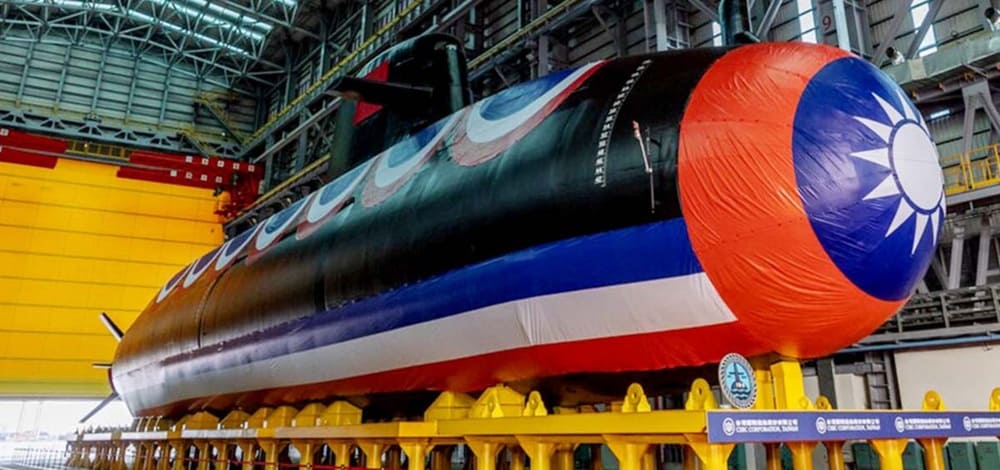
Taiwan's Hai Kun Submarine Achieves Major Milestone
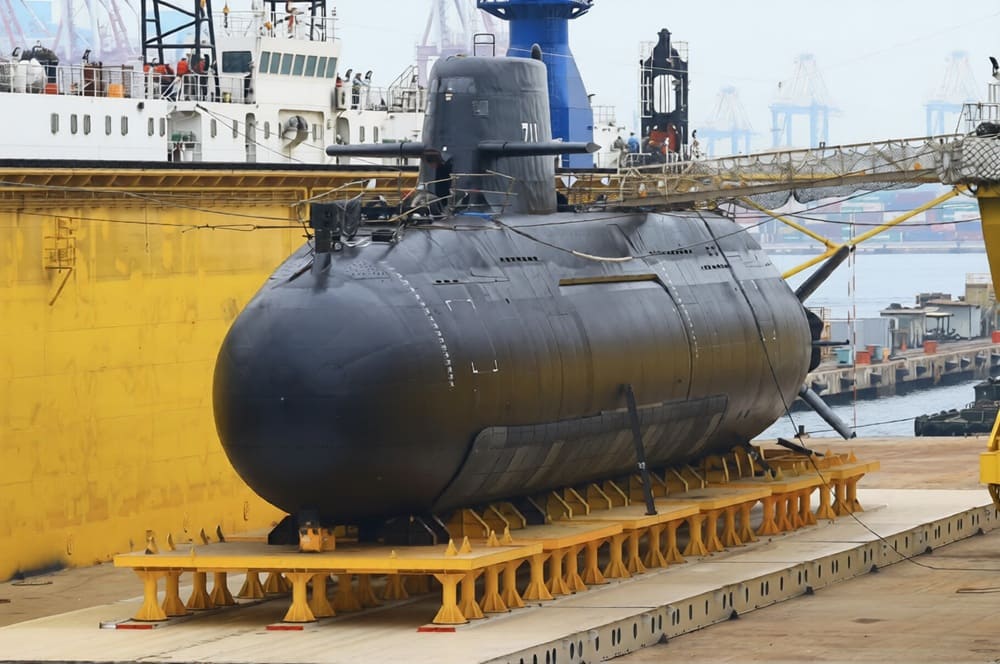
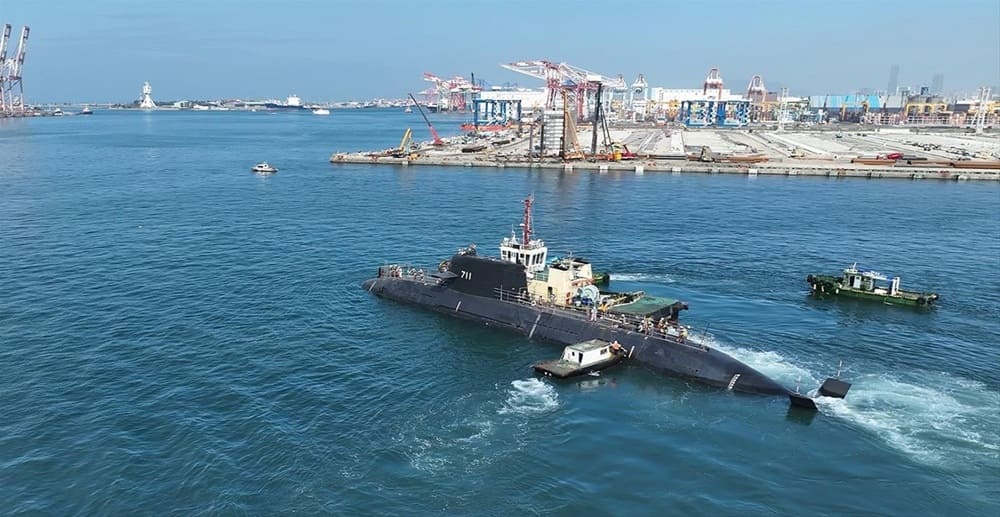
Taiwan launched its first home-built submarine, the Hai Kun, into the water. Workers at CSBC Corp.’s Kaohsiung shipyard flooded the dry dock, letting the submarine float for the first time. Taiwan’s Ministry of National Defense said the launch marked a key milestone in the submarine’s development. The Hai Kun already commenced sea acceptance trials back in April 2025 as scheduled. These tests are a significant step forward in strengthening Taiwan’s naval defense against mounting regional threats.
Self-Reliant Defense Capabilities
The development of the Hai Kun is a major step for Taiwan towards self-reliance in defense, which has historically relied on ageing foreign submarines. “The submarine is critical,” said Admiral Mei Chia-shu, the Chief of Staff of the Taiwanese Navy. “The Hai Kun will enhance our underwater combat capabilities and have our fleet ready by the end of next year.” President Lai Ching-te also praised the accomplishment as a national achievement, saying, “This submarine is the evidence of our determination to defend our sovereignty.”
Strategic Value Perspectives
People have welcomed the Hai Kun’s progress, but opinions differ on its strategic value. “We need to balance its cost with other priorities before we fully commit,” cautioned Alexander Huang of the opposition Kuomintang party. This is part of the ongoing debate about the role of submarines in Taiwan’s overall defense strategy.
Indigenous Submarine Programme
Then-president Tsai Ing-wen launched the $8.88 billion Indigenous Defense Submarines programme in 2016, with the goal of handing over eight submarines by 2038. But the goal was to hand over eight submarines by 2038. However, shortages of foreign components and lack of expertise led to serious delays. Planners later revised the target to three hulls, then two, and then three again after the prototype. The team recently flooded the dock, marking another major milestone. It has also successfully tested the power systems. These milestones indicate sea trials could be on the horizon.
Strategic Value in Regional Tensions
The arrival of the Hai Kun is timely, given the rapid expansion of China’s People’s Liberation Army Navy, which plans to have a fleet of 80 submarines by 2035. The ever-growing Chinese military activities around Taiwan have increased the need for strong defensive measures. Defense Minister Wellington Koo said: “A modern submarine force is crucial to breaking any blockade and maintaining our lifeline to the Pacific.” Recent undersea cable cuts near Keelung have highlighted Taiwan’s need for stronger maritime security. Officials suspect Chinese grey-zone operations caused these incidents.
Hai Kun Submarine Specifications
The Hai Kun sub is designed for Taiwan’s unique operational environment. It is about 80 metres long. It displaces 2,500 to 3,000 tonnes, a mid-sized but capable underwater vessel. The hull is constructed of high-strength HSLA-80 CRHS56 steel, providing it with durability and resilience for extended missions. Its teardrop shape is more stealthy and manoeuvrable in shallow waters like the Taiwan Strait. The submarine is powered by a diesel-electric propulsion system, a compromise between efficiency and dependable underwater performance.
However, Taiwan built the batteries domestically, demonstrating its increasing independence in cutting-edge military technology. The system is backed up by two MTU 12V 4000 diesel engines, providing continuous power generation at sea. With a submerged speed of up to 20 knots, the vessel achieves excellent tactical mobility. The vessel’s efficient design enables it to travel more than 2,000 nautical miles. This versatility makes the Hai Kun an essential part of Taiwan’s defense and deterrence strategy.
Armament and Advanced Systems
The Hai Kun has six 533 mm torpedo tubes that can fire U.S.-supplied MK-48 Mod 6 heavyweight torpedoes, effective against surface ships and submarines. The submarine will likely carry anti-ship missiles, including Harpoon Block II. These missiles would extend its offensive reach. Its advanced sonar suite reportedly uses technology based on the US AN/BQQ-10 system. This system improves threat detection and tracking. A customised Lockheed Martin combat management system integrates these sensors and weapons. It gives the crew a complete tactical picture.
Modular Design for Future Growth
The modular design of the submarine makes future upgrades possible, such as the installation of vertical launch systems for cruise missiles or unmanned underwater vehicles. That flexibility allows the Hai Kun to respond to threats that are evolving, including the development of hypersonic weapons and the surveillance of satellites. While specific configurations remain classified, this approach demonstrates Taiwan’s intent to maintain a flexible and modern submarine force.
Geopolitical Outlook
The development of the Hai Kun comes amid heightened regional tensions, including recent Chinese military exercises near Taiwan. Premier Cho Jungtai said the measures aimed to overshadow Taiwan’s advances in defense. Uncertainties have arisen over Taiwan’s defense support following Donald Trump’s return to the U.S. presidency in January 2025 and a parliamentary freeze on defense spending, including for submarines.
Defense Minister Koo said it could send “the wrong message to the United States.” He also cautioned it could help China. Taiwan demonstrates clear defiance as Hai Kun approaches sea trials. The submarine strengthens Taiwan’s posture amid complicated regional tensions. It may influence the strategic balance in the Taiwan Strait. It would also enhance deterrence, sovereignty and Taiwan’s pursuit of defense self-reliance.
References
- Republic of China Navy – Wikipedia
🔗 https://en.wikipedia.org/wiki/Republic_of_China_Navy - ROCS Hai Kun – French Wikipedia
🔗 https://fr.wikipedia.org/wiki/ROCS_Hai_Kun - Reuters – Taiwan tells China WWII shows aggression fails
🔗 https://www.reuters.com/world/asia-pacific/taiwan-tells-china-world-war-two-shows-aggression-will-end-failure-
About the Author