

Taiwan $40bn defense budget — Deterring China with tech
Taiwan’s $40bn defence budget and China deterrence
Taiwan’s $40bn defense budget represents a decisive shift in how Taipei thinks about deterrence and survival against China. President William Lai Ching-te has framed the eight-year package as a route to an “unassailable Taiwan,” one protected by innovation, technology, and a hardened defense posture rather than symbolism.
The move continues a decade of steady budget growth, yet Taiwan‘s $40bn defense budget commitments go further by locking in a long-term spending path tied to GDP. Lai wants annual defense spending above 3 percent of GDP next year and up to 5 percent by 2030, pushing Taiwan towards levels rarely seen outside states facing existential threats.
From Trump-era pressure to a structured Taiwan
Washington has long argued that Taiwan underinvested in defense relative to the threat from the People’s Liberation Army (PLA). Under Donald Trump’s first term, US pressure became more explicit, with calls for Taipei to spend far more and buy larger volumes of US-made systems. Trump has since suggested that Taiwan should move toward 10 percent of its GDP, a level beyond current political reality but clearly designed to shock.
Lai’s Taiwan $40bn defense budget offer sits between US demands and domestic constraints. The government has already proposed NT$949.5bn (about US$30bn), or roughly 3.3 percent of GDP, for next year’s core defense budget. The new package layers an extra US$40bn over eight years on top of that baseline, primarily for modernization and asymmetric capabilities rather than routine running costs.
For readers tracking allied airpower debates, Defense News Today’s analysis of US and allied airpower over the Taiwan Strait provides useful context on how money translates into operational options and munitions stockpiles.
Asymmetric warfare
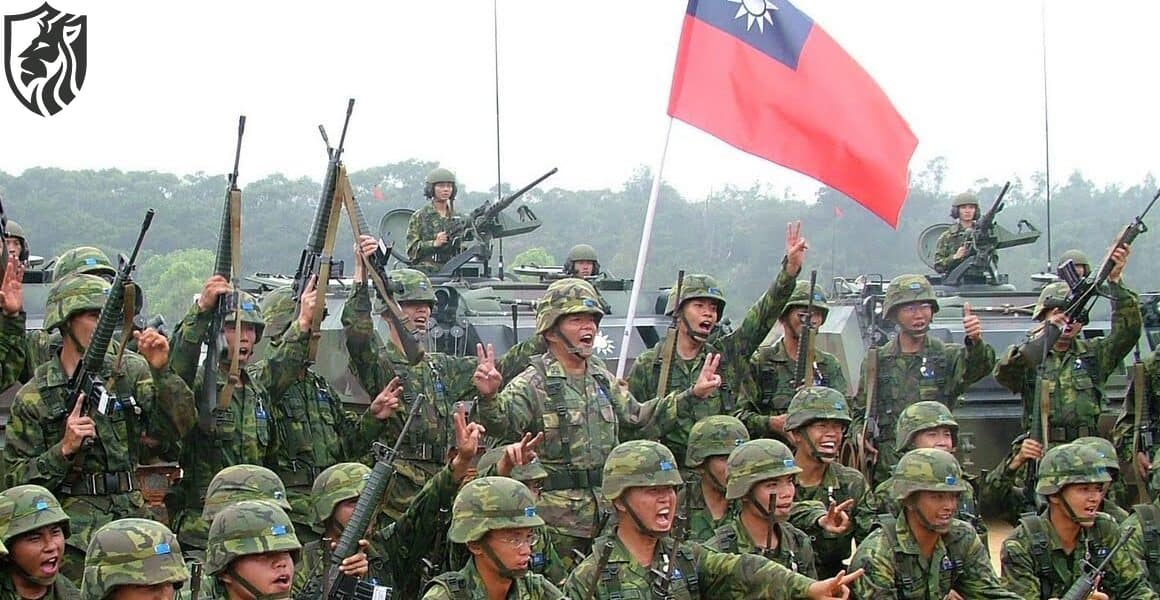
Lai has stressed that the Taiwan $40bn defense budget will fund new US arms purchases and systems that amplify Taiwan’s asymmetric warfare posture. This approach prioritizes survivable sensors, precision missiles, mobile air defense, dispersed command posts, and sea denial assets over prestige platforms.
Therefore, the plan aims to ensure that any PLA operation becomes slow, attritional, and politically risky. US officials have previously cited 2027 as a potential window for Chinese military action; Lai openly links Taiwan’s goal of “high-level joint combat readiness” to that timeline. Consequently, the Taiwan $40bn defense budget is as much about closing near-term vulnerability as about signaling long-term resolve.
For a more profound look at how small states use asymmetric tools to offset larger rivals, readers can compare Taiwan’s approach with Ukraine’s layered air defense and missile strategy, discussed in a separate Defense News Today feature on Russian–Ukrainian air campaigns.
The ‘T-Dome’ vision and an unassailable Taiwan
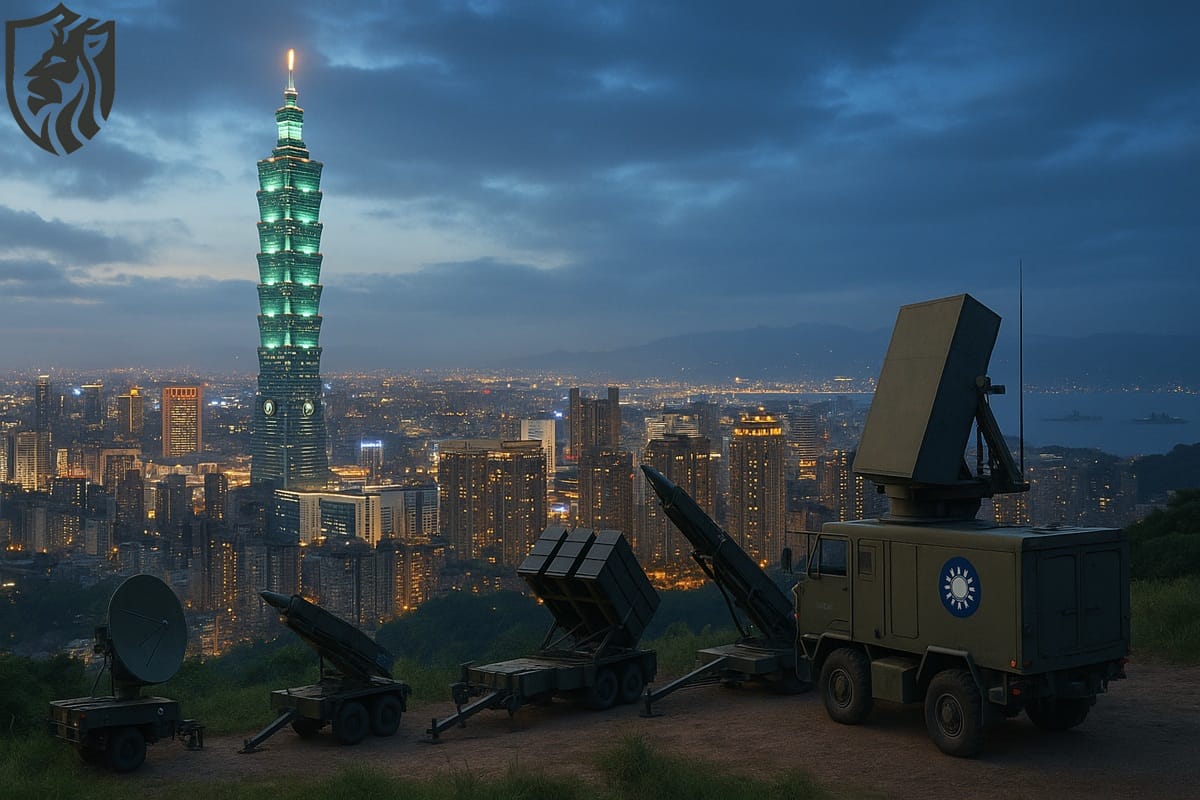
A core focus of the Taiwan $40bn defense budget is fast-tracking the so-called T-Dome shield concept. Lai presents T-Dome as a system of systems linking sensors, shooters, and decision tools into one resilient umbrella.
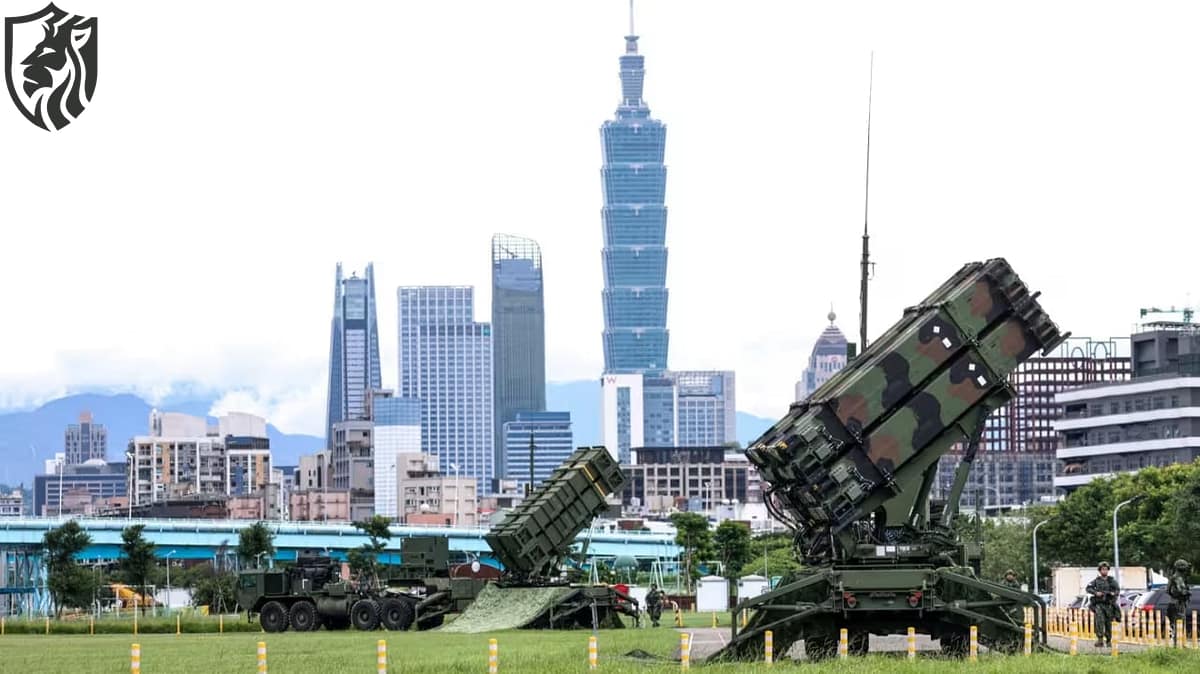
On paper, it blends long-range early warning, Patriot-class interceptors, shorter-range point defense, and dense counter-UAV networks. Hardened command centers and distributed data links aim to keep the architecture alive under heavy PLA missile fire.
In that sense, the Taiwan $40bn defense budget funds not just missiles, but the digital nervous system behind them. Analysts can benchmark this model against Israel’s layered air defense and US integrated air and missile doctrines.
US reaction and alliance politics around Taiwan’s
Washington has unsurprisingly welcomed Taiwan’s announcement of a $40 billion defense budget. The US’s top representative in Taipei, Raymond Greene, quickly endorsed the plan and urged cross-party consensus on defense.
His remarks followed Washington’s approval of a US$330 million package of spare parts and components for Taiwan. This deal marked the first Taiwan arms sale since Trump returned to the White House. Yet the politics remain highly complex across the Strait and beyond.
Beijing accuses Taipei of letting external forces steer its choices and cites the Taiwan $40 billion defense budget as proof. Chinese officials frame it as fresh evidence of a US-led containment strategy aimed at constraining China’s rise.
Regionally, Tokyo’s sharper tone, including Prime Minister Sanae Takaichi’s comments on possible intervention, further strains already tense China–Japan relations. Readers seeking precise wording and timelines can check Taiwan’s defense ministry releases and US DSCA notifications on recent arms packages.
Domestic roadblocks: Taiwan’s $40bn defense budget approval?
The biggest uncertainty for Taiwan’s defense plans is political rather than technical. The opposition Kuomintang, backed by the Taiwan People’s Party, controls parliament’s purse strings and questions higher defense spending.
Many in the KMT argue Taiwan should deepen economic ties with China instead of pouring more money into arms. Newly elected KMT chair Cheng Li-wun has already asked whether Taiwan can really afford President Lai’s ambitious plans.
As a result, the $40 billion defense budget debate doubles as a referendum on Taiwan’s long-term grand strategy. Taipei can either double down on self-reliant deterrence or lean toward de-escalation and deeper economic interdependence with Beijing. The final choice will shape force structure, defense industry priorities, and cross-Strait risk calculations well into the early 2030s.
References
- https://www.theguardian.com/world/2025/nov/26/taiwan-extra-40bn-defence-spending-china-threat
- https://www.aljazeera.com/news/2025/11/26/1768
- https://www.mnd.gov.tw/English/
- https://www.dsca.mil/
About the Author