
Soyuz Reaches ISS as Baikonur Launch Pad Suffers Damage
Soyuz success in orbit, trouble on the ground
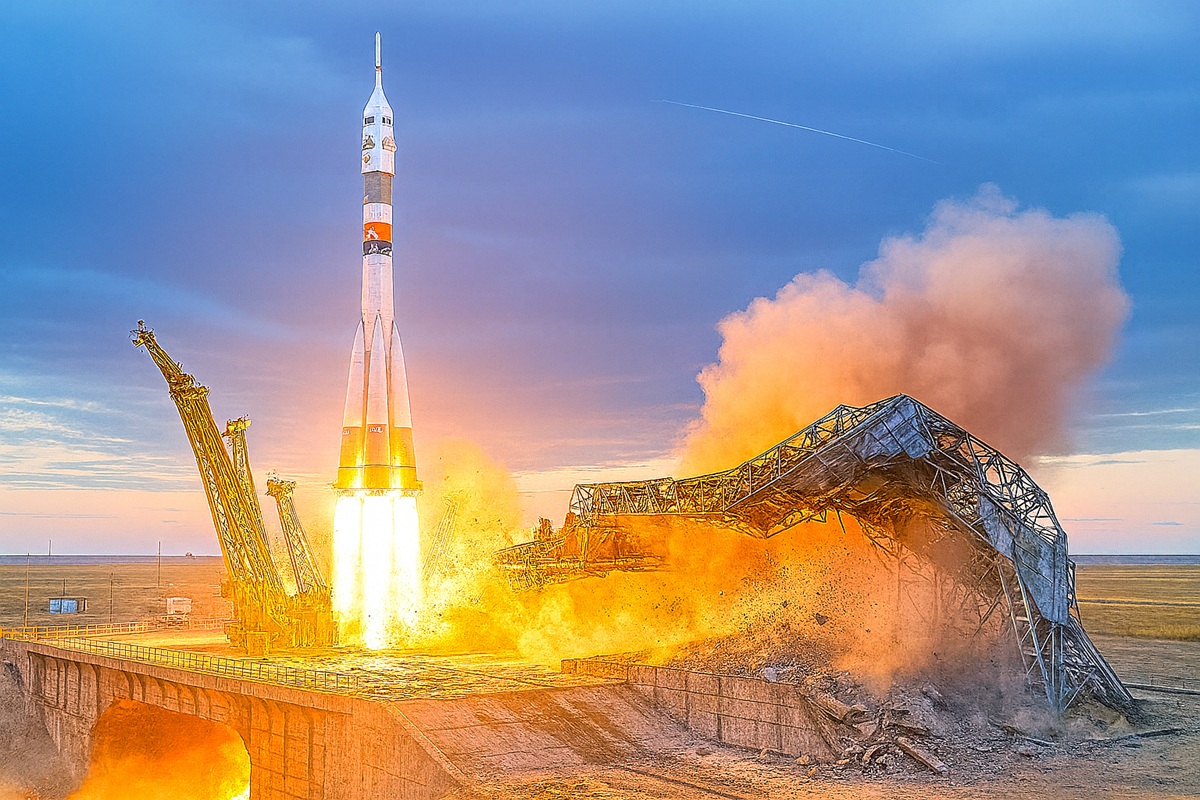
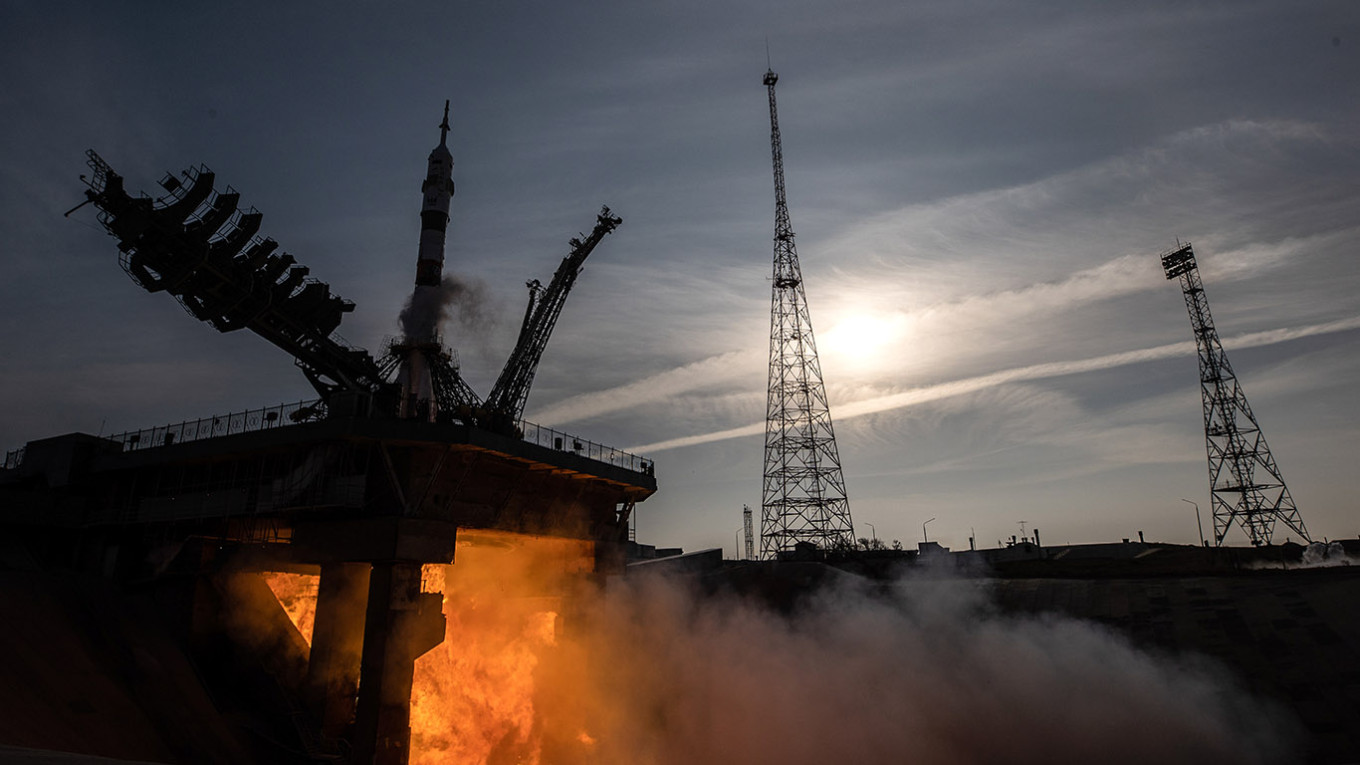
Following the Soyuz launch, damage to the Baikonur launchpad captured headlines, revealing the dual reality of Russia’s latest ISS mission. On 27 November 2025, Soyuz MS-28 lifted off from Site 31/6 at Baikonur, carrying Roscosmos cosmonauts Sergey Kud-Sverchkov and Sergey Mikaev, plus NASA astronaut Chris Williams, on an eight-month expedition to the International Space Station. The ascent, orbital insertion, and docking sequence all ran nominally, and Russia again demonstrated its profound experience with crewed Soyuz operations. However, post-flight inspection quickly revealed that the mission’s biggest risk materialized not in orbit, but under the rocket’s tail.
What happened at Site 31/6?
Roscosmos initially stressed that the launch proceeded “without comments,” yet engineers later confirmed that the Baikonur launchpad damage after the Soyuz launch was not an exaggeration. A movable service cabin beneath the pad appears to have collapsed into the flame trench as the Soyuz-2.1a cleared the tower, with footage and stills showing twisted structure and fallen panels around the exhaust duct. This mobile cabin normally houses umbilicals, access platforms, and critical ground support systems used for both crewed Soyuz and Progress cargo missions. Therefore, the damage here is not superficial; it directly impacts the core of Baikonur’s crewed launch infrastructure.
Russia’s only active crewed pad now compromised
The phrase “Baikonur launch pad damaged after Soyuz launch” carries weight because Site 31/6 is Russia’s only active crewed pad. Gagarin’s Start, or Site 1/5, ended crewed missions in 2019 and left Baikonur dependent on 31/6. Since then, Site 31/6 has handled every Soyuz ISS crew rotation and regular Progress cargo flight from Kazakhstan. This issue makes the pad a classic single point of failure for Russia’s human access to orbit. Roscosmos claims spare parts are available and repairs will be quick, but any delay could disrupt the Progress MS-33 schedule.
Ageing infrastructure and a long Soyuz legacy
Analysts see the Baikonur launchpad damage after the Soyuz launch as a symptom of deeper strain. Site 31/6 was built in the early 1960s for R-7 missiles, not endless modern crewed flights. It later became a workhorse for Vostok, Voskhod, and Soyuz missions, enduring constant launches for decades. Heavy use, patchwork repairs, and tight post-Soviet budgets have forced Baikonur to stretch aging hardware beyond comfort. Earlier pad incidents in the 1960s and 1980s already hinted that the safety margin was shrinking. Today’s partial collapse shows how risky it is when infrastructure outlives its design era and maintenance falls behind.

Operational impact: ISS logistics and risk tolerance
For ISS program managers, the phrase “Baikonur launchpad damaged after Soyuz launch” immediately translates into schedule risk. Soyuz MS-28’s crew is expected to stay on orbit for about eight months, forming part of Expedition 73 alongside NASA, Roscosmos, and JAXA colleagues. In theory, that gives engineers some breathing room to restore the pad before the next crew rotation. In practice, however, Russia also needs the complex for Progress resupply flights that backstop life support, fuel, and reboost operations on the Russian segment. Even short delays can compress maintenance windows, increase reliance on non-Russian vehicles, and nudge planners towards more conservative risk postures on launch and docking timelines.
Vostochny, redundancy, and strategic signalling
US–Russian cooperation under renewed scrutiny
News of the incident quickly spread, even as the Soyuz launch caused damage to the Baikonur launchpad. Yet the mission itself still highlighted how closely US and Russian space programs remain tied together in orbit. NASA astronaut Chris Williams flew on a Russian rocket under a cross-seat deal used since 2014. For Washington, access to Soyuz acts as insurance against sudden groundings of American commercial crew vehicles. For Moscow, flying NASA astronauts brings funding, prestige, and political legitimacy at a time of wider confrontation. A damaged launchpad, however, weakens Russia’s technical bargaining power and boosts NASA’s shift toward homegrown ISS access.
Best and worst case for Russia’s human spaceflight
Looking ahead, the Baikonur launchpad damage after the Soyuz launch leaves Russia facing two clear scenarios. In the best case, inspections confirm only local damage to the mobile service platform and nearby structures. Engineers then install spare modules, restore full pad functionality, and resume Progress and Soyuz flights with modest schedule changes. In the worst case, deeper structural damage in the flame trench or supports demands lengthy repairs and major schedule upheaval. That outcome could delay missions for months and shrink Russia’s physical presence and flexibility aboard the ISS. Either way, Moscow must show honest root-cause analysis and convincing fixes to reassure partners and its crews.
Why this matters beyond one launch
Finally, the Baikonur launchpad damaged after the Soyuz launch is more than a space-geek headline; it is a stress test of Russia’s broader high-tech infrastructure under sanctions and budget constraints. As Defence News Today explored in its analysis of Russia’s space warfare strategy, Russian planners increasingly treat space as both a prestige arena and a military enabler. DEFENSE NEWS TODAY Likewise, our coverage of the US Navy South China Sea salvage race shows how states now treat high-end technology recovery and protection as strategic tasks, not mere engineering chores. DEFENSE NEWS TODAY In that context, how quickly and transparently Russia restores Baikonur will signal not only its technical capacity but also the reliability of its commitments to partners who still ride its rockets to orbit.
References
- https://www.reuters.com/science/baikonur-launch-pad-damaged-after-russian-soyuz-launch-international-space-2025-11-27/ Reuters
- https://apnews.com/article/e4aedc39b69ce8983b3c8519fee2eaba AP News
- https://www.space.com/space-exploration/international-space-station/russias-only-launch-pad-for-cosmonauts-damaged-by-soyuz-crew-launch-to-international-space-station Space
- https://en.wikipedia.org/wiki/Baikonur_Cosmodrome_Site_31 Wikipedia
About the Author