

Sky Bow IV Production—Taiwan Adds 70 km Shield
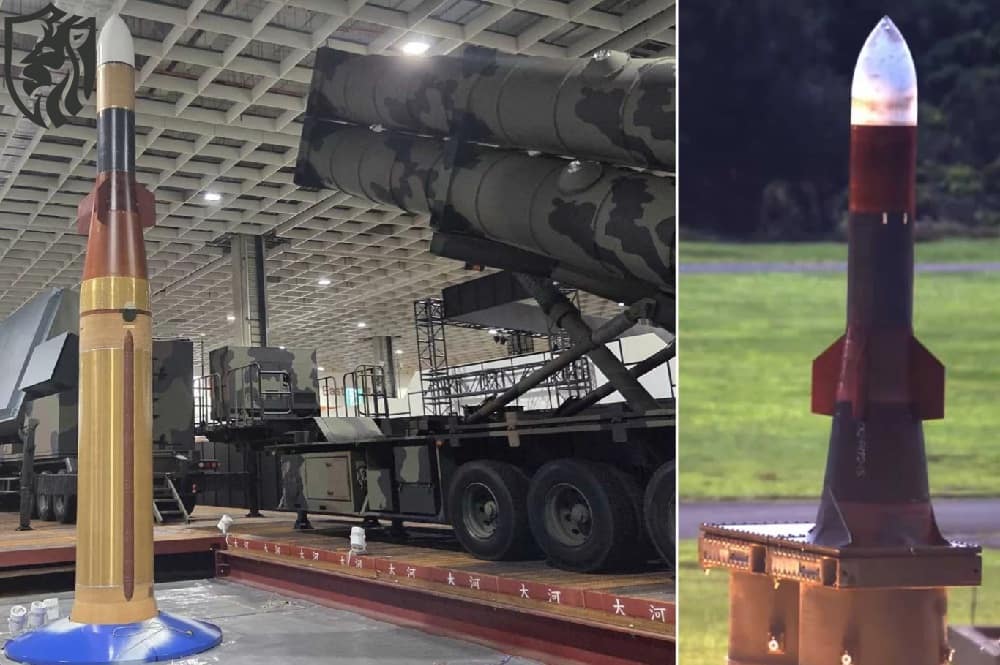
After NCSIST finished testing it in the field, Taiwan gave the green light for mass production of the Strong Bow program, which is also called Tien Kung IV or Sky Bow IV. The move adds a new layer of upper-air interception that is about 70 km high. The goal is to keep airbases and command centers running during the first wave of a PLA missile attack.
Why 70 km Matters
Sky Bow IV elevates Taiwan’s firing range beyond the 35–45 km range commonly associated with Sky Bow III. It also leaves room for Patriot PAC-3 to fire more shots. The issue is as much about time as it is about height. A higher shot window gives crews more time to find targets and choose the best shooter. Because of this, Taiwan can do a cleaner shoot-look-shoot sequence during a busy raid.
Strong Bow: More Than a Missile
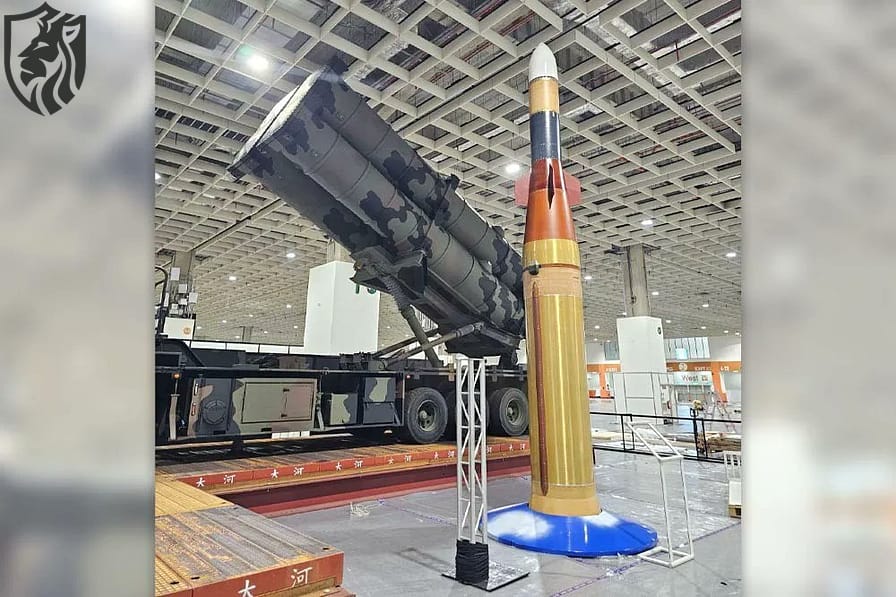
Reports say that Strong Bow is a networked system with radar, command gear, and launchers. Some reports say that the new radar and control tools might help warn against Chinese ballistic missiles and some hypersonic threats, but the results still depend on training, software, and the number of missiles available.
A trailer-mounted active electronically scanned array (AESA) radar is a key part. Open reporting says it can find things up to 500 km away. When crews are overloaded, the command element can connect dozens of launch units and give them automated shooting advice. AESA is helpful in a mass raid because it can quickly track many targets and is hard to jam. It’s also harder to target than fixed sites because it can move around.
Radar Layer: Real-World Impact
Just because the radar horizon is over 500 km doesn’t mean crews can shoot at every track right away. But it can find raids sooner, make better tracks, and give people more time to decide who shoots and when.
Interceptor: What We Know
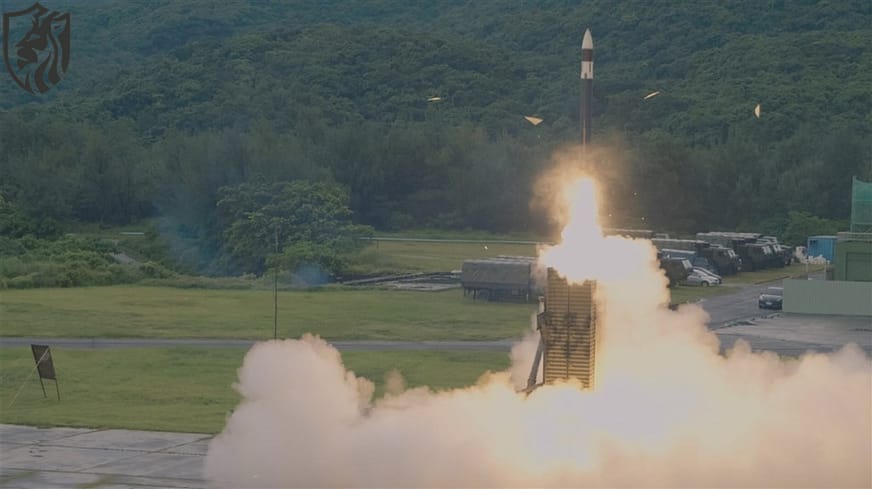
Sky Bow IV is a two-stage missile, according to open reporting. A strong booster lifts the missile into thinner air, and the second stage takes care of the last part. Sources also say that thrust-vector control and a millimeter-wave seeker are used for precise terminal guidance. The physics work with the control logic, and fins still help steer at first. But as the air gets thinner, thrust control becomes more important for staying on the intercept path.
Public releases don’t give much information about the warhead, but defense reporting suggests that it is a directed-fragmentation warhead instead of a strict hit-to-kill design. That choice can make the lethal zone bigger when debris, decoys, or tight timing make the last few seconds harder.
Sky Bow IV and T-Dome
Taiwan also sees “T-Dome” as a way to connect sensors and shooters, speed up reaction times, and raise the kill rate across all levels. Strong Bow backs that plan because it can take a shot from a higher altitude earlier, while lower tiers deal with leaks and other threats.
Reports also discuss AI-assisted support that indicates which tier should shoot first based on the quality of the track and the fight space. Taiwan can shorten the time between detection and launch if it can add early cueing from long-range warning sensors. That matters when salvos hit each other and defenders have to save missiles.
Continuity Under First Strike
Sky Bow IV is made for the hours when it is open. PLA Rocket Force attacks would probably try to make craters in runways, blind radars, and cut off C2 links. So, Taiwan needs to stop enough missiles so that planes can keep flying and targeting. A higher-altitude tier also expands the protected area.
Because of this, one saturated axis is less likely to break down the defense of one important node. This is deterrence by continuity, which means that Taiwan doesn’t need a perfect shield. It just needs enough runways, radars, and command posts that are still standing to keep fighting.
2026 Watchpoints
The numbers will decide if the idea works, and Taiwan Sky Bow IV missile production will only matter if Taiwan can buy and use enough rounds. Taiwanese news reports connect Strong Bow to a proposed special defense budget of about NT$1.25 trillion, which would pay for two system sets, at least 128 missiles, vehicles, and support gear. Next, watch drills for fielding speed and dispersal. In a missile fight, movement and quick reset are more important than what the brochure says.
Conclusion
Lastly, monitor the effectiveness of Strong Bow’s integration with other tiers. Beijing will change and try to fill up high-value sites. For now, Taiwan’s Sky Bow IV missile production is a big step toward making the area it protects bigger and making it harder for the PLA to plan attacks. But it can’t make Taiwan untouchable in a long fight. The production of the Taiwan Sky Bow IV missile also supports the larger T-Dome message: layers that are integrated are meant to survive the first blow and keep working.
References
- https://www.armyrecognition.com/news/aerospace-news/2026/taiwan-approves-sky-bow-iv-missile-production-adding-70-km-range-missile-defense-against-china
- https://taiwannews.com.tw/en/news/6295191
- https://www.taipeitimes.com/News/taiwan/archives/2026/02/04/2003851748
- https://www.reuters.com/business/aerospace-defense/taiwan-says-t-dome-better-integrate-air-defence-system-higher-kill-rate-2025-10-13/
About the Author