Sentinel ICBM Program Nears 2027 First Flight
The Sentinel ICBM program is moving from the design phase to a more visible test-and-build phase. The U.S. Air Force and Northrop Grumman now say that the missile will have its first flight test in 2027 and be ready for use in the early 2030s. This is important because Sentinel is more than just a missile replacement. It is rebuilding the land-based part of the U.S. nuclear triad.
Readers can also check out our Missiles section and our broader Strategic coverage for more information. Here is where those themes come together. Sentinel covers more than 32,000 square miles in five states, and the Air Force sees the move as both a major construction project and a weapons program.
Importance of this program
Northrop asserts that the missile’s development occurred in a digital engineering environment, leveraging insights from the B-21 Raider. That doesn’t mean it will work, but it should make design loops shorter and make it easier for the government, prime contractor, and suppliers to work together. In big strategic programs, faster iteration is often just as important as new ideas.
The Sentinel ICBM program will take the place of the old Minuteman III force and the Cold War-era infrastructure that goes with it. It will be sent to F.E. Warren, Malmstrom, and Minot, and Minuteman III will still be in service during the transition to keep a constant deterrent. The Air Force has also chosen to build new silos, launch centers, communication links, and support facilities instead of relying on a major overhaul of old infrastructure.
That choice gives us a lot of information about the size of the program. This isn’t as simple as just switching missiles. It is a system-of-systems overhaul that is meant to last a long time. The current plans are to keep Sentinel running until 2075. So, the missile itself won’t be the only thing that affects schedule discipline; construction, transportation, and command systems will also play a role.
Revised Approach Is Trying to Fix
The new Sentinel ICBM program focuses more on gradual progress, testing early, and learning quickly. In short, the government and industry team want to test hardware sooner, use what they’ve learned right away, and keep improving usable capability without lowering performance standards. That is a reasonable change after years of pressure on costs and schedules. It emphasizes quantifiable advancement rather than vague program terminology.
The strongest proof of that change is now in the body. In Promontory, Utah, a prototype launch silo is being built. New command centers are being built, and Vandenberg is adding infrastructure for the next flight test campaign. These steps don’t get rid of risk, but they do show that Sentinel is moving from the presentation stage to real hardware, like concrete, steel, and test hardware.
Missile and Silo Progress
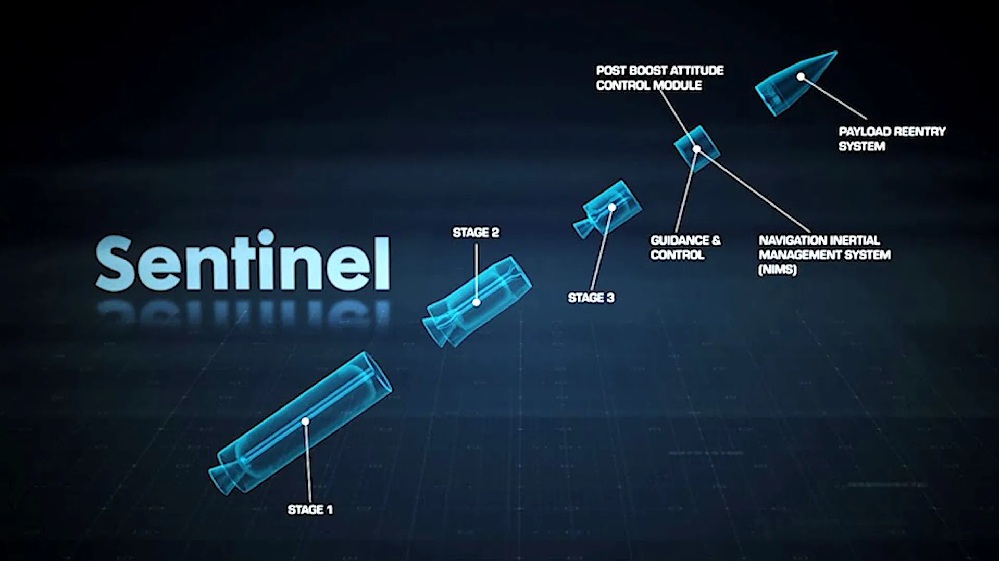
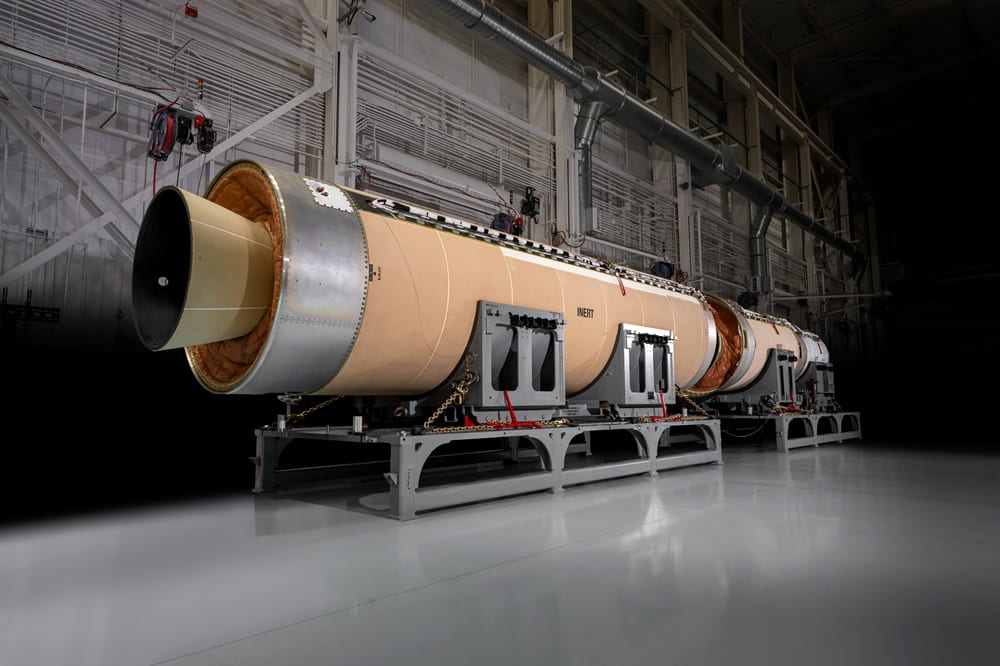
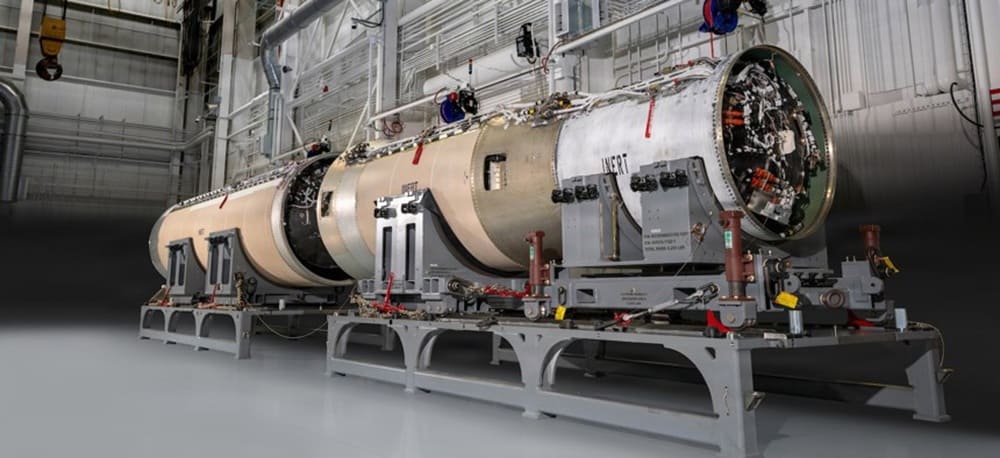
The Sentinel ICBM program has reached a more believable technical stage when it comes to missiles. Northrop says the propulsion system is complete and tested, the first three-stage booster is assembled, and solid rocket motors for the first five flight tests are in production. It has also finished tests for interstage separation, a shroud fly-off, and early guidance and control validation in conditions that are similar to flying.
One thing stands out. According to Northrop Grumman, the composite solid rocket motors in Sentinel are about 70% lighter than those in Minuteman III. That should help with the efficiency of the payload and the range margins, but the main point is that industry needs to be able to repeat itself. The most recent update to the Northrop Grumman program and the Air Force Sentinel fact sheet both show that the missile is part of a much larger system for deterring attacks.
The schedule may still depend on infrastructure. The Air Force says that the full-scale silo prototype will help prove a modular, repeatable building method before they make 450 new silos at full rate. That is crucial because if silos, utility corridors, and launch support systems fall behind, a modern missile won’t be able to stop an attack in time. In this program, the speed of construction is the strategy.
Industrial Scale vs Technology
The quieter parts of the system are also important to the Sentinel ICBM program. The Launch Support System has finished its critical design review, and the transport hardware has already been tested across the country. Those milestones aren’t as exciting as a motor firing. They are important, though, because strategic missiles only work as weapons when movement, command, and field support are all ready at the same time.
The Sentinel ICBM program also depends on whether U.S. industry can keep making things over time. According to Northrop, the project now has over 500 partners and more than 10,000 people working on it. It also says that in the past five years, it has spent $13.5 billion on infrastructure and research and development, including $2 billion on solid rocket motor capacity. In a long competition, that depth of industry is itself a form of deterrence.
The planned first pad launch in 2027 is the next big event. If that comes on time, people will quickly gain faith in the fielding target for the early 2030s. Doubts will return just as fast if it slips. Right now, the main point is clear: the Sentinel ICBM program is finally making enough progress on its visible hardware to make the timeline look more believable than it did a year ago.
References
- Northrop Grumman — Sentinel programme update
- Air Force Global Strike Command — restructure and 2027 launch timeline
- U.S. Air Force — silo prototype and 450-silo fielding plan
- Air Force Nuclear Weapons Center — Sentinel fact sheet
About the Author