Sapsan Missile 2025 — Ukraine’s Strike Autonomy
Ukraine wants long-range strike options it can build and employ on its terms. Western missiles have helped, but supplies come in batches, and policy rules can shift. Therefore, a home-produced ballistic missile changes both the military math and the politics of escalation.
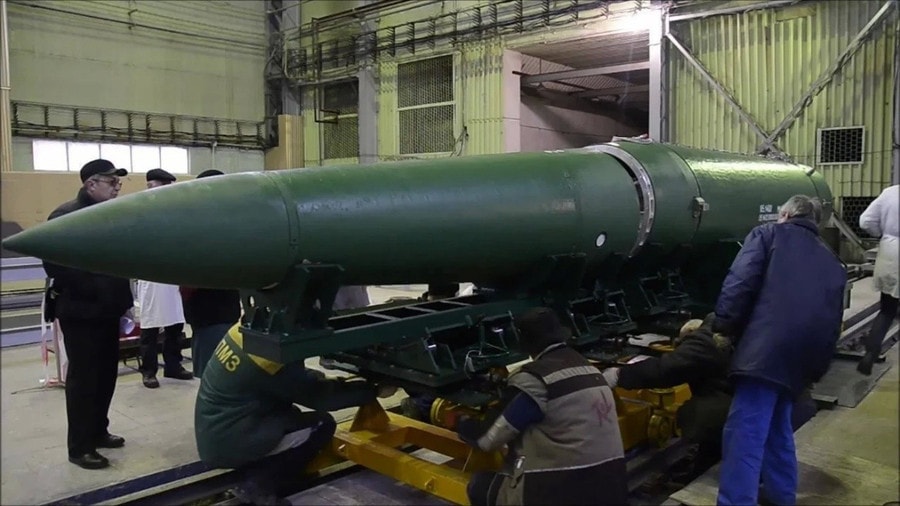
That shift now centers on the Sapsan ballistic missile program. Recent public remarks link Sapsan to battlefield use and serial production, while officials keep the numbers classified. Moreover, that restraint is logical. Once a capability turns operational, silence can protect launchers, depots, and production nodes.
Ukraine’s statements: key dates
On 27 August 2024, President Volodymyr Zelenskyy said Ukraine had successfully tested its first domestically made ballistic missile at the “Ukraine 2024. Independence” forum. He did not name the missile, yet the timing lines up with reporting that Ukraine had moved into flight testing.
In early December 2025, Zelenskyy went further. He listed several indigenous strike systems and then said Ukraine had begun using Sapsan, adding that he would not disclose quantities. Consequently, social media claims of a “stockpile” may indicate accumulation, but they do not confirm size.
Reported 2022–2025 timeline
Open reports attribute a detailed timeline to Oleksandr Liev, a former senior defense procurement official. It says Ukraine signed the first state contract for the 1KR1 Sapsan operational-tactical missile system in August 2022. It then describes initial tests in 2023, the first test employment in 2024, and systematic use plus mass/serial production in 2025.
This arc fits Ukraine’s broader push to finance production at home. In addition, Ukraine’s wartime budgets increasingly prioritize weapons output. For context, see Reuters reporting on Ukraine’s 2025 budget and weapons-production allocations.
Sapsan vs Hrim-2: likely link, unproven
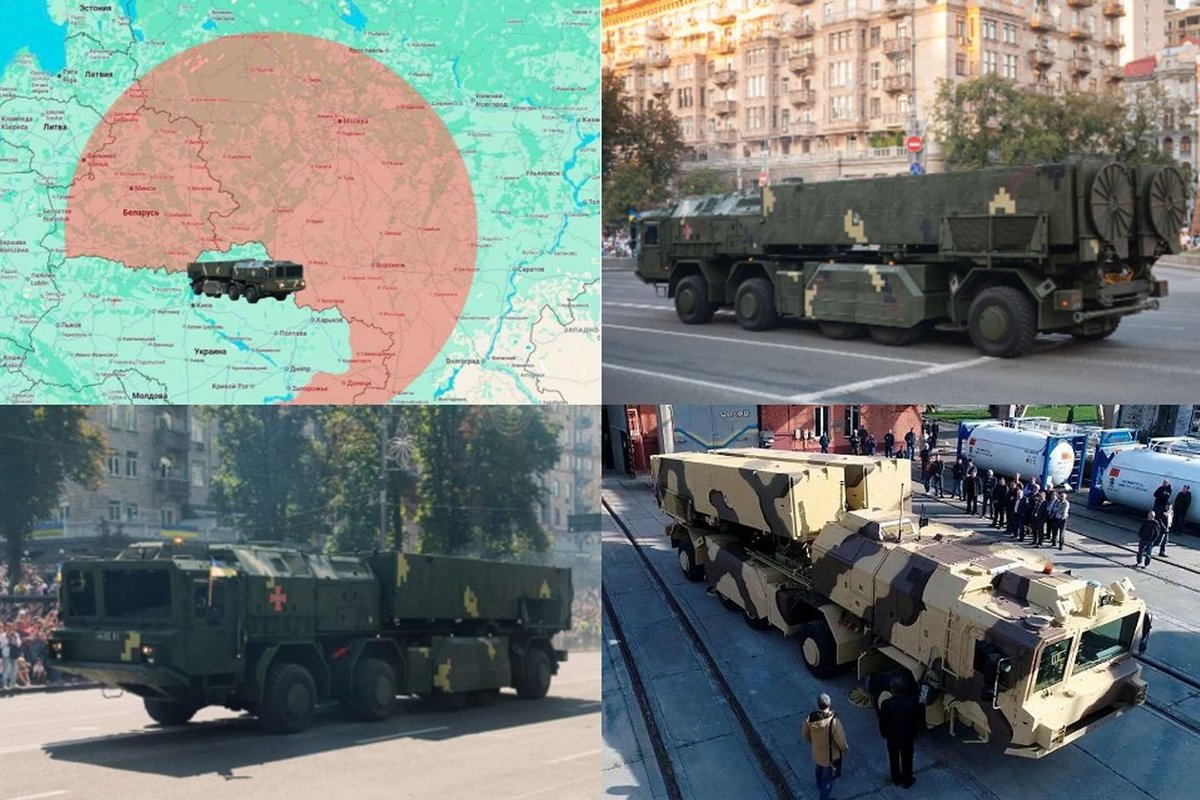
Analysts often connect Sapsan to the long-running Hrim-2 (Grom-2) development line. That link looks plausible; however, Ukraine has not published a full technical lineage. Still, reporting repeatedly ties the program to KB Pivdenne (Yuzhnoye Design Bureau) as the designer and Pivdenmash (Yuzhmash) in Dnipro as a key industrial base. That shared ecosystem supports the “same family” thesis, even if labels evolve.
Open reports: capability bracket
Most descriptions place Sapsan in the short-range ballistic missile category, optimized for precision strikes. They emphasize a range near 300 km, which suits operational targets in occupied territory and near-border staging areas. Importantly, older program descriptions also mention two notional variants: a domestic missile with a reach up to about 500 km and an export-oriented version near 280 km to align with Missile Technology Control Regime thresholds. You can review the baseline MTCR thresholds at the official MTCR site.
Open-source estimates often cite a ~500 kg class warhead, suitable for high-explosive or penetration effects against depots, command posts, and runway infrastructure. They also describe inertial navigation with optional satellite correction. Some reporting mentions multiple terminal seeker concepts (electro-optical, infrared, radar, and combined). If Ukraine fields a terminal seeker, it can widen target options and reduce dependence on perfect coordinates.
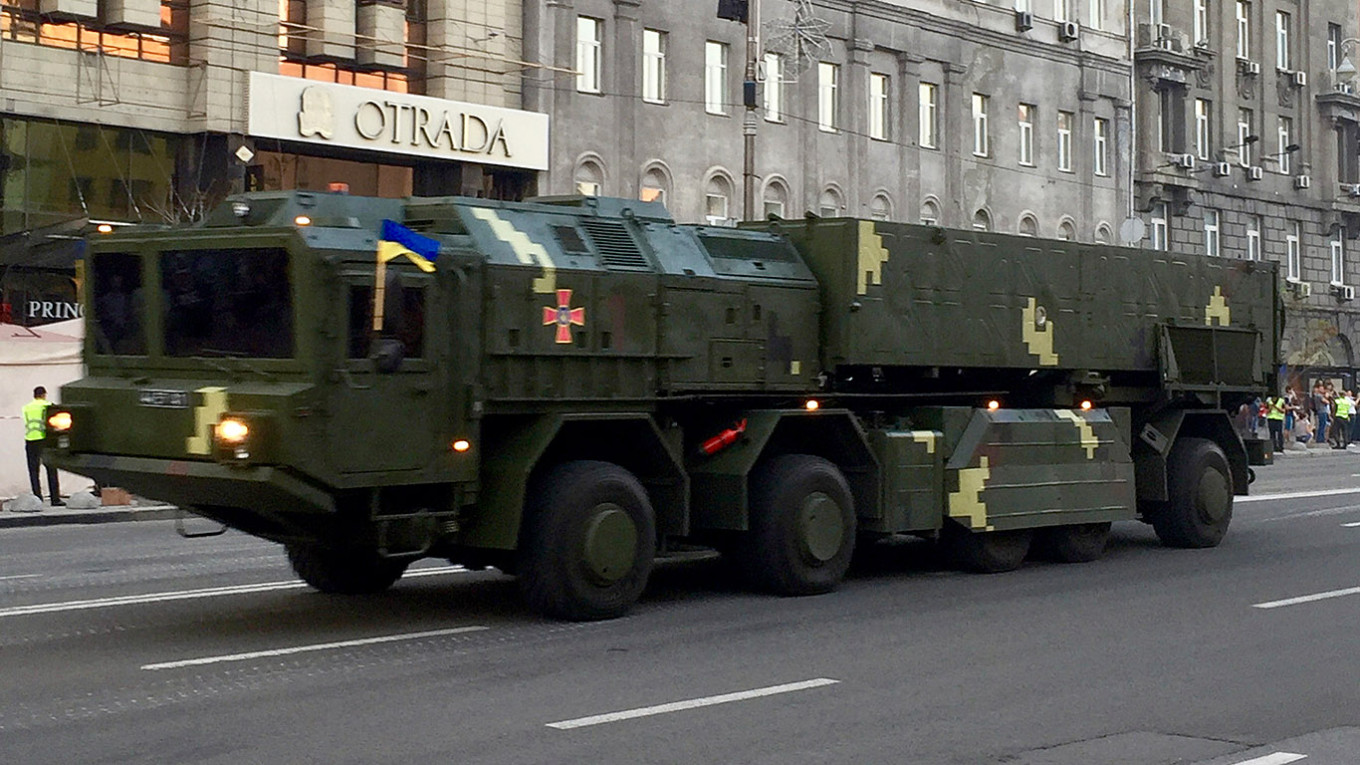
Survivability depends on mobility. Therefore, sources commonly describe a wheeled transporter-erector-launcher (often 6×6 or 8×8) with short setup times. A road-mobile TEL supports shoot-and-scoot tactics, which complicate Russian counterstrike planning.
Sapsan Missile vs Iskander Missile
Ukraine keeps Sapsan details highly classified, so several fields (especially dimensions, weight, and accuracy) are best treated as open-source estimates rather than confirmed figures.
| Spec | Ukraine Sapsan (1KR1) / Hrim-2 (open-source reported) | Russia Iskander-M (9K720 / 9M723) |
|---|---|---|
| Class/role | Short-range ballistic missile system (operational-tactical) | Short-range ballistic missile system |
| Origin | Ukraine | Russia |
| Developer | Pivdenne (Yuzhnoye) Design Bureau (reported) | KBM (Kolomna) |
| Manufacturer | Pivdenmash (Yuzhmash) (reported) | Votkinsk Plant (commonly cited for missiles) |
| Basing | Road-mobile | Road-mobile |
| Range | ~300 km reported; some reporting suggests up to ~500 km (domestic) | ~400–500 km (Iskander-M); ~280 km export (Iskander-E) |
| Warhead/payload | ~480–500 kg class (reported) | ~480–700 kg class (variant-dependent) |
| Warhead types | Conventional strike payloads reported (details not confirmed) | HE, submunition, penetrator, thermobaric (variant-dependent) |
| Propulsion | Single-stage solid fuel | Single-stage solid fuel |
| Length | Often described as ~10 m class (not confirmed) | ~7.3 m |
| Diameter | Often cited around ~0.9 m (not confirmed) | ~0.92 m |
| Launch weight | Not confirmed; open sources vary | ~3,800–4,020 kg |
| Guidance/nav | Typically described as inertial with optional satellite correction (not confirmed) | Inertial with GLONASS updates; some sources cite terminal optical seeker options |
| Accuracy (CEP) | Not confirmed publicly | Commonly reported in the tens of metres (variant/guidance-dependent) |
| Missiles per TEL | Often reported as 2 per TEL | 2 per TEL |
| Status (2025) | Reported as entering serial production and combat use (details classified) | Long-operational, widely fielded |
Battlefield impact
Ukraine has used ATACMS and Storm Shadow/SCALP, yet availability and employment rules always shape planning. By contrast, the Sapsan ballistic missile program grants Kyiv sovereign control over training, targeting policy, and surge production. That autonomy matters even if early output remains limited.
Sapsan also forces Russia to hedge. Even a modest inventory can make rear-area basing riskier, because ballistic flight profiles compress warning time. Consequently, Russia may harden sites, disperse stocks, or move command nodes farther back. Each adaptation consumes time, transport, and air-defense coverage.
Production under fire
Ukraine’s primary hurdle is steady production while Russia strikes industry and power infrastructure. Moreover, modern guidance packages and electronics can require components that are difficult to source under wartime pressure. Still, Ukraine has shown it can scale complex systems when money and policy align.
For an industry parallel, see our Defence News Today analysis of cruise missile engine supply chains and bottlenecks. Likewise, our explainer on one-launch, many-intercepts missile-defense concepts shows how “magazine depth” and industrial pace shape outcomes.
Key indicators to watch
Watch for repeated, time-stamped official references across months, not one-off lines. Also look for credible reporting on serial output rhythms. Finally, track Russian basing behavior in occupied areas, because actions often reveal perceived risk. Ukraine will likely keep technical details tight. Nevertheless, the strategic message already stands: Ukraine aims to own its long-range strike chain from design to launch. In short, that is the real significance of the Sapsan missile.
References
- https://www.ukrinform.net/rubric-ato/4067902-zelensky-confirms-use-of-sapsan-ballistic-missile.html
- https://militarnyi.com/en/news/zelensky-ukraine-successfully-tests-first-ballistic-missile/
- https://www.reuters.com/markets/europe/ukraines-parliament-approves-2025-budget-boosts-funds-defence-efforts-lawmaker-2024-11-19/
- https://mtcr.info/
About the Author