Admiral Kuznetsov
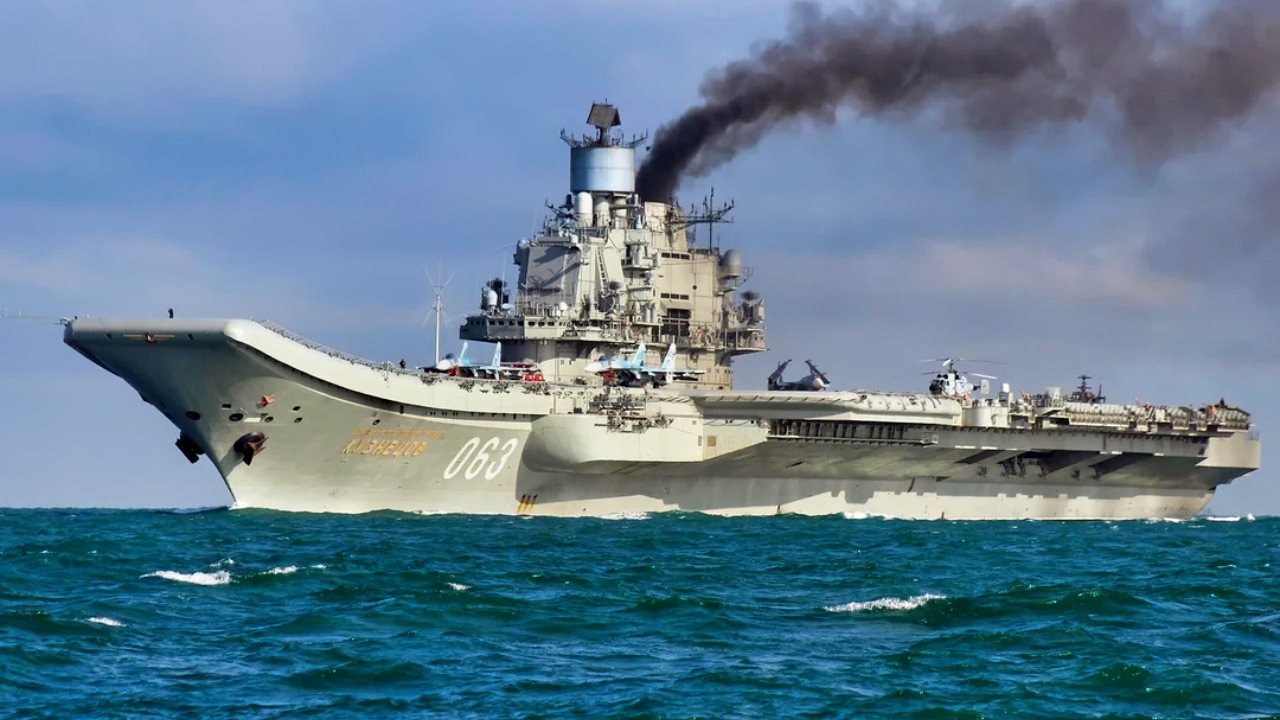
Russia’s only aircraft carrier, the Admiral Kuznetsov, appears headed for retirement after decades of persistent setbacks, spiraling costs, and operational embarrassment. With mounting evidence from Russian sources, including military-focused Telegram channels like BTVT.INFO, it’s becoming increasingly clear that Russia may abandon further attempts to restore the troubled vessel.
Admiral Kuznetsov’s repairs are halted.
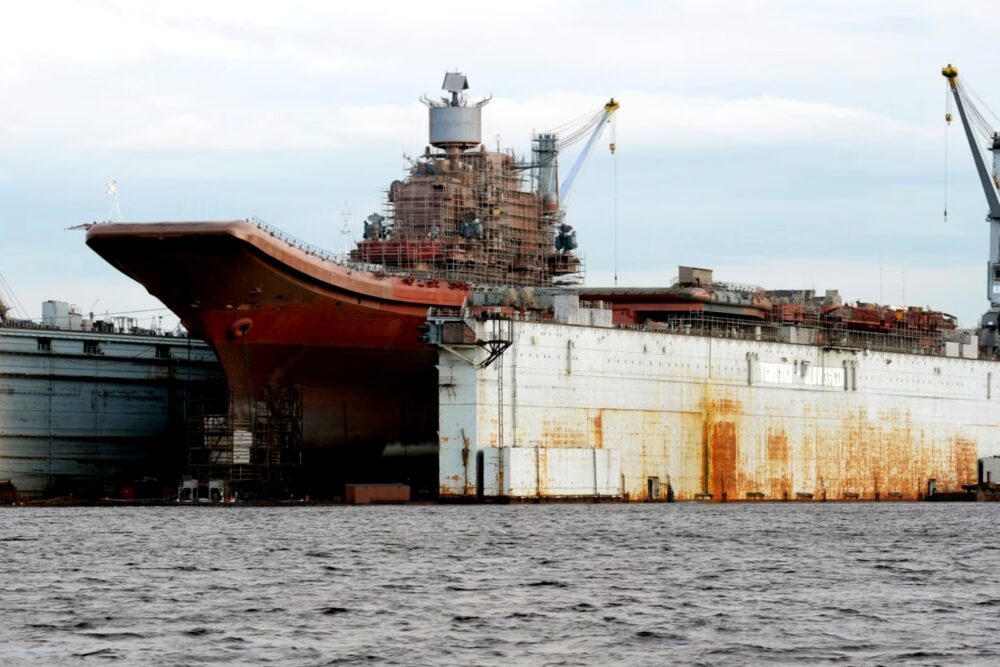
Multiple Russian defense analysts now confirm that repair work on the Admiral Kuznetsov has effectively ceased. According to BTVT.INFO, sources within the Russian armed forces suggest that the vessel might be scrapped altogether. This development is a major departure from earlier ambitions to fully modernize the ship and return it to frontline duty.
Ironically, this outcome may benefit the Russian Navy in the long run. The carrier has depleted financial resources without yielding any strategic benefits. Insiders speculate that the conversion of the ship into a floating museum could be a desperate attempt to preserve its public and symbolic value.
A Record of Delays and Disasters
Delays, accidents, and underfunding have plagued the Admiral Kuznetsov since the late 1990s. The first major overhaul began in 1996 but stalled due to financial constraints. A second, more ambitious refit launched in 2017 aimed to replace outdated boilers, refurbish gas turbines, and modernize onboard systems.
However, deadlines repeatedly slipped. Initially planned to re-enter service in 2021, the carrier missed that mark, with revised targets pushed first to 2023, then 2024. Meanwhile, estimated repair costs ballooned from 50 billion to over 100 billion rubles.
Catalogue of Catastrophes
Several high-profile accidents have turned the Admiral Kuznetsov into a symbol of dysfunction in Russia’s defense industry. In 2018, a floating crane collapsed onto its deck, punching a large hole and sinking the PD-50 dry dock—a key facility for naval repairs.
In 2019, a fire on board caused by welding work killed two personnel and injured 14 others. Damage from this single event exceeded half a billion rubles. A subsequent fire in 2022, which occurred shortly after the ship’s relocation to a quay, intensified the delays.
Adding to the complications, all four gas turbine units had to be replaced rather than just one, as initially forecast. This unexpected task, combined with the absence of a crew by 2023, severely disrupted repair schedules and raised fresh doubts over the feasibility of restoring the vessel.
Russian military circles split.
Not all Russian defense experts agree on the ship’s future. Former Pacific Fleet commander Admiral Sergei Avakyants has openly called for the cancellation of further upgrades, advocating instead for investment in unmanned systems and smaller, more agile naval platforms. On the other hand, Captain First Rank Vasily Dandykin continues to champion the importance of aircraft carriers like the Admiral Kuznetsov, arguing they remain vital for sustaining Russia’s maritime influence.
Limited Value, Poor Performance
In terms of operational deployment, the Admiral Kuznetsov has contributed little to Russia’s strategic power. Its most notable combat role came during the Syrian campaign of 2016–2017, when it launched Su-33 and MiG-29K sorties from the Mediterranean. However, technical failures during landings resulted in the loss of two fighter jets, casting doubt on the ship’s readiness. Beyond Syria, the vessel primarily participated in naval exercises and flag-showing missions across the Barents Sea, Black Sea, and Atlantic Ocean.
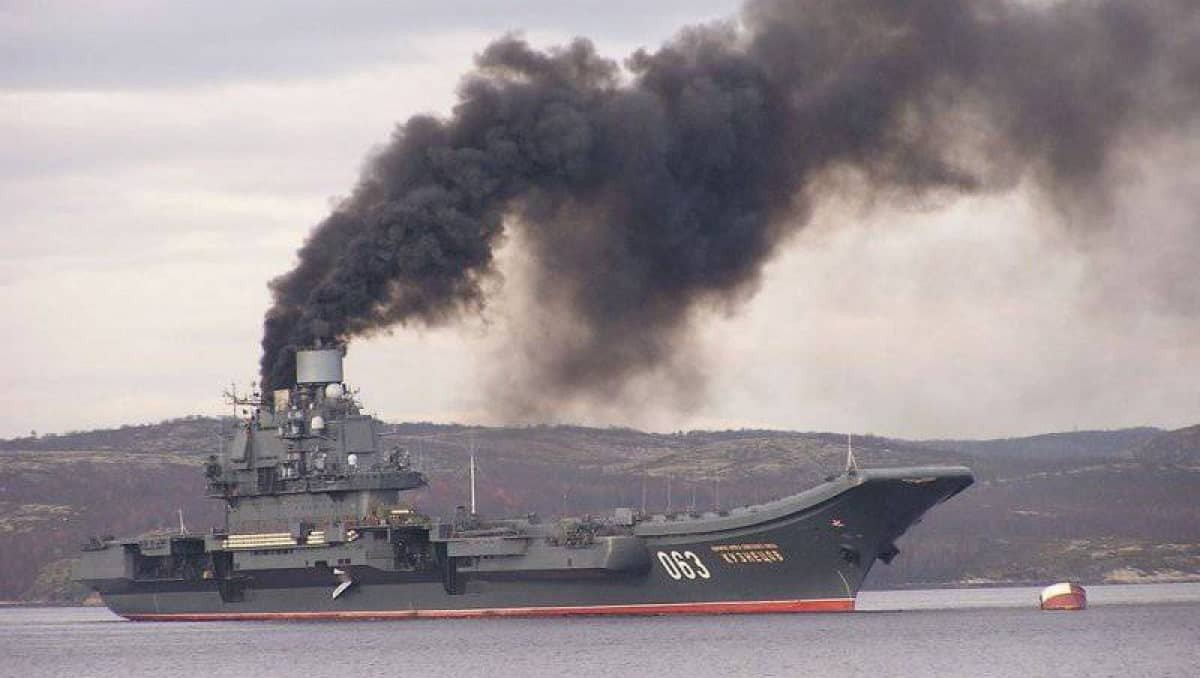
Throughout the 1990s and early 2000s, financial difficulties kept it largely anchored or under repair. Despite its design to accommodate 40 aircraft, mechanical issues and crew shortages often limited its deployment to less than half that number. The ship’s infamous smoke-belching engines also became a point of ridicule, often earning it comparisons to floating factories rather than modern warships.
Russia’s Carrier Plans in Doubt
The looming retirement of the Admiral Kuznetsov casts doubt over Russia’s long-touted ambitions to build a next-generation carrier. While Kremlin officials have spoken repeatedly of developing a replacement, no serious progress has been made.
One such plan, Project 23000E Shtorm, proposed a supercarrier on par with the U.S. Gerald R. Ford class. With a projected displacement of up to 100,000 tonnes and capacity for 90 aircraft—including a navalized Su-57—it seemed bold. However, by 2020, the $5.5 billion project remained unapproved, with no shipyard in Russia capable of such construction.
Funding and Infrastructure Constraints
A key limitation is infrastructure. Soviet carriers, including the Admiral Kuznetsov, were built in Mykolaiv—now part of Ukraine. Proposals to establish new shipyards in Severodvinsk or Vladivostok have stagnated, and none has materialized even as of 2025.
Sanctions and the ongoing war in Ukraine have worsened Russia’s economic situation, further constraining its military-industrial capabilities. Even if greenlit, a new carrier would likely take over a decade to complete, and staffing it would present a fresh set of challenges.
Focus Shifts to Amphibious Forces
Given these hurdles, the Kremlin seems to be recalibrating its naval strategy. The Kremlin is currently developing the Ivan Rogov-class (Project 23900) amphibious assault ships, viewing them as more feasible assets. Now under construction in Crimea, these ships will transport helicopters and UAVs. They will support coastal missions, not global power projection. This shift fits Russia’s long-standing naval doctrine more closely. It prioritizes submarines and littoral defense over blue-water dominance.
Conclusion: Kuznetsov’s Final Chapter?
With repairs halted, costs skyrocketing, and operational utility in question, the Admiral Kuznetsov appears destined for retirement. Its story is a stark reflection of Russia’s post-Soviet naval decline and the immense challenges of maintaining carrier-based power in a shifting geopolitical and economic environment. Unless a breakthrough emerges, the era of Russian aircraft carriers may be drawing to a quiet and costly close.
References
- https://www.thedrive.com
- https://www.navalnews.com
- https://t.me/BTVTinfo
- https://www.krasnaya-zvezda.com
About the Author