
Russia’s Motorcycle Tactics in Ukraine
Reshaping the Battlefield
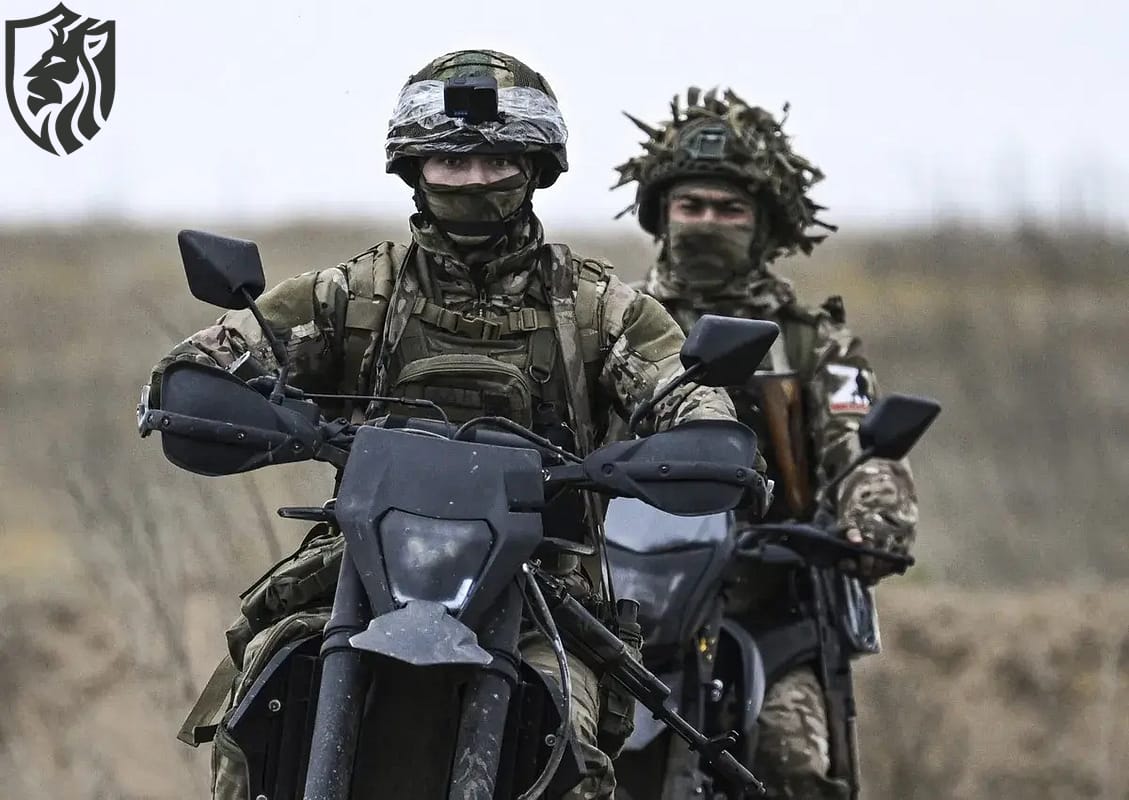
The Russian motorcycle tactics employed in Ukraine have created new patterns for combat operations during close battles. The method uses speed instead of armour protection, spreads danger across multiple areas, and takes advantage of environments with excessive sensor coverage.
The use of motorcycles in Ukraine creates difficult challenges for NATO forces regarding their ability to protect their troops and their need to counter unmanned aerial systems and make quick military choices.
Motorcycle Solving Battlefield Problems
Armoured pushes now face drones, loitering munitions, and precise artillery. Visibility is high; signature equals risk. Russian moto tactics in Ukraine trim that signature, move fast between microcovers, and accept survivability through mobility rather than plating. Therefore, these units can probe gaps, feint, and pivot before the defenders can mass their fires.
How the units operate
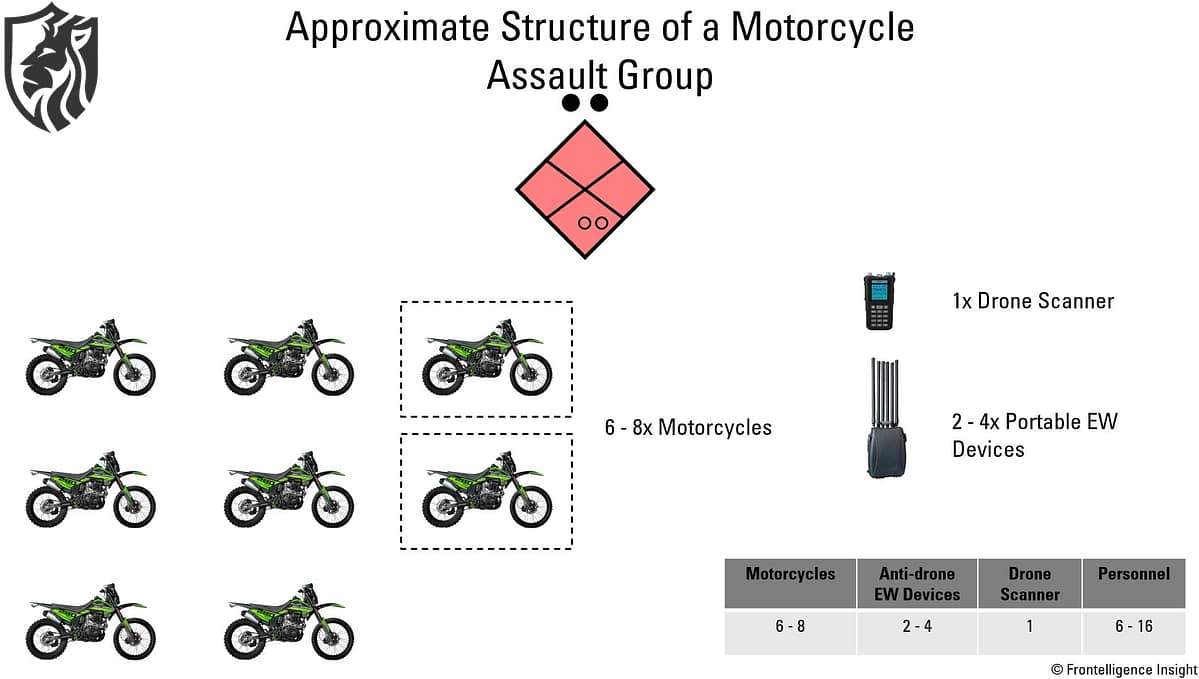
Small teams ride six to eight bikes with one or two riders each. They run flanking probes, route reconnaissance, quick sabotage, and casualty backhaul. Russia’s motorbike tactics in Ukraine emphasise short, violent acts and immediate displacement. Moreover, teams carry lightweight electronic warfare (EW) sets to blunt Ukrainian quadcopters and FPV drones.
TTPs seen at the front
- Approach: off-road lines that avoid obvious kill zones and minebelts.
- Effect: rapid ingress to a flank, quick strike, then scatter.
- Protection: EW jammers and basic drone-alert devices, plus dispersion and speed.
- C2: simple, pre-briefed plays with short voice or data bursts to reduce intercept risk.
Technology and logistics behind the tactic
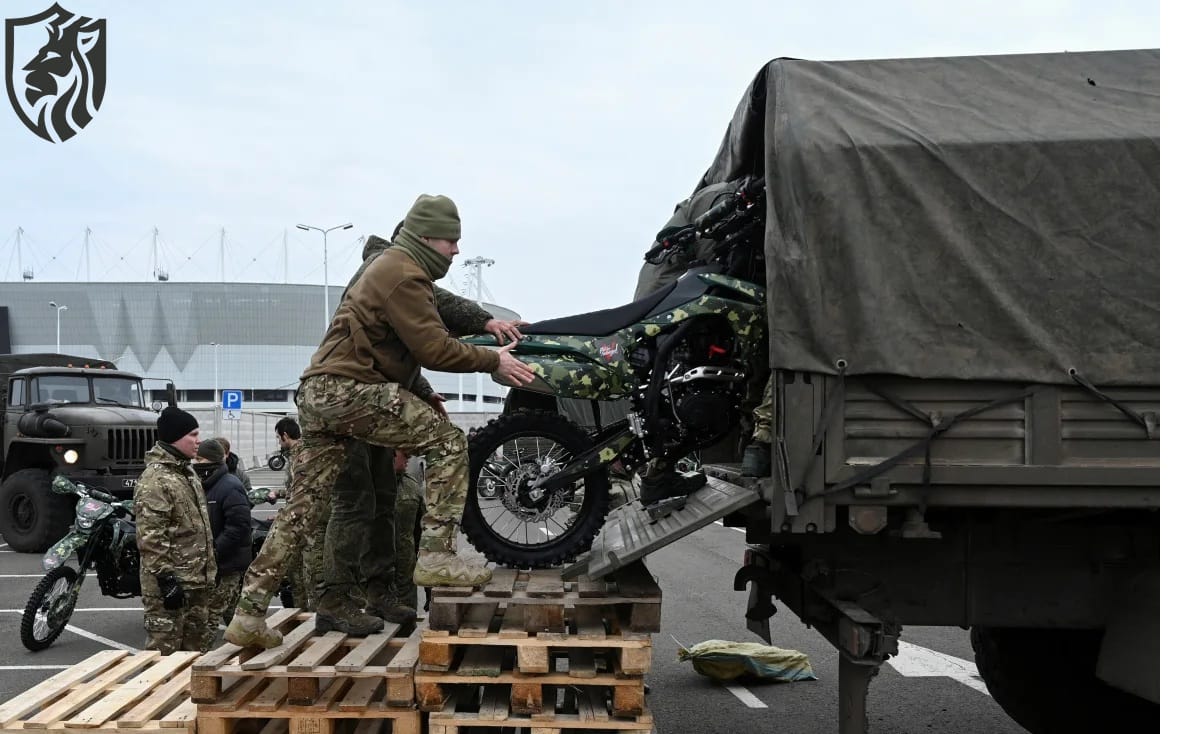
Most bikes are inexpensive, rugged, and easy to repair in the field. Volunteer networks source them in volume. The Kremlin’s motorbike tactics in Ukraine rely on plentiful spares, simple maintenance, and the ability to cannibalise parts. Additionally, portable EW packs jam control links, while handheld RF scanners cue riders to nearby drones.
From Blitzkrieg to Drones: Motorcycles Then and Now
German military units during World War II employed motorcycles to transport scouts and messages and light infantry at high speeds. The combination of MG-34s in sidecars and riders’ ability to navigate through traffic jams allowed columns to maintain their fluid movement, which suited the fast-paced nature of blitzkrieg.
The military used motorcycles to attach armoured units that broke through enemy lines. The Russian military today implements similar tactics through drone operations and precise artillery strikes. Modern motorcycles operate without armour protection because they use their speed to navigate through forests, execute reconnaissance missions, supply runs, and conduct medical evacuations.
The military uses dispersion tactics and quick manoeuvres combined with portable jamming technology to counter quadcopter surveillance. The current military strategy prioritises practicality over sentimentality. Survival on modern battlefields depends on possessing a smaller size, lower costs, and slightly improved speed capabilities.
Ukrainian counters
Ukraine has adapted fast. FPV hunter-killer teams now stalk riders across open ground. Thermal optics, cueing sensors, and layered minefields shape routes and create kill baskets. Such motorcycle tactics do achieve surprise, yet Ukrainian FPV cells punish predictable patterns. Consequently, defenders force riders into fire sacks or channel them onto observed lanes.
Field reports in mid-2025 described FPV sections destroying multiple bikes in a single contact and breaking a reconnaissance push. The vignette underlines a key truth: mobility helps, but it is not armour.
Training leads to institutionalisation.
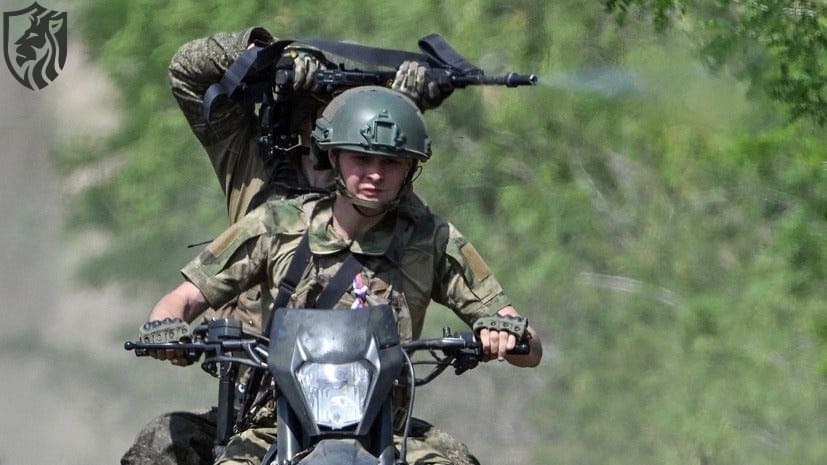
Motorised infantry courses now teach high-speed manoeuvring, terrain reading, and drone evasion. Riders practise short-halt drills, the use of smoke, and immediate actions in response to quadcopter threats. Russia’s motorcycle tactics in Ukraine appear set to endure because the training pipeline bakes them into unit DNA.
Interpretation for NATO
NATO forces face similar sensors and precision fires. Therefore, mobile light forces will matter alongside armor. Russia’s motorcycle tactics in Ukraine point to two urgent tasks: deny micro-mobility to attackers and preserve micro-mobility for defenders.
NATO counters to prioritise
- Counter-UAS at the lowest echelon: organic jammers, shot detectors, and drone hunters.
- Rapid sensor-to-shooter links: push AI-assisted cueing from ground sensors to FPV sections.
- Smart obstacle plans: mines and obstacles tied to live ISR, not static diagrams.
- Base and convoy defences: thermal pickets, acoustic alerts, and short-range drones on quick-reaction standby.
- Training and doctrine: the red team with motorcycle and UTV cells to stress defending units in exercises.
Urban and wooded terrain: a mixed picture
Towns offer concealment but reduce speed. Woods provide cover yet complicate coordination. Eventually such moto tactics in Ukraine thrive on edge terrain—tree lines, hedgerows, and sunken lanes. Hence, NATO defence plans should treat these features as probable ingress routes and pre-plot FPV loiter points.
Risk, cost and scale
A bike costs a fraction of an IFV. Losses are tolerable when units can replace platforms quickly. Such Russian tactics in Ukraine convert money into tempo, not protection. However, rider survivability drops under sustained small arms, fragments, and accurate FPV intercepts.
Limits and vulnerabilities
Speed fades in mud, snow, and churned fields. Noise and dust create cues for sensors. Russia’s motorcycle tactics in Ukraine also depend on EW that usually offers limited protection. Consequently, defenders who fuse RF detection, thermal sights, and FPV patrols can attrit riders at an acceptable cost.
What to watch next
- Expansion of motor-infantry course hours and syllabi.
- Wider distribution of pocket EW sets and drone finders.
- More logistics runs by bike, including urgent CASEVAC.
- Ukrainian publication of refined counter-motor TTPs and FPV playbooks.
- NATO exercises that add motorcycle or UTV “red cells” as standard.
Practical doctrine for planners
First, assume attackers will attempt micro-mobile infiltration on day one. Second, pre-assign FPV hunters to named avenues of approach. Such tactics in Ukraine show that time-to-engage beats caliber. Finally, treat sensors as weapons—own the RF spectrum, and you own the route network.
Conclusion
Motorcycles function as speed-enhancing tools instead of providing protective armour for soldiers. The Russian military uses speed and sensor gaps and target dispersion to achieve their battlefield objectives. The Ukrainian military demonstrates that FPV hunters combined with layered detection systems can defeat mobile forces through precise timing of their attacks.
NATO needs to understand the complete lesson, which consists of two essential parts. The military needs to develop fast-moving light forces that operate under drone surveillance while maintaining defensive capabilities to detect and eliminate micro-mobility raiders.
The implementation of new doctrine requires simultaneous changes in training methods and equipment acquisition. The side that first unites sensors with shooters at the smallest scale will control the upcoming close combat.
References
- https://www.nato.int/cps/en/natohq/topics_187839.htm
- https://rusi.org/explore-our-research/projects/war-ukraine
- https://www.iiss.org/publications/the-military-balance (context on force trends)
- https://www.csis.org/analysis/ukraine-war (analytical hub on adaptation)
About the Author