
Russia’s €1B Aviation Sanctions Evasion
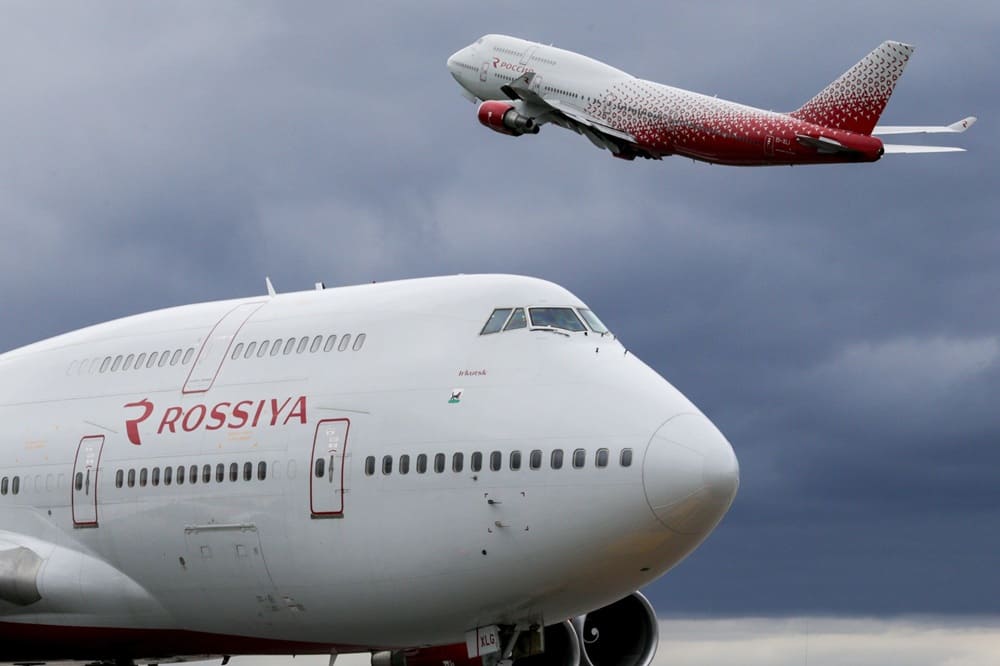
The international aerospace community has been startled by a startling revelation of the effectiveness of Western export controls in recent times. Russia has managed to import nearly €1 billion ($1.2 billion) of Boeing and Airbus parts despite sweeping bans aimed at grounding the Kremlin’s air fleet. This complex operation highlights the continued challenges surrounding aviation sanctions evasion in a globalized economy. Moscow kept its civilian fleet afloat with a shadowy network of intermediaries from February 2022 to September 2024.
Bypassing Aviation Sanctions
The scale of this procurement is huge, according to data obtained by Finnish media outlet Yle. More than 4,000 discrete shipments of aircraft hardware to Russian territory were found by investigators during the specified time period. These deliveries were not restricted to low-value consumables; they included high-value assets such as turbofan engines, advanced radar arrays, and essential avionics. Also included in the shipments were routine cabin equipment and seat cushions. Such a wide variety of inventory shows that Moscow’s aviation sanctions evasion strategy is both broad and well-planned.
More than 360 independent companies around the world facilitated these transactions. Some entities processed a few orders, and some processed hundreds of shipments in two years. The result is that the decentralized nature of this network makes it very difficult for Western regulators to police every single transaction. The trade volume indicates that the Russian aviation industry is far from collapse, as many Western economists predicted at first.
Corporate Hubs and Middlemen
The United Arab Emirates (UAE) has emerged as the main logistics hub for these banned goods. Statistics show that almost a third of all diverted aircraft parts pass through the UAE. These companies are operating in a legal grey zone, as the Emirati government has not imposed its own sanctions on Moscow. Also, countries such as China, Turkey, and Gabon are important transit points for Western-produced hardware. These third-country enablers effectively undermine the impact of EU and US export restrictions through continued evasion of aviation sanctions.
Airbus and Boeing both say they comply fully with all international legal frameworks. Airbus recently said there is no legitimate way to export documentation or spare parts into the Russian Federation. “Similarly, Boeing said in early 2022 it had stopped all technical support and maintenance services. But the presence of authentic parts in Russia indicates that the secondary and tertiary markets remain very porous. This means that once the products of the manufacturers leave their authorized distributors, they face an uphill battle in trying to control the destination of their products.
Seized Jets, Stripped Parts
As the Ukraine conflict escalated, Russia effectively nationalized a huge fleet of Western-leased aircraft. Carriers ignored cancellations of contracts and re-registered some 500 jets under Russian jurisdiction. Experts estimate that this “expropriated” fleet is worth some €10 billion ($11.7 billion). To keep these machines going, the Kremlin relies on a mix of smuggled commodities and internal scavenging. The fleet-management approach is desperate, and this is a direct consequence of successful but partial aviation sanctions evasion.
Earlier in the war, Russian carriers, including Aeroflot, began to “cannibalize” their existing fleet, stripping it for parts. Analysts estimate Aeroflot grounded around 15% of its fleet, including modern Airbus A350s and Boeing 737s, to supply parts for other airframes. But this internal scavenging is a temporary solution. It is the ongoing need for certain microchips and engine components that preserves the dependency on the secret supply chains disclosed in the Yle report.
Technical Risks Ahead
The use of unverified supply chains poses major safety concerns for the traveling public. The use of back-channel supplies presents huge aviation security risks, according to Professor Stephen Wright of Technological University Dublin. There were 37 recorded safety incidents involving Russian aircraft in 2022 and 81 in 2023. This spike coincides exactly with the shortage of authentic parts and the growth of aviation sanctions circumvention. But without the official technical data, it is almost impossible to maintain these complicated machines to international standards.
Also, the line between civilian and military aviation is becoming more and more blurred. Many of the imported components are for civilian use, but dual-use technologies, including electronics and radar systems, could easily upgrade military platforms. This crossover is a worry for defense experts who monitor the industrial capacity of Russia. The Russians don’t currently have the internal manufacturing base to replace Western aerospace technology. So the state needs to continue its aviation sanctions evasion efforts to prevent a complete halt of its transport infrastructure.
Strategic Security Impact
Given the survival of these supply chains, Western governments are now contemplating imposing stricter secondary sanctions in the near future. The EU and the US could logically then move to redlist third-country intermediaries in the UAE and Turkey. But such moves pose significant diplomatic risks and could harm relations with key regional partners. “Effectively stopping aviation sanctions evasion requires a degree of global cooperation that does not currently exist.”
In the end, the Russian aviation industry is surviving through sheer persistence and a global network of middlemen. With the fleet getting older and the supply of cannibalized parts dwindling, the pressure on these shadow networks is only going to grow. As Professor Wright aptly put it, Russia can fly for now, but it cannot fly safely or forever. Their runway will only be as long as it takes for Western enforcement to close the remaining loopholes of the global trade system.
References
- https://yle.fi/a/74-20111456
- https://www.reuters.com/business/aerospace-defense/russia-spends-billions-bypass-western-jet-parts-ban-2023-11-20/
- https://www.theguardian.com/world/2022/mar/15/russia-moves-to-seize-hundreds-of-leased-jets
- https://www.bloomberg.com/news/articles/2024-01-15/russia-s-airline-safety-incidents-double-as-sanctions-bite
About the Author