Russian Warships Enter Jakarta With Submarine
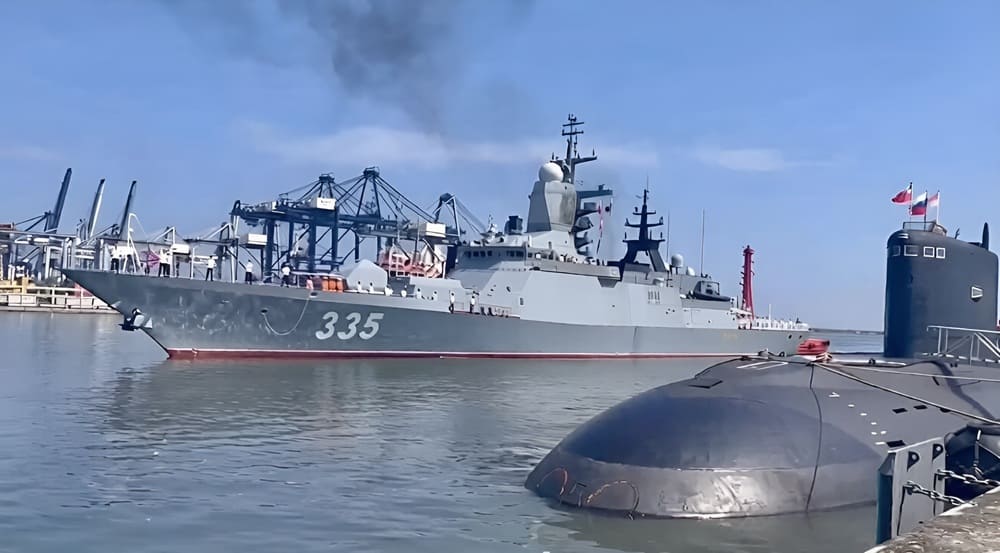
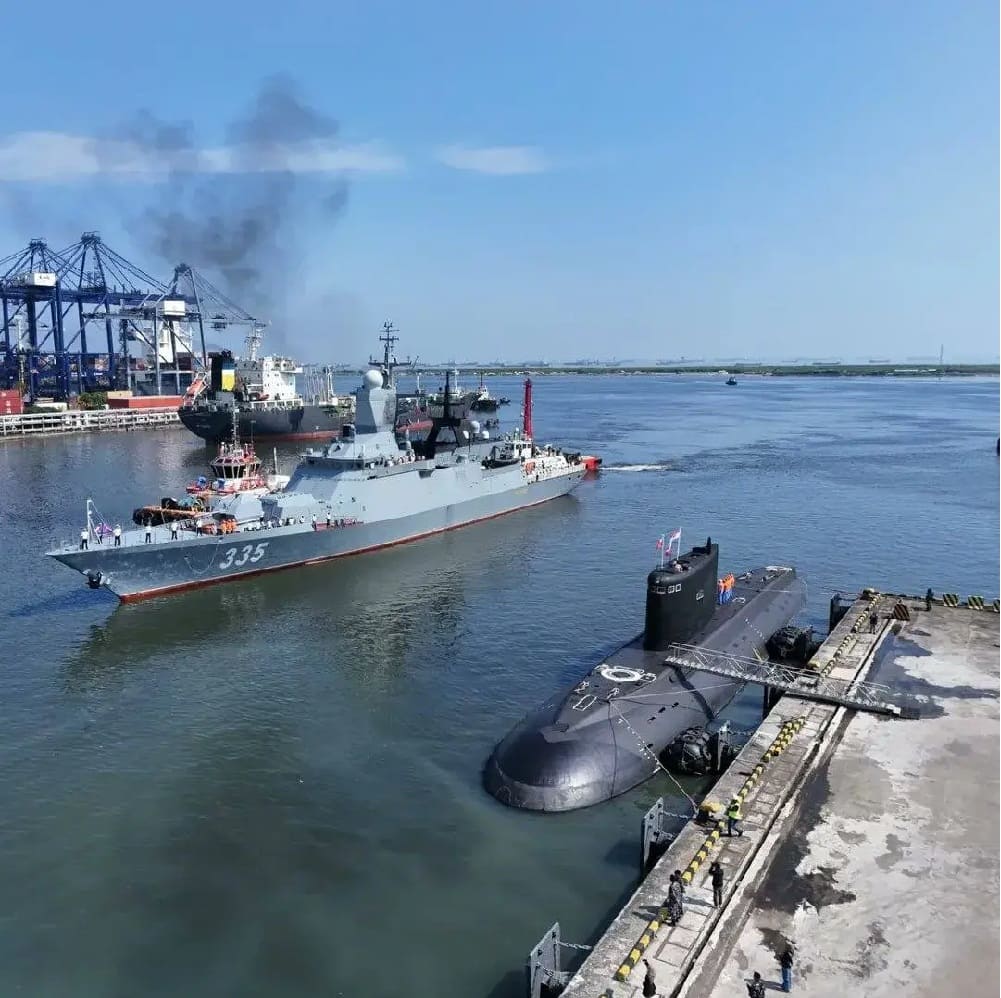
For a brief encounter with the Indonesian Navy, Russian warships and a submarine have arrived in Jakarta. But compared to a standard courtesy call, the visit has far greater significance. Tanjung Priok received the tug Andrey Stepanov, the corvette Gromky-335, and the submarine Petropavlovsk-Kamchatsky B-274 from Moscow. Officials characterized the exercise as a communication and maneuver drill rather than a combat drill.
Nevertheless, the visit has a clear strategic meaning due to the combination of platforms. The main details in the original text are consistent with the ANTARA report and other coverage. A single Corvette would have had a symbolic appearance. The optics are altered when a submarine is added. Even when they are quietly in port, submarines convey their ability to be stealthy, resilient, and sea-denying. Thus, the project for Russian warships and a submarine in Jakarta
Why It Matters
The announced drill will focus on movement and communication. That sounds simple on paper. It is not in naval practice. These drills check how well crews can signal, handle ships safely, keep their formations in order, and make decisions. They also help people get ready for future trips at sea. So, even a small amount of involvement can build trust without making formal interoperability or alliance commitments. That is why this event appears to be tactically narrow but strategically loaded. It helps both navies get to know each other better while keeping the public message calm and non-threatening.
Indonesia’s Naval Balancing
The real message from Indonesia may be more important than the one from Russia. Jakarta is still dealing with many major powers at once. It wants defense contact without being dependent on strategy. This approach aligns with Indonesia’s longstanding aspiration for independence and non-alignment with any particular group. In November 2024, Russia and Indonesia held their first joint naval exercises in the Java Sea. This indicated that their defense ties were becoming more useful, not just for show. So, this new port call seems less like a one-time thing and more like another planned step in a bigger relationship.
It still doesn’t mean that they are allies. Indonesia is using access and engagement to open up more options, not fewer. That balancing act makes sense for Jakarta. Indonesia is in the middle of some of the most important sea lanes in the world. Therefore, it is beneficial for Indonesia to maintain open relationships with various partners. When Russian warships and a submarine visit, Indonesian officers have the opportunity to observe platforms, procedures, and naval culture up close. Indonesia can also call the event a limited professional exchange at the same time. That leaves room for ties with Western navies, regional partners, and other Asian powers.
Submarine Changes the Optics
The Petropavlovsk-Kamchatsky makes this visit the most intriguing. Surface ships often help with diplomacy. Submarines do that too, but they have a bigger effect on the mind. They stand for hidden reach. They also remind people that underwater warfare is still one of the least clear forms of naval competition. Because of these factors, a Russian submarine in Jakarta will get more attention than just the corvette. The combination of platforms adds a sense of gravity to the entire event, despite the limited nature of the formal drill.
The message is clear for people who plan for the region. Access to ports is important. Being there matters. Optics are important. A brief visit can show who can come, where they can go, and how much political tension there is. In that way, Russian warships and a submarine in Jakarta are part of a bigger signaling campaign. Moscow wants people in Southeast Asia, rival navies, and people in Russia to see that it still has naval visibility abroad, even though it is pressured from other places.
Indo-Pacific Meaning
This trip does not make a new Indo-Pacific bloc. It doesn’t change the local combat power either. However, it does indicate a trend that defense planners should monitor. Now, maritime competition is based on more than just firepower. Defense planners should also consider access, posture, logistics, and perception. A port call can be used for diplomacy, intelligence, showing off, and sending a message to keep people from doing something.
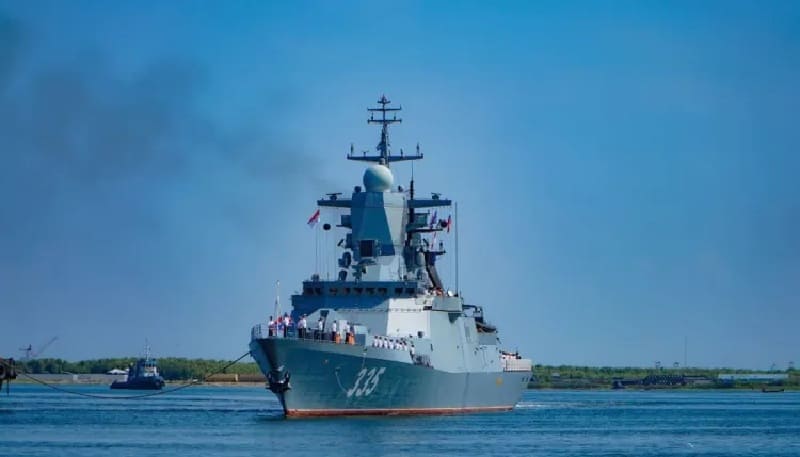
That’s why the stop in Jakarta is important. Russia receives more attention and proof of access. Indonesia makes contact while keeping its independence. At the same time, regional observers get more information about how middle powers deal with outside pressure without getting stuck in rigid groups.
Readers following Type 054B frigate combat systems or Hormuz maritime risk will recognize the same wider pattern: presence at sea now shapes strategy almost as much as missile range. For added context, Reuters’ coverage of the first Indonesia-Russia naval drills in 2024 and ANTARA’s report on the current visit show how continuity, not spectacle, drives the story.
Conclusion
Don’t read too much into the Russian warships and submarine in Jakarta. But you shouldn’t ignore them either. The visit doesn’t last long, but it has a lot of meaning. It shows how the Russian navy can get to the area, how Indonesia is protecting its interests, and how maritime optics are becoming more important in the Indo-Pacific. Presence has become a form of power in today’s naval competition.
References
- https://en.antaranews.com/news/410302/russian-fleets-arrive-in-jakarta-for-joint-drills-with-indonesian-navy
- https://www.reuters.com/world/indonesia-russia-navies-hold-first-joint-drills-java-sea-2024-11-04/
- https://defensenewstoday.info/type-054b-frigate-ai-air-defense-shift/
- https://defensenewstoday.info/trump-warns-iran-over-strait-of-hormuz-mines/
About the Author