Russian Su-35’s First Reported Ukrainian F-16 Kill
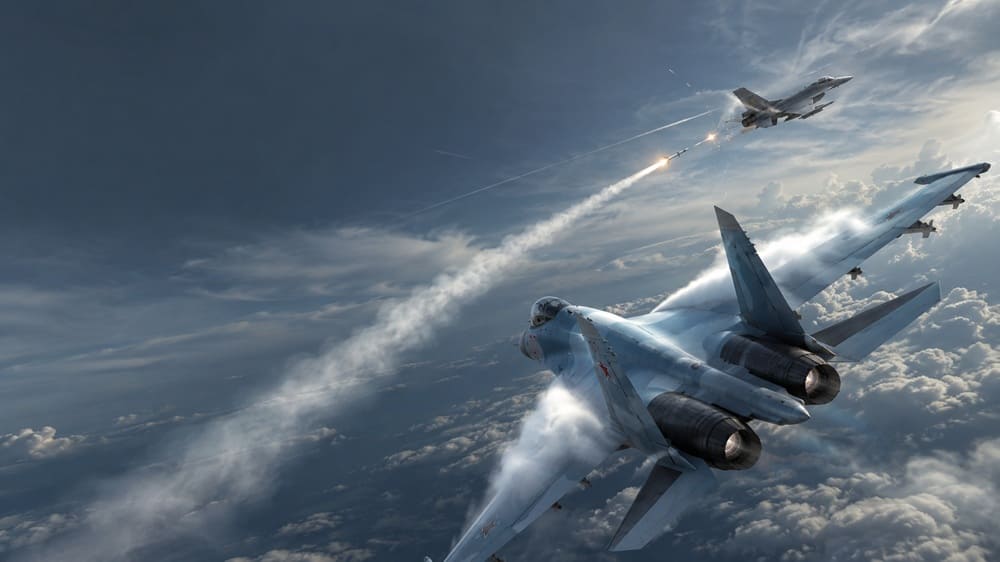
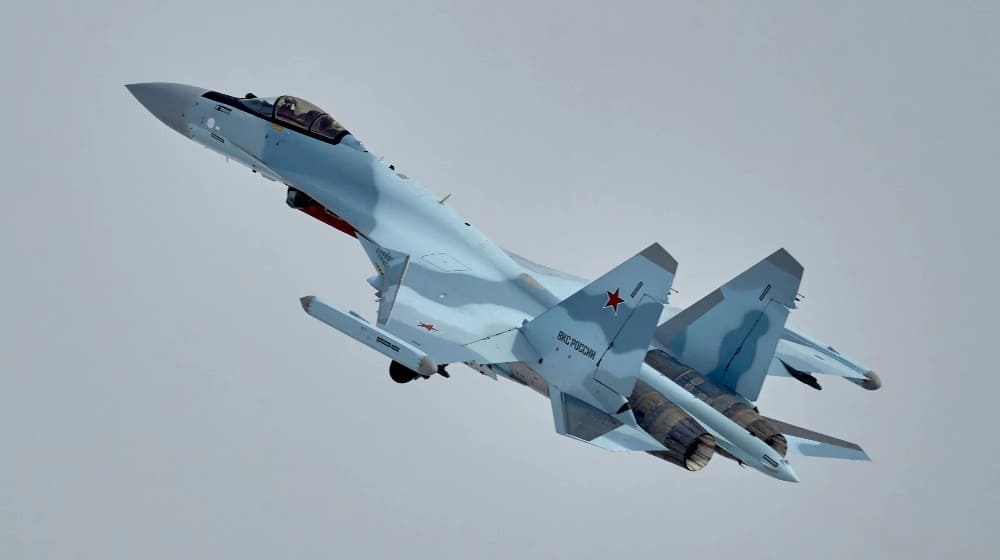
The reported Russian Su-35’s first Ukrainian F-16 Kill, if later confirmed with reliable military evidence, is a serious moment in the Ukraine air war. Russian sources have claimed that a Russian Aerospace Forces Su-35S engaged a Ukrainian F-16AM at beyond-visual-range distance and destroyed it with a radar-guided air-to-air missile, perhaps an R-77 or R-37M. The claim is sensitive, as there has been no independent verification from Kyiv or from major Western defense agencies so far. Meanwhile, even if it’s an unconfirmed report, it highlights the increasing threat to Ukraine’s fighters supplied by NATO.
First F-16 Air-to-Air Loss
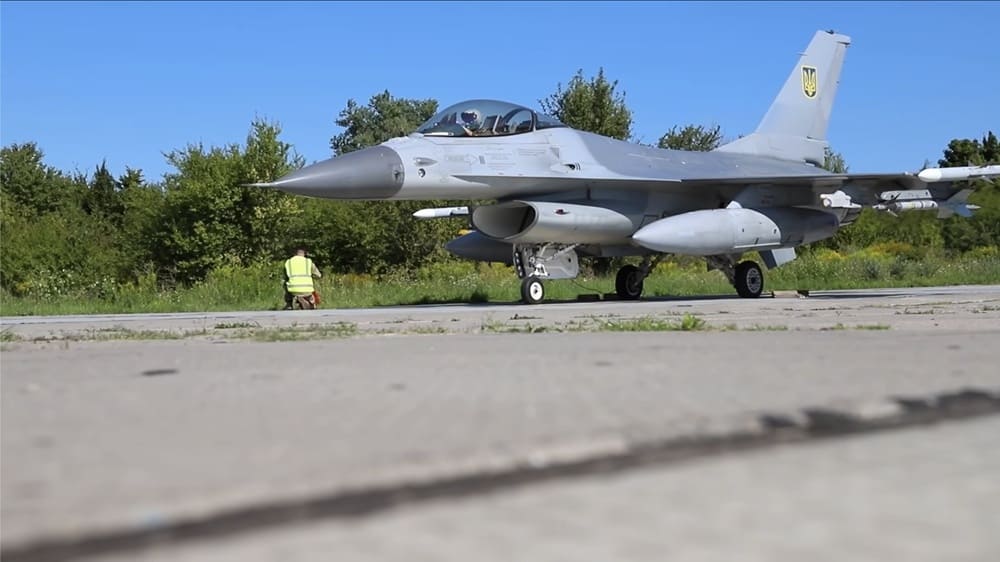
Ukraine has already lost F-16s in combat. In August 2024 Ukraine announced its first F-16 loss in a combat mission. Ukrainian F-16 pilot Maksym Ustymenko was killed in June 2025 when his plane went down while trying to defend against a massive Russian missile and drone attack, Reuters reported.
But the Russian Su-35’s First Reported Ukrainian F-16AM Kill claim is different from those other losses. If confirmed, it would be Russia’s first reported fighter-vs-fighter kill of a Ukrainian F-16. Therefore, the incident would have both symbolic and operational value, especially if we consider that the F-16 was provided to Ukraine to increase air defense, intercept cruise missiles, and improve its survivability against Russian aviation.
Su-35 advantage in BVR
The Su-35S is a heavy twin-engine air superiority fighter developed on the basis of the Su-27 family. Moscow designed the Flanker family to counter western fighters such as the F-15 and F-16. The F-16, by contrast, was originally conceived as a lower-cost and lighter-weight alternative to the F-15. Yet this difference still counts. The Su-35 has more fuel, larger sensors, and more heavy long-range missiles.
Russia has also been pairing the Su-35S with the R-37M with increasing frequency. Defense analysts have said that the R-37M gives Russian fighters a massive range advantage over older R-77-1 missiles. “The R-37M has become a more routine weapon on Su-35S and Su-30SM2 aircraft and, as a result, constitutes a more credible long-range air-to-air threat,” Business Insider said, citing analyst Justin Bronk.
Limitations of Ukraine’s F-16s
The Su-35 claim of shooting down an F-16 also points to a bigger problem for Ukraine. The F-16AM aircraft provided by the European countries are useful platforms, but not the latest F-16 Block 70/72 standard. They improve Ukraine’s interoperability with NATO weapons but do not erase Russia’s sensor and missile advantage.
The Netherlands and Denmark have agreed to supply F-16s contingent on US approval, but the transfer has always been conditional on pilot training, support infrastructure, and integration timelines. Ukraine also did not have fully trained pilots, because its air force had traditionally flown Soviet-origin aircraft like the MiG-29, Su-24M, and Su-27. Hence the slow integration of the F-16 The planes can help intercept drones and missiles, but they are in serious danger when Russian fighters fly at higher altitudes under cover of layered air defenses.
Pressure and Low-Altitude Tactics
Ukrainian pilots have adapted, flying low. This tactic employs terrain masking to minimize radar detection and to complicate missile tracking. But it also reduces the F-16’s radar horizon, its fuel efficiency, and its missile launch performance. The plane just takes longer but fights from a worse position.
“The Su-35S fighter jet has already forced Ukrainian F-16 and Mirage 2000 fighters to operate at low altitude and in rear areas,” Rostec chief Sergey Chemezov said in November 2023. He also said that the Su-35S fighters could strike targets hundreds of kilometres away.
The Russian allegations of state sponsorship should be taken seriously, but the tactical logic is clear. A high-flying Su-35 can use radar range and missile energy to its advantage. Meanwhile, a low-flying F-16 has to rely on ground control, electronic warfare, and air defense cover.
R-37M or R-77 question
Depends on the missile. Allegedly a shot from an R-77 would be a more conventional BVR engagement. However, an R-37M shot would be a signal of the Russian use of very long-range pressure to keep Ukrainian fighters away from the front. The R-37M missile is not a sure kill at max range; target manoeuvre, altitude, jamming, and warning systems all matter. But that range means Ukrainian pilots have to defend earlier and more aggressively.
Therefore, the story about the Su-35 downing an F-16 cannot be counted as a loss of one aircraft. It must be read in the context of a wider context involving radar range, missile kinematics, pilot training, EW and ground-based air defense.
Trail for Defense Watchers
Defense enthusiasts can search for pictures of wreckage, pilot status, confirmation by Ukraine, Russian gun camera or radar evidence, and any mention of the type of missile. “They also should look at how Ukraine changes F-16 mission profiles after this report.
Conclusion
The Russian Su-35’s First Reported Ukrainian F-16 Kill claim is unconfirmed, but it fits the larger pattern of Ukraine’s difficult air campaign. F-16s will strengthen Ukraine’s defenses, particularly against missiles and drones. But they don’t automatically solve the Russian advantage in long-range radar-guided combat.
Ultimately, Ukraine needs more than planes. It needs airborne early warning, better electronic warfare, modern missiles, layered ground-based air defense and enough trained pilots to sustain operations. Until then, the effect of the Russian Su-35S on Ukrainian F-16 tactics will remain, even without it firing a missile.
References
- https://militarywatchmagazine.com/article/russian-su35-ukrainian-f16
- https://www.reuters.com/business/aerospace-defense/least-six-wounded-large-scale-russian-air-attack-ukraine-ukrainian-authorities-2025-06-29/
- https://tass.com/defense/2049071
- https://www.businessinsider.com/russia-key-fighter-jet-missiles-threat-2026-2
About the Author