

Russian Rosoboronexport at 25 — A $230bn Export Powerhouse
Overview
Rosoboronexport at 25 has moved from post-Soviet recovery to a mature, globally competitive exporter. The agency claims more than 30,000 contracts across 120 countries and aggregate deliveries of roughly USD 230 billion. In doing so, it has embedded Russian hardware and training in partner forces while using the defence trade as statecraft.
This anniversary also frames the next decade. Sanctions have forced financial workarounds, local production, and deeper industrial partnerships. Meanwhile, competition from Turkey, South Korea, and China is real.
To keep pace, Russia is leaning on flagship air defence systems, combat aviation, and a pipeline that includes the Su-57E, the “Checkmate” (Su-75), and the S-500. In short, Rosoboronexport weapons exports remain a central lever of Moscow’s external influence.
From Fragmentation to a Single Window
The 1990s created a fractured export landscape. Factories idled, engineers left, and buyers looked West. The 2000 creation of Rosoboronexport centralized pricing, promotion, and end-user control under state oversight. This “single window” let Moscow align sales with foreign-policy priorities while offering through-life support—training, spares, and upgrades.
Over two decades, this model matured into a durable mechanism of diplomacy. Countries in Asia, Africa, and Latin America gained predictable access to combat-proven systems, often paired with industrial offsets. As a result, Rosoboronexport weapons exports grew into long-term portfolios rather than one-off transactions.

Governance and the State Machinery
Rosoboronexport operates as an authorized intermediary for military and dual-use technologies, working within the Rostec umbrella and under direct federal oversight. Only government defence or law enforcement end-users can buy, which helps enforce end-user certification and reduces diversion risks.
The upside is coordination power: standardized pricing, government-backed financing options, and diplomatic channels for negotiations. The model also supports integrated support packages, which sustain fleets and keep upgrades on a common technical baseline. Consequently, Rosoboronexport weapons exports function as an instrument of policy as much as a line of business.
What Sells: The Core Catalogue
Combat Aviation
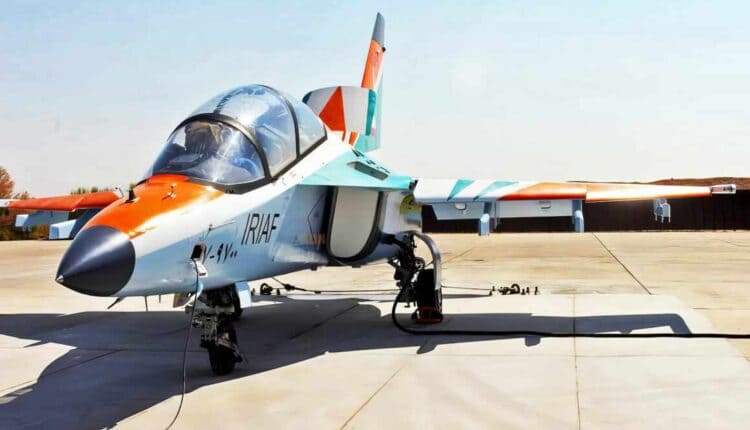
Rosoboronexport’s catalogue is anchored by the Su-30/35 families, MiG-29M/MiG-35, and attack/utility helicopters such as the Ka-52, Mi-28NE, and Mi-171Sh. Buyers prioritize range, payload, and low- to medium-altitude survivability. Where budgets allow, mixed fleets blend heavy twin-engine fighters with lighter multirole options.
Integrated Air Defence
S-300PMU-2, S-400 Triumf, Buk-M3, Tor-M2, and Pantsir-S1 feature in layered architectures. Many contracts combine acquisition with radar modernization, data links, and tailored rules for engagement and identification. This integrated approach keeps Rosoboronexport weapons exports central to customers seeking area denial.
Maritime and Littoral
Frigates, corvettes, and coastal-defense systems (Bastion, Bal) focus on sea denial in contested littorals. Packages often include training, logistic pipelines, and incremental combat-system modernization.
C4/EW and Uncrewed Systems
Orlan-10-class UAVs and electronic-warfare suites (e.g., Krasukha, Rtut-BM) support reconnaissance, counter-UAS, and spectrum control. Customers increasingly want network-centric integration that ties aviation, air defense, and maritime sensors together.
Sanctions: Constraint and Catalyst
Sanctions since 2014, expanded after 2022, have complicated finance and supply chains. However, Moscow adapted with national-currency settlements, barter mechanisms, and alternate banking channels. Trade shows—from Army Forum to Dubai Airshow—sustained marketing and demonstration cycles.
As a result, order-book signals remain notable: public claims point to roughly USD 55 billion in current orders and around USD 12 billion in annual contract signings. Therefore, Rosoboronexport weapons exports have persisted, albeit with longer lead times and a greater emphasis on co-production.

Regions and Anchor Accounts
India
Joint development and assembly programmes (Su-30MKI, BrahMos) created path-dependence: tooling, training, and spares chains lock in future upgrades. This, in turn, normalises long-horizon contracts and steady sustenance.
Egypt and Algeria
Air Force recapitalization with MiG-29M and air defence layers underlies national IADS evolution. Availability rates are driven by local maintenance capabilities and logistics pipelines in both situations.
Southeast Asia
Vietnam fields Su-30MK2 and Kilo-class submarines; Indonesia continues rotary-wing and missile-system dialogue; Malaysia’s Su-30MKM remains a core RMAF asset. For ASEAN states balancing major-power rivalry, Rosoboronexport weapons exports offer diversification and bargaining leverage.
Africa
More than 30 militaries operate Russian helicopters, armored vehicles, and short- to medium-range air defense. Here, affordability, pilot training, and ruggedness often outweigh brand prestige.
Malaysia and the ASEAN Outlook
Malaysia’s MiG-29N and later Su-30MKM created a mixed-origin avionics experience—French sensors on Russian airframes, with Russian weapons. That hybrid model remains valuable region-wide because it supports incremental upgrades without full fleet replacement. Rotary-wing packages (Mi-17 family) and point defence systems (Tor, Pantsir) continue to appeal, particularly where budgets are tight and coastal/EEZ enforcement tasks are rising.
For ASEAN, the attraction is not merely cost. The availability of munitions, flexible financing, and acceptance of local assembly are also important factors. Rosoboron’s exports of weapons thus help nations strike a balance between their ties to Chinese and Western defence systems.
Industrial Strategy: Offsets and Local Production
Russia now pairs sales with offsets, maintenance depots, and technology transfer. Local assembly—airframes, engines, or sub-systems—reduces shipping friction and creates political cover for buyers under external pressure. It also binds users to Russian upgrade paths over decades.
For industry ministries, the draw is workforce development and repeatable MRO income. For operators, turnaround times shrink as “remove-and-replace” components sit in the country. Thus, Rosoboronexport weapons exports evolve into industrial partnerships, not just deliveries.
Competitive Pressures
Turkey’s Baykar drones and Aselsan radars attack the tactical edge with competitive pricing and fast iteration. South Korea’s FA-50 and K9 combine industrial speed and attractive financing. China’s J-10CE and HQ-9 variants provide lower sticker prices and rapid delivery.
This competition forces Russia to demonstrate operational reliability, scale production, and keep sustainment costs predictable. The answer is a two-track approach: upgrade legacy fleets (T-90M, Mi-28NM) to hold cash flow while maturing next-gen systems (Su-57E, Su-75 “Checkmate,” S-500). If the pipeline lands on time, Rosoboronexport weapons exports can remain relevant through the 2030s.
Combat-Proven as a Selling Point
Russian officials emphasize operational experience. Customers study loss data, survivability measures, and mission outcomes. They then adapt concepts of operation accordingly. This feedback loop, whether valid or contested, plays a significant role in marketing. While combat proof carries weight, many buyers still seek their own instrumented trials and combined-arms exercises before committing.
Financing, Risk, and Sustainment
Beyond sticker prices, buyers evaluate training pipelines, spare-parts cadence, and munitions resupply. Some prefer phased contracts with options tied to availability KPIs. Others choose mixed fleets to diversify risk and exploit different munitions ecosystems.

Where sanctions raise transaction risk, buyers pursue national-currency settlement, escrow structures, or commodity-linked barter. In parallel, Russia has expanded regional service hubs. As a result, Rosoboronexport now bundles its weapons exports with finance and sustainment architectures to reduce the risk associated with long-term ownership.
Technology Pathways to 2035
Air and Air Defence
The Su-57E’s export positioning emphasizes low-observable shaping, sensor fusion, and standoff weapons. “Checkmate” targets a lighter, cheaper complement. S-500 aims for theater-level defence against high-speed, high-altitude threats, while legacy S-300 and S-400 users migrate via incremental upgrades.
Strike and Naval
The hypersonic Kinzhal and naval Zircon families headline strategic messaging. Meanwhile, shore-based Bastion and Bal give coastal states cost-effective anti-access options, especially when tied to improved maritime ISR.
C4/EW and UAS
Expect more emphasis on counter-UAS, passive detection, and cross-domain datalinks. Modular payloads and AI-assisted target selection will likely spread into mid-tier UAVs. If Russia productizes these advances at scale, Rosoboronexport weapons exports could retain an edge in price-to-performance.
Strategic Takeaways for Policymakers
- Arms equal influence. Lifecycle support embeds foreign technicians and doctrine exchanges. That shapes training cycles and procurement calendars.
- Finance and law matter. Sanctions create friction in trade, while alternative payment methods and local maintenance, repair, and overhaul (MRO) services help alleviate this issue. States must weigh legal exposure versus capability needs.
- Diversify to bargain. Mixed fleets and multi-vendor sourcing increase leverage and resilience.
- Data beats narrative. Independent trials, telemetry, and mission debriefs should guide choices more than marketing.
What This Means for Southeast Asia
ASEAN forces need deterrence without strategic entanglement. Russian offerings, paired with local assembly and flexible terms, provide a third path. Malaysia’s Su-30MKM case demonstrates hybrid integration; Vietnam’s Kilo-class and Su-30s anchor sea control and air denial; and Indonesia hedges with rotary-wing and air-defense options as it diversifies toward South Korea and the West.
Therefore, Rosoboronexport weapons exports will remain part of the region’s procurement calculus—even as competition intensifies and buyers demand more transparent sustainment metrics.
Conclusion
Rosoboronexport’s 25-year arc—30,000 contracts, 120 countries, and roughly USD 230 billion delivered—shows how a centralized, state-aligned model can turn defence trade into strategy. Sanctions pushed adaptation: local currencies, barter, and co-production. Competition forced product and process upgrades.
The next test is execution—scaling next-gen platforms while keeping legacy fleets available and affordable. For many states seeking capability without dependence, Rosoboronexport weapons exports will continue to offer a pragmatic, if politically complex, option.
References
- https://roe.ru/eng/press-service/news/
- https://www.rostec.ru/en/
- https://www.sipri.org/databases/arms-transfers
- https://www.iiss.org/publications/the-military-balance
About the Author