
Russian Encryption Microchip Delay—Rostec Fined
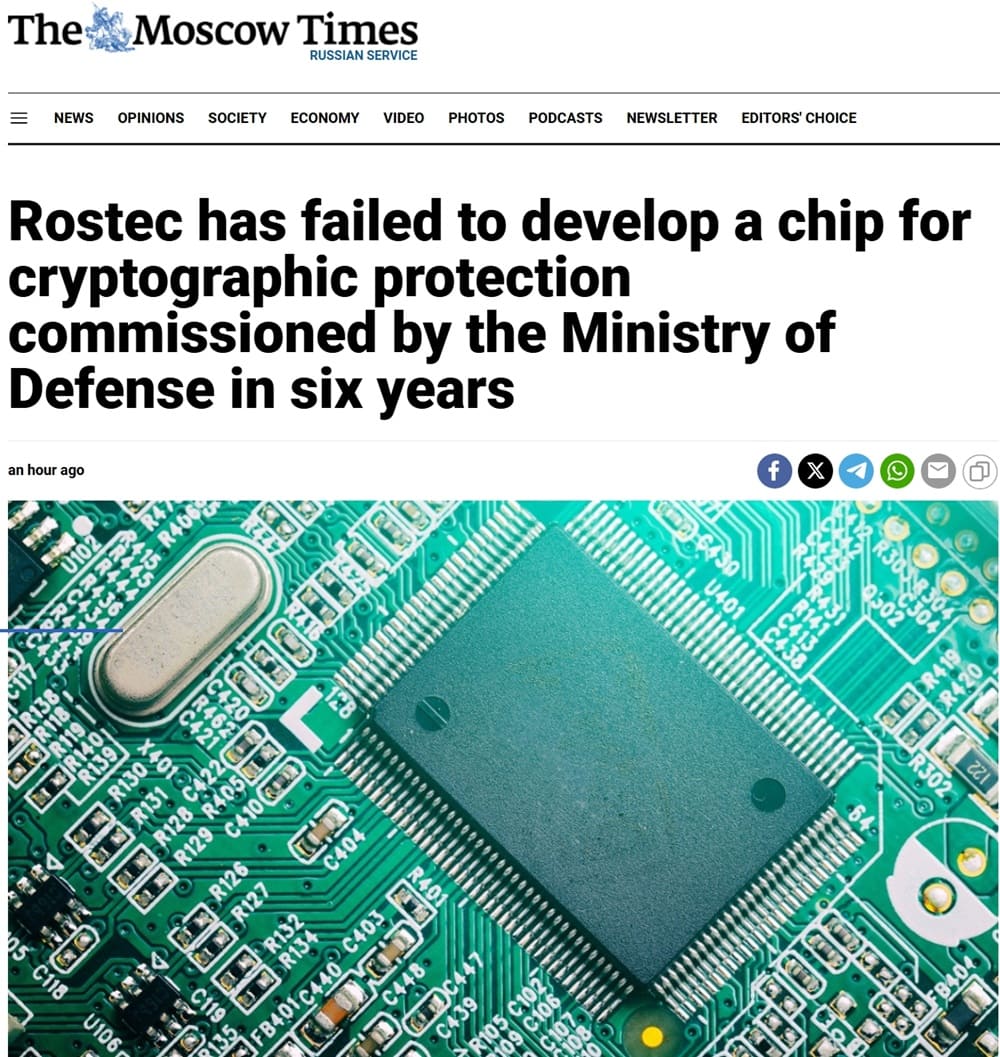
Rostec’s Avtomatika concern has been fined RUB 62.7 million (about $812,300) after it missed a Ministry of Defense-linked order for a cryptographic microchip. Reports put the slip at 2,262 days—more than six years—on a state contract overseen by Russia’s Ministry of Industry and Trade.
Contract deliverables
The development contract was signed in 2017 and valued at RUB 220 million (about $2.85 million). The third stage—prototype manufacture—was due in November 2019. However, the obligations were still not completed by late January 2026, which triggered the claim and penalty.
Consortium risk points
The workstream spans multiple firms. NIIMA Progress was expected to provide electronic components, Avtomatika to build and test initial samples, and the Vega concern to produce a pilot batch. Therefore, delays can stack quickly when hand-offs fail. For more articles related to Cyber security, visit the Defense News Today Cyber Security Section.
Spec highlights
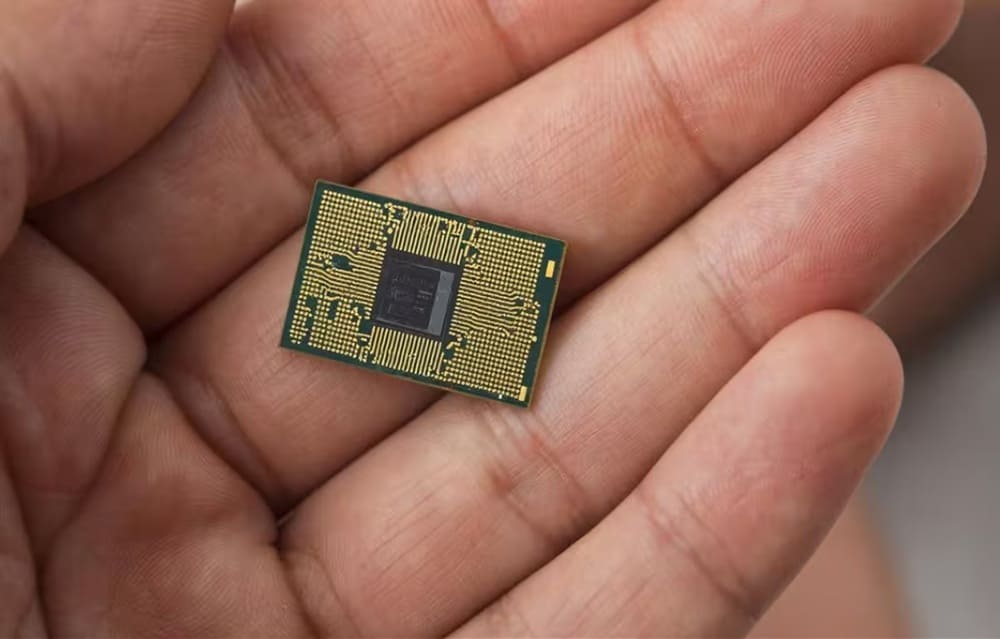
The microchip requirements reportedly combine two computing cores for “simple” and “complex” command sets. In addition, the design calls for RAM with automatic error correction, akin to ECC, to protect data integrity. The program also planned a computer-based digital model to support design verification. This is why the Russian encryption microchip delay matters operationally. Hardware cryptography usually protects keys and sensitive operations better than software-only approaches because it confines them inside dedicated silicon.
How delays hit modernisation
Crypto chips sit inside secure radios, gateways, mission computers, and key-loading tools. As a result, a stalled chip program can slow upgrades across C4ISR stacks and unmanned systems, especially when planners need interoperable, validated modules. It also affects critical information infrastructure. Operators prefer deterministic, tamper-resistant protection for industrial networks, not bolt-on software wrappers.
Global mass-production benchmark
Vendors outside Russia industrialize secure processing as standard practice. For example, NXP describes hardware security modules and trust provisioning for secure key handling and manufacturing flows. STMicroelectronics positions STSECURE secure platforms for advanced security needs. Texas Instruments likewise explains why hardware-accelerated cryptography reduces CPU loading in embedded designs.
Conclusion
This story feels like a painful reminder that secure hardware can’t be rushed or “explained away.” A Russian encryption microchip delay of 2,262 days doesn’t only break a deadline; it slows real-world upgrades that depend on trusted cryptography. Moreover, when NIIMA Progress, Avtomatika, and Vega split the work, one slip can stall the entire chain—from components to testing to pilot production. Therefore, the fine looks less like punishment and more like a signal: deliver working silicon, not paperwork. If Russia wants secure, scalable capability, it must tighten program control and prove repeatable production.
References
- https://safe.cnews.ru/news/top/2026-02-13_predpriyatie_rosteha_na
- https://ru.themoscowtimes.com/2026/02/13/rosteh-za-shest-let-ne-smog-razrabotat-mikroshemu-dlya-kriptozaschiti-po-zakazu-minoboroni-a187296
- https://www.nxp.com/design/design-center/software/development-software/mcuxpresso-software-and-tools-/device-hsm-trust-provisioning:DEVICEHSM-TRUST-PROVISIONING
- https://www.st.com/en/secure-mcus/secure-hardware-platforms.html
About the Author