

Russian Air Defenses Down 136 Ukrainian Drones — MoD
Overnight mass raid across southern Russia
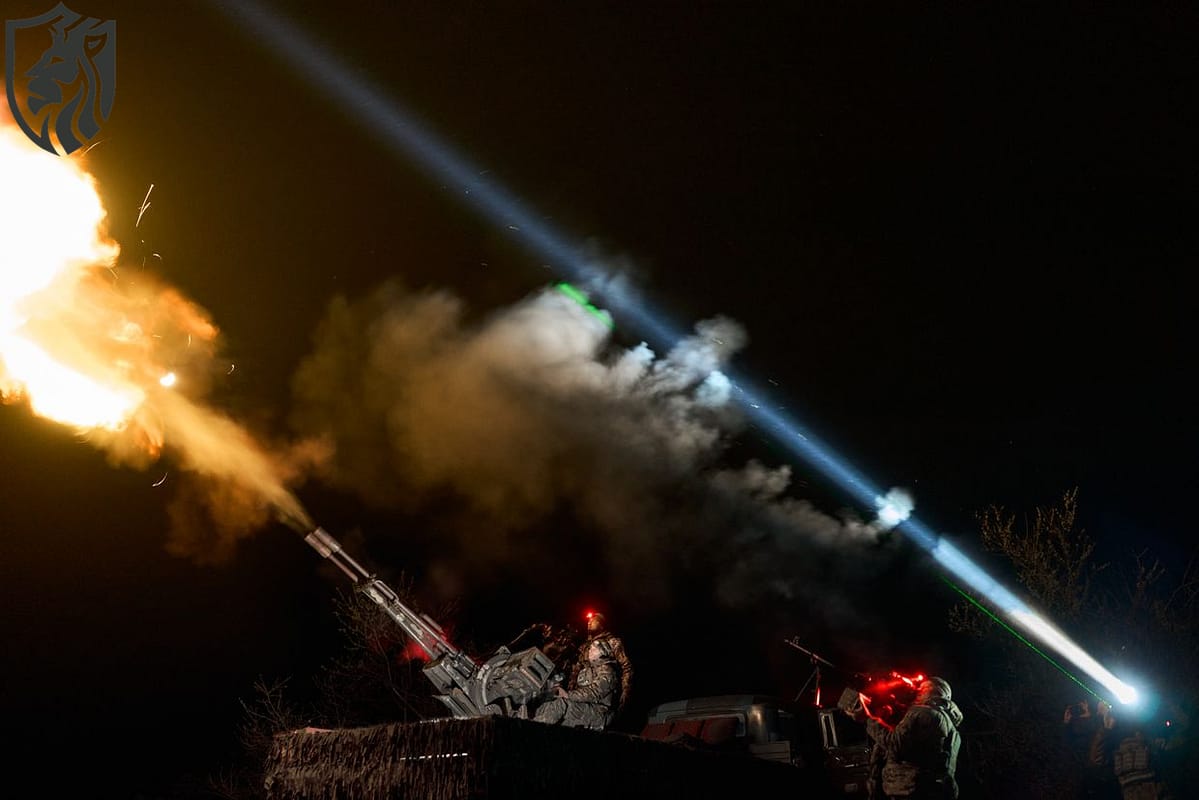
According to Moscow, Russian Air Defenses Destroy 136 Ukrainian Drones Overnight in one of the largest reported raids of the war so far. The Russian Defence Ministry claims air-defense crews engaged fixed-wing, aircraft-type UAVs during the night of 27–28 November across several regions, including Rostov, Saratov, Crimea, and the Black Sea.
Moscow reports that 46 drones were downed over Rostov, 30 over Saratov, 29 over occupied Crimea, and 12 over the Black Sea, with additional intercepts over Bryansk, Volgograd, Voronezh, Moscow, Kursk, and Kaluga. However, Russian regional authorities also acknowledge damage to residential buildings, vehicles, and infrastructure in at least Rostov and Voronezh, suggesting that some UAVs penetrated defensive fire or fell on urban areas after interception.
Geography of the 136-drone attack
Russian channels frame the episode as proof that Russian Air Defenses Destroy 136 Ukrainian Drones overnight, despite a wide attack front. The high number of intercepted drones over Rostov and Saratov shows that Ukraine is still targeting important supply centers, fuel storage, and airfields that help their operations in the south and near the Sea of Azov.
Moreover, the tally of 29 drones over Crimea and 12 over the Black Sea aligns with Kyiv’s wider strategy of degrading Russian rear-area assets, including air bases and naval facilities. Earlier operations, such as Operation Spiderweb, already demonstrated Ukraine’s willingness to strike deep into Russian territory using massed UAVs. Therefore, this latest wave looks less like an isolated raid and more like another iteration in an evolving Ukrainian long-range drone campaign.

Ukraine’s long-range UAV campaign
From Kyiv’s perspective, the destruction of 136 Ukrainian drones by Russian air defenses still supports a key operational goal: forcing Russia to disperse its air-defense assets and spend expensive interceptors on comparatively cheap drones. Ukraine’s one-way attack UAVs, including the AN-196 Liutyi, have been designed specifically to hit fuel, aircraft, and industrial targets hundreds of kilometers inside Russia.
Furthermore, Ukrainian planners appear to exploit the economics of drone warfare. Long-range UAVs can cost a fraction of high-end surface-to-air missiles and, when used in saturation raids, can expose gaps in radar coverage, electronic warfare (EW) envelopes, and command-and-control procedures. Western analyses of the conflict highlight how both sides increasingly rely on large drone salvos to shape the battlespace and drain enemy air-defense magazines.
For deeper background on this trend, readers can review Defense News Today’s overview of Russia–Ukraine drone warfare on Ukraine’s evolving drone strike doctrine and the site’s earlier analysis of cross-border Ukrainian UAV attacks on deep strikes inside Russian territory.
Russian air defense under immense pressure
While officials repeat that Russian Air Defenses Destroy 136 Ukrainian Drones Overnight, the deeper reality looks more complex. The episode highlights how dependent Moscow has become on layered, ground-based air defence systems across its territory. Russia now relies on long-range S-300 and S-400 batteries to cover wide areas and key strategic regions. Medium-range systems sit underneath them, trying to catch missiles and drones that slip through the outer shield.
Closer in, point-defense platforms like Pantsir-S1 protect airbases, command centers, and critical energy and logistics hubs. Alongside these systems, Russia uses expanding electronic warfare networks to jam, confuse, or divert incoming Ukrainian drones. These tools target Ukraine’s mix of cruise missiles, ballistic missiles, and long-range one-way attack drones launched nightly. However, repeated mass raids stretch the system and force commanders to make hard choices every night. They must decide which sectors, cities, or bases receive the densest protection and which accept greater exposure.

Costly Interceptors’ Dilemma
Every large engagement also depletes costly interceptor stocks, which are impossible to replenish overnight or without significant strain. Each battle reveals how Russian radars, communications, and electronic warfare systems behave under real combat pressure. Ukrainian intelligence and partners watch these patterns closely, hunting for weaknesses, gaps, and predictable response habits. Western think tanks note that both Russia and Ukraine constantly adapt their drone and counter-drone tactics.
This creates a rolling contest between cheap UAV swarms and increasingly stressed, resource-intensive air defense networks. Analysts warn that even successful defenses can feel like losing slowly if costs keep rising relentlessly. For broader context, experts point to the Institute for the Study of War’s assessments of recent raids. They also highlight West Point’s Combating Terrorism Center report on how drone warfare is evolving globally. Together, these studies show that the Russian Air Defenses Destroying 136 Ukrainian Drones Overnight is part of a wider trend. They argue that what happens between Russia and Ukraine today will shape future air defense doctrines worldwide.
Strategic signalling
When Russian officials repeat that Russian Air Defenses Destroy 136 Ukrainian Drones Overnight, they speak to several audiences at once. At home, this storyline aims to calm people and show the state still protects key targets. It suggests that big cities, energy sites, and major bases remain safe, even when damage is clearly visible. Abroad, Moscow uses the same message to defend continued strikes on Ukrainian cities and infrastructure. The Kremlin wants outsiders to see these attacks as retaliation, not unprovoked escalation.
Yet huge Ukrainian drone raids deep inside Russia still raise the risk of dangerous escalation. Every successful hit on a refinery, air base, or command node increases pressure for harsher Russian responses. Leaders in Moscow may feel pushed towards more destructive salvos against Ukraine’s power grid and industrial backbone. At the same time, disruption sends its signal, despite claims that Russian Air Defenses destroyed 136 Ukrainian drones overnight. It shows Ukrainian planners that deep strikes can work and may become a core part of Kyiv’s strategy.
References
- https://sputniknews.in/20251128/russian-air-defenses-destroy-136-ukrainian-drones-overnight-mod-10130125.html Sputnik India
- https://tass.com/politics/2050379/amp TASS
- https://understandingwar.org/research/russia-ukraine/russian-offensive-campaign-assessment-november-22-2025 Institute for the Study of War
- https://ctc.westpoint.edu/on-the-horizon-the-ukraine-war-and-the-evolving-threat-of-drone-terrorism/ Combating Terrorism Center at West Point
About the Author