

Russia Ready for War if Europe Starts It — Peace Talks Stall
Moscow Summit
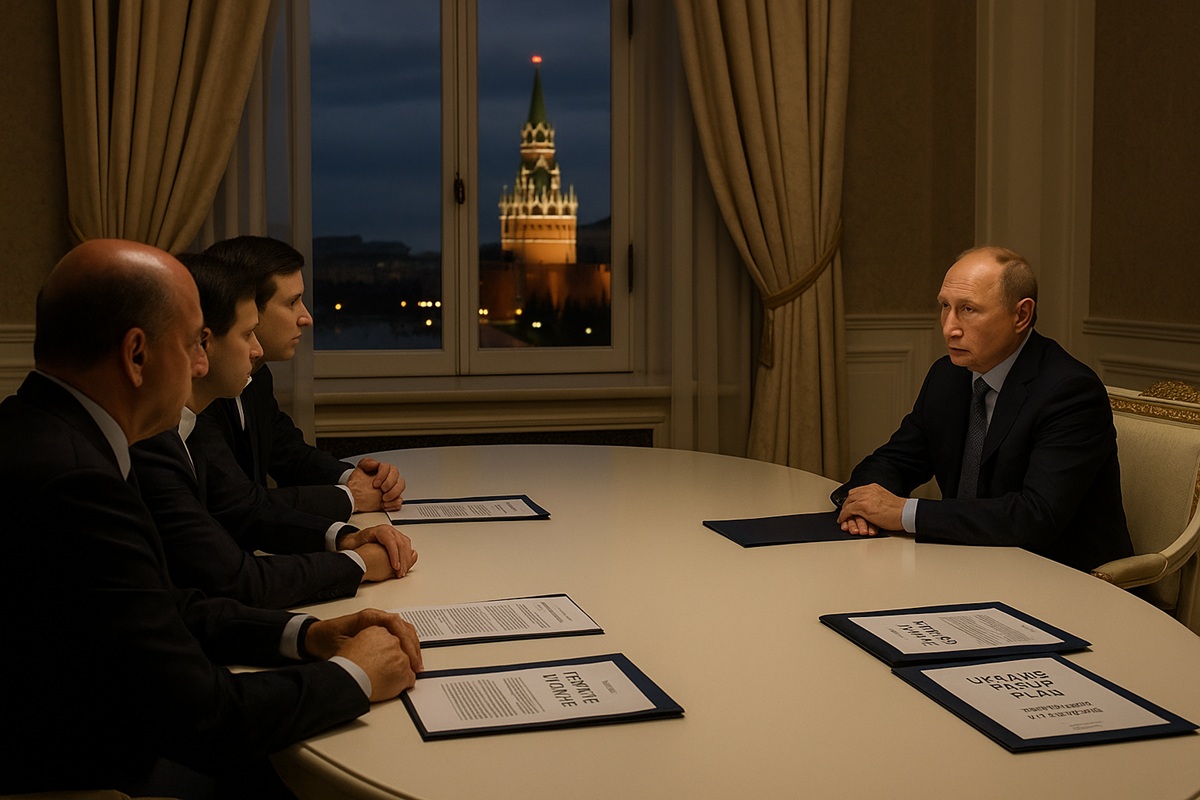
When Vladimir Putin warned that Russia is ready for war if Europe starts it, the tone was stark. He used that line to frame the latest round of US-led peace diplomacy over Ukraine. The message landed only hours before his five-hour Moscow meeting with envoy Steve Witkoff and Jared Kushner.
That timing underlined how far political negotiations now lag the brutal reality on the battlefield. Kremlin aide Yuri Ushakov later called the talks useful but admitted they brought no real breakthrough. In practice, Moscow still presses maximalist demands while Washington softens its plan for Kyiv and uneasy Europeans. Meanwhile, the phrase “Russia is ready for war if Europe starts it” echoes across the continent.
Moscow’s red lines and Trump Game Plan
The Trump administration’s 28-point blueprint, revised several times over recent weeks, still leans towards Russian interests on territory and Ukrainian force levels. Early drafts envisaged Kyiv surrendering parts of the east it currently holds and accepting long-term limits on its armed forces. European governments have lobbied aggressively against any deal that resembles a supervised capitulation, as Russia prepares for war; if Europe initiates conflict, Moscow will portray it as evidence that Europe desires endless conflict.
Ushakov says the Kremlin can live with some elements of the US proposal but rejects others outright, especially where they fix front lines or constrain Russia’s future options. Putin insists any accord must reflect “realities on the ground,” meaning the gains Russian forces have made since 2024 and the political narrative that Russia is winning. In that narrative, Russia’s readiness for war if Europe initiates it serves more as a warning that outside pressure will fail than as a threat.
Europe: veto player or scapegoat?
Putin openly accuses European capitals of sabotaging any path to peace in Ukraine. He claims that so-called European demands on Kyiv are unacceptable and block a reasonable settlement. European leaders read the situation very differently and distrust a narrow US-Russia bargain. They fear a frozen conflict that wrecks Ukrainian sovereignty and undermines European security for a generation.
This is why the slogan “Russia is ready for war if Europe starts it” dominates Kremlin rhetoric. Moscow wants to brand EU resistance to its terms as stubborn, emotional warmongering. Yet Europe has already taken in millions of refugees and poured tens of billions into aid. For European governments, conceding too much would reward large-scale aggression and annexation from the Baltic to the Black Sea.

Kyiv’s narrow runway for compromise
Ukrainian president Volodymyr Zelenskyy says he is ready to meet Trump “when there is something real to discuss,” but he cannot accept a map where Russia keeps territory still under Ukrainian control. Nor can he agree to permanent limits on Ukraine’s defense industry or force size while Russia is ready for war; if Europe starts, it remains Moscow’s public line. Zelenskyy still demands clear security guarantees from the West, not vague assurances that evaporate with the next political cycle.
Kyiv’s long-term survivability now hinges on a combination of airpower, air defense, and sustainable industrial support. Debates over fighter transfers, such as the prospective Ukraine Gripen fighter order, show how Ukraine and its backers are preparing for a protracted conflict rather than a quick freeze. That difficult reality makes it even harder to sell any peace package that locks in Russian gains while repeating that Russia is ready for war if Europe starts it.
Pokrovsk Victory and Battlefield diplomacy
Putin claims Russian troops have seized the strategic hub of Pokrovsk in eastern Ukraine. The city has served as a vital logistics node in Donetsk oblast for Ukraine’s front-line forces. Pokrovsk has endured more than a year of grinding assaults and almost constant artillery fire. Russian units now control most of the shattered urban area, though Kyiv disputes the extent of their gains.
By presenting Pokrovsk as a finished victory, the Kremlin signals that battlefield momentum still lies with Russia.
If Russian forces keep pushing west while Washington and Kyiv argue over clauses, Moscow appears increasingly confident. This message indicates that Russia is prepared for war if Europe initiates it, making it sound less like posturing. That narrative targets Western policymakers but also domestic audiences and prominent milbloggers tracking casualties and costs.
Black Sea and the “shadow fleet”
Putin has threatened to step up strikes on Ukrainian ports and on ships approaching them. He says some commercial shipping could become legitimate targets if Kyiv keeps attacking Russia’s “shadow fleet” of oil tankers.
Ukrainian naval drones have already damaged several sanctioned tankers in the Black Sea. Kyiv aims to raise the financial cost of Russia’s war while limiting environmental damage from large oil spills.
Russia’s claim that it is ready for war if Europe starts one forms part of a wider pressure campaign. Moscow wants to deter European support for long-range maritime strikes that threaten its vital energy revenues. At the same time, it signals that any clash at sea could quickly widen into a broader confrontation. Resulting instability in the Black Sea further complicates Europe’s strategy on energy security and defence spending.
Strategic outlook: Deterrence and Concession
Taken together, Putin’s rhetoric, the stalled Moscow talks, and the fighting around Pokrovsk all point to the same conclusion: Russia still believes time is on its side. So long as Russian forces continue to grind forward and the Trump administration faces friction with European allies, Moscow will see little reason to trade battlefield leverage for uncertain guarantees.
For Western planners, the challenge is to keep strengthening Ukraine’s position while avoiding fractures inside NATO. That includes investing in resilient logistics, advanced air defense, and even space-based capabilities, as highlighted in analyses of Russia’s evolving space warfare strategy. It also means grounding any negotiation track in the realities documented by ISW’s latest Russian Offensive Campaign Assessment and NATO’s official overview of support for Ukraine, rather than in wishful consideration of a quick restoration.
Conclusion
In that environment, the phrase “Russia is ready for war if Europe starts it” should be understood less as a literal prediction and more as a bargaining tool—and a reminder that Europe, Ukraine, and the United States all face a long, delicate contest in which military outcomes, alliance cohesion, and political narratives are tightly intertwined.
References
- https://defensenewstoday.info/ukraine-gripen-fighter-order-loi-signals-airpower-shift/
- https://defensenewstoday.info/russias-space-warfare-strategy-gunpowder-nails-and-the-future-of-orbital-conflict/
- https://understandingwar.org/analysis/russia-ukraine/russian-offensive-campaign-assessment/
- https://www.nato.int/en/what-we-do/partnerships-and-cooperation/natos-support-for-ukraine
About the Author