
Russia Deploys First S-500 Prometey Air Defense Regiment
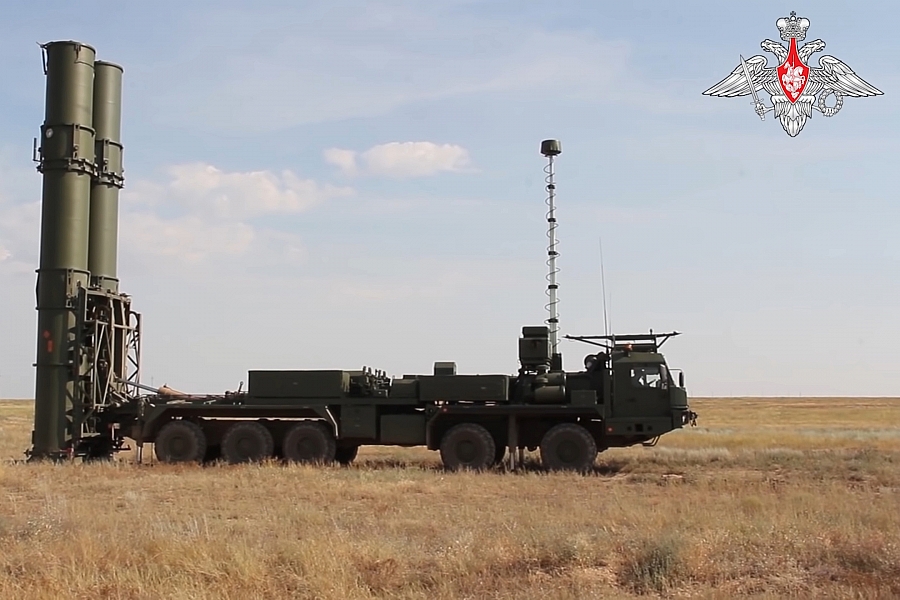
Russia is signaling a step-change in its integrated air and missile defense postures. At a briefing for foreign military attachés, Chief of the General Staff Gen. Valery Gerasimov said the formation of the first regiment equipped with the S-500 is nearing completion; that phrasing matters.
It suggests Russia views the system as more than a tech demonstrator and is moving towards routine duty, training cycles, and command integration. Despite outside claims and counterclaims, one point stays constant: the S-500 sits at the intersection of air defense and strategic missile defense. It aims to engage higher, faster, and farther than Russia’s legacy layers, while also offering at least the claimed ability to hold some space-domain assets at risk.
S-500: Intended Role
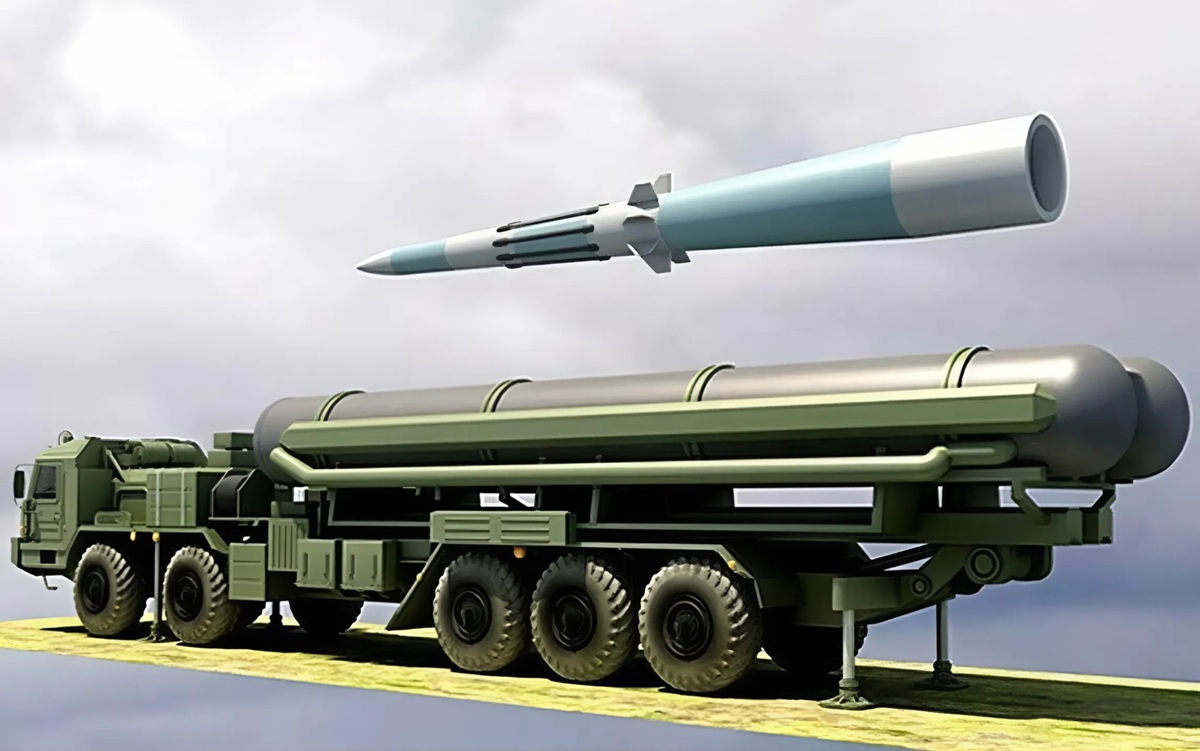
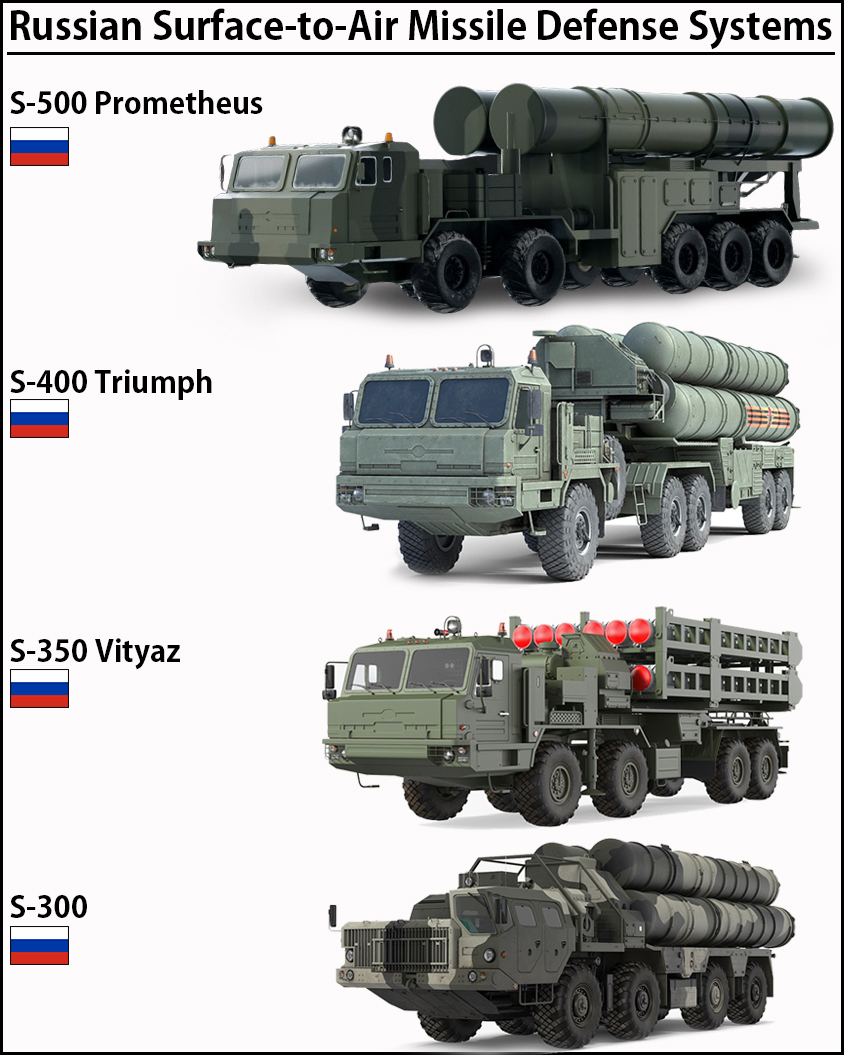
The S-500 long-range air defense system (Prometey) is built for targets that stress conventional SAMs: ballistic missiles, maneuvering reentry vehicles, and hypersonic threats. Western assessments and Russian messaging consistently frame it as a mobile air-and-missile defense asset that complements, rather than replaces, the S-400.
Russia and several open-source profiles associate the system with a claimed engagement envelope around 500–600 km (mission- and missile-dependent). However, “range” can mislead. Real-world intercept geometry depends on radar horizon, track quality, target profile, and the fire-control timeline. Therefore, the headline number should be read as a design ambition, not an automatic kill zone.
600 km Claim: Planning Implications
Your source text highlights a 600 km intercept figure and argues it exceeds US/NATO equivalents. The best way to handle this is to separate what Russia claims from what is verified.
- Some public profiles describe a 500–600 km class envelope for S-500 interceptors.
- Independent analysis also notes tests and a claimed flight ceiling in the 100–200 km band, which pushes into the “near-space” regime.
If Russia can operationalize that envelope at scale, the system complicates NATO air operations in two ways. First, it stretches the threat ring against high-value enablers (tankers, AEW&C, and stand-off ISR) if cued by a wider sensor network. Second, it pressures planners to assume shorter reaction times against high-speed threats. That said, the S-500 long-range air defense system has not demonstrated its full capabilities under transparent, independently verifiable conditions. Therefore, analysts should treat “space-control” language as credible intent, not proven dominance.
THAAD vs Patriot: Key Differences
The article compares S-500 to THAAD and Patriot primarily through range. The comparison works as a rough orientation, but it needs technical guardrails.
- THAAD is generally described as engaging targets at roughly 150–200 km.
- Patriot varies by interceptor and mission, and it was never designed to be a THAAD substitute in the high-altitude endo/exo-atmospheric band.
In other words, THAAD’s job is not “long-range air defense” in the classic sense. It is a ballistic missile defense terminal. S-500 tries to bridge multiple missions, which is ambitious but also operationally complex.
S-500 in Russia’s Layered Shield
Russia’s concept relies on layers: point defense, area defense, and strategic missile defense around critical regions. Analysts often say that the S-500 links systems like the S-300/S-400 with strategic missile defense efforts, including the A-235/Nudol This is where the system’s real value may sit: not in replacing S-400 batteries, but in improving the overall network’s ability to sort targets, allocate interceptors, and reduce “leakers” against complex raids.
Reported S-500 Deployments
Open sources said Russia planned an S-500 regiment for Moscow-area air defenses in October 2021. That timeline implies Russia had been building regiment-level readiness for years. However, the system’s full capability suite still looked unfinished at the time. The article also mentions Arctic trials in December 2021 under severe conditions.
Even so, reports disagree on details and performance outcomes. Still, Russia often stress-tests its strategic kit in extreme climates. Separate reports also claimed S-500 elements appeared in Crimea near the Kerch Strait Bridge. The headline matters less than the logic behind it. Russia would likely assign scarce, top-tier defenses to assets with high political and operational value.
Comparison: S-500 vs THAAD vs HQ-19 vs Arrow 3
| Category | S-500 “Prometey” | THAAD | HQ-19 | Arrow 3 |
|---|---|---|---|---|
| Country/program | Russia | United States | China | Israel (with US cooperation) |
| Primary role | Long-range air & missile defence (ABM-focused) | Theatre ballistic missile defence | High-altitude ABM (upper-tier) | Exo-atmospheric ballistic missile defence |
| Intercept domain | Endo + “near-space” (claimed) | Endo + exo (terminal) | Mid-course/high-altitude (assessed) | Exo (“in space”) |
| Publicly described target set | Aircraft, cruise/ballistic missiles, and LEO satellites (claimed) | SRBM/MRBM/IRBM terminal defence | Ballistic missiles; possible HGV potential (assessed) | Exo-atmospheric ballistic missile intercept |
| Engagement range (public) | Up to ~600 km (widely reported) | ~150–200 km | up to 1000 km | Up to ~2,400 km (publicly reported) |
| Intercept altitude (public) | Not publicly disclosed (often described as “near-space”) | ~40–150 km | 150 km | >100 km (publicly reported) |
| Interceptor/kill method (public) | Often linked to 77N6-series interceptors (details vary); kill method not fully disclosed | Hit-to-kill | hit-to-kill interceptors with thrust vectoring | Hit-to-kill |
| Radar/sensors (public) | Radar suite often listed in open sources; exact fit varies by report | AN/TPY-2 (X-band) | Not publicly disclosed | Not consistently disclosed publicly |
| Basing & mobility | Mobile, ground-based launchers | Mobile truck launchers, typically 8 interceptors per launcher | Publicly shown on 8×8 truck with six-cell launcher | Strategic, site-based / semi-fixed architecture |
| 2025 status (public) | Russia stated first regiment nearing full readiness/on combat duty in 2025 | In service; deployed | Publicly revealed; capability discussed, operational status not clearly confirmed | Operational; European deployment steps reported in 2025 |
Space Threats: Satellites & Near-Space
The most strategically provocative claim is anti-satellite utility. Some policy and think-tank writing notes that the S-500 is designed to target satellites in low Earth orbit (at least in theory), and that its ceiling claims place it in the near-space engagement band. Even a limited ability to threaten space-based support systems changes escalation math. NATO forces lean heavily on satellite communications, ISR, and navigation.
Therefore, any credible risk to those nodes forces redundancy planning, dispersal, and faster kill-chain design. If you want a deeper explainer on space denial and missile-defense layering, go through our coverage hub on Defense News Today—e.g., Strategic defense coverage and Air defense coverage on Defense News Today.
Counter-Stealth: Networked Sensing
The article argues the S-500 can help counter stealth by cueing other systems. That concept is plausible in principle: modern IADS wins through sensor fusion and distributed engagement, not one “magic radar.” However, the right way to phrase it is this: the S-500 long-range air defense system may strengthen the network’s detection-and-track picture at long ranges, enabling other layers (including the S-400) to take better shots when geometry and signatures allow. It reduces stealth effectiveness and does not guarantee kills. It simply pressures the attacker’s margins. For a solid baseline reference on the system’s intended role, see the CSIS Missile Threat profile on S-500.
Cyber Risk: The Silent Weakness
Advanced IADS depends on software-defined radios, data links, and battle management. That creates opportunity for cyber and EW exploitation. The article’s warning stands: if an attacker degrades communications, corrupts track data, or injects false targets, they can blunt even an advanced interceptor stack. Russia likely invests heavily in resilience and compartmentalization. Even so, the more the system relies on networking, the more it must assume contested spectrum and persistent cyber pressure.
Costs & Exports: The Price of Capability
The article frames the program as a major financial undertaking, and that is consistent with the reality of high-end missile defense: expensive interceptors, specialist radars, training pipelines, infrastructure, and sustainment. Export talk will persist because the S-400 succeeded commercially. Yet space-adjacent and strategic functions often come with tighter political controls, and Russia may prioritize domestic coverage before releasing mature configurations.
Conclusion
Gerasimov’s “nearing completion” comment signals institutional momentum. The rest is about execution: production throughput, training quality, command integration, and survivability under electronic and cyber attack. If Russia can scale those pieces, the S-500 long-range air defense system will push air defense logic upward—closer to the edge of space, where modern wars increasingly depend on fragile enablers.
References
- https://tass.com/defense/1889337
- https://missilethreat.csis.org/defsys/s-500-prometheus/
- https://www.atlanticcouncil.org/in-depth-research-reports/issue-brief/russian-and-chinese-strategic-missile-defense-doctrine-capabilities-and-development/
- https://www.congress.gov/crs-product/IF12645
About the Author