
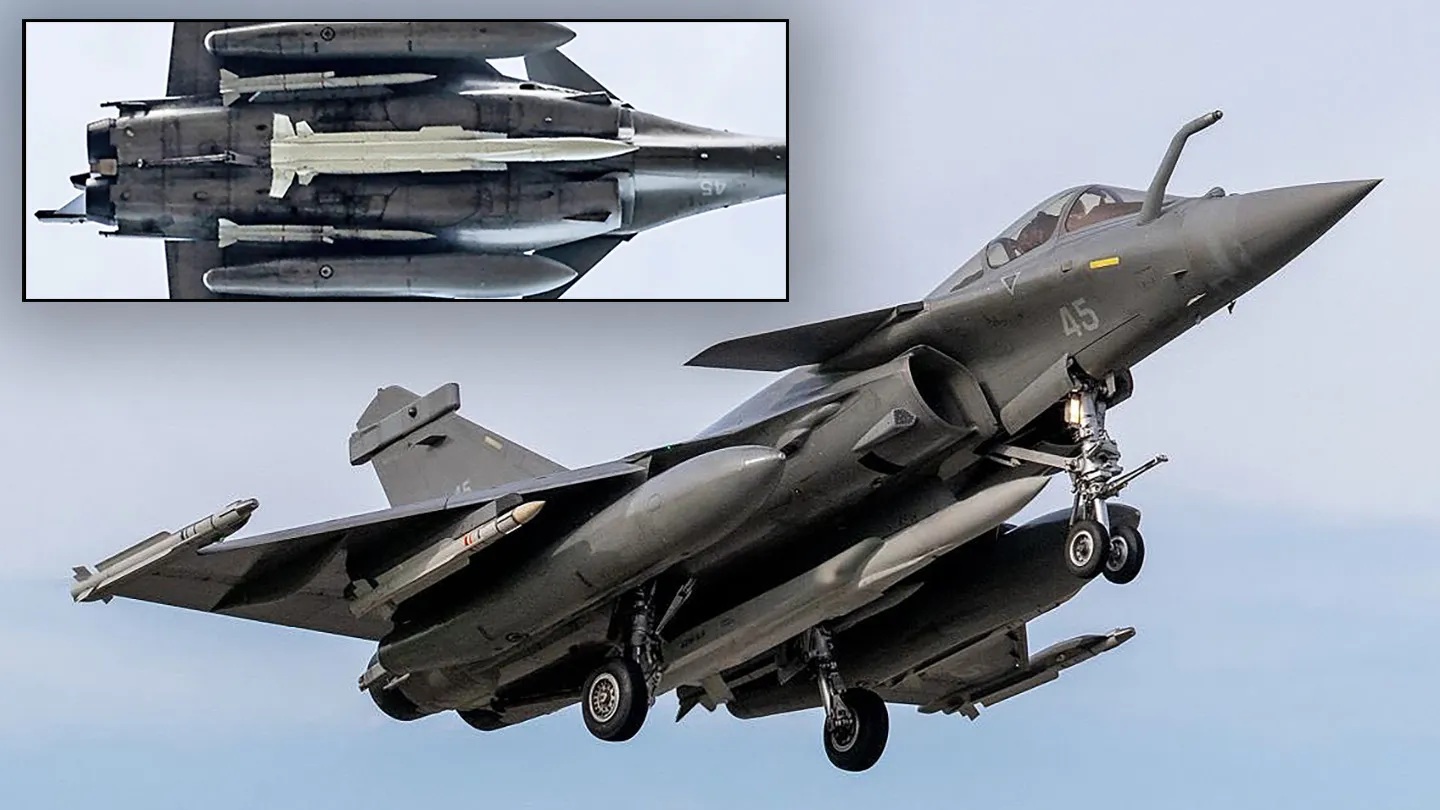
Rafale-fired ASMPA-R missile
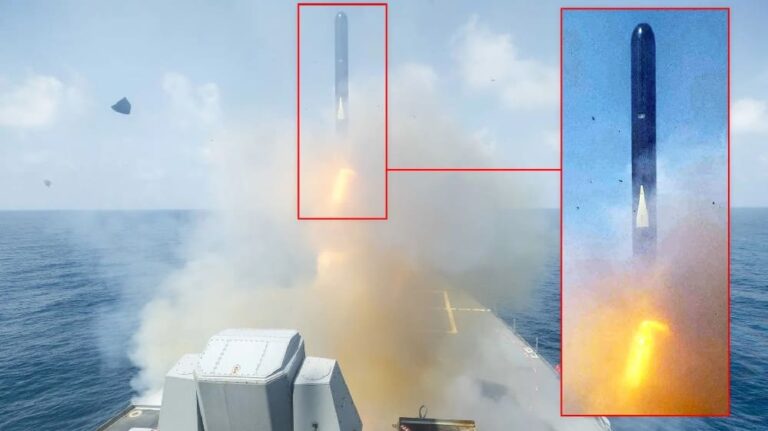
France boosts deterrence with Rafale-fired ASMPA-R missile success after a French Navy Rafale M launched the renovated missile on 13 November 2025. The unarmed shot was the centrepiece of Operation DIOMEDE, a long-planned exercise that rehearsed a realistic nuclear raid profile for the Naval Nuclear Air Force (FANU). French officials described the second ASMPA-R launch, which was the first from the Navy, as evidence that the air component of the Force de Frappe is still reliable and self-sufficient in a world that is becoming more dangerous.
Operation DIOMEDE: Rehearsal for nuclear strike
During Operation DIOMEDE, the Rafale Marine flew a long-range mission typical of carrier operations before releasing the ASMPA-R. The scenario mirrored how the Charles de Gaulle carrier group would project power in a crisis, even though this test was likely launched from a land base for convenience. The Directorate General of Armaments (DGA) tracked the missile from launch through impact using telemetry sites such as Biscarrosse and Hourtin, gathering performance data that no simulator can fully reproduce.
France enhances deterrence for potential adversaries by demonstrating that the Navy can now execute the same nuclear strategy as the Air and Space Force. The Navy shot follows the first operational ASMPA-R firing by a Rafale B of the Strategic Air Forces during Operation Durandal in May 2024. These tests collectively bridge the gap between air and naval integration, demonstrating that the upgraded missile is no longer merely a paper capability displayed in glossy brochures.
Inside the ramjet ASMPA-R
At the hardware level, ASMPA-R remains a brutally simple proposition for nuclear planners. It is a supersonic, airborne nuclear cruise missile designed to penetrate modern air defences. The missile spans approximately 5.38 meters, from its nose to its tail. It weighs about 860 kilograms, heavy but still manageable for a Rafale. A solid booster kicks it cleanly off the pylon immediately after launch. Then a liquid-fuel ramjet lights up and drives the missile through the rest of its flight. In typical strike profiles, ASMPA-R sprints at more than Mach 3 at high altitude. At low level, it still holds around Mach 2 while hugging the terrain. Its quoted range is around 500 kilometres for standard mission planning. Some estimates push that figure to 600 kilometres, depending on the route and flight geometry.
In operational service, ASMPA-R carries a 300-kiloton TNA thermonuclear warhead. French doctrine gives it a “pre-strategic” role inside the Force de Frappe. It represents a last, unmistakable warning shot before full ballistic-missile Armageddon. Terrain-following flight keeps the missile low, hiding it inside radar clutter. High speed and a compact radar cross-section further complicate interception attempts. In practice, these traits make ASMPA-R a tough target to defeat. That is precisely how France boosts deterrence with Rafale-fired ASMPA-R missile success. Opponents must assume they cannot safely ride out a French nuclear strike.

From ASMP to ASN4G nuclear air leg
The ASMP family has quietly underpinned France’s air-delivered nuclear option since 1986. The original ASMP replaced older free-fall bombs; the ASMP-A upgrade, launched in 1997 and fielded from 2009, extended range and improved accuracy. The ASMPA-R “renovation” program, kicked off in 2016, replaces ageing components, refreshes electronics, and adds performance margins without changing the missile’s basic dimensions. Qualification firings in December 2021 and March 2022 paved the way for operational deployment.
Looking ahead, the ASMPA-R acts as a bridge to ASN4G, a hypersonic, air-launched successor expected to exceed 1,000 kilometres in range and reach around Mach 6–7. This future system should enter service around the mid-2030s on the Rafale F5 and eventually on the next-generation fighter under the FCAS programme, keeping the air component relevant against dense, layered air defences.
MBDA’s ecosystem
MBDA France leads the ASMPA-R program in the middle of a broad industrial network. It pulls together the missile’s airframe, propulsion system, and guidance into one coherent package. Safran provides key engine components, while Thales delivers navigation systems and mission-critical avionics. The renovation effort depends on precision manufacturing and carefully selected advanced materials. Engineers apply strict quality control so every missile passes demanding checks before entering service.
France previously built roughly fifty-four ASMP-A missiles for its nuclear air force. ASMPA-R upgrades the existing stock of ASMP-A missiles instead of developing a completely new design. This approach reflects a characteristically French, almost circular-economy mindset for strategic weapons. Semiconductor shortages and export controls have complicated sourcing high-end electronics. Paris has responded by boosting domestic capacity and tightening supplier vetting under DGA oversight.
ASMPA-R and the Force de Frappe
Strategically, the ASMPA-R sits inside a two-legged Force de Frappe, now built on ballistic-missile submarines and air-launched cruise missiles after land-based systems were retired. Four Triomphant-class SSBNs field M51-series SLBMs, while Rafale squadrons—both land-based and carrier-borne—provide the flexible “last warning” option. Current open-source estimates suggest France holds roughly 290 operational nuclear warheads, many of them tied to these two delivery systems.
In capability terms, the ASMPA-R differs from Russia’s long-range Kh-102 or the US AGM-86 ALCM. Those missiles prioritise reach; France chooses speed, manoeuvrability, and signal value over sheer distance. When France boosts deterrence with Rafale-fired ASMPA-R missile success, it reminds everyone that a single carrier group or Rafale wing can deliver a calibrated yet devastating nuclear message without calling Washington for permission.
Rafale Marine, FANU and nuclear mission
The test also underlines the Rafale Marine’s multi-role identity. The same jet that was trapped aboard Charles de Gaulle in rough seas now serves as a nuclear delivery platform for the FANU. Pilots train for low-level ingress, tanker hooks and demanding deck cycles, while ground crews manage heavily secured storage and loading routines at bases such as Landivisiau. Such an arrangement is a significant departure from merely displaying a “swing-role” badge on a PowerPoint slide.
Defence News Today has examined workshare tensions inside FCAS and their link to France’s airborne deterrent to provide additional context on how Paris balances future fighter priorities with its nuclear-capable Rafale fleet.
By contrast, Rafale’s combat record has faced tougher questions over South Asia, as shown in our coverage of Rafale and S-400 losses during Operation Sindoor. Yet in French hands, the Rafale still anchors a highly specialised nuclear mission that most air forces do not attempt.

European allied signalling
Politically, the timing of the shot matters almost as much as the telemetry itself. The test lands as European planners quietly debate wobbling US nuclear guarantees. They ask what happens if Washington’s promises fray under future domestic or global pressures. France offers no formal nuclear umbrella to the wider continent today. Yet President Emmanuel Macron has floated deeper consultation and possible sharing frameworks in speeches and interviews. Even then, Paris insists that launch authority remains strictly and unequivocally national.
In that context, France boosts deterrence with the Rafale-fired ASMPA-R success and a very deliberate signal. It indicates that the arsenal is modern, exercised, and genuinely ready for use if required. The weapon system is not a museum piece frozen in Cold War glass and dust. For defence professionals, the message remains brutally straightforward and difficult to misread. Europe’s only independent nuclear power still invests hard cash, political capital, and real flight hours. It works constantly to stay credible, relevant, and survivable in any future crisis. Adversaries prefer not to assess that performance in real time. This is especially true when confronted with a 300-kiloton nuclear “warning shot”.
Conclusion
Taken together, the Rafale M launch, ASMPA-R’s upgraded internals and the long-term path to ASN4G show a cohesive design philosophy. France wants a fast, penetrative, air-launched nuclear option that can operate from land or sea, complementing its ballistic-missile submarines and underlining its strategic autonomy inside NATO.
As observers watch future tests, carrier workups and Rafale F5 upgrades, one theme will remain constant: France boosts deterrence with Rafale-fired ASMPA-R missile success by proving that its nuclear air leg is not just surviving but evolving. For a medium power that insists on acting like a strategic one, that is precisely the point.
References
- https://www.aerotime.aero/articles/france-second-test-upgraded-asmpa-r-nuclear-missile AeroTime
- https://www.defence-industry.eu/france-advances-nuclear-deterrence-modernisation-with-successful-asmpa-r-test-and-new-m51-3-deployment/ Defence Industry Europe
- https://www.aviationweek.com/defense/missile-defense-weapons/france-shows-asmpa-r-missile-first-time Aviation Week Network
- https://thebulletin.org/premium/2025-07/french-nuclear-weapons-2025/ Bulletin of the Atomic Scientists
About the Author