
Radia’s Giant Cargo Jet for U.S. and NATO
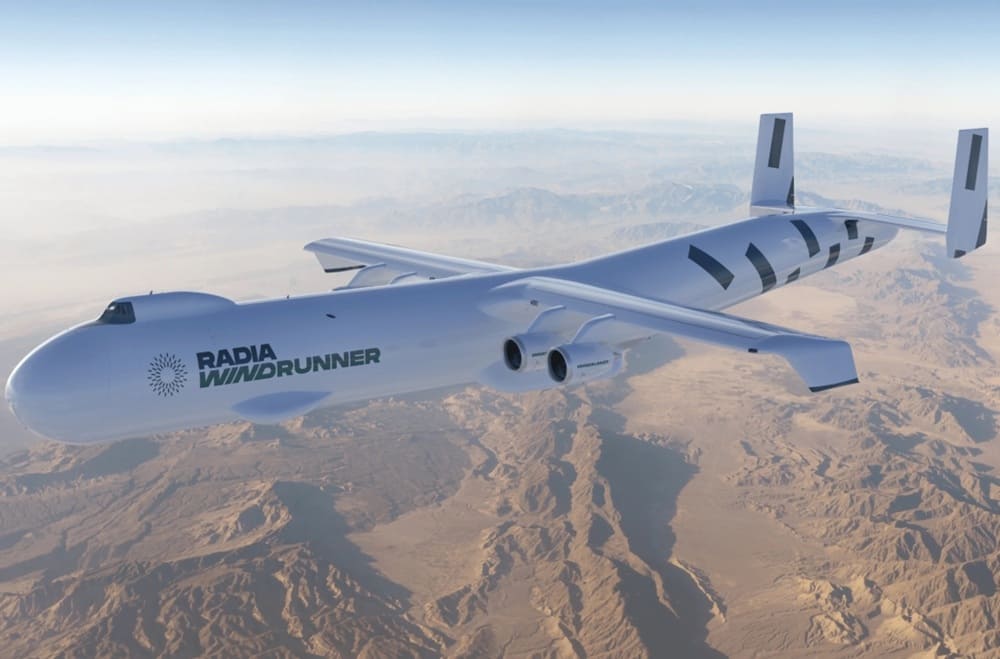
The Radia WindRunner for Defense aims to address a significant logistics issue. Western troops can still move heavy things by air. They do, however, have trouble with big, heavy loads. That is especially true when the load is light. Radia says that its new plane will fill that gap. It wants to move systems that are still working for U.S. and allied forces to enhance operational efficiency and support missions in challenging environments. The goal is to get to rough, spread-out places where people work, such as remote military bases or disaster-stricken areas, to provide support and logistics for operations. In September 2025, the company showed off the defense version. It did this at the Cyber, Space, and Air Conference.
This aspect is important because modern military operations need speed, spread, and strength. Planners want to quickly move combat power across large areas. They also want to rely less on big, open-air bases, which can be vulnerable to attacks and limit operational flexibility. That problem is the same in both Europe and the Indo-Pacific, where military planners face challenges in logistics and rapid deployment of forces in diverse terrains and operational environments. So, WindRunner has a different kind of value. It focuses on the amount of cargo rather than just how much it can lift. Because of this, military forces could get equipment that was ready to use right away. They wouldn’t have to take it apart, ship it, and then put it back together again.
Why today’s fleet falls short
The case for the Radia WindRunner for Defense starts with a simple fact: many Western airlifters were made for a different time. The C-17 and C-5 are still very useful, but neither aircraft is being produced. At the same time, planners still have trouble with oversized cargo, especially when it is long, awkward, or needs special care. Radia says that most fleets reach their volume limits before they reach their weight limits.
That is the main idea behind WindRunner’s design. The plane is not being sold as the heaviest lifter ever made. Instead, it is pitched as a platform that can move enormously assembled systems in one sortie. In real life, that could mean shorter deployment times, less time spent on the ground, and fewer moves needed to get equipment ready for combat.
WindRunner by the numbers
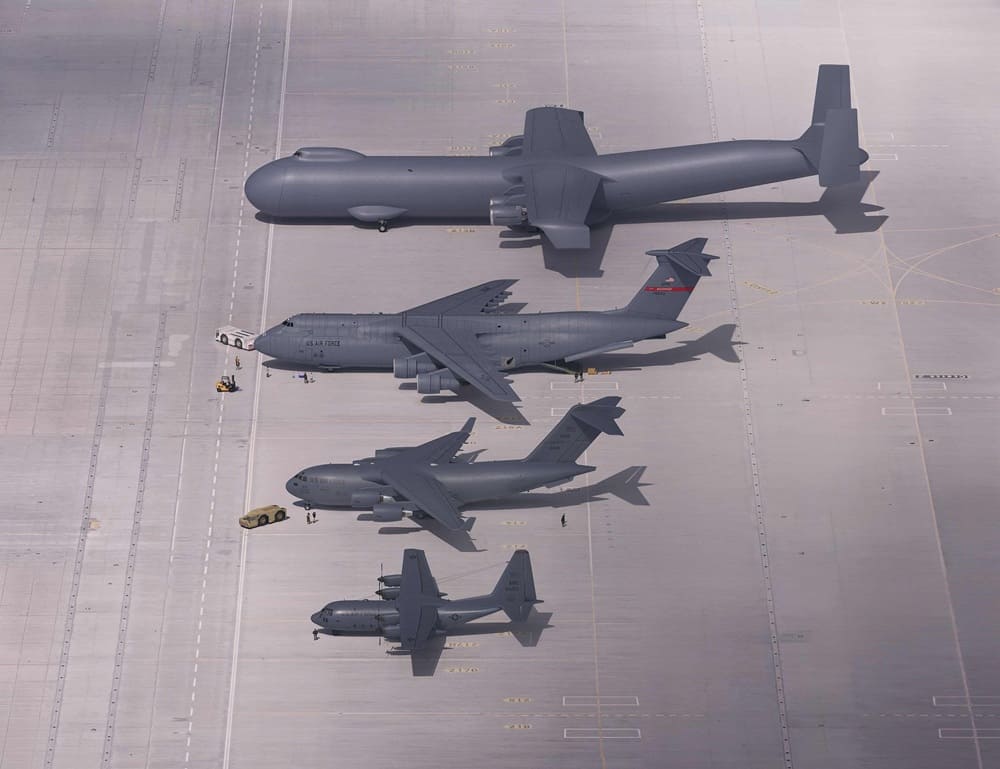
The numbers that Radia has made public are fascinating. The basic idea for the WindRunner is a length of 108 to 109 meters, a wingspan of 80 meters, and a height of about 24 meters. The company says that the defense version has more than 6,800 cubic meters of internal cargo space. The wider WindRunner concept has been described as having even more space for civil use. It can also use runways that aren’t paved and are about 1,800 meters long.
That’s why Radia talks so much about “outsized-volume” cargo. The maximum payload, which is about 72,575 kg, is not more than that of classic super-heavy transports. However, the payload alone does not provide a comprehensive picture. Even if a transport plane has enormous lift, it won’t be able to complete its mission if the cargo doesn’t fit inside the fuselage. That’s exactly where Radia wants WindRunner to be different.
The company also says that the cruise speed is about Mach 0.6 and the maximum payload range is about 2,000 km. Those numbers are pleasing, but not groundbreaking. WindRunner’s value wouldn’t come from beating all of its competitors. Instead, it would come from taking assembled, mission-ready equipment straight to places where the infrastructure isn’t great, such as remote or disaster-stricken areas where rapid deployment is crucial.
What WindRunner can carry
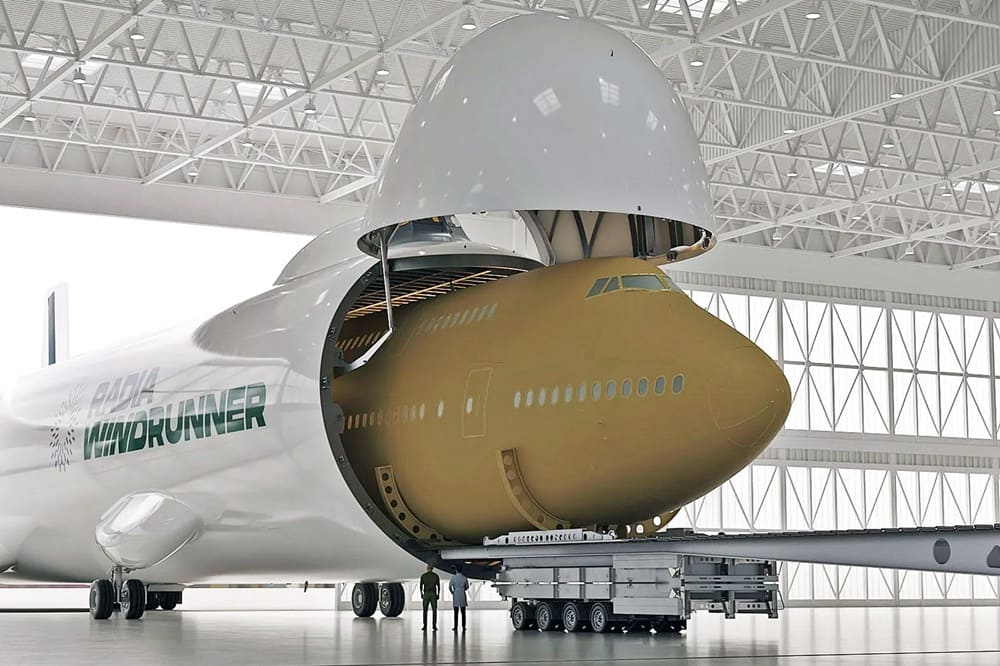
This is where the Radia WindRunner for Defense gets intriguing for military readers. Radia says that the plane could carry six fully assembled CH-47 Chinooks (a type of heavy-lift helicopter), four CV-22 Ospreys (a tiltrotor aircraft used for transport), up to twelve Apache helicopters (an attack helicopter), or several fighter planes, like F-16s (a multirole fighter) or F-35Cs (a stealth multirole fighter), all at once. The main point is not just size. It is the inability to take apart and put back together.
That changes the math for logistics. Every time a force breaks down planes or big systems, it makes things harder, takes longer, risks spare parts, and makes them more vulnerable. Additionally, it creates a second problem at the arrival point, as staff and facilities must rebuild and test the equipment before it can be used. In a theater where there is a lot of competition, that delay can be just as important as distance.
Radia also talks about how space and emergency missions get support. The same logic applies to big boosters, long aerospace structures, mobile hospitals, radars, and disaster-relief packages. If a system arrives intact, it can enter service more quickly. So, the business case is bigger than just combat logistics.
Why rough-field access matters
Runway flexibility is another big selling point. Radia says that WindRunner is made to work on unpaved strips that are about 1,800 meters long. If that works in real life, it would be one of the best things about the program. Many big transports need airfields that are better prepared, which makes it harder to spread out, especially in traditional military operations that rely on established infrastructure; however, WindRunner’s capability to operate on unpaved strips allows for greater flexibility and adaptability in various operational environments. WindRunner wants to do the opposite.
That goes well with Agile Combat Employment and distributed basing. Both ideas are based on the idea that future operations will spread assets across larger networks of smaller or less important locations. In that situation, being able to move big machines into semi-prepared strips could help with both logistics and survival.
But such an arrangement also makes the test harder. It’s one thing to say how well something works in a brochure. It’s a different story to show that it works under real-world loads, weather, and maintenance conditions, which can significantly impact the performance and reliability of the test results, such as how the test performs during extreme weather events or prolonged usage over time. Because of this, the runway claim will always be one of the program’s most important goals.
Timeline and strategic support
Radia says it wants its first flight to happen by the end of the decade and its first operations to start around 2030. The company also says it plans to use certified, proven parts and digital engineering tools to speed up development, which will help ensure reliability and efficiency in its operations. In May 2025, the company said it would work with U.S. Transportation Command on a Cooperative Research and Development Agreement (CRADA) to look into possible military uses, such as moving large cargo, providing humanitarian aid, and working with current logistics systems.
That deal doesn’t guarantee that the purchase will happen. It does show, though, that the idea has gone beyond marketing slides. USTRANSCOM clearly thinks it’s worth looking into how this kind of plane could fit into future logistics networks. In early 2026, reports said the command was looking into how to get more flight hours for large aircraft once the platform is up and running.
It’s also important that NATO is interested. A number of allied countries already rely on shared lift solutions, and they know how quickly strategic airlift capacity can run out during emergencies. So, a model owned by a contractor or backed by the government could be appealing to countries that need access but don’t want to buy a whole fleet.
The risks remain.
Still, there are big questions about the Radia WindRunner for Defense. The first is the risk of business. It’s never cheap, easy, or quick to build the biggest airplane in the world. Radia has raised about $150 million so far, but a project of this size will need a lot more money and long-term political support.
The second problem is the trade-off between operations. WindRunner has a lot of volume, but its payload and range don’t always beat those of its competitors. That means it won’t be able to completely replace classic heavy airlifters. Instead, it would fill a need: enormous, volume-driven cargo that current fleets have trouble moving quickly and easily.
The third problem is how to carry it out. Choosing the right engine, getting it certified, validating the rough strip, loading it, and making military changes are all still essential. There could be aerial refueling and other defense-specific features later, but first the plane needs to show that the basic design works.
Conclusion
It’s not as simple as “bigger is better” when it comes to the Radia WindRunner for Defense. It is a bet on a specific operational gap: quickly moving intact, oversized systems to remote areas. If Radia fulfills its promise, WindRunner could serve as a valuable supplement to the existing strategic lift fleet, rather than a direct replacement.
This is why defense planners should closely monitor WindRunner. The plane doesn’t have to be heavier or longer than every other mode of transportation. It just needs to fix a problem that current fleets still can’t fix well enough, such as the inability to rapidly deploy troops to remote locations or effectively support operations in contested environments. If it can do that by 2030, it might change how the U.S. and NATO think about moving troops quickly, dispersed bases, and air mobility in the next ten years.
References
- https://radia.com/media/radia-announces-wind-runner-for-defense-redefining-air-mobility-with-a-new-class-of-outsized-volume-air-cargo
- https://radia.com/media/radia-and-u-s-department-of-defense-collaborate-to-assess-utility-of-wind-runner-the-world-s-largest-aircraft-for-dual-use-civil-military-oversized-outsized-cargo-operations
- https://breakingdefense.com/2025/09/how-radia-hopes-to-move-dod-cargo-with-the-worlds-largest-airplane/
- https://aviationweek.com/defense/aircraft-propulsion/radia-responds-us-transcom-rfi-windrunner
About the Author