
PL-15E Decode Analysis: India Updates Fighter EW
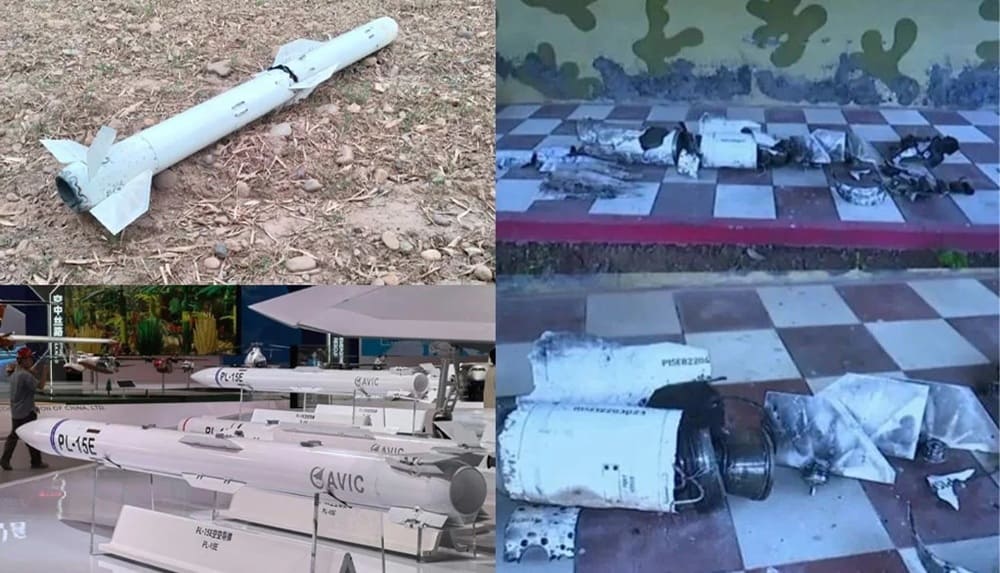
The PL-15E decode analysis apparently provided India with a rare technical insight into a Chinese beyond-visual-range missile that Pakistan had used. As per the information given, the DRDO and the Indian Air Force had carried out lab assessments of PL-15E hardware recovered in connection with Operation Sindoor. The recovery was made at Kamahi Devi in Hoshiarpur, about 100 km inside India, on May 9.
This step is important because it gives you direct access to the missile hardware, so you do not have to guess. Before the evaluation, there was some uncertainty regarding the detection and tracking behaviour of the PL-15E. But the measured hardware data provided Indian teams repeatable parameters for detection and classification.
The lab work reportedly identified three key areas: radar emissions, frequency-agility logic, and data-link formats. These details together help explain how the PL-15E searches, communicates, and adapts in flight. Electronic support systems can use the radar emissions from the missile to identify the behaviour of its seeker.
Its frequency-agility logic, meanwhile, shows how the missile changes frequency to avoid interference. Additionally, its data-link format can provide information on how the weapon is being guided or updated prior to entering its terminal phase.
Onboard Profiles and Threat Libraries
Once these findings went into threat libraries, the PL-15E decode analysis proved operationally useful. Modern fighters use such libraries to quickly identify hostile emissions and classify threats. The collected data was then translated into profiles that onboard systems could exploit.
This is a crucial step for pilots and mission systems. It can improve threat recognition, help in faster categorization, and allow electronic warfare suites to respond with more accurate countermeasures. In short, the missile recovery seems to have turned raw hardware access into usable combat data.
Software Upgrades
Indian fighter fleets are now pushing software updates to all systems, the information says. Sources indicate that new PL-15E focused logic has enhanced the Tejas Mk1A’s and Su-30MKI’s indigenous electronic warfare suites. The Rafale’s SPECTRA system also incorporated jamming logic specific to the PL-15E.
This is important because the PL-15E is more than a missile threat. It is also a target of electronic warfare. If Indian systems could better identify and classify their emissions, then they could also improve jamming timing and defensive responses. But the real value depends on how well the pilots, software, and tactics work together.
Importance of Hardware Access
Without a self-destruct, the recovery was more worthwhile. If the missile had self-destructed, there would have been little material for engineers to study. Direct hardware access, on the other hand, enabled DRDO and IAF teams to test physical components, validate assumptions, and reduce uncertainty.
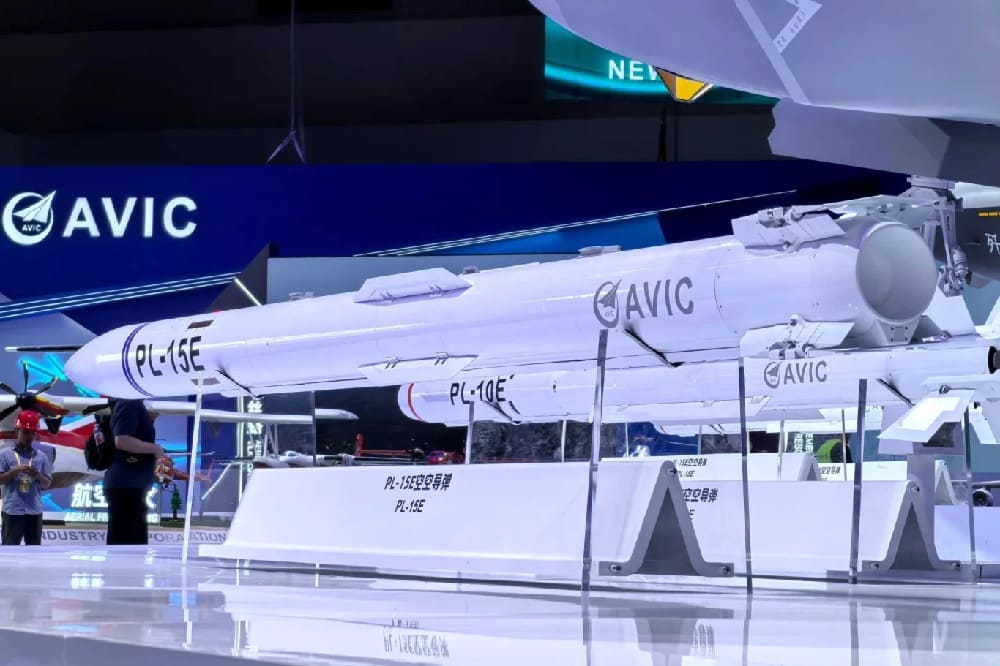
The PL-15E is credited with a 145 km range, a dual-pulse motor, and Mach 5+ performance claims. The above details present the missile as a serious BVR threat. Thus, any measured insight into its behaviour can help refine Indian electronic warfare planning.
Data-Link Disruption
One operational takeaway relates to the data-link interruption windows. A long-range air-to-air missile may need midcourse guidance until its seeker can decide. If Indian systems can understand the data-link behaviour of the missile, they may be able to know when a disruption is most effective.
This does not guarantee missile defeat. But it can improve the timing of jamming, manoeuvres, and electronic countermeasures. Thus, the analysis of PL-15E could influence the responses of Indian pilots around the contested airspace.
Effect on LoC Tactics, Manuals and Simulators
We are told that the results went into crew manuals and simulators. That is a key step because pilots need to be able to train in a repeatable way and not just receive technical reports. Simulators can help model the missile’s detection and tracking patterns more accurately, and manuals can help pilots make better decisions under pressure.
Information also points to LoC tactics. In that environment, reaction time, missile warning, and electronic warfare discipline can be a factor. Thus, up-to-date training may be just as important as up-to-date software.
Astra Mk2 and PL-17 Context
The details provided also include Astra Mk2 lessons. This means India could leverage the PL-15E decode analysis to enhance its missile development thinking, especially regarding seeker behaviour, data links, propulsion, and counter-countermeasure awareness.
The question also arises in the PL-17 context. China’s longer-range air-to-air missile development continues to push regional air combat farther apart, with faster engagement cycles and increased reliance on electronic warfare. So the PL-15E data may also help India prepare for future missile threats beyond this one weapon.
Global Interest
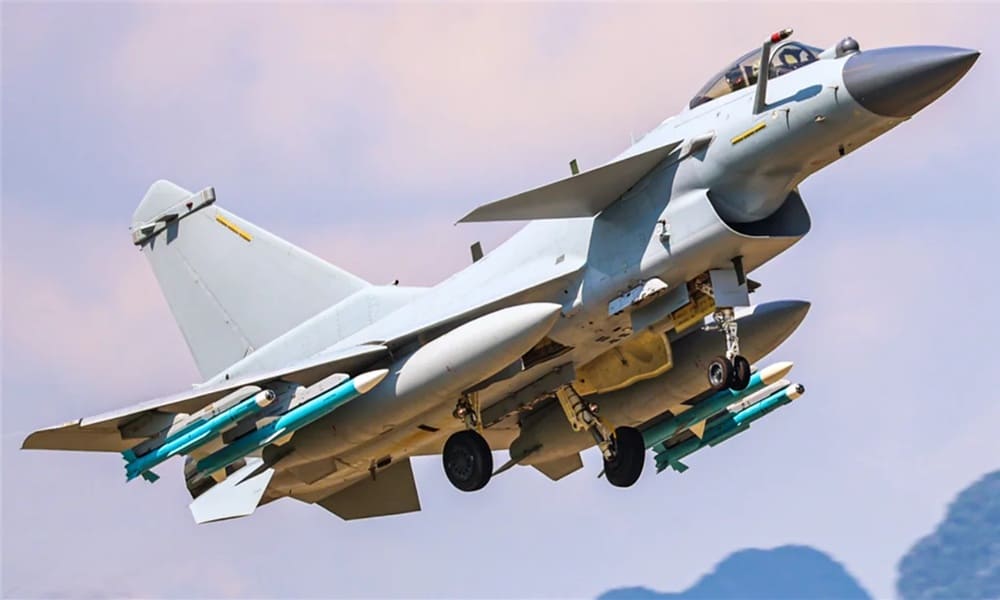
The US-France-Japan interest in the reported PL-15E suggests that the findings may be transferable beyond South Asia. Those countries would likely focus on emissions, data-link behaviour, jamming logic, and insights on dual-pulse motors. But the data only shows interest, not the level of sharing taking place.
Data as a Combat Tool
The PL-15E missile recovery seems to have given India a measured perspective of a major Chinese-origin missile in Pakistan’s inventory. The DRDO and IAF tests reportedly translated their findings on radar, frequency agility, and data link into threat library profiles. Meanwhile, upgrades to the Tejas Mk1A, Su-30MKI, and Rafale SPECTRA indicate that work is now moving from the lab to the operational fleets.
Conclusion
As the DRDO and IAF continue their analysis of the recovered PL-15E, China’s broader missile ecosystem may already be moving on newer long-range systems such as the PL-17 and PL-21 missiles. If such weapons enter the Pakistan Air Force inventory, India’s technical exploitation of the PL-15E could yield only a limited near-term operational advantage. However, the results could be immensely useful for India’s own Astra missile program, especially in terms of seeker behaviour, data-link robustness, propulsion modelling, electronic counter-countermeasures, and the future R&D of BVR missiles.
References
- https://militarywatchmagazine.com/article/china-first-close-look-longest-a2a-pl17
- https://www.globaldefensecorp.com/2025/05/20/australia-france-uk-japan-and-usa-to-send-experts-to-india-to-examine-captured-chinese-made-pl-15e-missile/
- https://defensenewstoday.info/defense-branches/air-force/
- https://meta-defense.fr/en/2026/05/19/pl-15e-drdo-iaf-punjab/
- https://www.twz.com/air/parts-of-a-pakistani-pl-15e-air-to-air-missile-came-down-relatively-intact-in-india-after-air-battle
About the Author