
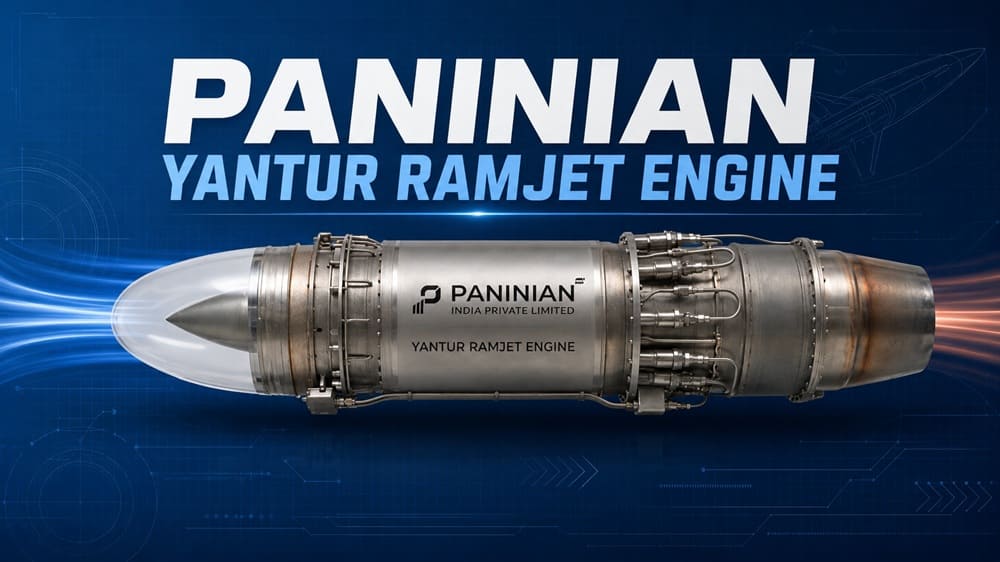
Yantur Ramjet Engine: India’s Supersonic Push
India’s private defense firms have entered a more challenging engine race. Paninian Aerospace unveils the Yantur ramjet engine for fast unmanned weapons and test systems. The company says the air-breathing engine could achieve sustained supersonic and hypersonic flight. This makes it better than your average booster. That suggests a more difficult class of missile and drone power.
The latest reports have linked Paninian to engineers having DRDO and HAL experience. They also talk about a 50,000-square-foot site with simulation labs and wind-tunnel work. Paninian was founded in 2020, according to the reports. But the company’s LinkedIn page says 2018, so that’s one to watch.
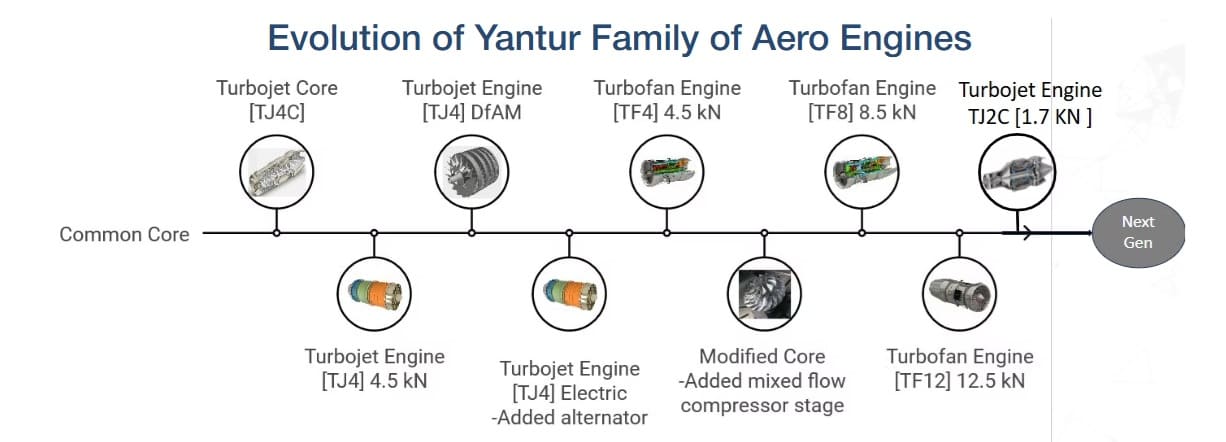
Yantur Engine Family
The Yantur ramjet engine is part of a larger engine scheme. Paninian’s public portal lists Yantur aero-engines for cruise missiles, unmanned combat aircraft, aerial targets, and decoys. It also lists a modular range from 3kN to 12kN, while recent coverage indicates 12.5kN at the top end.
So the approach seems like a family strategy, not a single lab item. A common-core design can help cut cost and accelerate changes. It also allows engineers to adapt a single base design to several roles. That’s a big deal for India. Missile makers, drone teams, and test ranges need small, reliable engines.
Ramjet Working
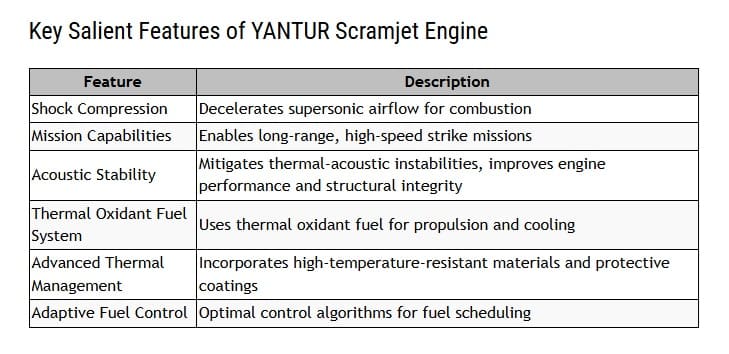
There are no compressor blades in a ram jet. Instead, the forward speed pushes air into the inlet. The shock waves then compress and slow the air prior to reaching the combustor. The process sounds simple but is difficult to control at high Mach numbers.
The Yantur design uses oblique and normal shocks in succession, it seems. This step retards the supersonic flow of the inlet to subsonic speed before the fuel burns. Thus, the engine can maintain more stable ignition and reduce the risk of flameout during rapid flight.
However, pressure waves can still damage a ramjet. Paninian says its design helps reduce thermal-acoustic instability in the chamber. That is an important point because harsh vibration can destroy test engines and cut service life.
Digital Control, Heat and Fuel Cooling
The main danger at sustained supersonic speeds is heat. The source material mentions thermal loads around 2400K that require special coatings and high-temperature materials. The engine reportedly also uses fuel as a cooling liquid around the chamber before injection.
This process helps in twofold. First, the fuel will heat the wall of the engine. Next, the combustor receives the fuel, which burns to produce thrust. Real results will still depend on fuel type, cooling channels, seals and build quality.
The Yantur ramjet engine is also connected to Paninian’s Svayatt plan. The Svayatt TD-1 target-decoy system is designed to simulate aerial threats for weapons testing and training. Kalman Intel is used for mission planning of cruise missiles and collaborative combat air vehicles.
Promise, but Proof Still Matters
The policy setting helps, too. India’s iDEX scheme targets the promotion of defense and aerospace innovation through start-ups, MSMEs, researchers and industry partners. That gives private engine companies a clearer path from prototype to military use.
The military value is apparent. A mature Indian ramjet could enable long-range cruise missiles, high-speed UAVs, loyal-wingman concepts and hypersonic test vehicles. It could also assist air defense units in training against faster targets.
Meanwhile, defense readers should remain cautious. Paninian still has to provide data from ground tests, inlet results, thrust figures, combustor stability, flight profiles and thermal-cycle life. Until then, the Yantur Ramjet Engine is a promising private sector step, not a proven operational engine.
References
- Paninian Svayatt Portal — Ramjets
- Paninian Svayatt Portal — Aero Engines
- Paninian Svayatt Portal — Kalman Intel
- iDEX official page
About the Author