

Pakistan’s Role in Defeating the Sri Lanka's Tamil Tigers
Pakistan supported Sri Lanka’s final push
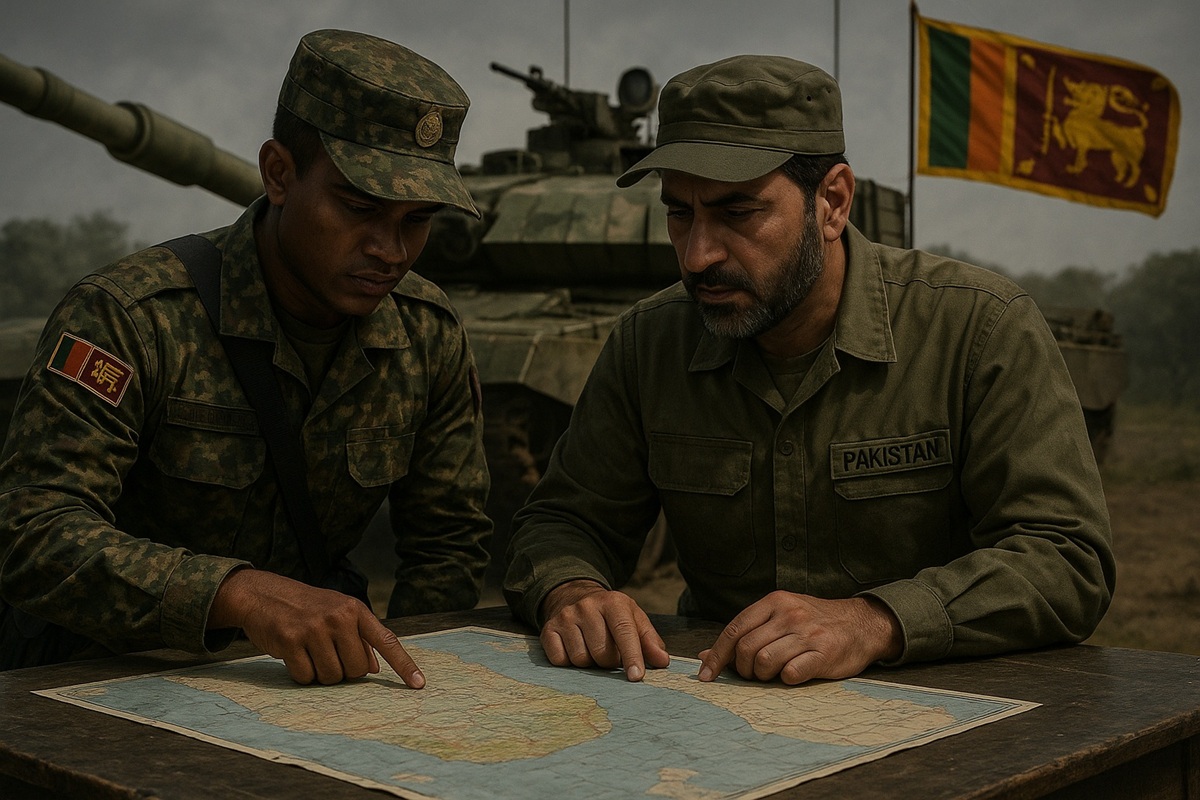
For many analysts, Pakistan’s role in defeating the Tamil Tigers sits in the background of Eelam War IV, yet its impact was real. As Colombo committed to a decisive military solution between 2006 and 2009, Western arms channels narrowed and India faced political constraints. Pakistan quietly stepped in with weapons, training and operational advice to help Sri Lanka sustain a high-speed campaign when ammunition stocks and heavy firepower mattered the most.
When Colombo turned to Islamabad
Sri Lanka needed a partner willing to supply combat-proven weapons quickly and with minimal political conditions. Pakistan’s role in defeating the Tamil Tigers emerged from this strategic gap. According to contemporaneous reports, Pakistan became one of Colombo’s largest suppliers of high-tech military equipment in the final phase, offering armour, artillery, and airborne ammunition when other states hesitated. This support complemented Chinese and Russian deliveries but carried a distinct South Asian political signal.
Much-needed Arms packages
Reports from 2008–2009 describe how Pakistan approved deals for tanks, rockets and precision ammunition as Sri Lankan forces pushed into LTTE-held territory. Media accounts suggest a package including 22 Al-Khalid main battle tanks, valued at over US$100 million, alongside a wider “shopping list” of weapons and air force equipment. Even though some details remain disputed, Pakistan’s role in defeating the Tamil Tigers clearly included sustaining Sri Lanka’s armoured and artillery advantages at critical moments.
Ammunition, rockets and sustained firepower
The war’s final years consumed ammunition at a brutal rate. Pakistani sources and regional reports describe urgent Sri Lankan requests for large volumes of mortar rounds, artillery shells and rockets. Pakistan answered with repeated consignments of ammunition, including multi-barrel rocket launcher munitions and deep-penetration bombs suited for hardened LTTE positions. Consequently, Colombo could maintain continuous pressure along multiple fronts instead of pausing offensives to rebuild stockpiles, which would have given the LTTE time to regroup.
Training for counter-insurgency
Beyond its hardware, Pakistan’s role in defeating the Tamil Tigers depended heavily on decades of officer training and defence cooperation. Thousands of Sri Lankan officers and soldiers have passed through Pakistani staff colleges and speciality schools, gaining exposure to counter-insurgency operations, intelligence methods and joint planning. By the late 2000s, many held senior command positions in Colombo. These personal networks eased rapid coordination on new arms packages and gave Sri Lanka access to Pakistan’s own hard-won lessons from internal security campaigns.
Air Force advisers
Some of the most sensitive elements of Pakistan’s role in defeating the Tamil Tigers relate to air power. Pakistani and Indian media at the time reported that Pakistan Air Force officers were present in Colombo, advising the Sri Lankan Air Force on strike planning, bunker-busting attacks and leadership-targeting missions. Certain accounts even claimed that Pakistani pilots flew strike sorties in Sri Lankan aircraft, although neither government has confirmed such claims publicly.
Nevertheless, experienced planners, targeteers, and technicians can significantly improve sortie effectiveness, especially when new ammunition arrives. Pakistani advisory teams allegedly helped Sri Lankan crews integrate heavier bombs, refine target lists, and adapt tactics to the LTTE’s air defences and terrain.
ISI Intelligence cooperation
Intelligence and security cooperation formed another layer of Pakistan’s role in defeating the Tamil Tigers. Pakistani agencies—often framed through the ISI lens in Indian commentary—shared experiences on counter-terrorism, insurgent logistics, and maritime smuggling routes. For Colombo, the partnership meant additional insight into LTTE supply chains and fundraising networks across the Indian Ocean region. For Islamabad, the relationship offered influence in a territory close to India’s southern coastline and a demonstration that Pakistani arms and training could shape outcomes beyond its immediate borders.

India and the Diplomatic cover
Diplomatically, Pakistan backed Sri Lanka’s narrative that it was conducting a legitimate counter-terrorism campaign. Pakistani leaders repeatedly affirmed support for Colombo’s “war on terror,”, while many Western capitals expressed human-rights concerns. This political alignment gave Sri Lanka useful cover in international forums, even as casualty figures mounted. At the same time, Pakistan’s role in defeating the Tamil Tigers fed Indian anxieties about encirclement, especially as Chinese projects expanded across the island and in the wider Indian Ocean.
Post-war narratives
Pakistan frames its contribution as support for a sovereign state fighting a proscribed terrorism organisation. Tamil activists, human rights groups, and some Western commentators argue, however, that external arms suppliers—including Pakistan, China, and others—share responsibility for the civilian toll of the final offensive. Therefore, debates over Pakistan’s role in defeating the Tamil Tigers now sit inside broader arguments about accountability, universal jurisdiction and post-war reconciliation in Sri Lanka.
Counter-insurgency lessons learned
For defence professionals, this case offers three lasting lessons. First, reliable external suppliers can dramatically increase a state’s endurance during a grinding campaign, particularly when heavy armour and artillery dominate. Second, long-term training pipelines may prove more important than any single arms deal, because they shape the commanders who eventually plan and execute operations. Third, quiet diplomatic backing can shield controversial campaigns from external pressure long enough to reach a military decision—though the political and ethical costs may surface years later.
In that sense, Pakistan’s role in defeating the Tamil Tigers illustrates how arms, training and diplomacy can combine to reshape a small state’s battlefield fortunes while also leaving a complex legacy for regional security and international law.
References
- Indian Express – Pak played key role in Lanka’s victory over Tamil Tigers: https://www.indianexpress.com/news/pak-played-key-role-in-lankas-victory-over-tamil-tigers/467482/
- Business Standard – Pakistan played major role in LTTE defeat: https://www.business-standard.com/article/economy-policy/pakistan-played-major-role-in-ltte-defeat-sources-109052800127_1.html
- SIPRI Arms Transfers Database – Sri Lanka imports: https://www.sipri.org/databases/armstransfers
- Daily Mirror – Over 7,000 Sri Lankan officers and soldiers trained by Pakistan: https://www.dailymirror.lk/front-page/Over-7-000-Sri-Lankan-military-officers-soldiers-trained-by-Pakistani-Army/238-266936
About the Author