Pakistan $686m F-16 Upgrade — US Signal to India
The Pakistan F-16 upgrade $686 million package is the most consequential external boost to Pakistan Air Force combat power in years. Washington frames the deal as a counterterrorism and stability measure, yet it also sends a clear strategic signal to India and the wider Indo-Pacific.
Inside Pakistan’s $686m F-16 Upgrade Package
At its core, the Pakistan F-16 upgrade $686 million deal funds sustainment and modernization, not shiny new strike weapons. The US Defense Security Cooperation Agency has notified Congress of a package built around mission systems and secure communications. It also locks in long-term fleet support and has triggered a standard thirty-day congressional review window.
Most of the Pakistan F-16 upgrade’s $686 million funding falls under non-major defense equipment categories.
In practice, the package updates mission-planning tools, Operational Flight Program software, and critical cryptographic applications for the fleet. It also pays for simulators, test equipment, technical documentation, and a deep pipeline of spare parts. These apparently boring items actually keep jets combat-ready into the 2030s and 2040s, long after headlines fade.
The Pakistan F-16 upgrade $686 million notification classifies only about thirty-seven million dollars as Major Defence Equipment. That smaller segment funds Link-16 terminals and a limited batch of Mk-82 five-hundred-pound bombs. Those bombs exist purely for testing and certification, not for building large operational stocks.
Link-16 is the single most important technology inside the Pakistan F-16 upgrade ($686 million package). This jam-resistant datalink lets F-16s share targeting and sensor tracks in real time with Erieye aircraft. It also connects them to ground nodes and other shooters, compressing decision timelines inside contested airspace. By improving shared awareness, Link-16 reduces fratricide risk and strengthens cooperative engagement options for Pakistan Air Force crews.
F-16s and Pakistan’s Air Doctrine
For four decades, the F-16 has sat at the core of Pakistan’s airpower doctrine, so the $686 million Pakistan F-16 upgrade decision protects more than 70 multirole fighters that still anchor precision strike, air defense, and deterrence.
These jets entered service in 1983 and evolved from Cold War interceptors into digitally networked multirole assets. The new Pakistan F-16 upgrade program, costing $686 million, arrives after sanctions-era maintenance gaps, severe use in counterinsurgency campaigns, and increasingly complex electronic-warfare environments.
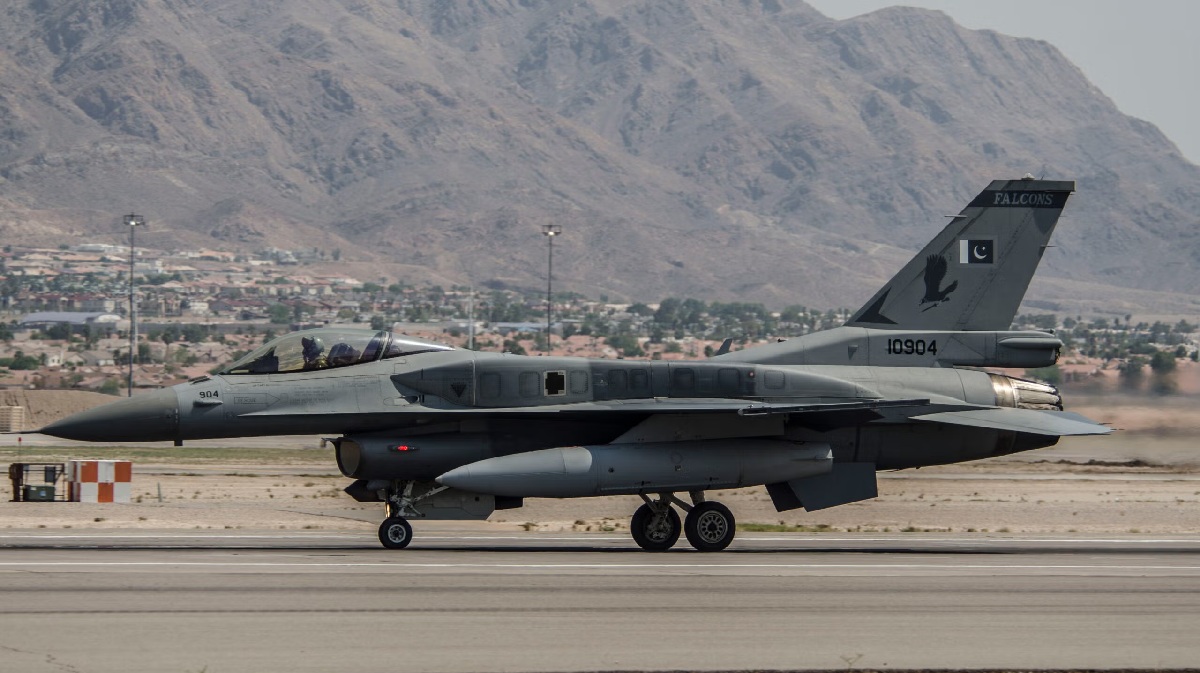
During Operation Zarb-e-Azb, PAF F-16s flew politically vital precision strikes against militant targets along the Afghan frontier. These missions showed how central the F-16 had become to Pakistan’s counterterrorism and counterinsurgency campaigns. With the Pakistan F-16 upgrade’s $686 million sustainment line open, those airframes gain a badly needed second life.
Combat-Proven F-16s with Upgraded Avionics
They can now pair hard-won combat experience with refreshed avionics, navigation suites, and identification systems into the 2040s. Crucially, Link-16 will let these fighters plug far more cleanly into Pakistan’s wider kill chain. The Pakistan F-16 upgrade’s $686 million network boost meshes naturally with the Saab 2000 Erieye AEW&C aircraft.
It also links more effectively with ground-based radars, turning dispersed sensors into a unified view for managing air battles. For a more profound look at how Pakistan already uses networked kill chains against India, read Defense News Today’s analysis. The article, “Pakistan’s Kill Chain Downs Indian Jet: Michael Dahm,” breaks down that engagement in technical yet accessible detail.
US Leverage and the F-16 Precedent
The F-16 story also mirrors the broader arc of US–Pakistan relations, and the Pakistan F-16 upgrade $686 million case fits a long pattern of cooperation mixed with mistrust. In the 1980s, Washington saw Pakistan as a frontline state against the Soviet Union and supplied F-16s on favorable terms. Later, nuclear-related sanctions froze paid-for jets on US soil, resulting in a permanent change in Pakistani strategic thinking.
After 9/11, renewed counterterrorism cooperation brought new Block-52 F-16s and Mid-Life Upgrades for older airframes. More recently, a separate US$450 million sustainment package in 2022 drew Indian protests and came with tight monitoring requirements, underlining the heavily managed nature of this relationship.
That legacy explains why the new notification for the Pakistan F-16 upgrade $686 million deal stresses that no new weapons are involved and no extra US personnel will deploy. Washington limits political risk while preserving leverage through software, sustainment, and export-controlled components that Pakistan cannot easily replace from non-Western sources.
Strategic Signal to India and the Indo-Pacific
Whatever the formal paperwork says, India will read the Pakistan F-16 upgrade’s $686 million approval through the prism of a long-running rivalry. New Delhi has already objected to earlier sustainment deals, arguing that every incremental capability boost indirectly targets Indian forces and complicates future crisis management.
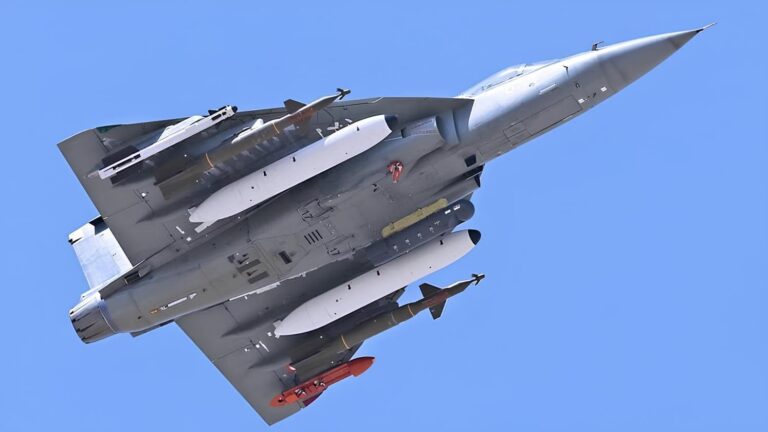
For Pakistan, the timing of the $686 million package for the Pakistan F-16 upgrade is helpful. Economic constraints are biting into defense modernization, even as India inducts Rafales, Tejas MK-1A variants, and new long-range air-to-air and cruise missiles. A modernized F-16 fleet offers a stabilizing anchor while Pakistan experiments with JF-17 upgrades and other Chinese-origin systems.
For Washington, the Pakistan F-16 $686 million upgrade framework is less about choosing sides and more about shaping behavior. Keeping a critical slice of PAF airpower tied to US-controlled supply chains, software keys, and compliance rules ensures enduring leverage, even as the US courts India as a key Indo-Pacific partner.
To place this dynamic in a wider regional context, readers can also explore Defense News Today’s explainer on why the F-35 fighter jet is not the right fit for India’s Air Force, which highlights the political and operational trade-offs India faces in choosing its path.
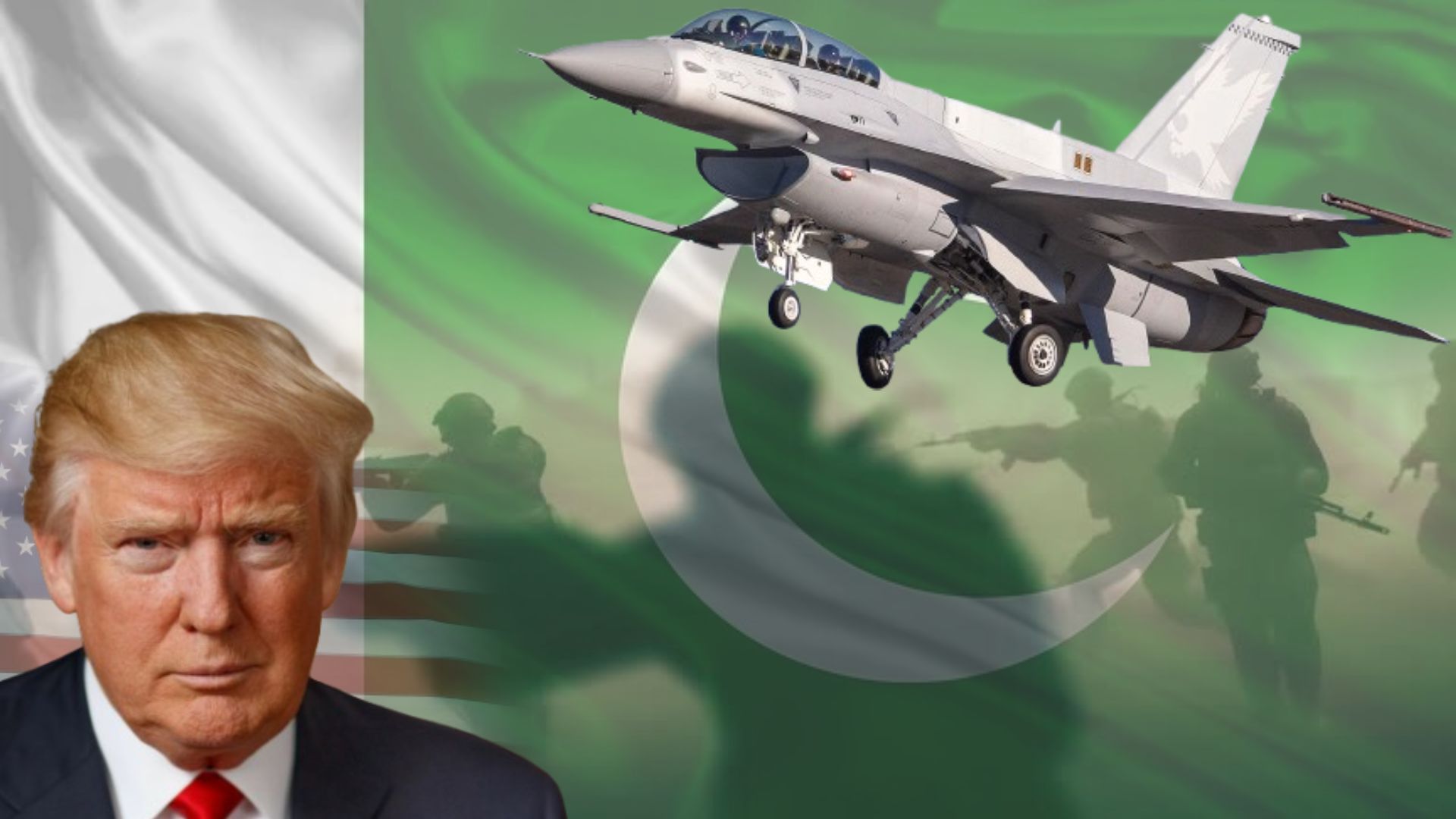
Future Air Combat in South Asia
Operationally, the Pakistan F-16 upgrade $686 million deal buys time and flexibility for the Air Force. It ensures the PAF can field a credible, network-enabled F-16 fleet well into the 2040s. That breathing space lets planners experiment with newer Chinese aircraft and future indigenous combat aviation programs.
In a future crisis, Link-16-equipped F-16s will close kill chains faster and with fewer mistakes. They will share Erieye tracks more cleanly and help commanders understand the air picture in real time. Improved links and software also make it easier to deconflict crowded skies and avoid friendly-fire incidents. These Pakistan F-16 upgrades, which cost $686 million, strengthen defensive counter-air and precision strike options for the PAF. They still will not turn the jet into a fifth-generation peer for the Rafale or any future Indian stealth design.
Conclusion
However, perception will matter as much as the technical detail in any future crisis. Indian analysts already argue that the Pakistan F-16 upgrade $686 million package narrows important qualitative gaps. They fear these gains could embolden Pakistani planners during a standoff, even if Washington calls the deal balance-neutral.
Ultimately, the Pakistan F-16 upgrade $686 million decision shows how legacy fighters can still shift deterrence calculations when they plug into modern networks. In South Asia’s permanently tense airspace, information dominance, sustainment, and political leverage may matter as much as raw platform generation in deciding who enjoys the final advantage.
References
- https://defensenewstoday.info/flawless-kill-chain-pakistans-networked-strike-took-down-indian-fighter-says-michael-dahm/
- https://defensenewstoday.info/why-the-f-35-fighter-jet-isnt-the-right-fit-for-indias-air-force/
- https://www.businesstoday.in/world/us/story/us-authorizes-sale-of-686-mn-package-of-advanced-tech-support-for-f-16-fighter-jets-to-pakistan-506250-2025-12-11
- https://www.dawn.com/news/1709178
About the Author