
Pakistan Navy SMASH ASBM Test 2025 — Indigenous Sea Strike
Pakistan’s P-282 “SMASH” anti-ship ballistic missile
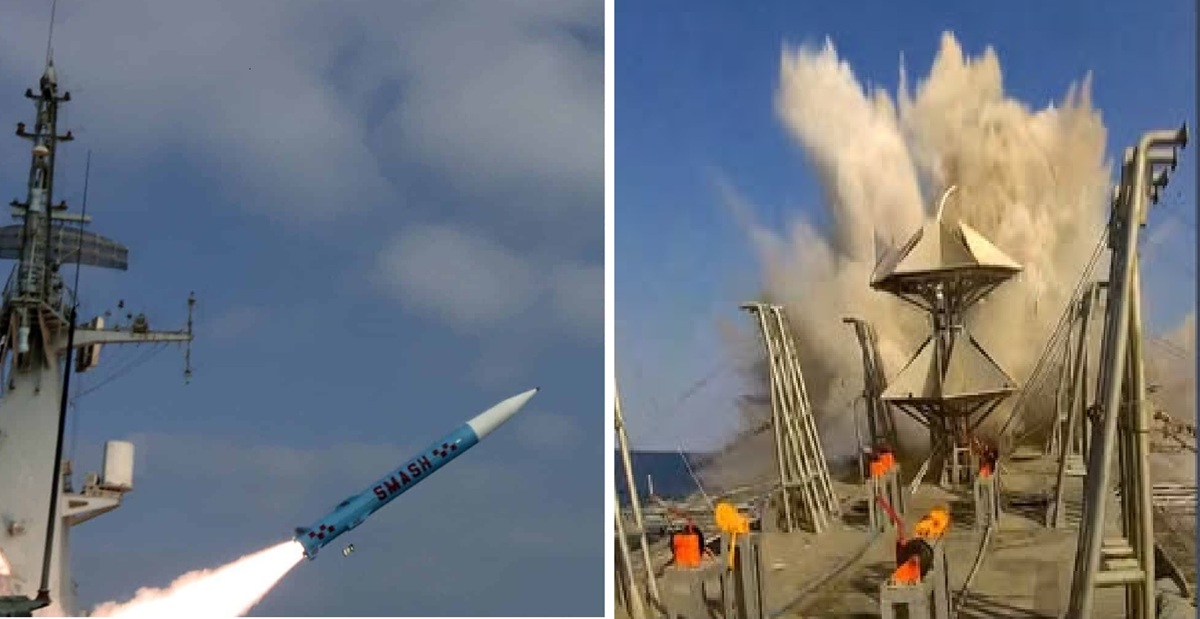
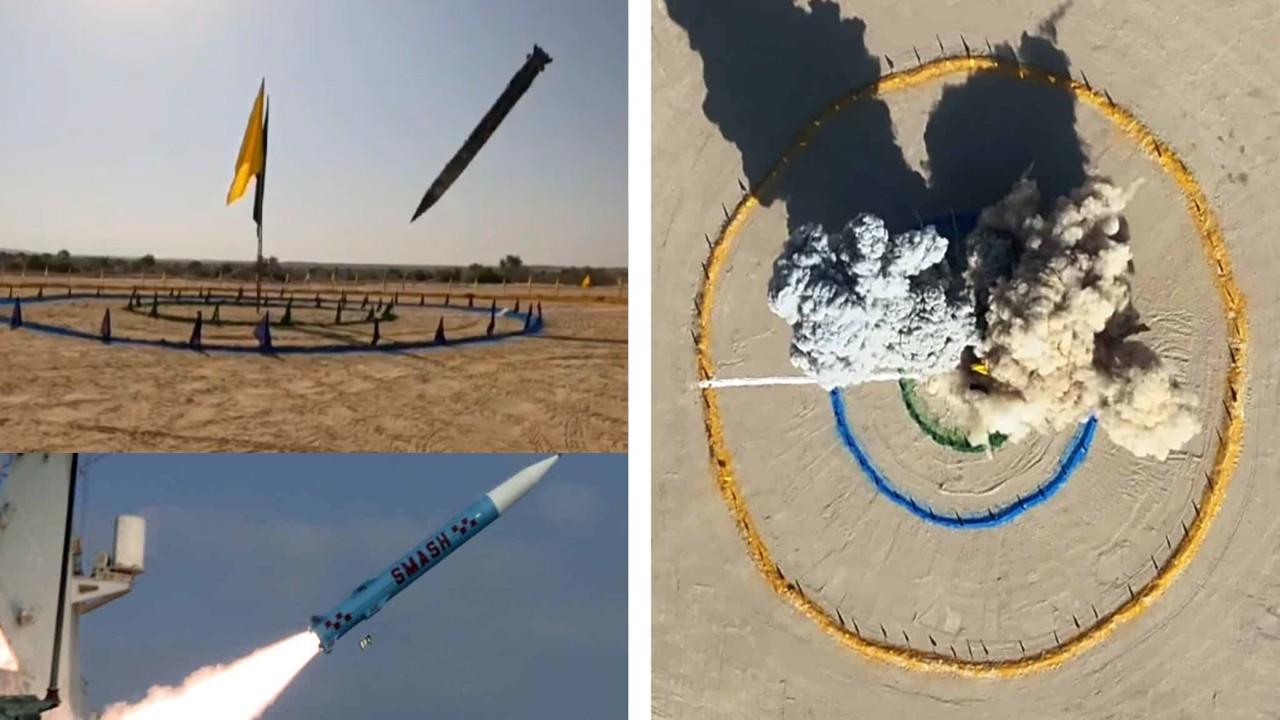
On 25 November 2025, the Pakistan Navy conducted another live test of its ship-launched P-282 “SMASH” anti-ship ballistic missile from a Zulfiqar-class frigate. The Pakistani Navy’s SMASH anti-ship ballistic missile test signals that the weapon is moving from concept to operational sea-based strike capability. Senior naval leaders, scientists, and engineers watched the firing, underlining how central SMASH has become to Pakistan’s maritime modernization effort.
Official information remains limited. However, Navy statements stress that the missile can engage both maritime and land targets and uses a modern guidance package with terminal maneuvering for high-accuracy strikes. Pakistani sources continue to place the range at around 350 kilometers, allowing SMASH to keep surface groups and coastal infrastructure at risk beyond Pakistan’s immediate littoral waters.
For readers tracking the broader context, Defense News Today’s wider Pakistan Navy modernization coverage sets this test within a long-running recapitalization of the fleet.
A modernisation flagship
SMASH first appeared in public testing in November 2024, when Pakistan confirmed a successful launch from a Type 22P (F-22P) frigate against a land target. Open-source assessments suggest that the Pakistan Navy SMASH anti-ship ballistic missile test series now likely totals two or three firings, all from the same class of ship. This pattern points to a controlled qualification campaign tied to a specific launch platform.
Analysts at Quwa and other regional outlets frame SMASH as part of a wider shift toward indigenous naval weapons, including anti-ship cruise missiles and land-attack missiles. An in-house ASBM should give Islamabad more freedom to shape future upgrades without relying entirely on foreign suppliers or export-controlled sub-systems.
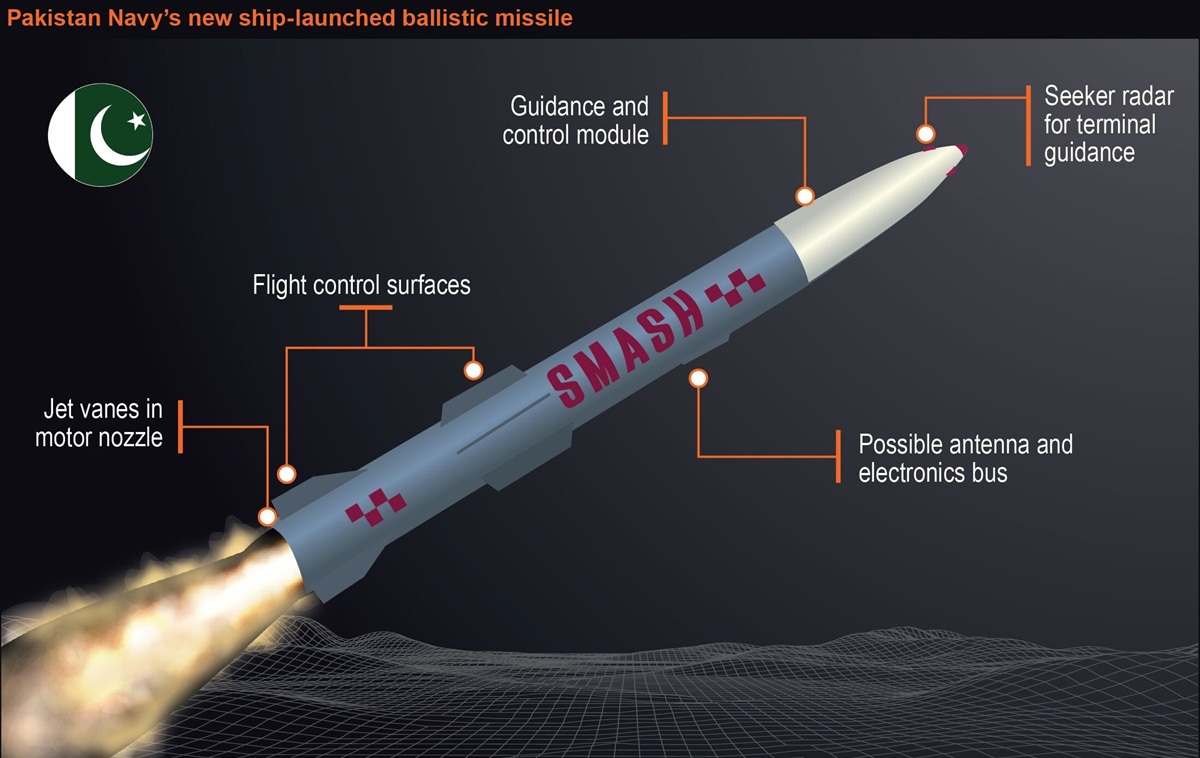
Early speculation likened SMASH to supersonic cruise missiles such as China’s CM-302 or the Russian–Indian BrahMos. Subsequent imagery and official descriptions instead confirm a ballistic configuration with a lofted trajectory and high-G terminal maneuvers, aligning it with emerging anti-ship ballistic concepts rather than classic sea-skimming cruise missiles.
Is Pakistan’s SMASH Missile Really “Indigenous”?
Some critics suggest that Pakistan’s SMASH anti-ship ballistic missile (ASBM) owes a tremendous deal to China’s CM-401 design. Officially, Pakistan presents SMASH as an “indigenously developed” system, yet its close visual resemblance to the CM-401, along with the extensive use of Chinese technology in both the missile and its launch platforms, strongly suggests deep Chinese involvement. In practice, most experts see SMASH not as a clean-sheet Pakistani weapon but as a locally adapted variant built on Chinese foundations. It doesn’t matter whether the P-282 is a copy or heavily derived from the CM-401 design; the main thing is it’s with the Pakistan Navy, and it’s working perfectly fine.
SMASH Early Specifications
| Parameter | Specification (2025, approx.) |
|---|---|
| Missile designation | P-282 “SMASH” |
| Type | Ship-launched anti-ship ballistic missile (ASBM) |
| Origin/developer | Pakistan (Maritime Technologies Complex – MTC) |
| Service status (2025) | Development/early service; tests in 2024 and 2025 |
| Approx. range | ~350 km |
| Flight profile | Quasi-ballistic with terminal manoeuvring |
| Speed (reported) | Supersonic to hypersonic (est. up to Mach 5–8) |
| Length | ~9 m |
| Diameter | ~0.85–0.90 m |
| Propulsion | Single-stage solid-fuel ballistic missile |
| Warhead | Conventional HE / possible submunitions, anti-ship focus |
| Guidance & navigation | INS with advanced terminal guidance and high-G MaRV |
| CEP (estimated) | ~10–14 m (unofficial, analyst estimates) |
| Closest missile derivative | Chinese CM-401 anti-ship ballistic missile (assessed analogue) |
| Primary launch platforms | Zulfiqar-class (F-22P) frigates, inclined launchers |
| Roles | Anti-ship and land-attack; part of Pakistan’s A2/AD layer |
Fatah-II connection
The missile’s external form and reported performance suggest design commonality with the GIDS Fatah-II guided ballistic missile, which Pakistan has tested for precision land-attack roles. Both systems appear to prioritize quasi-ballistic flight, precision guidance, and maneuvering re-entry vehicles designed to stress modern air and missile defenses. Therefore, it is likely that the Pakistan Navy’s SMASH anti-ship ballistic missile test is based on an existing engineering toolkit, rather than an entirely new design.
For a more profound look at this trend, see Defense News Today’s analysis of Pakistan’s evolving rocket force, which tracks how land-based systems are feeding naval programs.
Platforms, targeting and operational use
So far, all known SMASH firings originate from Pakistan’s Zulfiqar-class frigates, which use inclined deck launchers instead of vertical cells. This integration path lets the Navy field a credible ASBM capability without waiting for new-build combatants or complex vertical-launch retrofits. Open-source video suggests that the missile can prosecute both pre-planned coordinates and cueing from external sensors, though the exact targeting chain remains classified.
Operationally, a 350-kilometer-class weapon presents Pakistan the option to threaten high-value naval units operating deep in the Arabian Sea. When combined with shore-based surveillance, maritime patrol aircraft, and drones, SMASH forms part of a layered anti-access and area-denial posture around Pakistan’s coast and key sea lines of communication.
Contested Indian Ocean
The Pakistan Navy’s SMASH anti-ship ballistic missile test is part of a larger trend toward mass-produced, conventionally armed ballistic systems. Pakistani defense analysts increasingly highlight conventional precision missiles as tools to offset India’s numerical advantages and its investment in long-range air defense systems.
Ballistic anti-ship weapons also complicate planning for any Indian carrier or surface action group operating near Pakistani waters. Unlike cruise missiles, maneuvering ballistic re-entry vehicles approach from the upper atmosphere at very high speed. Defenders must therefore manage shorter warning times and more demanding engagement geometry, accelerating the regional shift towards fully integrated air and missile defense at sea.
Conclusion
For now, Pakistan describes SMASH as an indigenous system still in development and validation. Officials also stress that SMASH is meant only for national requirements, not for export.
That stance is unsurprising. The technology is strategically sensitive and already faces political scrutiny from Western capitals. The next milestones will likely include more live firings at sea. Engineers will also work on integrating SMASH across a wider set of surface combatants. They will refine the kill chain that links sensors, decision-makers, and shooters. If Pakistan links SMASH to long-range targeting and resilient command-and-control, its effectiveness will grow sharply. In that case, SMASH could anchor a new layer of sea-based defense in the northern Indian Ocean.
References
- https://quwa.org/pakistan/munitions/smash-anti-ship-ballistic-missile/
- https://missilethreat.csis.org/country/pakistan/
- https://nationalinterest.org/blog/buzz/pakistans-smash-missile-might-be-hypersonic-does-it-matter-bw-120425
- https://turdef.com/article/ship-launched-asbm-test-marks-major-step-for-pakistan-navy
About the Author