PN Sea Sultan Embraer lineage 1000
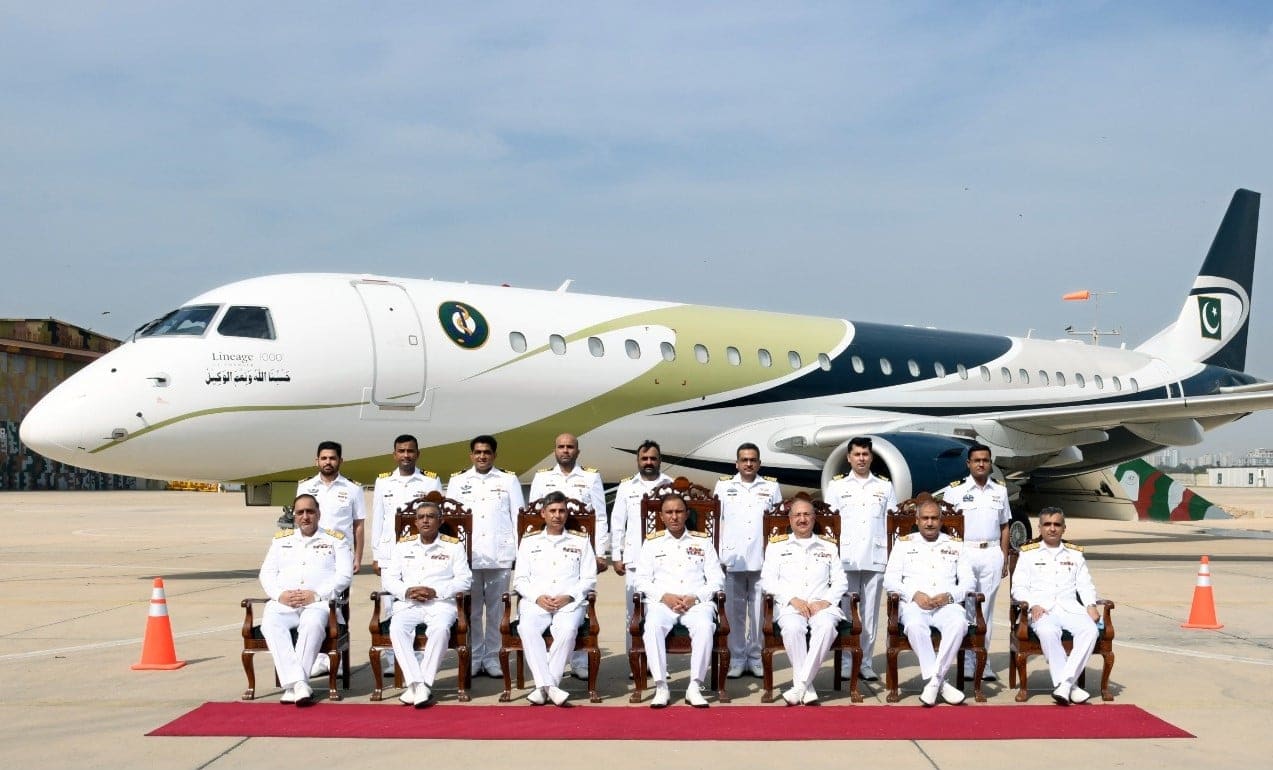
The Pakistan Navy’s Embraer Lineage MPA program is starting to look less like a guess and more like a real thing. Pakistan chose the Embraer Lineage 1000 as the basis for its next long-range maritime patrol aircraft in 2020. In 2021, it worked with Leonardo and Paramount to make the changes. Now, reports say that the first fully modified plane will be ready in 2026. That matters because it makes the Sea Sultan program’s long-running replacement plan into a real delivery timeline.
Why Sea Sultan Matters
The Sea Sultan is meant to replace the old P-3C Orion force in the Pakistan Navy over time. Defense reports have always said that the long-term goal is to replace the Orion fleet with up to ten converted commercial jets. The change, on the other hand, won’t happen all at once. Pakistan got its first unmodified Lineage plane in September 2021. It appears that this plane was mostly used for training and getting to know the crew, not for frontline maritime patrol work.
What Sea Sultan Is
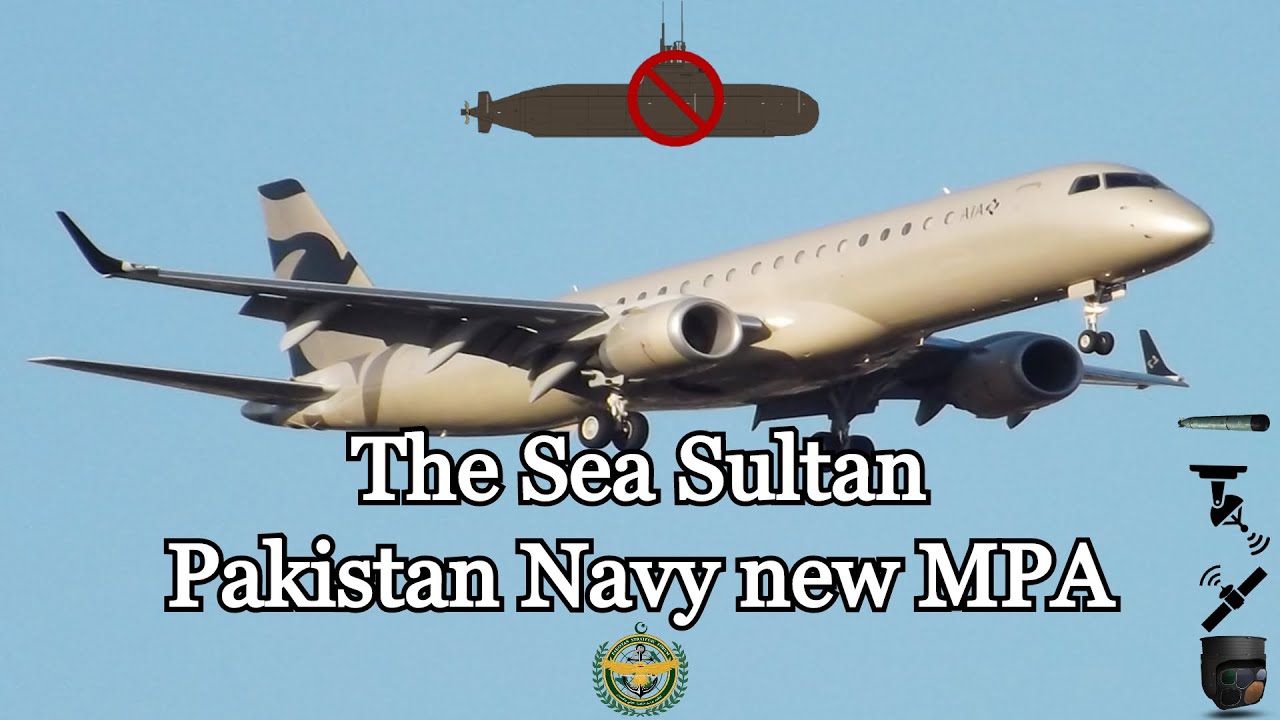
The Sea Sultan is a business jet that comes from the Embraer 190 regional airliner. It is based on the Embraer Lineage 1000E. According to public reports, the plane can fly about 8,500 km, reach a top speed of Mach 0.82, and service at 41,000 ft. Of course, those numbers alone don’t make it a weapon. But they do explain why Pakistan picked a jet airframe. The Pakistan Navy Lineage MPA should be able to respond more quickly, cover more ocean, and stay useful in a wider range of patrol boxes than older propeller-driven designs. The Navy’s stated mission goals and the plane’s performance inform the last point.
Why the Jet Choice Works
A Lineage-based patrol plane is part of a bigger trend in maritime aviation. The US turned the Boeing 737 into the P-8 Poseidon. Pakistan seems to be following the same basic idea, but with a smaller airframe: use a proven commercial platform, add mission systems, and get better reach with less risk of development than starting from scratch. That doesn’t make the conversion any easier, especially if the plane has to include launchers, mission consoles, and anti-submarine systems. The idea is not strange or wrong, though. It is challenging, but it makes sense from a strategic perspective.
Possible Onboard Systems
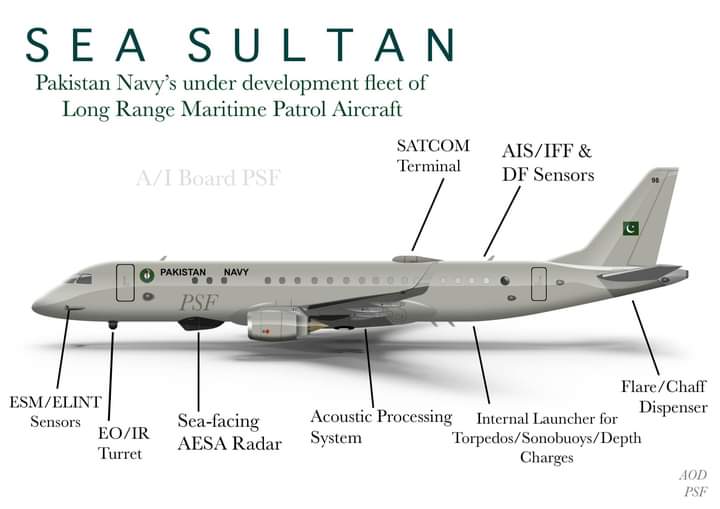
The most pressing question that remains unanswered is the mission package. Official details are still scarce. Public reports indicate that the Sea Sultan conversion could include an AESA radar, an electro-optical turret, ESM and ELINT sensors, satellite communications, chaff and flare dispensers, and the capability to launch torpedoes, sonobuoys, and depth charges. If that setup works, the Pakistan Navy Lineage MPA will be much more than just a spy plane. It would be a real multi-mission asset for anti-submarine warfare, anti-surface search, ISR, and maybe even limited command-and-control functions over the Arabian Sea.
Why the South Africa Phase Matters
The program’s industrial structure is also worth looking into. In 2021, Defence News said that Paramount would take care of maintenance, repairs, and overhauls before the conversion and that Leonardo would provide the maritime patrol and anti-submarine warfare package. DefenceWeb said that by the end of 2024, the plane was being changed in South Africa and was still on track to be delivered in 2026. The same report said that Aerosud had been hired to make two sets of special-mission interiors, which would include observer tables, galleys, dividers, and places to store equipment. The work was supposed to be done by the middle of 2025. To put it another way, the program has gone from planning on paper to doing real engineering work.
What 2026 Delivery Means
The 2026 delivery date should not be viewed as the point when the entire fleet undergoes a transformation. Instead, it means that the first fully converted operational aircraft will probably arrive as part of a phased plan to modernize naval aviation. Admiral Naveed Ashraf said that the Sea Sultan would work well with the current ATR 72 and older P-3C platforms. It would have better range, endurance, anti-submarine, and anti-surface capabilities. So, in the short term, the value is in multiplying forces rather than replacing them right away. If follow-on deliveries stay on schedule, the Pakistan Navy Lineage MPA will first expand options and then become the backbone of maritime patrol operations.
Why It Matters in the Indian Ocean
Defense readers must be aware of what’s happening at sea and how quickly they can react. Pakistan borders crucial sea lanes, energy routes, and contested waters in the northern Indian Ocean. A faster jet-powered patrol plane with modern sensors could make submarine hunting, maritime surveillance, and targeting over the horizon more accurate. Furthermore, it could help Pakistan shorten the time between finding something and responding to it. That doesn’t mean that Sea Sultan is automatically as effective as bigger Western systems. But it does show that Pakistan is working hard to move its naval air arm from an old fleet to a newer, more connected one.
What to Watch Next
There are several signs that will show if the Pakistan Navy Lineage MPA program is really picking up speed. First, wait for confirmation of the first handover in 2026. Second, look for signs that weapons and sonobuoys are working together. This will help you figure out if Sea Sultan is a full ASW platform or mostly a long-range ISR plane. Third, monitor whether Pakistan surpasses the initial three planes and begins progressing towards its long-cherished goal of ten. Sea Sultan will stop being a niche upgrade and start being a central part of Pakistan’s future naval aviation posture if that happens.
Conclusion
The Sea Sultan is important because it shows a bigger change in how the Pakistan Navy plans things. The service is not just replacing old planes with new ones. It is working to make the maritime patrol force faster, with longer legs, and more adaptable. The arrival of the first modified plane in 2026 will be a significant milestone. However, it won’t finish changing. But it will indicate that Pakistan’s transition from the Orion era to the jet age is finally working.
References
- https://www.defensenews.com/naval/2020/10/26/pakistani-navy-confirms-brazilian-jetliner-will-replace-orion-patrol-aircraft/
- https://www.defensenews.com/industry/2021/07/08/pakistan-hires-leonardo-paramount-group-for-aircraft-conversion-program/
- https://www.navalnews.com/naval-news/2021/09/first-sea-sultan-maritime-patrol-aircraft-joins-pakistan-navy/
- https://defenceweb.co.za/aerospace/aerospace-aerospace/pakistan-to-receive-south-african-modified-maritime-patrol-aircraft-from-2026/
About the Author