
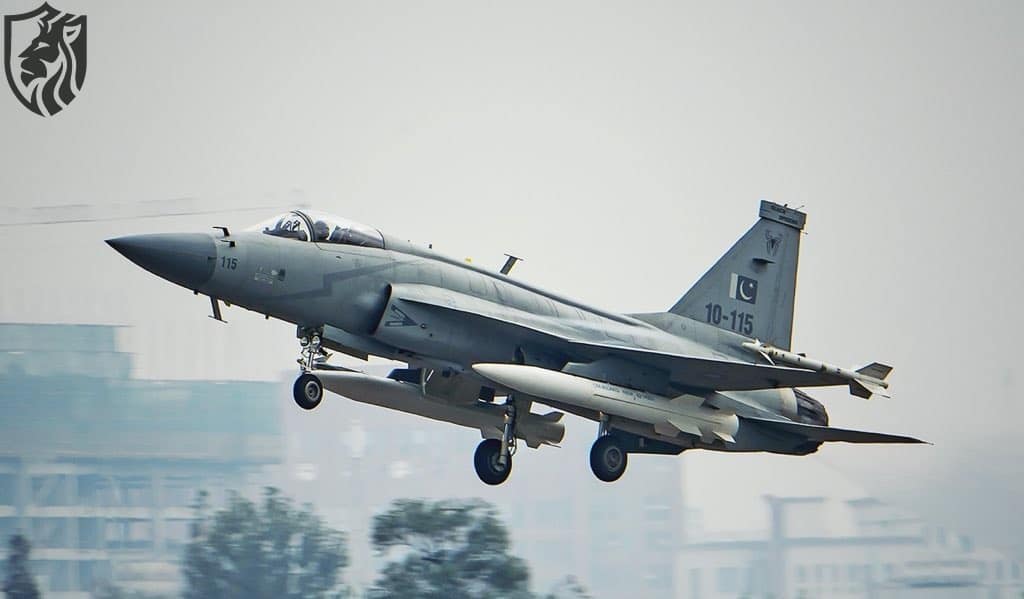
PAF JF-17 Thunder Block III carrying 2 CM400AKG Missiles
At the weekend, the Pakistani military claimed to have successfully targeted and destroyed an Indian S-400 air defense system located in Adampur, Jalandhar district of Punjab province in India. Pakistani forces reportedly launched a precision aerial attack using hypersonic missiles fired from JF-17 jets, rendering India’s $1.5 billion air defense system useless.
According to China Daily and an ISPR statement, the media wing of the Pakistan Armed Forces reported that the charge represents a significant escalation of the tension between the two nuclear powers.
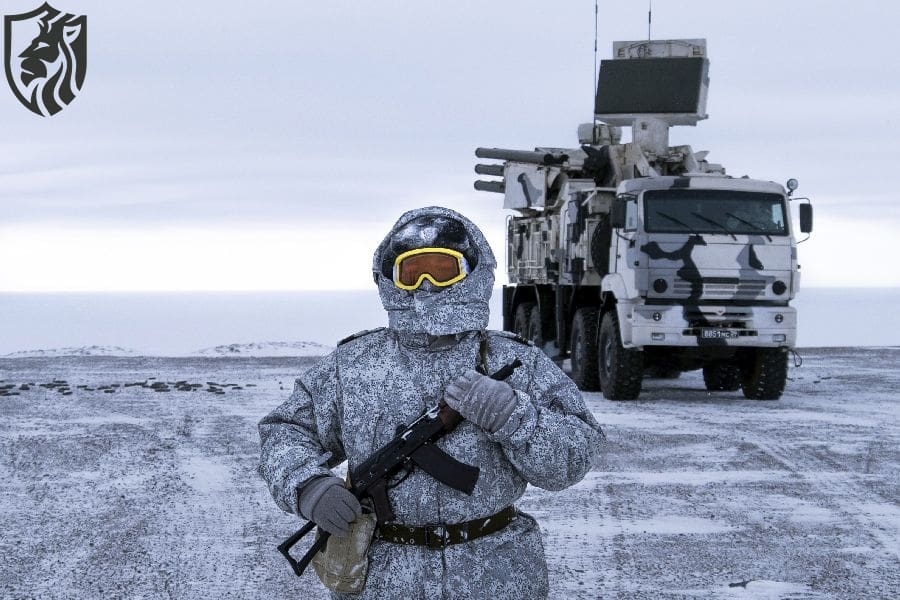
The project, alternatively referred to as “Bunyanul Marsoos” or “Concrete Structure,” was conducted in reaction to what Pakistan considers to be ongoing provocation by India, aimed at several important military installations in India. The Russian firm Almaz-Antey manufactures the S-400 Triumf, widely recognised as one of the world’s most advanced air defense systems.
Broad Spectrum of Aerial Threats
The system can engage multiple targets at a range of up to 400 kilometers and 30 kilometers’ altitude and is intended to be used against a broad spectrum of aerial threats in the form of fighter planes, unmanned aerial vehicles, cruise missiles, and ballistic missiles.
In 2018, India secured a $5.43 billion contract from Russia to purchase its initial S-400 systems, scheduled for delivery in 2021. The induction of the system in the Punjab state bordering Pakistan was aimed at enhancing India’s air defense against a possible threat from its western neighbor.
The S-400’s radar systems, e.g., the 91N6E Big Bird, offer longer-range detection, and its missile system, comprising the 48N6E3 and 40N6E, offers multilevel defense against different types of targets. Its capacity to monitor 100 targets at a time and shoot down 36 is a powerful tool in contemporary warfare.

Pakistan’s military destruction of such a system, if true, would be a major setback for India’s defense plans. The airstrike, according to the ISPR statement carried by China Daily, would have employed precision-guided hypersonic missiles fired from the JF-17 Thunder, a light multirole fighter aircraft developed jointly by Pakistan’s Pakistan Aeronautical Complex and China’s Chengdu Aircraft Industry Group.
Pakistan Air Force
The JF-17, which was first revealed in 2007, is a workhorse of the Pakistan Air Force and is meant to replace the aged Mirage and F-7 fighters. The aircraft has a top speed of Mach 1.6 and a combat range of about 1,350 kilometers. It is equipped with sophisticated avionics, including the KLJ-7A active electronically scanned array radar, making it increasingly able to detect and strike at targets far away.
The platform’s multi-mission capability allows it to be configured to carry multiple different types of ordnance, including air-to-air missiles, precision-guided munitions, and, as this mission claims, hypersonic missiles.
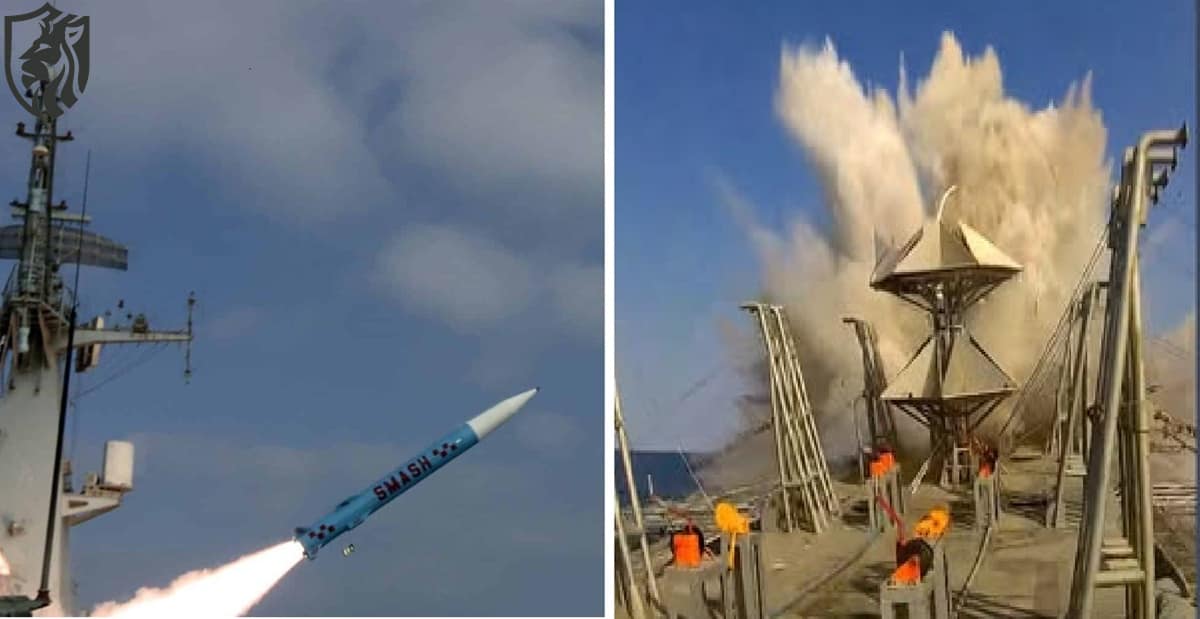
The use of hypersonic missiles in the air strike is noteworthy. Hypersonic missiles, which can exceed Mach 5 in velocity, are designed to evade traditional air defense systems due to their speed, maneuverability, and low flight profiles.
While Pakistan has not revealed the precise nature of the hypersonic missile used, defense analysts believe that it is either a version of the system developed domestically or imported from China. As a strategic ally of Pakistan, China has been quite advanced in hypersonic technology, as can be seen through systems such as the DF-ZF hypersonic glide system and YJ-21 missile.
Centre for Strategic and International Studies
In a 2024 report released by the Centre for Strategic and International Studies, it was noted that China’s advancements in the field of hypersonic weapons have overtaken Russia’s and those of the United States in certain regards, namely readiness for deployment.
If Pakistan had integrated this technology into its JF-17, it would have represented a significant increase in its offensive capabilities. The air raid was on Adampur, which is a significant Indian Air Force base located close to 100 kilometers from Pakistan’s border. The base is home to squadrons of Sukhoi Su-30 MKI fighter jets and is a key hub of India’s northern air operations.
The destruction of an S-400 facility in a region of high strategic value would not only demilitarize India’s air defense but would also be a symbolic statement of Pakistan’s ability to penetrate deeply into the Indian mainland.
Following experts quoted by China’s Xinhua news agency, the loss of one S-400 unit would be meaningful in the context of India’s air defense strategy, particularly in Punjab and Jammu and Kashmir, where tensions with Pakistan are most severe. The surgery comes amid heightened tensions between India and Pakistan, both of which have a long history of conflict over territorial disputes, particularly over the Kashmir region.
Partition in 1947
The two nations have fought three full-blown wars since their partition in 1947, in addition to numerous small battles and cross-border skirmishes. There was a major outbreak of tensions in February 2019 when India conducted airstrikes against suspected militant training camps in the Balakot region of Pakistan in response to a terror attack on Pulwama, Kashmir, that killed 40 Indian paramilitary personnel.
Pakistan responded with airstrikes, resulting in the destruction of an Indian MiG-21 and the capture of its pilot, who subsequently gained his freedom. The 2019 incident served to underscore the precarious dynamics defining India-Pakistan relations, with both countries maintaining significant military presences along the Line of Control in the Kashmir region.
Recent incidents have also put a strain on relations. A terrorist attack on April 22, 2025, in Indian-occupied Kashmir claimed the lives of 26, most of whom were tourists, and prompted India to accuse Pakistan of orchestrating the attack. Pakistan denied the allegations; however, India responded by launching missile strikes on Pakistani military camps, including one located near Islamabad, according to a report by CNN dated May 9, 2025.
Operation Bunyanul Marsoos
Pakistan’s Operation Bunyanul Marsoos seems to be a clear act of retaliation for these attacks, with the ISPR saying that the operation hit several Indian military installations to offset what it termed as India’s aggressive stance. The S-400 system’s destruction, if true, would be the most publicized consequence of Pakistan’s retaliation.
The world community has expressed concern at the growing conflict. On May 9, 2025, TIME wrote that Gulf states, including Saudi Arabia and Iran, have stepped in to mediate peace, plugging a diplomatic vacuum created by the United States, which has reduced its engagement in South Asian conflicts.
The intervention of regional powers underscores the significant international stakes in any conflict between India and Pakistan. Since both nations possess nuclear weapons, the risk of escalation deeply concerns the global community.
The Stockholm International Peace Research Institute estimates India holds 164 nuclear warheads, while Pakistan has around 170. These numbers make it clear—any escalation between them isn’t just regional; it’s a serious international security threat.
Technically, the reported destruction of an S-400 raises questions about the vulnerabilities of even advanced air defense systems. The S-400 design is all about redundancy and mobility, with its components mounted on wheeled chassis for purposes of quick redeployment. However, its success depends on its integration with other defense systems, such as India’s Akash missile shield and Barak-8 surface-to-air missiles.
RAND Corporation
A 2023 study by the RAND Corporation noted that advanced air defense systems, like the S-400, are more vulnerable to saturation attacks or precision strikes on their radar and command centers. Pakistan’s use of hypersonic missiles, which are difficult to target due to their flight path and velocity, could have exploited these vulnerabilities.
Conversely, the air defense systems of various nations exhibit varying degrees of effectiveness. The United States uses the Patriot PAC-3 system, which intercepts ballistic missiles but offers a shorter range than the S-400.
Israel developed the David’s Sling and Arrow systems to counter medium- and long-range threats effectively. Meanwhile, China fields the HQ-9, and Russia deploys the S-500—both designed to compete directly with the S-400. The so-called success of the Pakistani air strike can cause India to reevaluate its reliance on the S-400 system and accelerate indigenous technology development, like the Advanced Air Defence missile.
The broader geopolitical context also deserves consideration. Over the past few years, Pakistan’s military alliance with China has grown stronger, as evidenced by collaborative projects like the JF-17 and the China-Pakistan Economic Corridor, which have strengthened their strategic partnership.
Report by kaldata.com
According to a report by kaldata.com issued in July of 2024, Chinese advancements in hypersonic technology may have enabled Pakistan to develop state-of-the-art weapons. Simultaneously, India’s defense cooperation with Russia, the United States, and Israel has broadened its capabilities, but it has also complicated its strategic alignment. The loss of an S-400 unit could potentially strain India-Russia relations, especially if its performance falls short of expectations.

As events unfold, the world awaits unbiased verification of Pakistan’s claims. Verification from analysis of satellite imagery, open-source reports, and statements from Indian authorities will go a long way in confirming the disabling of the S-400 system.
India has not yet made an official response to the specific claim; however, its military has reaffirmed the ongoing operations to counter Pakistani aggression. The lack of third-party confirmation, emphasized by the scarcity of independent sources other than China Daily and Xinhua, underscores the need to exercise caution when determining the extent of the incident.
The Adampur airstrike, even if totally confirmed, indicates the delicate power dynamic in South Asia. The attack makes it harder for the United States, which has tried to maintain strategic ties with India and Pakistan, to stabilize the region.
Global Onlookers
The surge of tensions highlights the challenge posed by high-technology war weapons in the possession of rival great powers. As India and Pakistan navigate this latest crisis, they are aware that the stakes are not limited to Punjab.
India-Pakistan relations sharply worsened after a terrorist strike on 22 April 2025 at Baisaran Valley close to Pahalgam in Indian-occupied Kashmir that killed 26, the majority of whom were Hindu pilgrims, and left more than 20 injured. India accused Pakistan of sponsoring the attack, claiming that militants of The Resistance Front [TRF] carried it out.
The incident elicited a series of military, diplomatic, and economic measures. Since April 24, there have been skirmishes of light arms and artillery exchanges along the Line of Control [LoC], Kashmir’s de facto border, in the sectors of Satwal, Manawar, and Uri.
Pakistan announced it had shot down two Indian military drones, and India claimed that it had repelled an infiltration bid at Uri, killing two militants and seizing arms. Both nations increased military preparedness, with Pakistan moving tanks and artillery and India holding civil defense exercises across seven states on May 5, the first since 1971.
Diplomatically, the situation unravelled. India recalled its diplomats, expelled Pakistani diplomats, suspended visa services, and closed borders.
1960 Indus Waters Treaty
Pakistan responded by barring Indian flights from its airspace and suspending trade. India unilaterally abrogated the 1960 Indus Waters Treaty, which Pakistan described as an “act of war,” and subsequently, Pakistan approached the World Bank to pursue its legal rights.
Reports have also accused India of releasing water from the Uri Dam, which flooded Muzaffarabad in Pakistan, while the Chenab River experienced an abrupt decline in water flow in Sialkot.India launched missile attacks, Operation Sindoor, on May 6 and 7 against nine suspected terrorist sites in Pakistan, including Kotli, Muzaffarabad, and Ahmed Pur East.
India claimed that the attacks were “non-escalatory”, specifically targeting civilians and military personnel, while Pakistan suffered at least eight confirmed deaths and threatened retaliation. Both countries conducted cyber warfare, with India blocking Pakistani YouTube sites and Pakistan blocking access to Indian media.
Conclusion
The world urged restraint. In the person of Secretary of State Marco Rubio, the U.S. insisted on a “responsible solution,” and the UN suggested mediation. China and Iran advocated de-escalation, and Russia issued a travel advisory. But U.S. President Donald Trump downplayed the crisis, falsely stating the war was 1,500 years old.
Clashes sporadically erupt along the LoC until May 8, 2025, while both the U.S. and India remain on high alert. The war can escalate further because both nations possess nuclear weapons, although there has not been any war yet. Pakistan is taking legal action against the Indus Waters Treaty, and India has a firm military stance, waiting for a response.
References
- China Daily – S-400 Strike Claim – chinadaily.com.cn
- ISPR Pakistan (Official)—ispr.gov.pk
- CSIS – Hypersonic Weapons 2024 – csis.org
- RAND – Air Defence Vulnerabilities – rand.org
- SIPRI – Nuclear Weapons Inventory – sipri.org
- CNN – May 9, 2025 Escalation – cnn.com
- TIME – Gulf Mediation Efforts – time.com
- Kaldata—Chinese Hypersonic Tech—kaldata.com
- Indian MoD – Official Releases – mod.gov.in
- GlobalSecurity – S-400 Triumf – globalsecurity.org
- Pakistan Aeronautical Complex – JF-17 – pac.org.pk
- Chengdu Aircraft Industry Group—chengduaircraft.com
About the Author