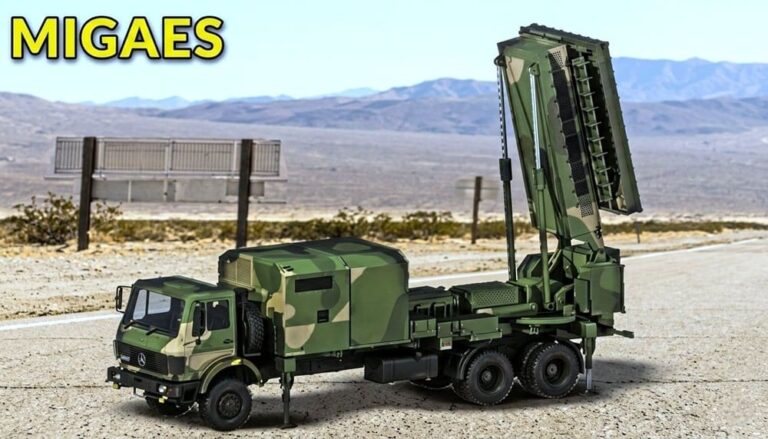
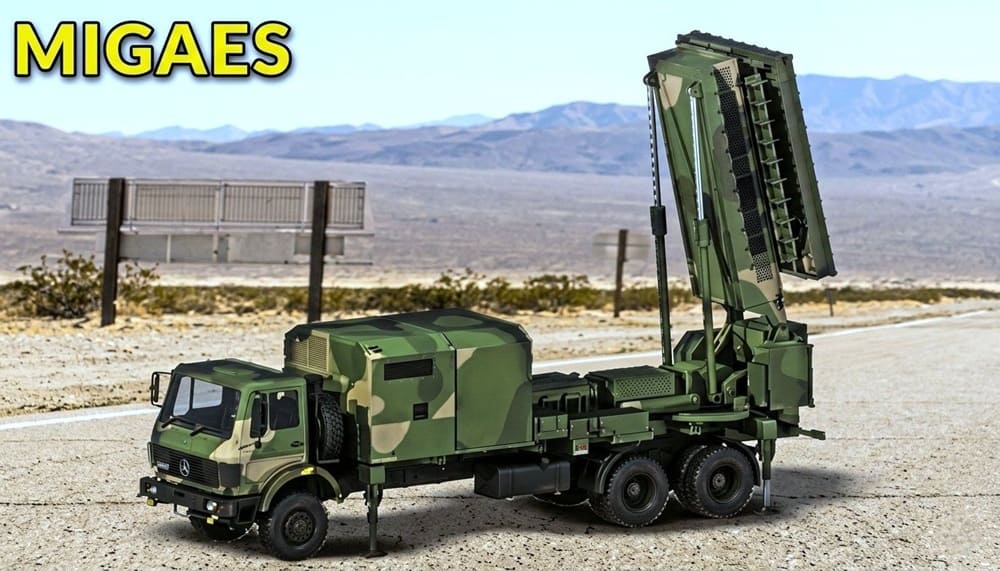
PAF MIGAES Boosts Ground-Based Electronic Attack
Pakistan has made a significant investment in ground-based electronic warfare with the deployment of the MIGAES Electronic Attack System. The action is significant because radars, data links, and quick information flow are essential to modern air combat. Thus, without launching a missile, any system capable of interfering with those processes can influence the battle.
Why MIGAES Counts
Recent news says that the Pakistan Air Force has added the MIGAES Electronic Attack System to its arsenal. This system is a ground-based platform that can block communications and radars used by aerial platforms. According to reports, that target set includes fighter jets, airborne early warning and control aircraft, and other planes that are connected by networked sensors. In short, MIGAES seems to be made to attack the enemy’s view of the sky.
This is important because electronic warfare is now a big part of air operations. NATO says that electromagnetic warfare helps friendly forces and makes it harder for enemies to use the spectrum. In South Asia, that logic is even more important because both sides use datalinks, long-range missiles, and networked sensors.
Who made MIGAES
The Pakistan Air Force developed the MIGAES Electronic Attack System, a ground-based electronic warfare platform. The PAF’s efforts to improve its electronic warfare capabilities against contemporary aerial threats are reflected in its development and induction. According to the information that is currently available, the Air Weapon Complex, in collaboration with the National University of Sciences and Technology, most likely had a major role in the program. By interfering with enemy radars, communications, and data links, the system makes it more difficult for hostile aircraft to identify, coordinate, and function efficiently. MIGAES provides the PAF with a tool for battlefield defense and control by focusing on the electromagnetic spectrum.
What MIGAES Is Built For
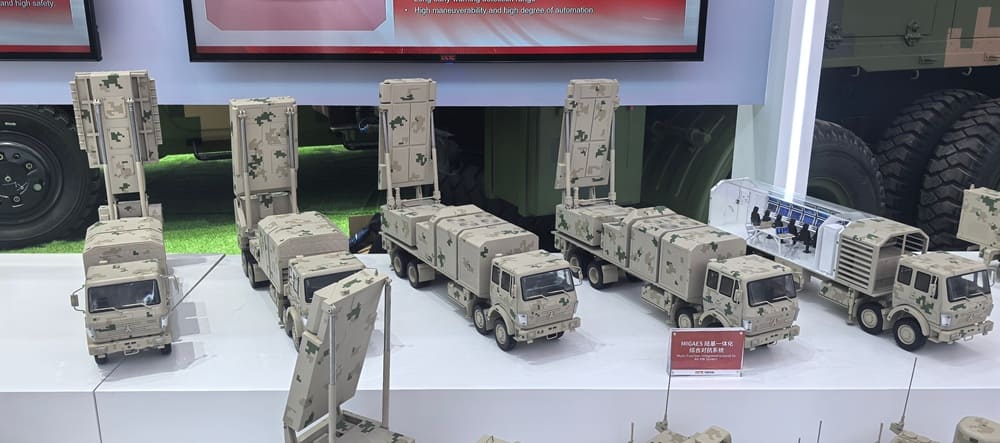
The MIGAES Electronic Attack System gives Pakistan’s air defense system a non-kinetic option. Instead of directly destroying an aircraft, it can try to make radar less effective, stop communications, and make tracking more difficult. Because of this, an opposing force might have to work from a greater distance or in less effective modes.
Open-source reporting has talked more about MIGAES’s mission than its hard technical numbers. So far, public reporting has mostly been about the role and not the specifics like range, power, or frequency coverage. The mission, however, is clear: the system’s goal is to fight for control of the electromagnetic spectrum from the ground while also supporting larger air and air-defense operations.
How MIGAES Fits Modernization
The induction also fits with the PAF’s larger move toward network-centric and multi-domain warfare. The May 2025 air battle between India and Pakistan showed how important situational awareness, sensor fusion, and electronic attack are in shaping outcomes. In this case, MIGAES is not a stand-alone wonder weapon; instead, it makes the ground layer of a bigger system stronger.
That broader trend also appears in related developments. On Defense News Today, readers can compare this story with MC-55A Peregrine Arrives in Australia, Boosting RAAF EW and India’s New Stealth Tech: Anālakṣhya Radar Cloak. For external context, see Pakistan Air Force Inducts MIGAES Electronic Attack System and Reuters’ report on Pakistan’s networked kill chain.
Strategic Value, But Also Limits
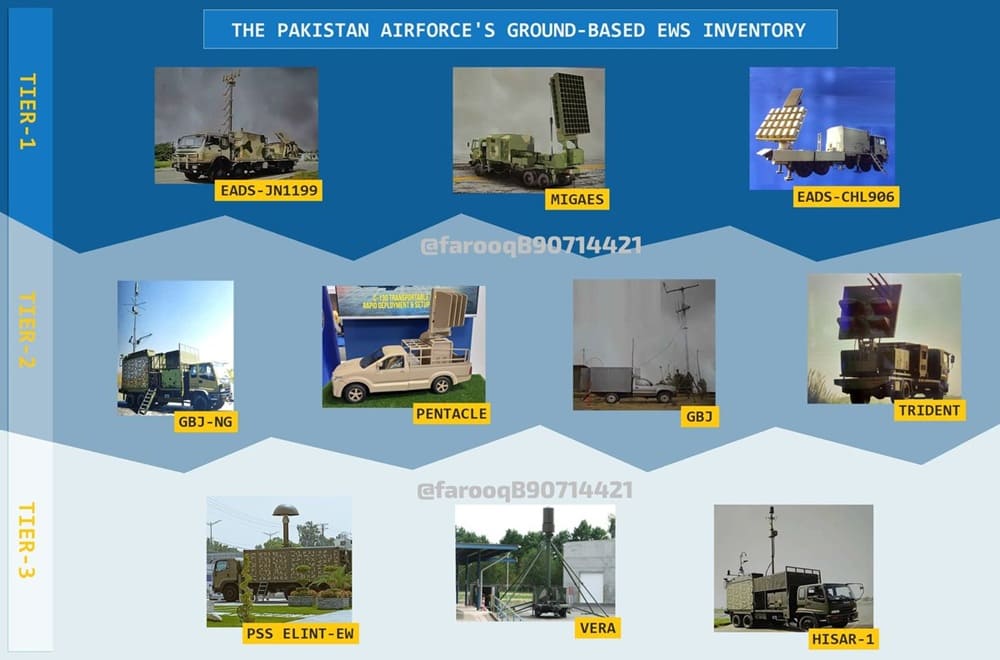
Analysts should still be careful. The MIGAES Electronic Attack System might make it easier to cause trouble and be more flexible in combat, but there is no public proof yet that it would work well against certain airborne radars or hardened datalinks. Also, electronic attacks don’t usually work by themselves. When used with surveillance, air defense missiles, fighters, and battle management networks, it works best.
The MIGAES Electronic Attack System, on the other hand, does point to a clear doctrinal direction. The PAF wants to fight for control of the sky by attacking both aircraft and information flows. It makes sense to do it that way because the side that sees first, connects faster, and disrupts better usually has the upper hand. In that way, MIGAES is more than just another support asset. Pakistan is trying to compete for control of the invisible battlespace, and this is part of that effort.
References
- MC-55A Peregrine Arrives in Australia, Boosting RAAF EW
- India’s New Stealth Tech: Anālakṣhya Radar Cloak
- Pakistan Air Force Inducts MIGAES Electronic Attack System
- How Pakistan shot down India’s cutting-edge fighter using Chinese gear
About the Author