

P-8A Simulator Shipment to China: US Charges South African Firm
What the US Claims
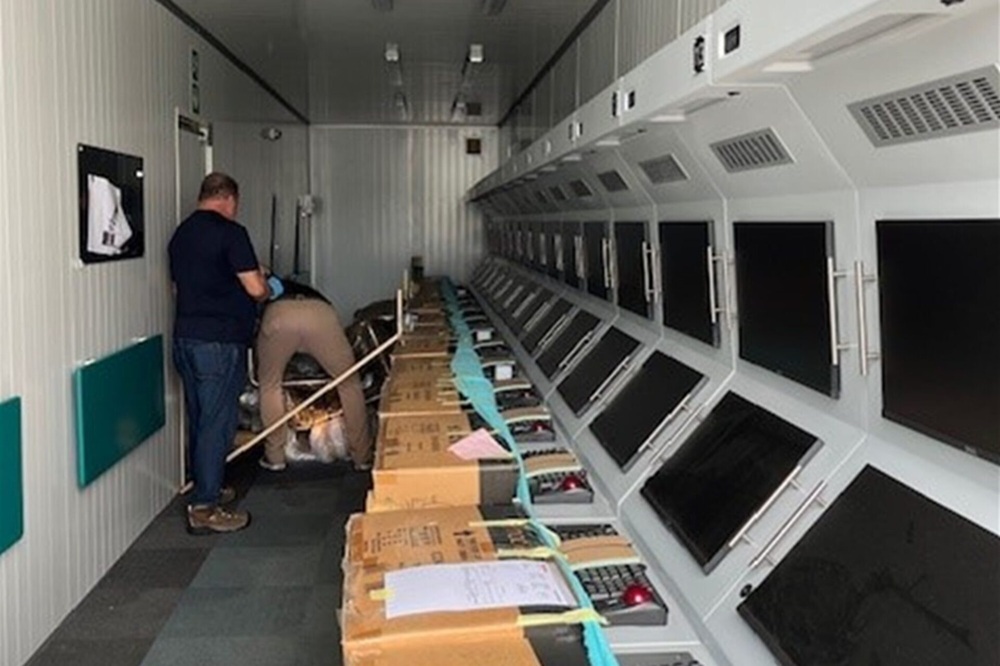
US prosecutors say TFASA tried shipping two containerized mission-crew trainers to China’s PLA. The Justice Department alleges the TFASA P-8A Poseidon simulators used US-origin software and P-8A technical data. Officials say that breached export-control rules. However, the cargo never reached China. Authorities reportedly intercepted the shipment in transit and seized it in Singapore in 2024.
Trump Turns Up Pressure on South Africa
Trump’s team is scrutinizing Pretoria through three connected disputes. Investigators say South African-made parts appeared in Russian drones recovered in Ukraine, raising diversion and export-control concerns. Washington also argues South Africa is drawing closer to Iran after naval drills that included Iranian participation, which it frames as siding with rivals. US prosecutors further allege a South African firm tried shipping two P-8A Poseidon-style ASW trainers to China, and officials seized the containers in transit. Taken together, these cases give Trump more leverage to push compliance, clearer alignment, and tighter controls on sensitive transfers.
Why Simulators Matter
For defense professionals, a trainer is not “just a box.” A mission crew trainer can replicate crew stations, workflows, and sensor employment in ways that compress years of operational learning into months. Moreover, anti-submarine warfare (ASW) training sits at the heart of undersea competition in the Pacific. That background helps us understand why the TFASA P-8A Poseidon simulators caught the attention of the US: Washington believes the project aimed to enhance the PLA’s ability to locate and track submarines, a factor that directly impacts US safety.
Project Elgar: Shipping Trail
Court filings and reporting describe TFASA’s effort as Project Elgar, producing mobile, container-mounted learning systems built around US-controlled inputs. Public coverage also links the shipment to COSCO carriage and a transshipment stop in Singapore. Meanwhile, a TFASA-released internal report says the cargo departed South Africa in late 2024 and was reportedly confiscated in Singapore in November 2024.
Recruitment Allegations
Since 2022, separate reporting has claimed the PLA tapped TFASA-linked channels to hire former NATO pilots and instructors, aiming to absorb Western tactics and operational know-how. Even as governments tightened rules and issued warnings, the central worry did not change: a training network can shift capability without moving a single aircraft. As a result, the TFASA P-8A Poseidon simulators case sits inside an already charged political and counterintelligence climate.
TFASA’s Rebuttal
TFASA rejects the US narrative and says media characterizations can be “factually incorrect and misleading.” The company argues the containers held basic training modules rather than tactical simulators or classified systems, and it points to an “independent investigation” referenced in its public materials. Such an argument creates the core technical question for analysts: what exactly was modeled, what data powered it, and how closely did the systems mirror P-8 mission processes?

Watchpoints
The episode underlines how training technology has become a frontline export-control issue. If the systems genuinely replicated P-8A mission workflows, they could have accelerated Chinese ASW learning fast. However, TFASA challenges that characterization, so the technical record and court process will matter most. Either way, partners will likely tighten checks on simulator exports and transit routes.
References
- https://www.justice.gov/opa/pr/united-states-files-forfeiture-action-against-two-anti-submarine-warfare-crew-trainers-en
- https://breakingdefense.com/2026/01/us-reveals-seizure-of-purported-anti-submarine-mission-trainers-en-route-to-china/
- https://www.janes.com/osint-insights/defence-news/c4isr/us-files-forfeiture-action-for-aircrew-training-equipment-seized-en-route-from-south-african-company-to-china
- https://defenceweb.co.za/aerospace/aerospace-aerospace/test-flying-academy-of-south-africa-faces-us-ire-over-china-contract/
About the Author