France’s New Carrier Equipped with U.S. Tech
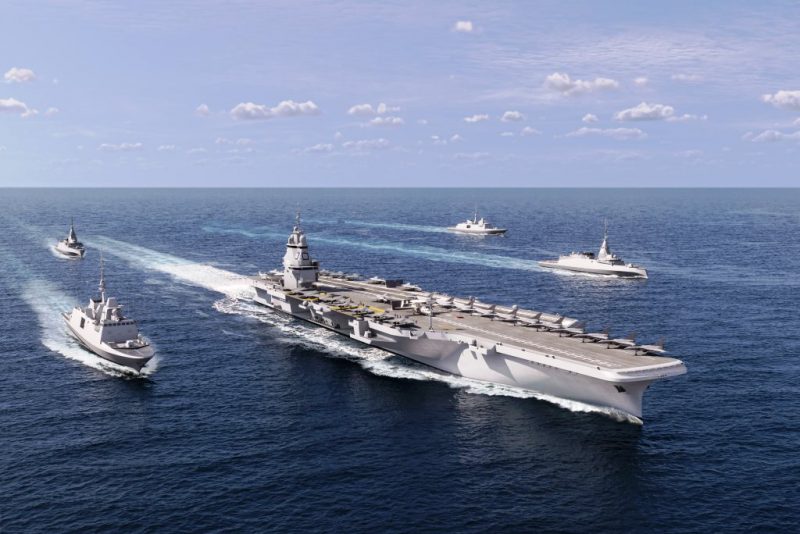
General Atomics has signed a $41.6 million contract to help the French Navy get ready for the future. The goal is to make two high-tech systems for France’s new aircraft carrier: the Advanced Arresting Gear (AAG) and the Electromagnetic Aircraft Launch System (EMALS). These systems are already essential for the Ford-class carriers in the U.S. Navy. France now plans to add them to its new PANG (Porte-Avions de Nouvelle Génération) carrier.
EMALS is a new kind of catapult that is much better than older steam catapults. It uses electromagnetic energy to launch planes more smoothly and accurately, and it works with both bigger jets and smaller drones.
Steam catapults rely on high-pressure steam and cause more mechanical problems. EMALS, on the other hand, is more reliable, needs less maintenance, and is more flexible. It works well for launching the new unmanned aerial vehicles (UAVs), which are lighter and may not work with older systems.
AAG is a new system that safely catches planes without putting too much stress on their frames. Older arresting systems use hydraulics, which can be hard on planes and need a lot of upkeep. AAG uses cutting-edge energy-absorbing technology to make landings smoother and safer for pilots and their planes.
Today’s carriers expect busy operations, making this kind of innovation essential for reducing wear and tear and maintaining readiness. The Foreign Military Sales (FMS) program plays a crucial role in this contract. In simple terms, France, not American taxpayers, is funding this project.

French PANG Project
The full $41.6 million has already been set aside, and the money won’t run out until the end of this fiscal year. France is committed to the PANG project and is willing to work with U.S. industry leaders to modernize its navy.
Most of the work will take place in San Diego, California, where General Atomics is headquartered. There will also be smaller parts of the project in Tupelo, Mississippi, and Lakehurst, New Jersey. The entire project is expected to be completed by January 2026, allowing ample time for the Preliminary Design Review. This is an important step before full integration can begin.
This stage will need a lot of testing and validation to ensure that the systems meet French operational needs and international safety standards. So, what do we care? France is the only European country that has a nuclear-powered aircraft carrier. The PANG, which will replace the Charles de Gaulle, will show off new naval technology.
U.S. Ford-class carriers
By combining EMALS and AAG, France will be more like the U.S. Ford-class carriers, letting it fly a wider range of planes, including unmanned systems in the future. This ability will greatly increase France’s capacity to project power around the world and help NATO’s efforts to defend itself as a whole. It’s also important to say that there was no competition for this contract.
It was straightforward to choose General Atomics because it had already done well with these technologies. Both systems have already worked well on the USS Gerald R. Ford, which makes it simple to adapt them to French needs.
Still, adapting these technologies for use on a French carrier powered by nuclear energy with different ways of doing things and infrastructure will likely be difficult in its own way. This agreement shows how the U.S. and France are working together more in the military and business worlds, in addition to the technical side.
France Adopts U.S. Technology
France’s decision to use U.S. technology as a key NATO ally makes it easier for countries on both sides of the Atlantic to work together in today’s tense world. NATO needs to keep a technological edge over the seas because China and Russia are both working on their carrier projects.
Will France be able to turn the PANG into the ship that will carry the naval capabilities of the future? This contract demonstrates that work is already underway to construct a new type of aircraft carrier. Using EMALS and AAG isn’t just about new technology; it’s also a sign of a strategic goal: France wants to stay a strong naval power as it enters the 21st century.
The French Navy’s new carrier, PANG [Porte-Avions de Nouvelle Génération], will make France’s navy much stronger, but it has many problems with both technology and money. It will replace the old Charles de Gaulle, which has had many problems, including maintenance issues and infrequent use.
PANG will use a CATOBAR
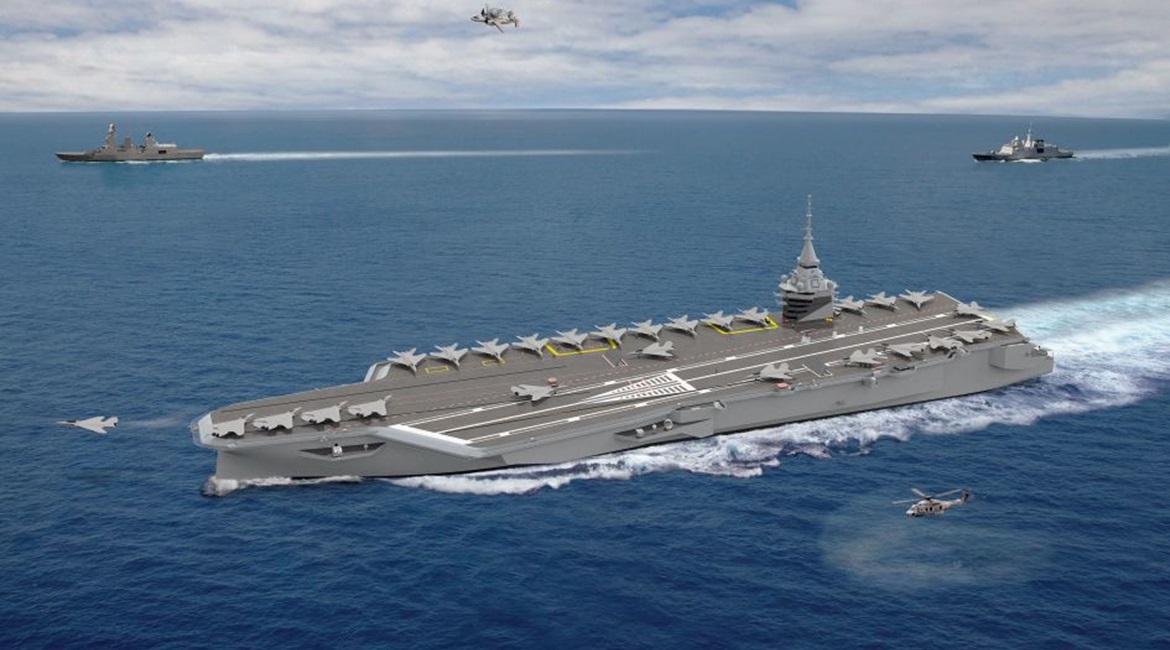
France wants to put the PANG into service by the end of the 2030s. The project is a big step, but it will be difficult to adapt to modern naval warfare. The PANG is interesting because it is so big. It will be much bigger than the ship it replaces, weighing about 75,000 tonnes and being 300 meters long.
The PANG will use a CATOBAR system to launch heavier jets like the Rafale M and FCAS fighters. This change will make it easier for the French Navy to show its strength in tough places. But there are risks that come with switching to a high-tech launch system. The system is expensive and difficult to use, which makes people worry about how reliable it is.
Some people are worried that France could have the same problems with the launch that the Charles de Gaulle did. Like its predecessor, PANG will also run on nuclear power. This means it can go farther without needing to stop for gas all the time. The carrier’s larger size, though, makes things harder.
Conclusion
To stay fully operational, it will need a skilled crew and a lot of money. That is a big problem for France’s defense planners when it comes to supporting the PANG, because they need to make sure that other important military upgrades don’t get cut. The military already has to deal with budget cuts and modernization.
PANG strengthens France’s military presence around the world, in addition to the technology. It will help Paris stay involved in Africa and the Indo-Pacific. But this powerful ship puts more pressure on the navy’s management and readiness. That’s especially true when the global security situation is changing quickly.
The U.S. Navy is now getting ready for hypersonic threats and fighting against carriers in the Pacific. PANG’s future role is now more complicated than ever. How will it deal with all the new threats that are coming up quickly?
References
- Defense Security Cooperation Agency (DSCA). France – Electromagnetic Aircraft Launch System (EMALS) and Advanced Arrest Gear (AAG). 21 December 2021.
- General Atomics Electromagnetic Systems. General Atomics Awarded Contract Continuing EMALS, AAG Evaluation for France’s Next Generation Aircraft Carrier. 2 September 2022.
- French Ministry of the Armed Forces. Porte-avions de nouvelle génération PA-NG. The official program page for France’s next-generation carrier.
- Naval Group. Naval Group welcomes the decision by the President of the French Republic to launch the studies of a future Aircraft Carrier. 8 December 2020.
About the Author