Multiple Kill Vehicle — One Launch, Many Intercepts
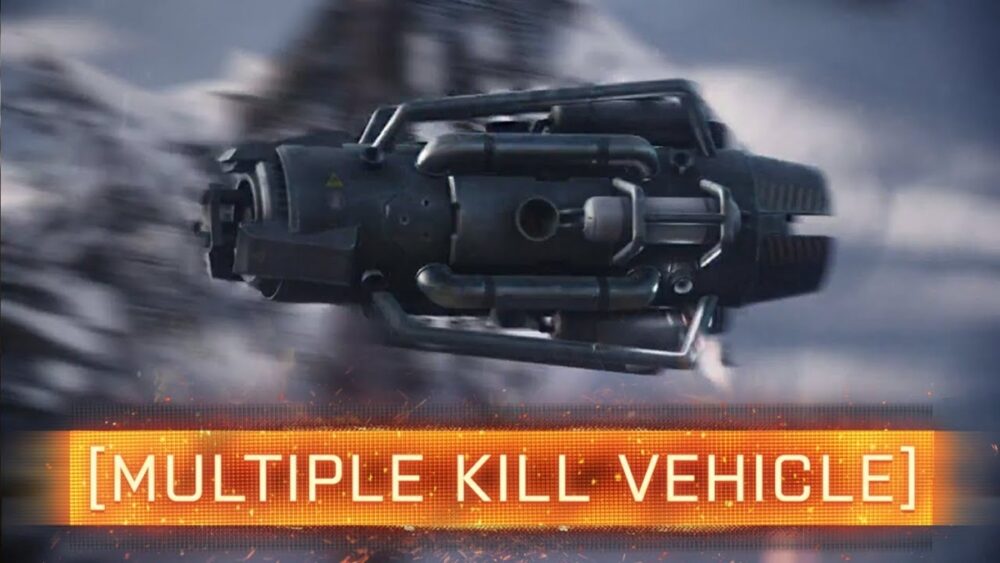
In the early 2000s, U.S. missile-defense planners faced a difficult situation. In space, a real warhead can hide among decoys and debris, creating a “threat cloud.” To improve the chances of success, designers developed the Multiple Kill Vehicle concept, which places several miniature kill vehicles on a single interceptor.
Midcourse Defense and MKV
After boost, before reentry, there is the midcourse phase where objects coast together outside the atmosphere. They may look alike to sensors. Discrimination is as important as closing speed. MKV sought to raise the chance of destroying the actual warhead by striking multiple objects in the same complex.
Finding Real Warheads
A defender is not just chasing a missile. It goes after the right thing in the cloud. If the attacker deploys lightweight decoys that replicate the warhead’s radar or infrared signature, the defender’s “best target” may shift late. This may mean multiple shots for a single-kill interceptor to achieve a kill. The Multiple Kill Vehicle sought to substitute parallel engagements for that uncertainty.
Instead of a single guess, MKV would send out a small flock. Each little vehicle would locate its own way to a given object. More than that, a single interceptor could pick up both decoys and the likely warhead in a single engagement window.
Inside the MKV System
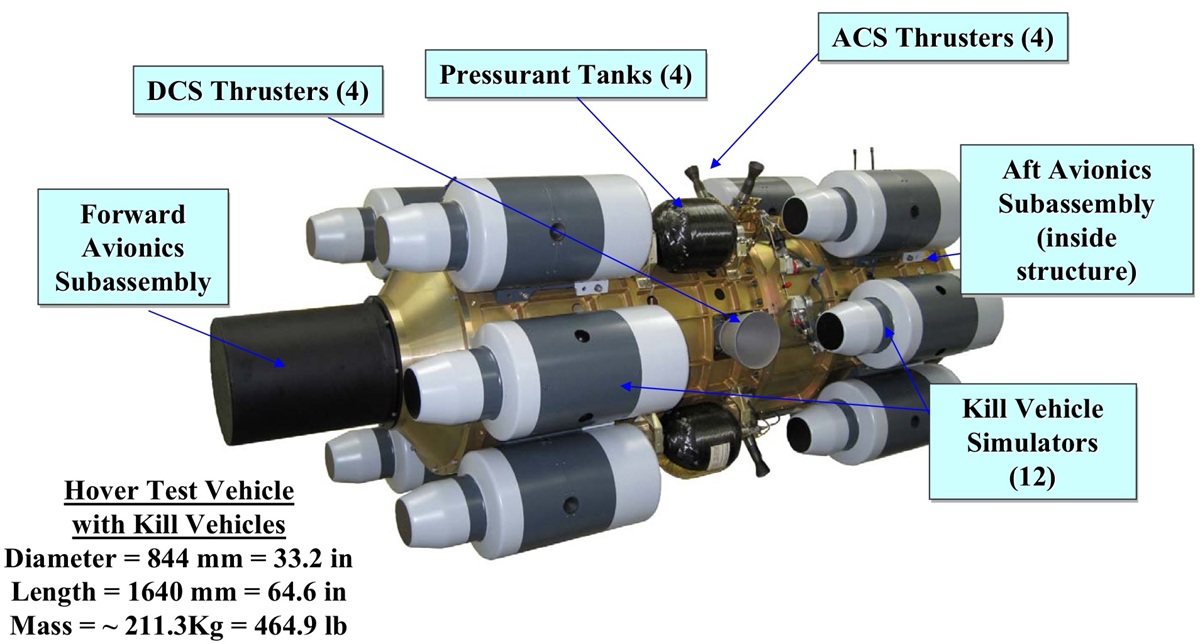
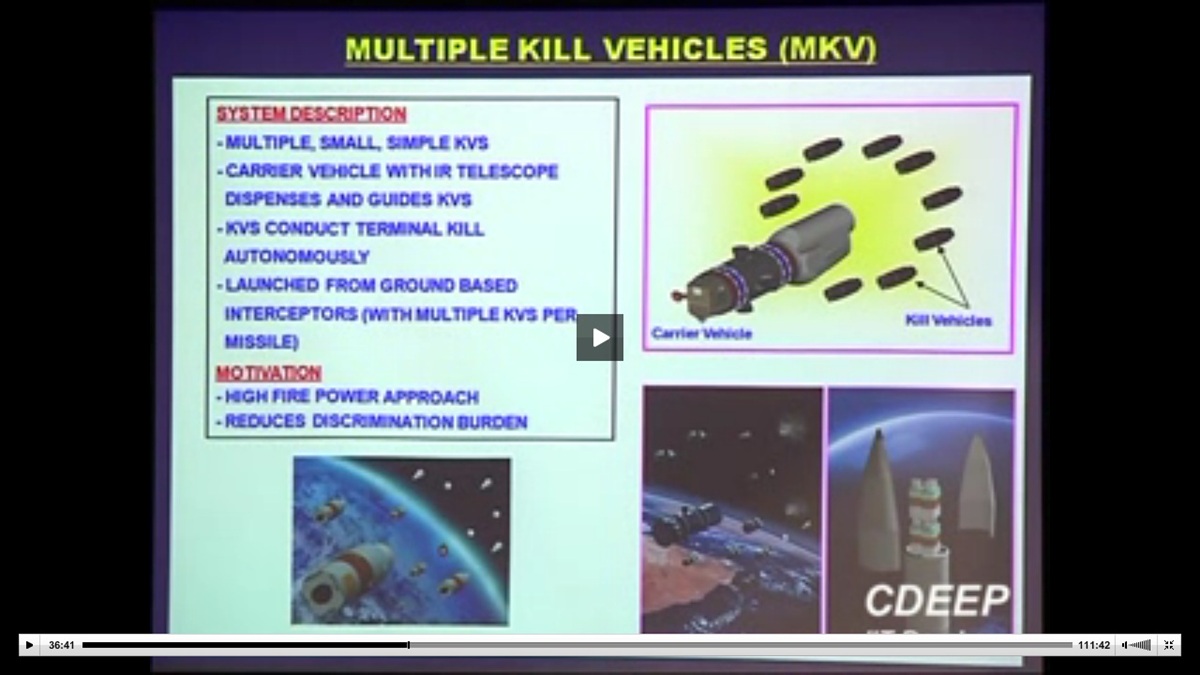
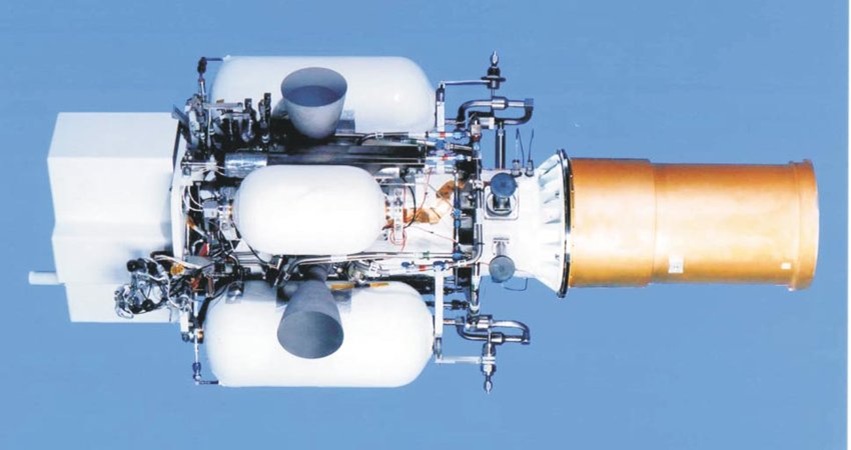
The architecture was based on a carrier vehicle plus a few kill vehicles. The carrier would receive tracking data from the larger Ballistic Missile Defense System and then use its seeker to refine it. It would then release the kill vehicles, which would use their thrusters to ram specific objects.
Each kill vehicle weighed about 10 lb (4.5 kg), so there were “many per booster”, but aggressive miniaturisation of propulsion, guidance, sensors, and power was needed, so capability had to be traded off against mass, heat, and battery life.
Where MKV Would Deploy
MDA planning linked MKV to GBI, then dropped KEI and the SM-3 Block IIA growth path. The aim was to destroy medium- to intercontinental-range ballistic missiles carrying multiple warheads or penetration aids, preferably with a single interceptor missile.
But that vision also signalled a bigger shift. If one interceptor can take out more objects, defenders can save magazines and reduce the number of launches required during a raid. But that advantage is only real if sensors and battle management are reliable under stress.
MKV Hover Test Explained
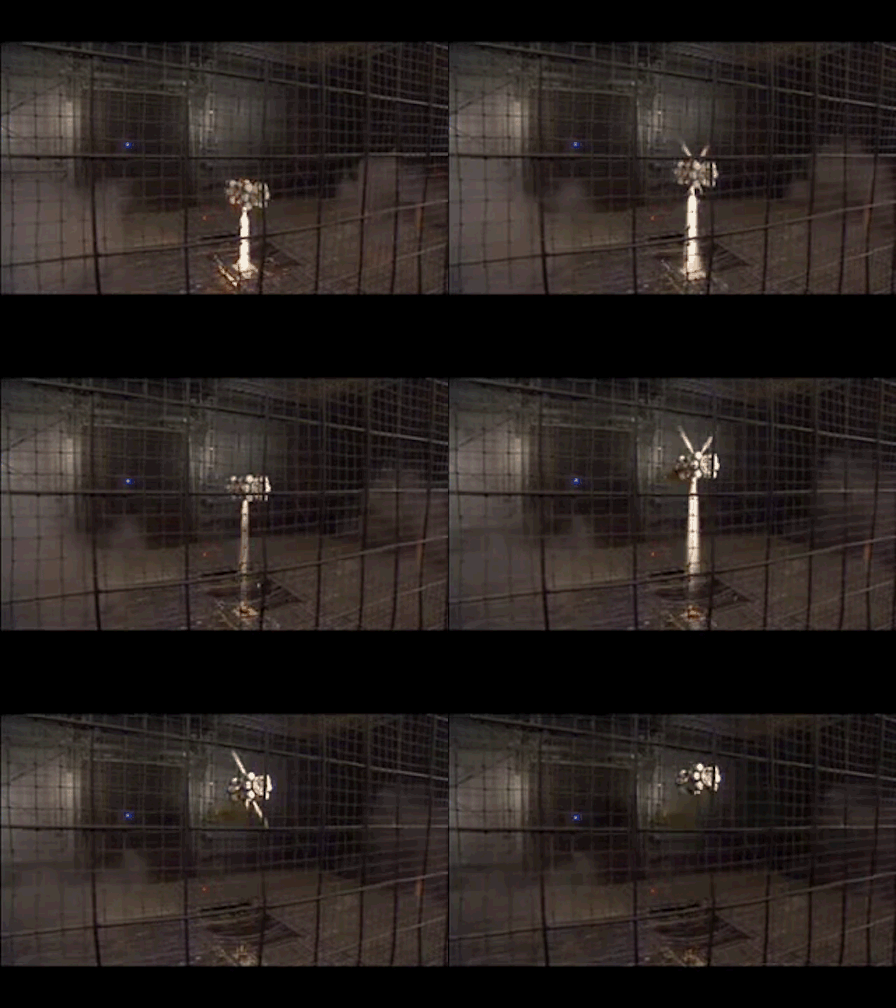
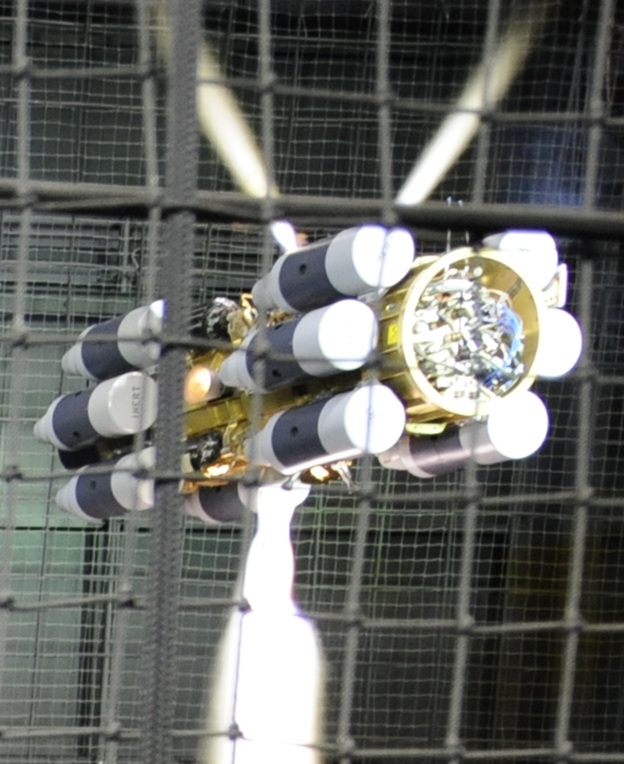
MDA pursued two industry tracks, MKV-L by Lockheed Martin and MKV-R by Raytheon. One major demonstration was conducted on 2 December 2008 at Edwards Air Force Base during a free-flight hover test at the National Hover Test Facility. Lockheed Martin said MKV-L has achieved objectives such as hovering by itself and target identification and tracking in a flight environment. It wasn’t an intercept of a target, but it was an important test.” It evaluated the control systems and seeker performance in motion. Both capabilities were important to hitting multiple targets near the end of the mission.
MKV’s 2009 Cancellation
Defense Secretary Robert Gates announced a major reshaping of the budget on 6 April 2009, stating that the Pentagon would terminate the Multiple Kill Vehicle program due to significant technical challenges and a need to reconsider the requirement. The Congressional hearing material from the same period echoes that rationale.
The biggest problem was that mixing different systems was dangerous. While the MKV could theoretically engage targets more efficiently, it also posed more chances of failure at the critical moment. If any part of the system failed, target identification, communication, guidance, and extra kill vehicles would not matter.
MKV Returns as MOKV
As of August 2015, Department of Defense contract records indicate Raytheon was awarded $9,775,608 for the development of a Multi-Object Kill Vehicle concept, which would focus on improving sensors, control systems, and communication methods to target multiple threats at the same time. Industry reporting also noted parallel awards to Raytheon, Lockheed Martin, and Boeing in August 2015, with early programme planning reviews completed later that year.
Multiple Kill Vehicle Specifications
| Specification | Multiple Kill Vehicle (MKV) details |
|---|---|
| Programme type | The Multiple Kill Vehicle (MKV) was a proposed concept of a U.S. missile-defense program that was never deployed. |
| Primary purpose | Locate, track, intercept, and destroy multiple ballistic missile objects in a single engagement to include decoys and countermeasures. |
| Engagement method | Kinetic “hit-to-kill” impact (no explosive warhead). |
| Intended threat set | The threat set being addressed is medium-range intercontinental ballistic missiles, especially those with multiple warheads or penetration aids. |
| Core architecture | One booster carries a “carrier vehicle” plus multiple small kill vehicles. |
| Kill vehicle mass | The mass of each kill vehicle is approximately 10 lb (4.5 kg). |
| Kill vehicle mobility | Each kill vehicle uses its own small thrusters to steer independently in the final seconds. |
| Guidance concept | The carrier refines tracking with its sensors and releases its kill vehicles, assigning them to objects within the threat cloud. |
| Operational advantage | Instead of betting everything on one “best guess”, it can engage several objects to raise the chance of hitting the real warhead. |
| Planned interceptor hosts | The planned host interceptors include the Kinetic Energy Interceptor (KEI) concept, the Ground-Based Interceptor (GBI), and the SM-3 Block IIA. |
| Industry approach | Two competing development paths: MKV-L (Lockheed Martin) and MKV-R (Raytheon). |
| Notable test milestone | A December 2008 hover-style demonstration emphasised controlled flight, manoeuvring, and tracking a surrogate target. |
| Programme outcome | The Pentagon cancelled MKV in 2009 during a broader budget and missile-defense reshaping. |
| Follow-on concept | The multi-object idea was later resurrected as the “Multi-Object Kill Vehicle” (MOKV). |
What Analysts Should Note
The Multiple Kill Vehicle is still a classic example of compromises. It offered better raid handling and a better cost swap. However, it required extreme miniaturisation and tight integration between sensor and shooter. It also showed that “more kill vehicles” only works if the system can reliably distinguish between warheads and decoys.
Multi-Kill Ideas Worldwide
Several countries are beefing up their ballistic-missile defenses, from Israel and India to China and parts of Europe, by upgrading sensors, interceptors, and battle-management systems. The classic “one booster, many kill vehicles” is still closest to US thinking through the MKV/MOKV-style work.
In general, an attacker tries to make midcourse defense harder by mixing real warheads with convincing decoys, launching larger salvos, and using manoeuvrable or non-traditional re-entry vehicles. Thus, defenders push harder on discrimination, shorter decision cycles, and more interceptor stocks. “They also protect the radars, satellites, and command links because those nodes hold the whole kill chain together.”
Conclusion
The Multiple Kill Vehicle has never been used, but its logic keeps coming back. Adversaries add decoys, and defenders improve discrimination or the volume of shots. The Multiple Kill Vehicle tried to do both with a single launch—and that ambition is what makes it still relevant today. this project is on hold but will be back eventually.
References
- https://www.armscontrol.org/act/2009-05/gates-reorienting-missile-defense-programs
- https://en.wikipedia.org/wiki/Multiple_Kill_Vehicle
- https://www.congress.gov/crs-product/IF10541
- https://news.lockheedmartin.com/2008-12-04-Lockheed-Martin-Team-Conducts-Free-Flight-Hover-Test-of-MDAs-Multiple-Kill-Vehicle-L
- https://www.war.gov/Newsroom/Contracts/Contract/Article/613351
- https://missilethreat.csis.org/system/gmd/
About the Author