
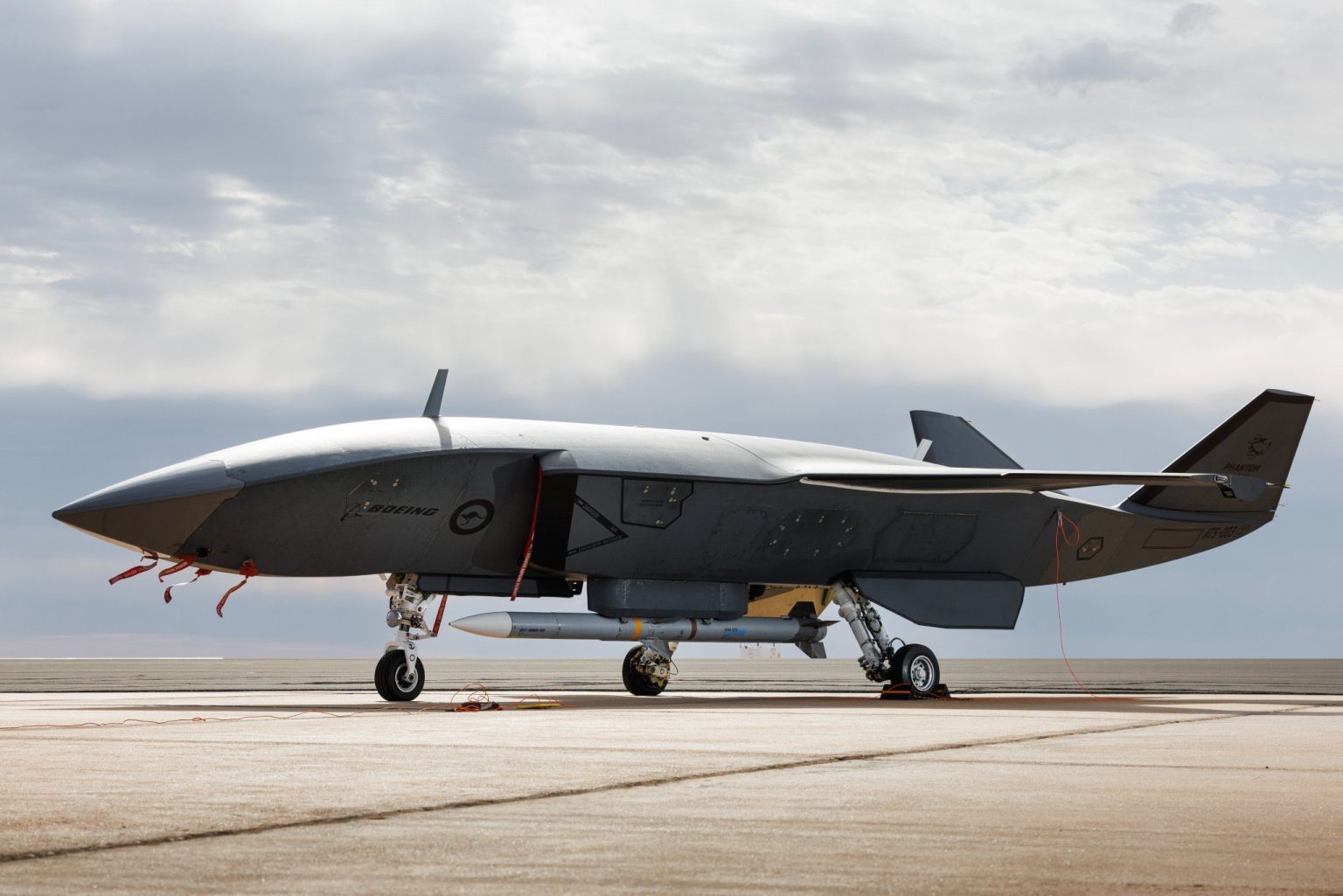
MQ-28 Ghost Bat AMRAAM Test — 2nd after Kizilelma
Autonomous Air Combat First
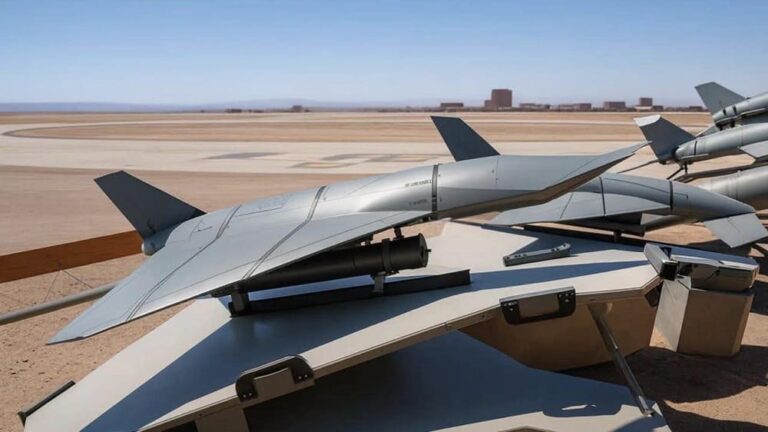
The MQ-28 Ghost Bat AMRAAM test marks a genuine step change in autonomous air warfare, not a marketing stunt. In a live trial with the Royal Australian Air Force (RAAF), Boeing’s uncrewed aircraft fired an AIM-120 at a fighter-class target drone.
The shot demonstrated that an autonomous “loyal wingman” can plug into a mixed formation and deliver a real air-to-air kill chain. During the MQ-28 Ghost Bat AMRAAM test, the drone flew with an E-7A Wedgetail and an F/A-18F Super Hornet. Together, the three platforms shared data and roles in a way that hints at future crewed-unmanned teaming tactics.
Inside the Live-Fire Test
In the MQ-28 Ghost Bat AMRAAM test, each aircraft played a distinct part in the engagement chain. The E-7A Wedgetail tracked the formation, monitored safety margins, and authorized the Ghost Bat to fire when conditions were satisfied. The Super Hornet acted as a forward sensor node, feeding real-time target data into the network.
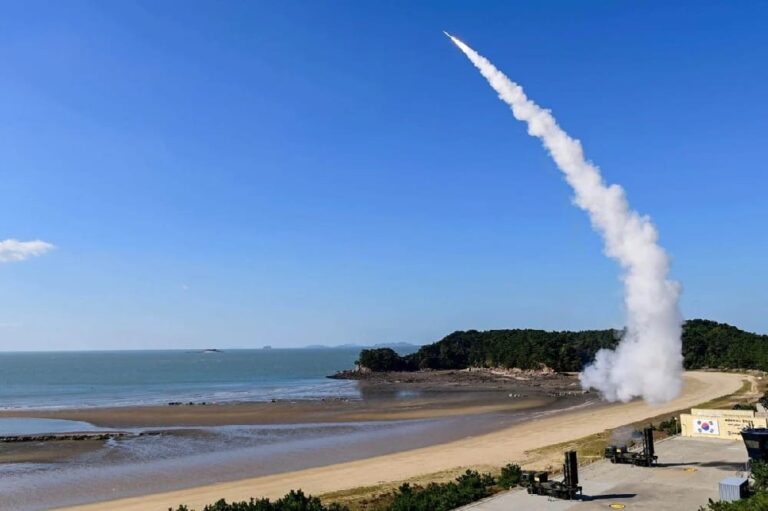
The MQ-28 then repositioned autonomously, using the shared picture to move into a valid weapons envelope. After confirmation from the Wedgetail, it launched Raytheon’s AIM-120 Advanced Medium-Range Air-to-Air Missile at the target drone. Crucially, the human crew retained decision authority, while the uncrewed system handled maneuver and firing logic at machine speed.
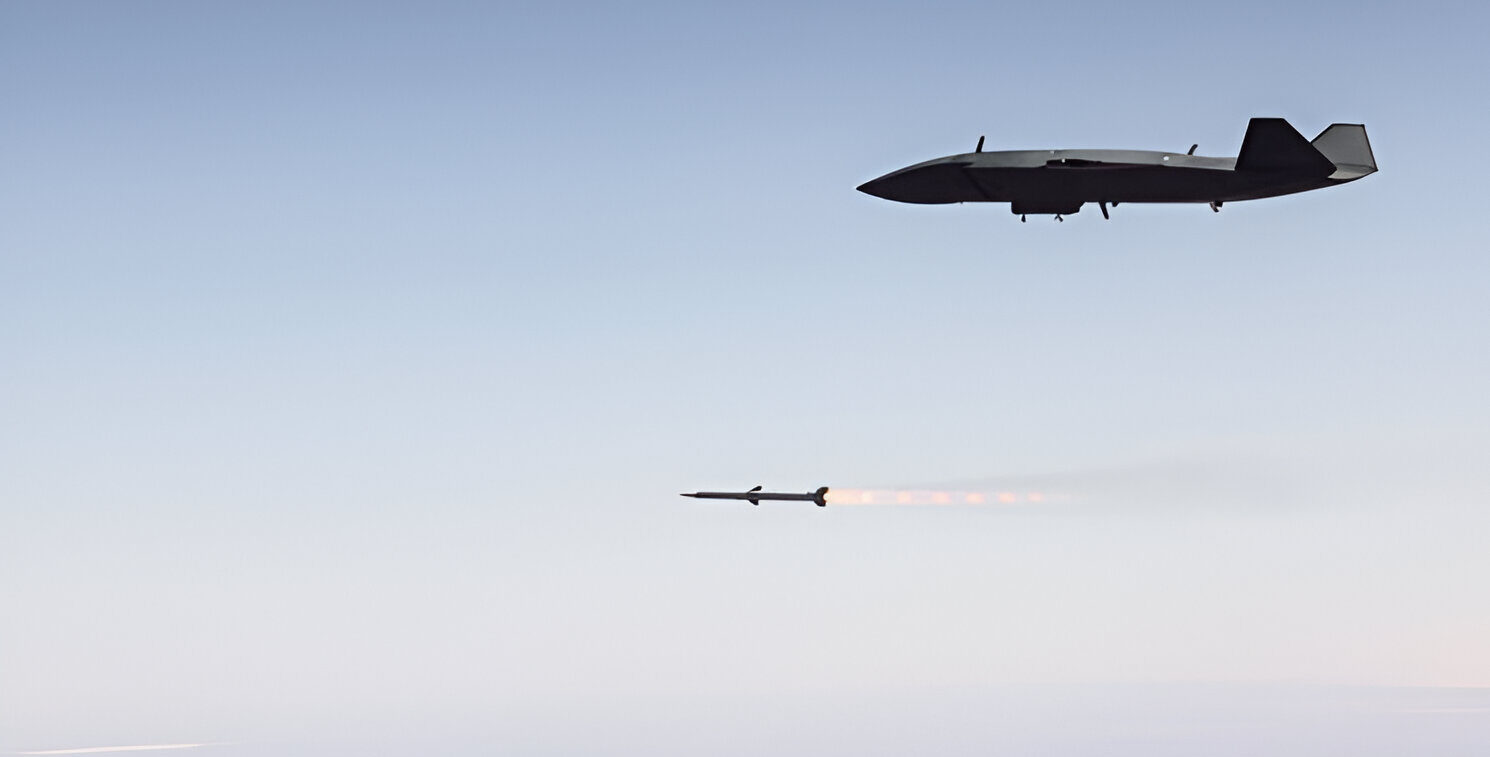
MQ-28 AMRAAM Test vs Kizilelma Gökdoğan Trial
Both the MQ-28 Ghost Bat AMRAAM test and the Turkish Kizilelma BVR trial demonstrate the rapid growth of unmanned combat aircraft. Ghost Bat behaves like a disciplined wingman, staying plugged into an E-7A and Super Hornet team, then firing AMRAAM when humans say “go.” Kizilelma feels more like a bold, jet-powered striker, built to sling indigenous Turkish missiles at range.
Together, their trials show that drones are no longer just scouts or decoys; they are becoming trusted, armed partners in the air combat stack. In the November 2025 trial over the Black Sea, Kızılelma used its ASELSAN MURAD AESA radar to detect and track a high-speed, jet-powered target drone, then launched a Gökdoğan BVR missile from an underwing hardpoint, successfully destroying the target.
Ghost Bat: Next-Gen Wingman
The MQ-28 Ghost Bat AMRAAM test underlines the drone’s main purpose: delivering extra mass and reach for piloted fighters. As Boeing’s collaborative combat aircraft, Ghost Bat adds “eyes and ears” without putting another pilot at risk. It can push forward, absorb early threats, and keep high-value crewed assets further from enemy weapons.
The platform has already amassed more than 150 flight hours in a structured trial program. Those flights finished four months ahead of schedule, which suggests a mature systems integration approach. For more context on how such concepts are evolving, Defence News Today has covered loyal wingman drone programs across several air forces.
Open Architecture, Rapid Integration
Behind the MQ-28 Ghost Bat AMRAAM test sits a broader design philosophy built around open architectures. Boeing emphasizes that the aircraft’s avionics and mission systems use modular hardware and software blocks.
This approach should let operators swap sensors, effectors, or electronic warfare payloads as threats evolve.
According to Boeing Phantom Works, the team used an advanced digital ecosystem from the outset. They integrated, tested, and fielded the live weapon configuration in under eight months, from concept to live shot.
That speed-to-capability is central to the collaborative combat aircraft idea, where software updates will matter as much as airframes.
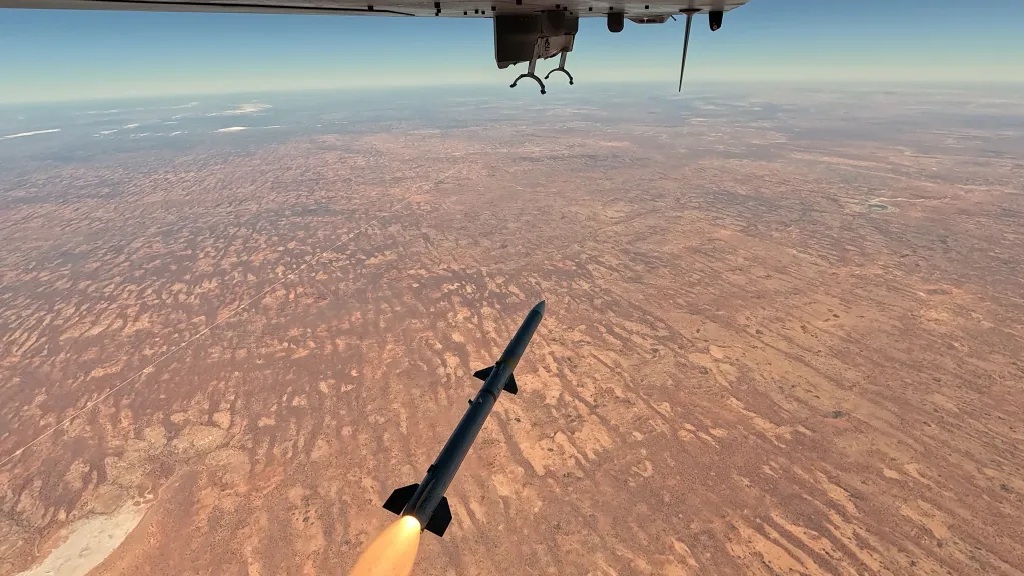
Impact on RAAF and Allies
Strategically, the MQ-28 Ghost Bat AMRAAM test shows how air forces might regain mass without buying large numbers of fighters. In a high-end conflict, autonomous wingmen could thicken defensive screens, bait enemy radars, or surge extra missiles into the fight. They also offer a way to preserve scarce pilots and advanced crewed jets, especially during the opening salvos of a campaign.
For the RAAF, Ghost Bat complements platforms like the E-7A Wedgetail, which already anchors Australia’s airborne command-and-control. Defense News Today has previously examined Turkish Kizilelma and their role in network-centric air power. Allies watching this trial will note that the same logic can extend to F-35, NGAD, and future sixth-generation fleets.
Next for Autonomous Air Combat
Looking ahead, the MQ-28 Ghost Bat AMRAAM test is likely only the first in a series of increasingly complex trials.
Future events will probably layer in electronic attack payloads, stand-off weapons, and more independent mission planning. However, human commanders are expected to retain control over rules of engagement and lethal decisions.
If that balance holds, Ghost Bat-style drones may become standard members of mixed formations by the early 2030s. Air forces would then field flexible “families” of crewed and uncrewed systems, sharing data and missions in real time. In that scenario, the MQ-28’s debut air-to-air kill will be remembered as a quiet but decisive turning point.
References
- https://www.boeing.com/defense/mq28-ghost-bat
- https://www.airforce.gov.au/technology/mq-28a-ghost-bat
- https://defencesecurityasia.com/en/kizilelma-ucav-first-bvr-missile-test-gokdogan-murad-aesa-turkey-air-combat/?utm_source=chatgpt.com
- https://defensenewstoday.info/kizilelma-uav-first-bvr-air-to-air-kill/
About the Author