Military Drones in Africa Face Tough Barriers
Africa’s Drone Boom Hits Hard Limits
Over the past decade, military drones in Africa have moved from novelty to must-have kit. Governments from the Sahel to the Horn now buy Turkish, Chinese, and other unmanned systems to track insurgents and secure borders. On paper, medium-altitude long-endurance (MALE) drones promise persistent surveillance and precision strikes. However, their performance in African battlespaces often falls short of political expectations. Vast distances, fragile infrastructure, and harsh weather combine to expose the limits of this new capability.
MALE Drones and Bayraktar TB2’s Appeal
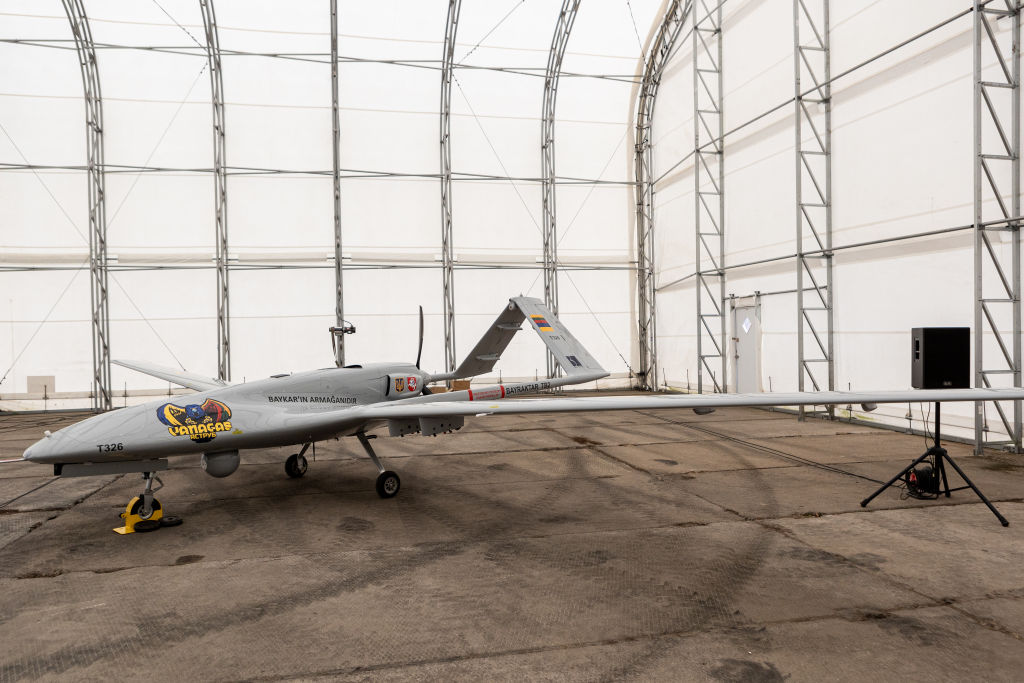
Most African buyers start with MALE drones such as Turkey’s Bayraktar TB2. The TB2 is around 6.5 meters long, with a 12-meter wingspan and a payload of roughly 150 kg, giving it enough endurance for 24–27 hour missions. For military drones in Africa, that mix of endurance, sensor payload, and relatively low cost is attractive. Burkina Faso and Togo, among others, have added the TB2 to their arsenals, while larger Akinci platforms have appeared in theaters from Liptako-Gourma to northern Ethiopia. Yet the TB2’s nominal 300 km line-of-sight control radius becomes a serious constraint on a continent where single operational sectors can span 800–1,000 km.
How Geography and Weather Cut Combat Effectiveness
Supporters of military drones in Africa often highlight their ability to loiter over remote areas where extremists operate. In practice, geography and climate push back. Sandstorms in the Sahel, heavy cloud over Ethiopia’s highlands, and dense forest in Central Africa regularly degrade electro-optical sensors. When operators push drones below cloud layers or treetop level to maintain visual contact, they expose slow, medium-altitude aircraft to small-arms fire and MANPADS. Consequently, MALE systems struggle to deliver continuous surveillance across massive, weather-disrupted battlespaces.
Training Gaps and Reliance on Foreign Operators
Technology alone is not sufficient; we also need skilled human capital. Many fleets of military drones in Africa still rely on foreign operators or advisers, especially for complex strike missions. Some African militaries have reportedly used Turkish personnel to operate Bayraktar TB2s during combat sorties, while domestic crews train up on simulators and basic flight profiles. This outsourcing keeps sorties going in the short term. However, it delays the hard work of building local pilot, payload operator, and maintainer pipelines, which research consistently identifies as a core barrier to effective UAV adoption.
When Inexperience Becomes a Costly Liability
The risks are not abstract. In 2023, Burkina Faso lost one of its five TB2s in a crash that analysts widely linked to operator or maintenance error. For a small defense budget, losing 20% of the high-end MALE fleet is strategically painful. Each mishap undermines public confidence in military drones in Africa and forces governments to spend scarce funds on replacements instead of wider support infrastructure. Moreover, immature maintenance systems can turn routine wear-and-tear into catastrophic failure, especially in hot, dusty environments where engines and optics degrade quickly.
Infrastructure: The Missing Link in Drone Strategy
Sustained MALE drone operations need far more than a strip of tarmac and a basic hangar. They also demand secure data links, reliable power, hardened shelters, and properly trained technicians on the ground. Ideally, militaries pair these systems with satellite communications to keep control beyond the horizon. Many military drones in Africa still rely on fragile line-of-sight radio links. That setup limits their effective radius to roughly 150–300 kilometres from the ground control station. In the 2022 Tigray conflict, Ethiopia reportedly shifted drone operations from Addis Ababa to Bahir Dar. The move brought launch sites about 300 kilometers closer to the frontline. It shows how weak basing options and poor communications can turn a long-range asset into a short-legged tool.
Targeting Errors, Civilian Harm and Tragic Outcomes
Even when military drones in Africa become airborne, poor targeting practice can erase their precision advantage. In several theaters, contentious strikes on vehicles, markets, or villages have sparked allegations of civilian casualties. Mistaken or politically driven target selection turns drones from symbols of technological progress into “harbingers of tragedy,” feeding anti-government narratives and international criticism. Because MALE platforms often fly with high-resolution cameras, every error is recorded, replayed, and exploited by adversaries online, amplifying strategic damage far beyond the immediate blast radius.
Drone Escalation Risks in Darfur
Sudan’s civil war offers another cautionary tale for military drones in Africa. The Sudanese Armed Forces have used TB2s in Darfur with Turkish support, while the Rapid Support Forces have responded with their own UAV strikes, including an attack on the Port Sudan air base believed to host both aircraft and foreign operators. As drones proliferate, local actors quickly learn to copy each other’s tactics. So, adding a new MALE squadron makes it more likely that similar drone attacks will happen against bases, fuel storage, and command centers, which could make already tense conflicts even worse.
Range Gaps on a Vast Battlespace
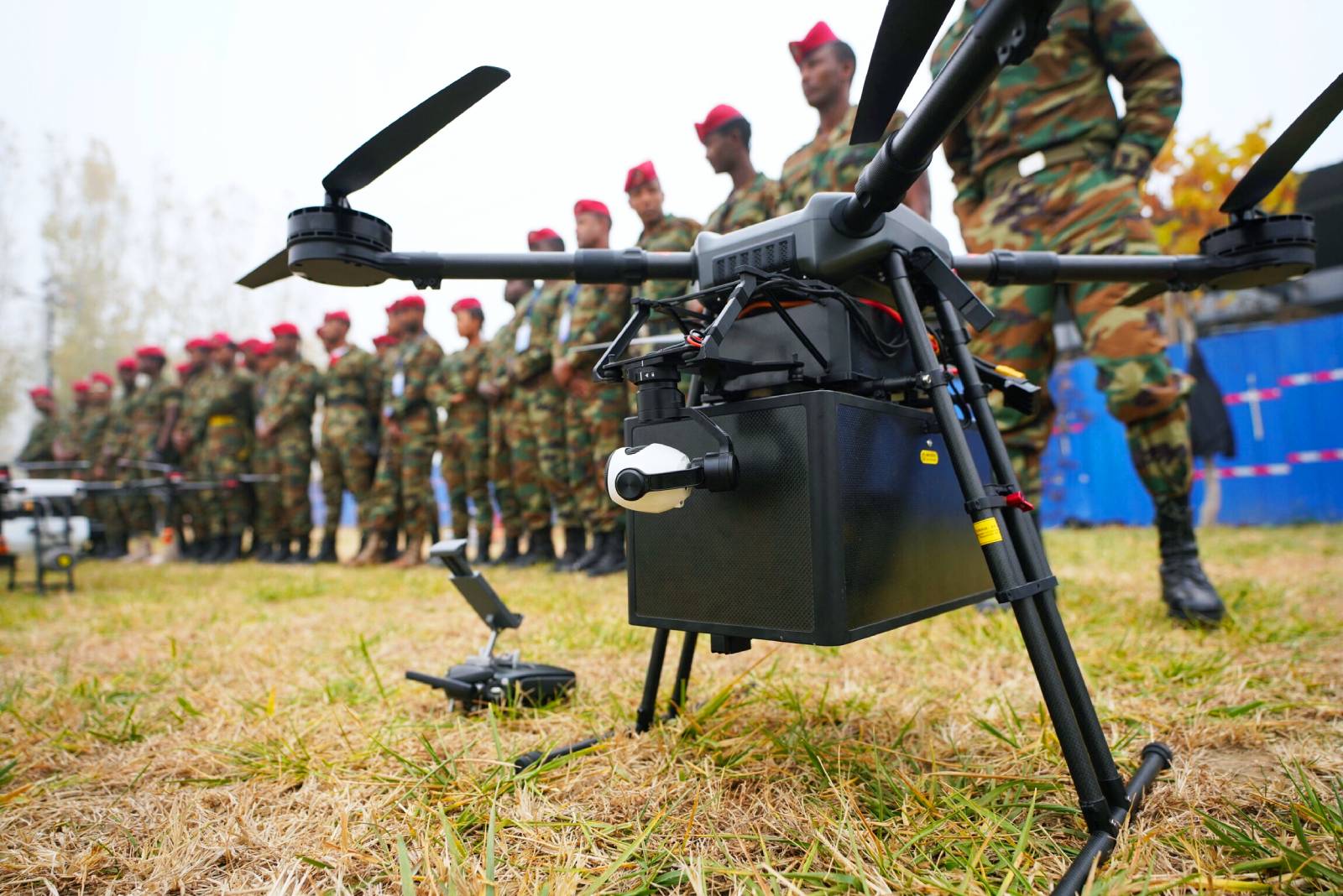
On a map, a 300 km drone range looks generous. On African terrain, it is often insufficient. Insurgent safe havens in the Sahel can sit 500–800 km from the nearest secure runway, placing them beyond routine MALE coverage. Military drones in Africa thus become tools for spot surveillance and episodic strikes rather than instruments of continuous presence. Without larger fleets, satellite-linked variants, or forward operating locations, commanders must choose between thin coverage of vast regions or intensive focus on a narrow corridor, leaving other routes open to smugglers and armed groups.
What African Militaries Need to Fix
Despite all these benefits, MALE systems are not a panacea. They remain useful, though, when militaries use them in the right way. Governments must treat military drones in Africa as one part of a wider force mix. That requires steady investment in pilots, sensor operators, and maintenance crews. It also needs solid bases, hardened shelters, and dependable communications infrastructure.
Clear targeting doctrine is vital to reduce civilian harm and political backlash. Drones should link with crewed aircraft, ground forces, and electronic intelligence, not fly as lone “wonder weapons.” When militaries integrate them properly, today’s patchy UAV record can steadily improve. Used like this, drones become reliable tools for surveillance, deterrence, and limited precision strikes.
References
- https://www.crisisgroup.org/africa/sudan/drone-attacks-port-sudan-mark-dramatic-escalation
- https://www.sipri.org/yearbook/2025/07
- https://baykartech.com/en/uav/bayraktar-tb2/
- https://adf-magazine.com/2025/12/military-drones-face-barriers-in-africa/
About the Author