

Microsoft Program Could Expose the DoD to Chinese Hackers
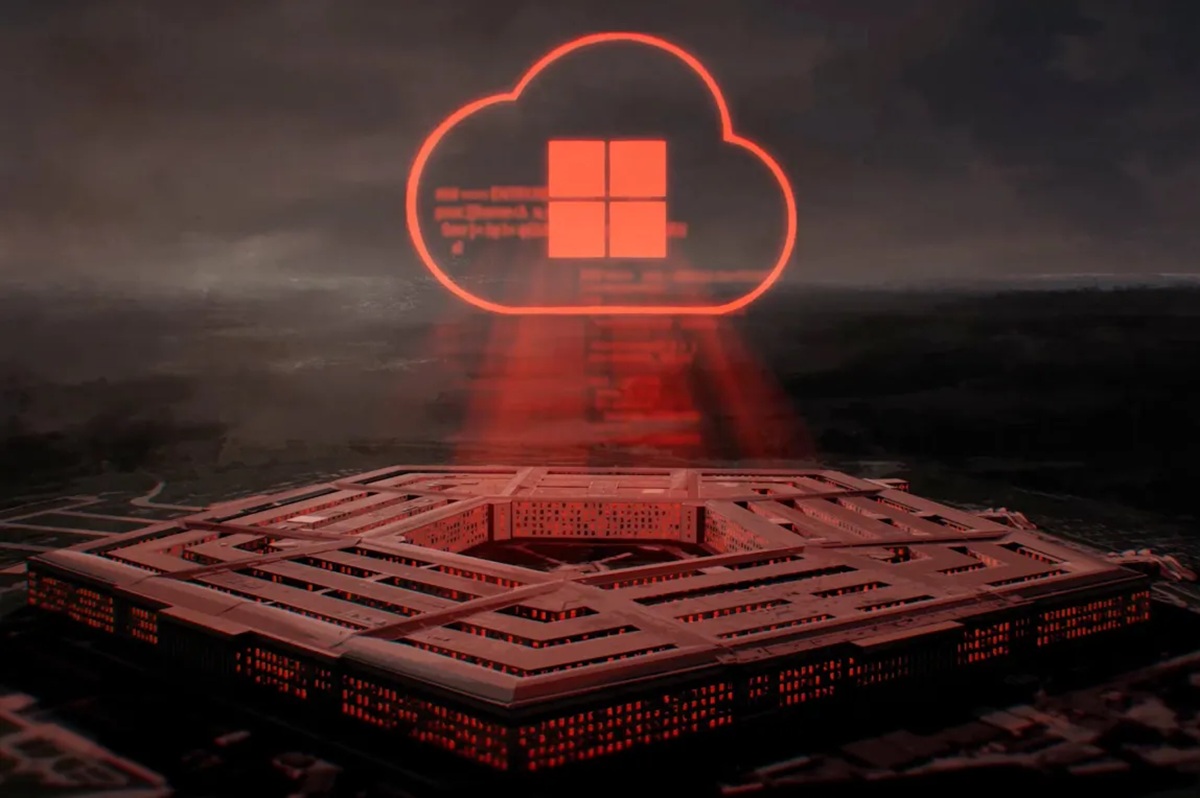
When the U.S. Defense Department pushed sensitive workloads into the commercial cloud, it accepted a trade: less physical control in return for scale and speed. However, a little-known support practice now questions where real control ends. The Microsoft digital escort program, revealed by OSINT, reportedly let engineers in China help maintain Defense Department cloud systems while cleared U.S. “digital escorts” acted as the operator layer.
Microsoft says global workers have no direct access to customer data or customer systems, and that escorts with appropriate clearances and training provide hands-on support. Yet OSINT found a persistent skills gap: escorts often lack the engineering depth needed to supervise more advanced foreign specialists. This issue is important because the work involves very sensitive unclassified defense data—DoD Impact Level 4 and 5 environments—where losing confidentiality, integrity, or availability could seriously harm operations and people.
Microsoft Digital Escorts for Foreign Engineers
In the reported workflow, a foreign engineer diagnoses a problem and proposes a sequence of commands (for example, firewall changes, patching, or log review). Then a U.S.-based escort—typically a U.S. citizen with a DoD “secret” clearance—inputs those commands into the environment. In short: the overseas engineer provides the expertise; the escort provides the keyboard. Microsoft also says it uses internal checks, including a process it calls “Lockbox,” to review and control support requests. Microsoft told certain news agencies it disclosed the model to the federal government. However, former officials said they had never heard of it, and DISA reportedly struggled to find someone familiar with the arrangement.
Why the Programme Exists
FedRAMP, created in 2011, forces cloud providers to show how they vet and authorize personnel who can affect sensitive federal workloads. In parallel, Defense Department rules have long favored U.S. citizens or permanent residents for sensitive support work. Microsoft, with a large global workforce, reportedly pushed for a model that preserved around-the-clock specialist coverage without rebuilding its support workforce solely inside the United States.
A former Microsoft program manager described digital escorting as “the path of least resistance” because it reduced cost friction and let the cloud business scale faster. In June 2016, Microsoft announced FedRAMP authorization for handling some of the government’s most sensitive non-classified data, and the escort concept went into practical use around that period, according to OSINT.
Clearance Without Technical Authority
Escort-style supervision is not new in federal security thinking. NIST guidance expects fully cleared and technically qualified staff to escort maintenance personnel lacking the necessary authorizations. That last clause is the uncomfortable part. OSINT cites contractor recruiting that starts at about $18 an hour, with clearance as the primary requirement and technical skills framed as “nice to have.” Therefore, the Microsoft digital escort program may succumb to a fragile pattern of copying, pasting, and relying on trust. One escort informed OSINT, “We’re trusting that their actions aren’t malicious, but we really can’t tell.”
China Raises the Stakes
This is not only a vendor-management issue. It intersects with strategic threat assessments. ODNI has described China as the most active and persistent cyber threat to U.S. government and critical infrastructure networks. Cloud platforms are already within the reach of state-backed campaigns. In summer 2023, a China-linked actor (Storm-0558) compromised U.S. officials’ cloud mailboxes; the reporting cited about 60,000 emails downloaded from the State Department alone. The Cyber Safety Review Board later called that intrusion preventable and criticized Microsoft’s security failures and transparency.
The escort model did not cause those events. However, it demonstrates why support pathways can become national security pathways, especially when geopolitical pressure rises. Around the same era this escort strategy was developed, an earlier China-attributed breach (the OPM compromise) exposed personal data linked to roughly 22 million people, many of them security-clearance applicants—an enduring reminder that personnel ecosystems are strategic targets.
Unclassified, High Impact
The OSINT reporting is explicit: the escort system supports government “high impact level” information below classified. In defense terms, that includes IL4 and IL5 workloads tied to mission support. Attackers do not need classified documents to hurt readiness. They can degrade availability during a crisis. They can alter configuration to create hidden persistence. They can also steal architectural knowledge that speeds up later operations. Therefore, the Microsoft digital escort program should be evaluated as an operational risk, not a compliance footnote.
Where Operational Risk is concentrated
1) Commands Become the Attack surface.
A former Microsoft engineer told OSINT that a script could look harmless while doing something malicious—meaning an escort might not spot the difference. Even without malice, complex fixes carry collateral risk. Therefore, supervision must be technical, not ceremonial.
2) Cloud Operations Exposure Is Enough
OSINT also notes that foreign engineers can learn granular details about federal cloud environments. That knowledge can enable future exploitation even if no data leaves the system during a support session.
3) Throughput pressure encourages shortcuts
One escort described a roughly 50-person team supporting hundreds of monthly interactions, with many tickets originating from China-based engineers. Under throughput pressure, vigilance drops and routines harden.

Contractors and accountability gaps
OSINT identified staffing firms linked to escort roles, including Insight Global and ASM Research (whose parent company is Accenture), and described earlier involvement with Lockheed Martin’s IT business (later associated with Leidos). This contractor chain complicates accountability. If something goes wrong, responsibility can fragment across vendor, subcontractor, and agency.
DISA’s public posture in the reporting emphasized that cloud providers must maintain controls for vetting and using qualified specialists, yet the program’s low visibility suggests oversight may not have matched the sensitivity of the environments. The reporting also describes a whistleblower pathway: a former contractor raised the issue through a DoD hotline, and DISA’s inspector general later closed the case, referring the matter to management.
Review Outcomes, Not Promises
OSINT received a surprise from former DoD CIO John Sherman, who called for a thorough review by DISA, Cyber Command, and others. A credible review should focus on verifiable controls:
- Escort competence standards: enforce minimum engineering capability aligned to the “technically qualified” requirement, not just clearance.
- Runbook constraint: require pre-approved, narrowly scoped runbooks for privileged work; block free-form commands.
- Two-person integrity: require independent approval for high-risk actions (identity, logging, firewall rules, key management).
- Full session capture: record commands, context, and output; routinely replay samples for anomaly checks.
- Time-to-detect metrics: measure how quickly monitoring flags dangerous changes; minutes matter during mission support.
In other words, the Microsoft digital escort program must stand on measurable governance, not on trust in process.
Why do defense readers care?
This story sits at the junction of cyber and operations. It shows how a workforce model can become a strategic vulnerability, even without a confirmed breach. It also highlights a procurement trap: compliance language can sound strong while operational reality stays weak. At Defense News Today, we treat that gap as a reporting signal. Our internal verification playbook focuses on primary documentation, cross-checking, and technical sanity checks, because cloud risk often hides in process details rather than headlines. (Internal link: How We Verify) For broader coverage of cyber patterns that repeat across defense ecosystems—identity failures, insider risk, and patching gaps—follow our cybersecurity section. (Internal link: Cyber Security)
Trust Isn’t controlled.
The Microsoft digital escort program tries to reconcile global cloud reality with defense-grade constraints. However, if the person typing commands cannot interpret them, the barrier is symbolic. Security fails when it depends on symbolism. A credible rehabilitation requires technically qualified supervision, constrained privileged workflows, and detection that runs faster than damage. That is the standard DoD should demand from every cloud provider—because in modern defense, “support” is part of the battlespace.
References
- https://www.propublica.org/article/microsoft-digital-escorts-pentagon-defense-department-china-hackers
- https://www.dni.gov/files/ODNI/documents/assessments/ATA-2024-Unclassified-Report.pdf
- https://www.cisa.gov/sites/default/files/2025-03/CSRBReviewOfTheSummer2023MEOIntrusion508.pdf
- https://nvlpubs.nist.gov/nistpubs/SpecialPublications/NIST.SP.800-53r5.pdf
About the Author