
KNDS LORAS Artillery Targets 60 km Base Range
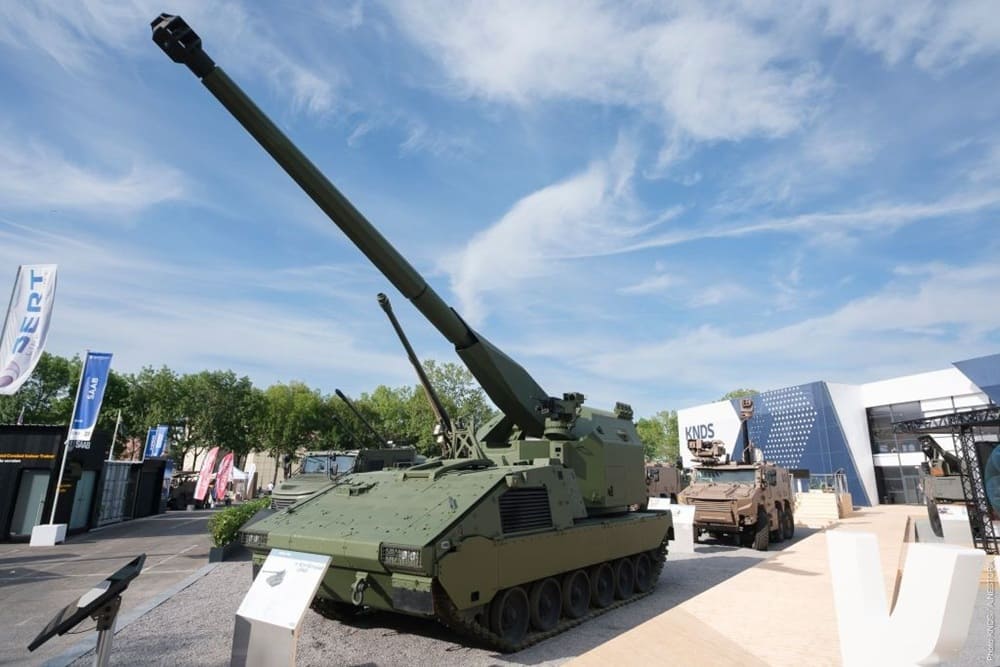
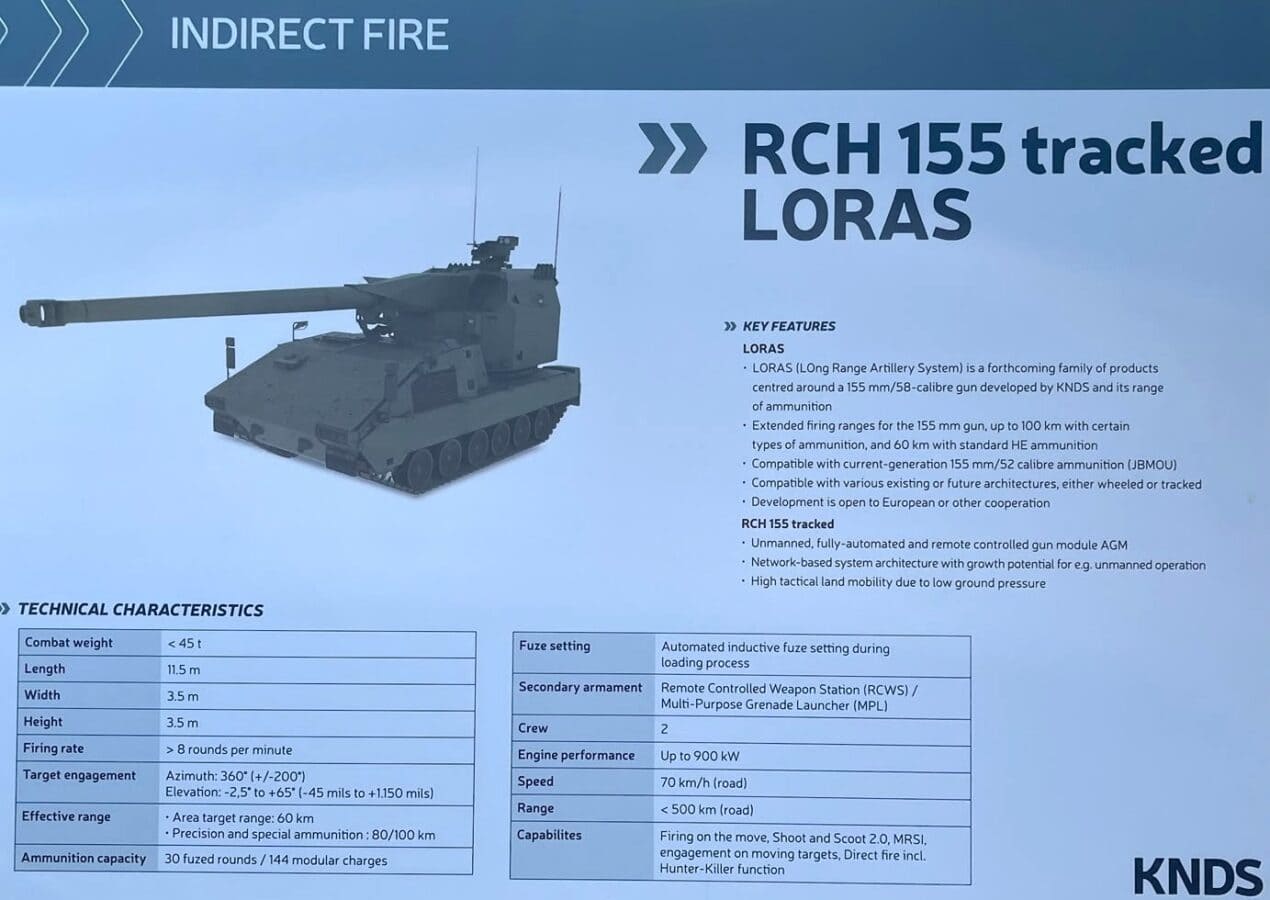
KNDS unveiled a new European response to long-range tube artillery at Eurosatory near Paris. The 155 mm howitzer LORAS has a base range of 60 kilometres with standard high-explosive shells. That number is important, as many existing 155 mm/52-calibre European guns are in the 40-kilometre class with conventional ammunition. The KNDS LORAS artillery concept is a blend of German and French know-how. KNDS Germany provides the Artillery Gun Module, which is mounted on a tracked Boxer chassis.
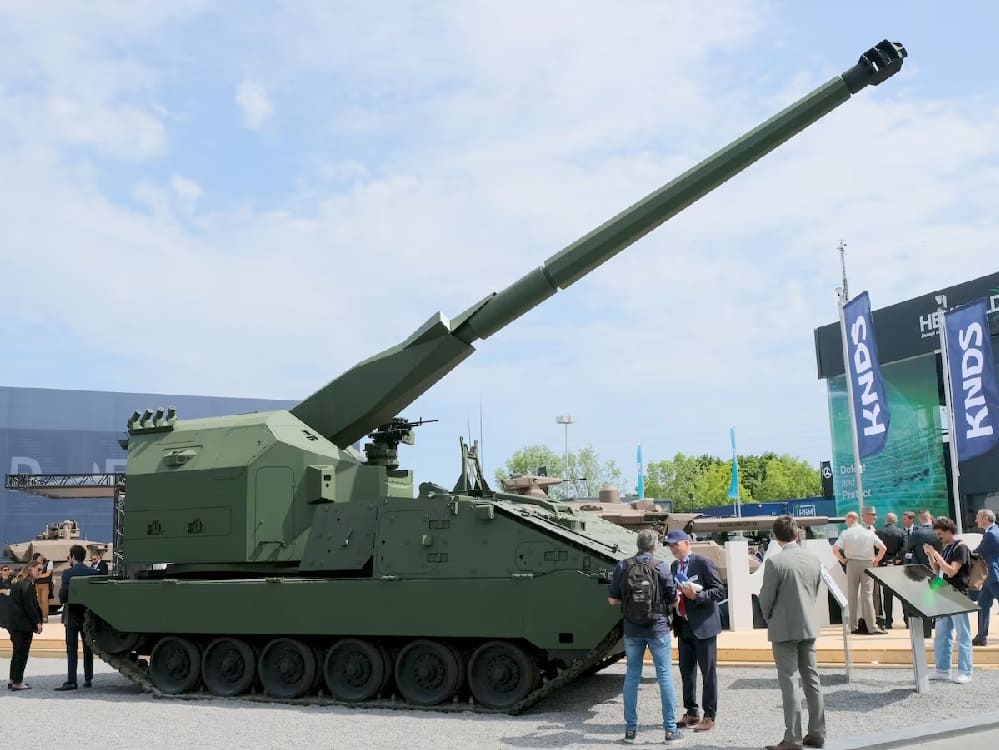
The longer barrel from Bourges in central France is supplied by KNDS France. So the design looks more like a practical Franco-German evolution than a one-country experiment. KNDS has already fired a prototype and wants to begin production between 2032 and 2035. The company funds development internally, though France’s Directorate General for Armament supported early studies. The system features a 155 mm/58-calibre gun tube, which is about 12% longer than the 52-calibre barrels that are standard across modern European artillery.
58-Calibre Barrel
The key selling point of KNDS LORAS artillery is its lower cost at range. KNDS wants 60 kilometres without rocket-assisted rounds That could reduce the cost of deep fires when armies require volume, not just a handful of premium precision rounds. However, range is a pressure on engineering The longer the barrel, the more heat, stress and erosion it will take. The United States acknowledged this risk in its Extended Range Cannon Artillery programme. Tests revealed excessive wear on the gun tubes after a limited number of rounds, and Washington cancelled ERCA in March 2024. KNDS says LORAS is going a different way.
“The gun has a bigger combustion chamber and a softer pressure curve than the ERCA,” company engineer Pierre Septfons said. Or, to put it differently, KNDS seems to be looking for range via managed energy and not just higher pressure. Moreover, the European industry has had experience with 52 calibre systems for years. Caesar, Panzerhaubitze 2000 and RCH 155 have advanced knowledge about barrels, charges, recoil forces and loading systems. KNDS believes this experience will give it an advantage in managing the wear on a 58-calibre gun.
Charges, Shells and the 100 km
LORAS can accept between one and eight modular propellant charges. 1-6 Uses of Caesar. The wider charge range should give crews more flexibility in their choice of trajectory, range and effects on target. KNDS is also developing a specific family of 58-calibre ammunition. It requires high-explosive, illumination and smoke shells that fully utilise the barrel.
It can still fire regular 52-calibre rounds, but they may not travel as far. Hence, the system’s value is focused on shell design. The company also believes it can achieve a range of 100 kilometres with ramjet-powered or gliding munitions. KNDS, however, said it would initially concentrate on traditional rounds and be open to partners for more sophisticated shells. That makes sense – armies fire many more basic artillery rounds than specialised ones.
Battlefield Availability
The KNDS LORAS artillery system has a 100% automatic loading. It can reduce crew workload and support rapid-fire missions. It also matches Europe’s shift to protected unmanned artillery modules. However, Ukraine has demonstrated that automating comes with a maintenance price tag. Some battlefield reports suggested lower availability for some highly automated howitzers than for simpler systems like Caesar.
Mud, heavy firing, field repairs and long supply lines can be a killer of complex mechanisms. LORAS has newer electronics and a new loading system, but it has taken some loading ideas from the Panzerhaubitze 2000, says KNDS. Septfons also said the 58-calibre barrel costs only slightly more than a 52-calibre tube. If the system is robust, LORAS could give it range and tempo. Or armies could just go for simpler guns that cycle faster.
Strategic Impact on Europe
Europe wants more range in their artillery for clear operational reasons. Russia’s war in Ukraine has demonstrated the utility of massed fires, counter-battery reach and ammunition depth. Thus, NATO armies need weapons that can hit further and minimise their exposure to enemy fire. The KNDS LORAS artillery proposal is also a cornerstone for Europe’s industrial autonomy.
It combines German module expertise, French barrel production and Boxer mobility in one package. For a broader land-warfare context, readers can follow our coverage of Army systems and European defense updates. The planned production window of 2032–35 suggests that LORAS is not an immediate battlefield fix. Instead, it indicates Europe’s next artillery cycle. By then, armies may need to combine layered fires: reliable 52-calibre guns, longer 58-calibre systems and rockets or missiles for deeper precision strikes.
What to track
First barrel life. KNDS must demonstrate that a 58-calibre gun can withstand sustained operational firing without repeating the ERCA failure. Second, the maturity of the ammunition is also important. The shells and charges used with this weapon determine its basic range of 60 kilometres. Adoption will also depend on the reliability of the platform. A tracked Boxer with an unmanned artillery module provides protection and mobility, but armies will judge it by its uptime.
Conclusion
Ultimately, cost will be a key consideration. The cost of the barrel might be slightly higher, but the full system, new charges and new shells will be the determining factors in the procurement case. So LORAS is more than just a longer gun. It asks whether Europe can take conventional artillery into a new range bracket without sacrificing barrel life, logistics or battlefield availability.
References
- https://www.defensenews.com/global/europe/2026/06/17/size-matters-knds-pitches-long-barreled-artillery-for-60-kilometer-base-range/
- https://knds.com/en/press-releases/knds-unveils-a-new-main-battle-tank-generation-and-charts-the-future-of-very-long-range-artillery
- https://knds.com/en/products/systems/rch-155
- https://www.defensenews.com/land/2024/03/11/us-army-scraps-extended-range-cannon-artillery-prototype-effort/
About the Author