
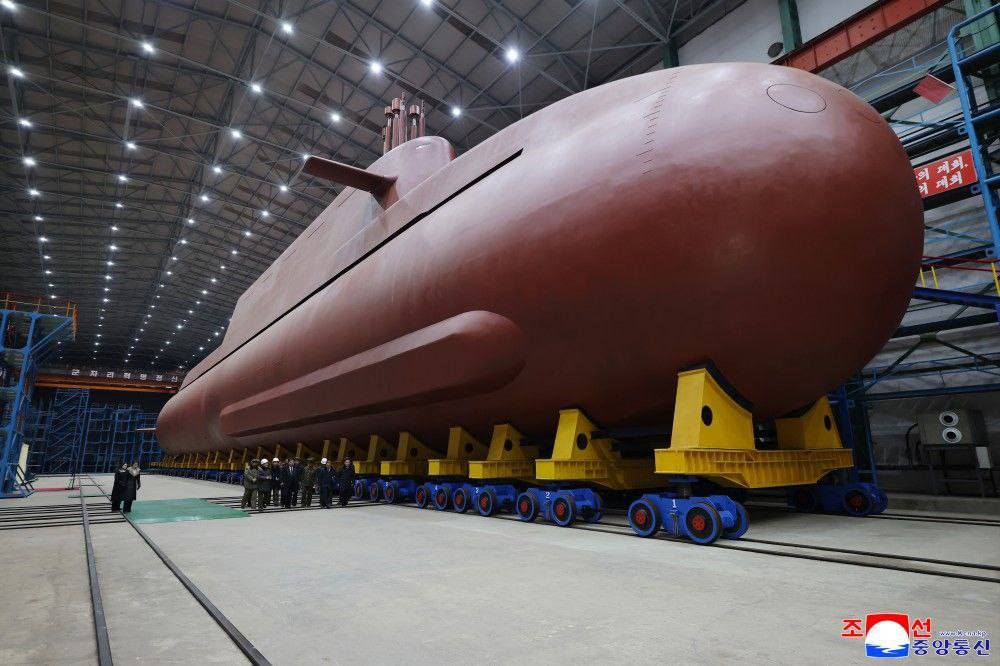
Kim Jong Un Visits 8,700-Ton Nuclear Missile Submarine | Courtesy KCNA
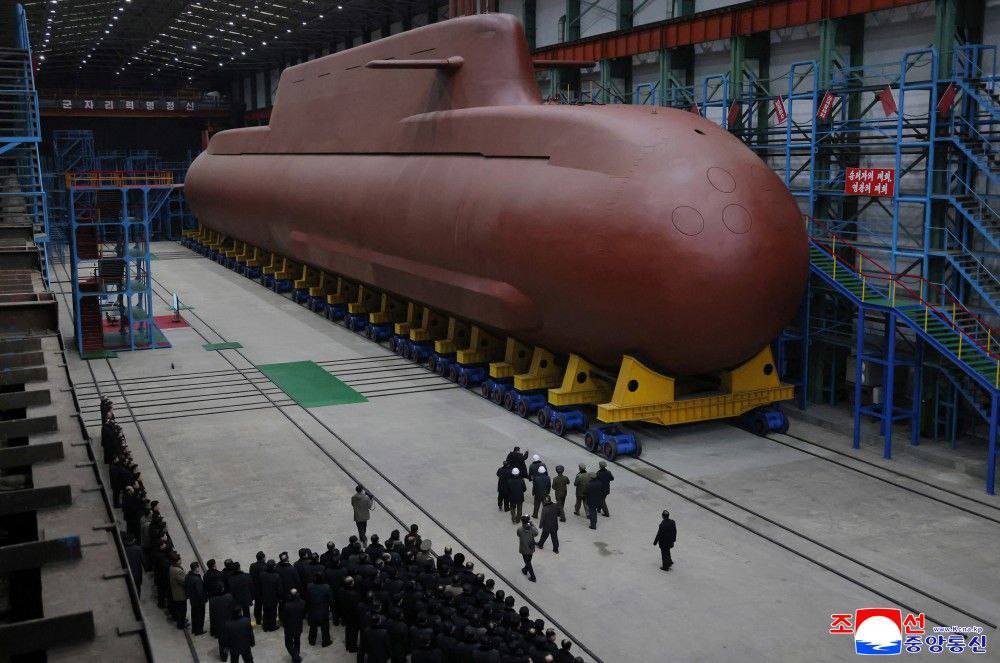
North Korea aims to depict a novel threat to the world: a nuclear-armed submarine capable of slipping into the sea, concealing itself under the waves, and launching missiles with minimal notice. That is the message behind the latest state-media imagery showing Kim Jong Un touring a construction site for what Pyongyang calls an 8,700-ton-class “nuclear-powered strategic guided missile submarine.”
The claim matters because a nuclear-powered ballistic-missile submarine (SSBN) or SSBN-like platform is not just another prestige project. If it becomes operational, it changes how regional militaries plan for deterrence and anti-submarine warfare. It also signals that Kim is still pursuing the long-term force-modernization agenda he outlined back in 2021—only now with more visible momentum and sharper political messaging.
What North Korea Showed
Why 8,700 Tons Matters
An 8,700-ton submarine would be far larger than North Korea’s existing diesel-electric boats and larger than the heavily modified “missile submarine” it unveiled in 2023. Size is not a vanity metric here. Bigger displacement usually means more space for missiles, longer endurance, and potentially more capacity for quieter machinery, improved crew habitability, and additional sensors—if the builder can execute at that level.
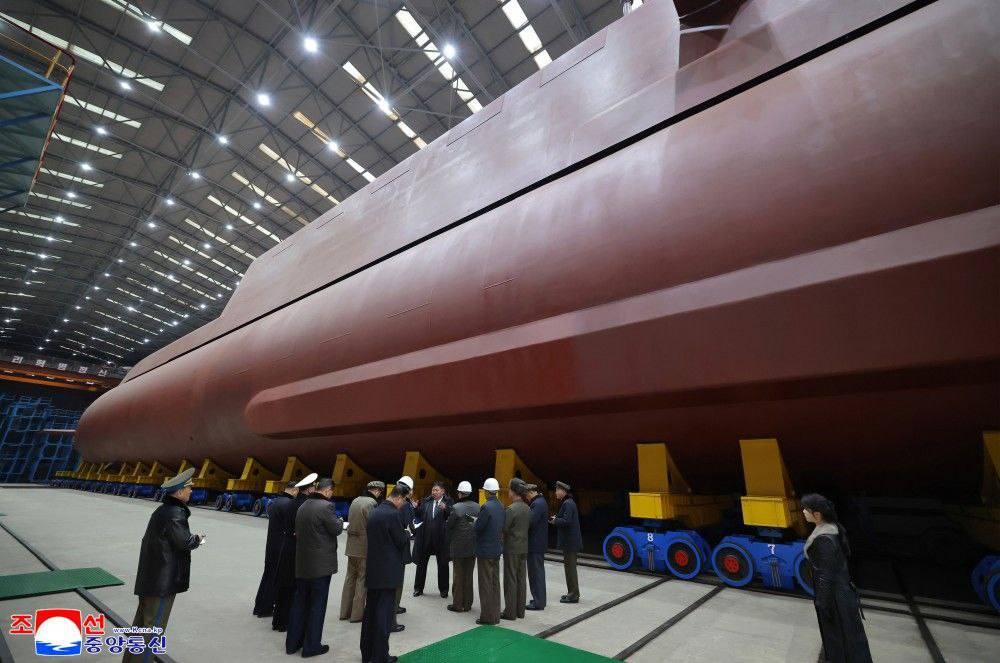
The term “strategic guided missile submarine” also carries significant weight. In North Korean messaging, the term “strategic” typically implies a mission tied to nuclear deterrence, not just local coastal defense. Analysts at 38 North say the “strategic” label signals an aim to hold targets beyond the peninsula at risk, potentially including the United States, depending on the missile the submarine is built to carry.
Nuclear-Powered Yet, and Near Sea Trials?
North Korea insists the submarine is nuclear-propelled. Outside observers treat that claim cautiously because a working naval reactor program is among the hardest military technologies to field. To prevent easy tracking, the submarine requires enriched fuel, reactor design expertise, shielding, safety procedures, trained crews, maintenance infrastructure, and quieting measures.
Still, “hard” does not mean “impossible,” especially if North Korea has external help, access to design know-how, or technology transfer. AP noted that some analysts have suggested the North may have received technical assistance from Russia amid their expanding military cooperation, though this remains difficult to verify from open sources.
As for timelines: a hull that looks far along does not guarantee quick entry into service. Submarines can sit for months—sometimes years—during systems integration, dockside testing, and early propulsion trials. Even once the submarine moves, sea trials can uncover problems that require major rework, especially for first-of-class designs. The most realistic takeaway from the imagery is not that service entry is imminent, but that North Korea wants observers to believe it is getting close, and that it wants to lock in the psychological impact now.
It could reshape regional strategy
If Pyongyang fields a genuinely nuclear-powered missile submarine, it gains three advantages:
- Survivability: A submarine at sea is harder to preempt than land launchers or fixed sites.
- Second-strike credibility: Even a small number of survivable missiles complicates an adversary’s calculations.
- Operational reach: Nuclear propulsion enables longer deployments without surfacing as often, which can widen patrol areas and increase uncertainty.
See it less as a “war-winning” weapon and more as a deterrence booster. It creates uncertainty, drains tracking resources, and forces South Korea, Japan, and the US to prepare for unexpected scenarios. CSIS has argued that a nuclear-powered submarine program would complicate anti-submarine warfare and crisis management. Even if North Korea’s boat is louder or less advanced than modern SSBNs, it still poses a threat.
Kim’s timing remains unclear.
The timing looks deliberate. According to Reuters, Kim paired the submarine narrative with broader calls to accelerate naval modernization while also linking his rhetoric to regional tensions—U.S. visits to submarine ports, allied exercises, and South Korean defense plans.
Al Jazeera reported that Kim criticized moves associated with South Korea’s pursuit of nuclear-powered submarine capability, framing it as an “offensive” act and using that argument to justify North Korea’s own “nuclear weaponization” of naval forces.
In other words, the submarine is both hardware and story: a strategic program that also supports Kim’s political narrative of encirclement and the need for accelerated nuclear force development.
Conclusion
Until those proof points appear, the clearest reading is simple. Kim Jong Un’s tour signals a strong push for a sea-based nuclear force. The 8,700-ton size also shows real ambition. However, a nuclear-powered strategic submarine is not “ready” because the hull looks complete. Submarine is ready only when it sails safely and reliably. It must stay submerged for long periods. Submarines must communicate securely while at sea. It must do all of these tasks under pressure and close tracking.
References
- https://www.reuters.com/world/asia-pacific/north-koreas-kim-jong-un-oversees-test-firing-long-range-missile-building-2025-12-24/
- https://apnews.com/article/042354b0b38bb429f937a4ecb7f70df2
- https://www.csis.org/analysis/north-korea-announces-nuclear-powered-submarine-development
- https://www.38north.org/2025/03/north-koreas-nuclear-powered-missile-submarine-a-mystery-wrapped-around-a-riddle-and-an-enigma/
About the Author