Kalashnikov Unveils AK-308 Rifle
Upgraded AK-308
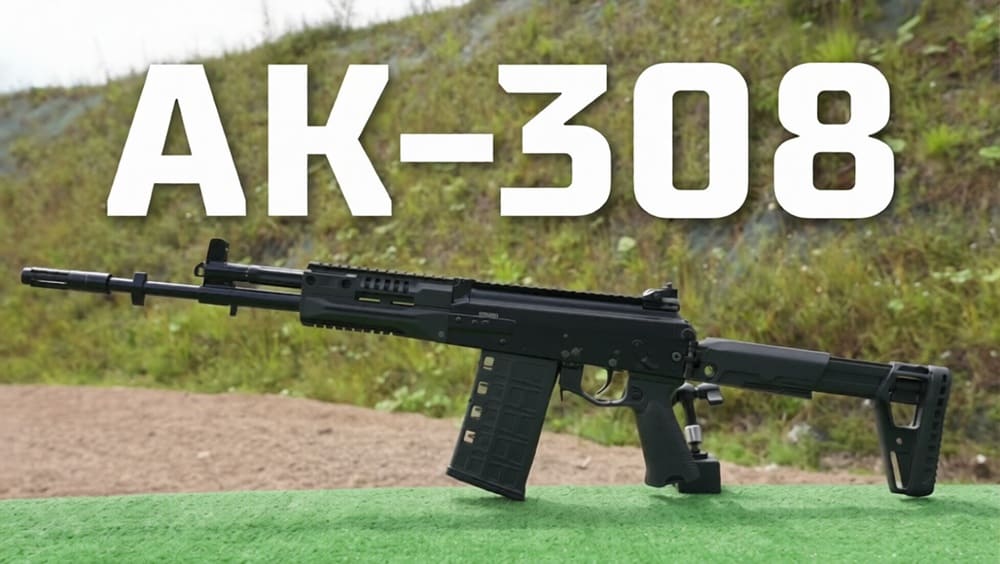
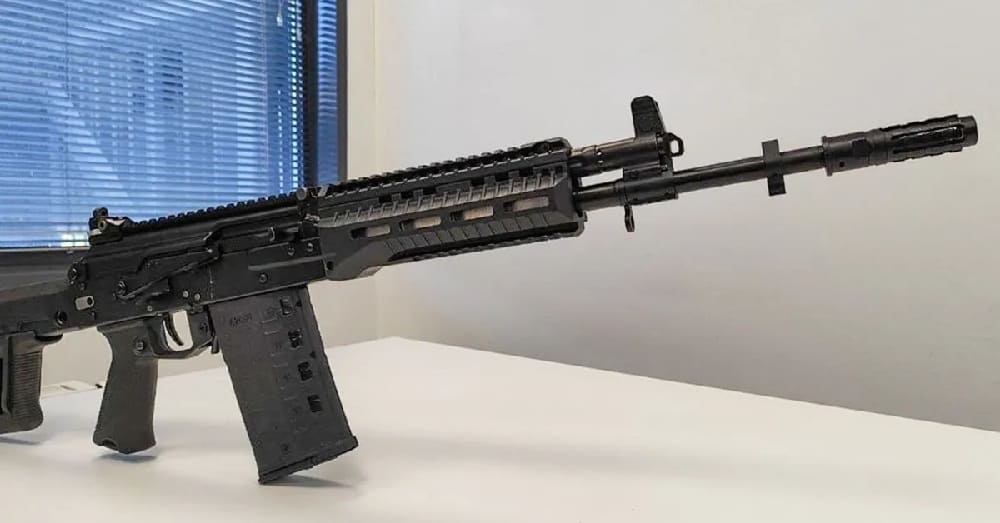
The upgraded AK-308 is now being tested for qualification, Kalashnikov said, adding that serial production would soon start. The announcement is part of a wider trend of non-NATO states adopting Western calibres, with Serbia considering the 6.5×39 mm round, which suggests a move towards the global standardisation of small arms. The modernised AK-308 has several design improvements based on the battlefield performance of the AK-12. The rifle’s forend has been lengthened to provide better grip and control when firing – a modification made after soldiers reported fighting in intense urban combat.
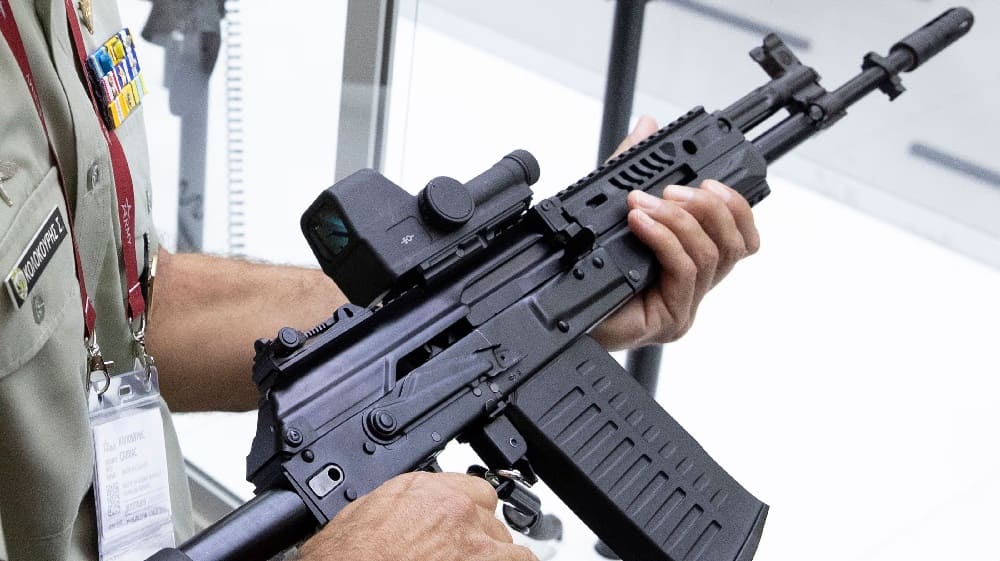
The folding buttstock with adjustable length of pull and cheek rest gives the shooter more options for different configurations and environments. The receiver cover sports a Picatinny rail, so you can mount modern optics like red dot or thermal sights, putting the AK-308 on par with today’s tactical needs. The diopter sight improves aiming accuracy, and the magazine with clear windows allows rapid visual checks of ammunition levels, an important feature in prolonged engagements. The Russian “special military operation” in Ukraine drives these changes, which aim to improve ergonomics and combat effectiveness. Breaking news
NATO Standard
The technical specifications of the AK-308 make it a strong contender in the battle rifle category. The rifle is chambered for the 7.62x51mm NATO round, which allows for better penetration and range than the 5.45x39mm used in the AK-12 or the 7.62x39mm used in earlier Kalashnikov models. The heavier 7.62X51mm NATO round has a muzzle velocity of about 2800 feet per second and a muzzle energy of over 2600 foot-pounds. Designers had built it to accurately strike targets up to 600 metres away. This round also has decent penetration against modern body armour. The AK-12 fires the 5.45x39mm round with a muzzle energy of about 1,000 foot-pounds. It kicks less and takes more bullets, but it won’t stop anything like the 7.62x51mm will. Western guns, such as the FN SCAR-H or M110 SASS, may be harder to maintain in harsh conditions, such as mud, sand or freezing weather.
The AK-308 design has the rotating bolt mechanism that is gas-operated, a feature that is a hallmark of Kalashnikov rifles. This update makes sure it works. The AK-12’s development, particularly the 2023 version that incorporated feedback from Russian troops in Ukraine, significantly influenced the development of the AK-308. The Russian military adopted the AK-12 in 2018. It was easier to put together, had better ergonomics, and had a safety mechanism that worked for both right- and left-handed people. But the AK-12 faced a few problems in trench warfare and urban combat, such as the need for faster ammo checks and a better grip. The press service of Kalashnikov said that the upgrades to the AK-308 incorporated design solutions from both platforms, which were a direct result of lessons learned by the engineers of the company’s Design and Technology Centre.
AK-12’s combat tests
The combat tests of the AK-12 revealed the need for rifles to fight fortified positions and armoured personnel, particularly in the Sumy and Kharkiv regions. The AK-308 has a larger calibre, making it better suited for this role. Kalashnikov rifles have been renowned for their reliability and simplicity for a long time. Since the late 1940s, armies all over the world have received the AK-47 and its derivatives. The AK-308 carries this heritage forward, adapting to the demands of modern combat. The 7.62x51mm round was developed for NATO’s M14 rifle. It would later be used in weapons like the FN FAL and M240 machine gun.
This round has a good mix of range and lethality for both conventional and asymmetric warfare. The AK-308 appears to be aimed not at the domestic market, like Russia’s standard infantry rifle, the AK-12, but rather at export buyers. Reports from 2018 and 2019 said that India was an important market for AK-308. New Delhi sought to replace the antiquated INSAS rifles with modern 7.62x51mm platforms. India already has a joint venture with Kalashnikov to build 600,000 AK-203 rifles in 7.62x39mm. But the AK-308’s NATO compatibility may be more appealing to countries outside Russia’s usual markets.
NATO Caliber
The idea of mounting the AK-308 in NATO calibre is not new. In the 1990s, Kalashnikov produced the AK-101 in 5.56x45mm NATO calibre in an attempt to interest overseas buyers. It only worked a little. Kalashnikov, however, took a more targeted approach with the AK-308, designed for countries such as India, which has a history of buying Russian military technology, including naval frigates and S-400 air defence systems. Its compatibility with NATO ammunition could ease logistics for countries moving away from Soviet-era stockpiles, as demonstrated in Ukraine, which has begun using Czech-made Bren 2 rifles in 5.56x45mm to reduce reliance on Russian calibres.
The improvements found in the AK-308 reflect broader trends in modern warfare, where urban combat and counterinsurgency require flexible, modular platforms. The Picatinny rail standardises the rifle to Western standards, allowing for the addition of advanced optics and accessories, including the Russian-made 1P87 red dot sight shown on the prototypes. But reliance on domestic parts makes it questionable if the rifle can compete with Western systems such as the FN SCAR-H and Beretta ARX160, which have access to advanced electronics.
AK-308 and Smart Optics
Sanctions have been imposed on Russia since 2014, and more are expected after 2022. The embargo has limited Kalashnikov’s ability to acquire high-precision components, which could impact the AK-308’s ability to integrate smart optics or networked systems. Then there is the U.S. Army’s Next Generation Squad Weapons [NGSW] programme, which introduced the XM7 rifle in 6.8 x 51 mm. It’s a different approach, emphasising integration with augmented reality sights and drone-linked targeting systems and setting the standard for future small arms. It remains an effective battlefield weapon, capable of countering contemporary threats, such as enemies equipped with IV-level body armour that can stop smaller calibres (like 5.56 x 45 mm).
The 7.62x51mm cartridge is particularly effective in situations like those in Ukraine, where Russian soldiers face fortified positions and defences supported by drones. It is capable of penetrating ceramic plates and hitting targets from a long distance. Public analysis suggests that Russian infantry must now rely on more powerful firepower to counter the changing tactics of Ukrainian troops on the battlefield. They also want to neutralise the threat posed by Ukrainian FPV drones. Experts believe that by early 2025, FPV drones will account for 60-70% of all Russian equipment losses. But the AK-308’s focus on reliability and stopping power might be just what’s needed by those changing tactics, though its effectiveness in drone-heavy fighting is unknown.
Russian Exports
Geopolitically, the AK-308 demonstrates Russia’s willingness to stay competitive in the global arms market despite major constraints. Russia’s exports of weapons continue despite economic sanctions and limited access to modern military technologies. Foreign clients have shown “constant high interest,” Kalashnikov’s press team confirmed in recent announcements. But the press team did not say which specific countries or contracts they are currently negotiating. India is likely to remain a major prospect, given its strong defence ties and ongoing procurement projects.
India got 35,000 AK-203 assault rifles in 2024 in a joint Indo-Russian venture. Besides, India is also awaiting another 20,000 rifles by March 2025, which shows that the cooperation is continuing. The Middle East and Africa have also expressed increasing interest in Russian small arms. For instance, Indo-Russian Rifles Private Limited cited the demand for the AK-203 in the region. But the AK-308 faces tough competition in the international market from NATO-aligned manufacturers. Western companies like Beretta and CZ offer advanced rifles with modern ergonomics and integrated electronics.
Chinese QBZ-191
Moreover, China now pushes the QBZ-191 (5.56x45mm) with reliable global components and political influence. Even with the harsh sanctions on components and manufacturing, the AK-308 must be quality-maintained by Kalashnikov. Luckily, the AK-308 rifle uses parts from the AK-12, making it easier and cheaper to produce. That gives Kalashnikov a price advantage over foreign competitors made to order. However, exporting NATO-calibre weapons poses strategic risks to Russia’s defensive position. If these systems are captured or reverse engineered, they can be used against us. Giving these weapons to unstable governments can have negative consequences.
The Soviet Union struggled to stop others from copying and selling its AK-47 all over the world. Some buyers may hesitate if they are wary of the AK-308’s Russian-made optics and proprietary accessories. Western militaries prefer weapons that integrate into global supply chains and feature NATO standard attachments. For example, the SIG Sauer 716 was also considered a viable alternative for India’s INSAS replacement programme. That rifle uses the same 7.62x51mm round and supports fully modular NATO accessories. Ultimately, Kalashnikov is trying to stay relevant in exports while preventing its technology from leaking out.
Reliability
The success of the AK-308 will depend on the ability to blend affordability, reliability and diplomatic outreach in contested defence markets. The AK-308, if done right, could still find a place in the armouries of non-Western and budget-conscious countries. The Ukraine conflict is impacting broader military modernisation in Russia, including the AK-308’s development. Russian forces received an upgraded model of the AK-12 in January 2023, which included several key improvements. Soldier feedback was that they preferred simplicity and durability to complex firing modes. So the designers stripped the two-shot burst feature from the updated rifle.
To improve reliability in combat, they also replaced the old muzzle with a fixed, non-removable one. Kalashnikov engineers designed the AK-308 as an upgrade of the AK-12 with improvements for long-range shooting and firepower. The larger calibre of the AK-308 translates into increased recoil and limits magazine capacity compared to lighter ammunition, such as 5.45 mm rounds. Meanwhile, its Western equivalent, the FN SCAR-H, has a 20-round magazine and interchangeable barrels for mission flexibility. The AK-308 is just as rugged but is not modular, which is often a requirement in modern combat situations. The AK-308 may not appeal to forces accustomed to adaptability in fluid battlefield environments.
Russian Airborne Forces
Operationally, the AK-308 fills a gap left by short-range carbines like the AK-12K. In June 2025, Russian Airborne Forces adopted the AK-12K for urban operations, with better mobility. However, the AK-12K sacrifices range for compactness, which makes the AK-308 a better choice for open terrain and defensive purposes. Recent fighting in the Sumy region shows a Russian preference for heavy firepower over mobility in extended combat. In this respect, the AK-308 is compatible with this method but adds weight, which could be detrimental to effectiveness in fast-paced assaults.
Ukrainian troops, for example, prefer lighter weapons, such as the Czech-produced Bren 2, in rapid operations. The AK-308 was heavy, but it could have its place in a fixed position where mobility was less important. The rifle is now in qualification trials that began earlier in 2025 and will run through mid-year testing. Engineers are testing the durability, accuracy and reliability of Kalashnikov rifles under extreme conditions, which they are known to withstand. If the tests are successful, production could begin in late 2025 or early 2026, in line with deliveries of the AK-12 upgrades. But Kalashnikov still needs to increase production without sacrificing quality, a challenge in the face of current international sanctions.
Kalashnikov faces competition
Logistical problems similar to those that have bedevilled the delayed AK-203 programme could stall the induction of the AK-308. Plus, Kalashnikov is also going up against more sophisticated Western systems with digital battlefield sensors like the U.S. Army’s XM7. The AK-308 is reliable because of a traditional design, but it lacks the sophisticated integration capabilities of next-gen NATO weapons. Russia’s limited access to microelectronics means it can barely include smart optics or networked sensors.
Conclusion
Consequently, the AK-308 may not meet the expectations of modern militaries in network-centric warfare situations. That said, its NATO-standard calibre and rugged construction may still appeal to buyers in the developing world who are looking for low-cost solutions. Kalashnikov now has the dual challenge of proving technical reliability and competing in a fast-evolving global market.
Should it pass current trials and secure export contracts, the AK-308 rifle could still be critical. India has been a long-time buyer of the Kalashnikov and could be a major customer if the rifle does well in field trials. In the end, the AK-308 reflects Russia’s wider challenge to modernise its infantry weapons in the face of global sanctions and changing combat requirements. Kalashnikov must therefore innovate within constraints and show the world that its legacy weapons can still stay relevant.
References
- Kalashnikov Concern Official Website
- Army-2018 Expo Report – TASS
- India-Russia AK-203 Rifle Deal – The Hindu
- Next Generation Squad Weapons (NGSW) – U.S. Army
- Kalashnikov Showcases AK-308 – The Firearm Blog
About the Author