

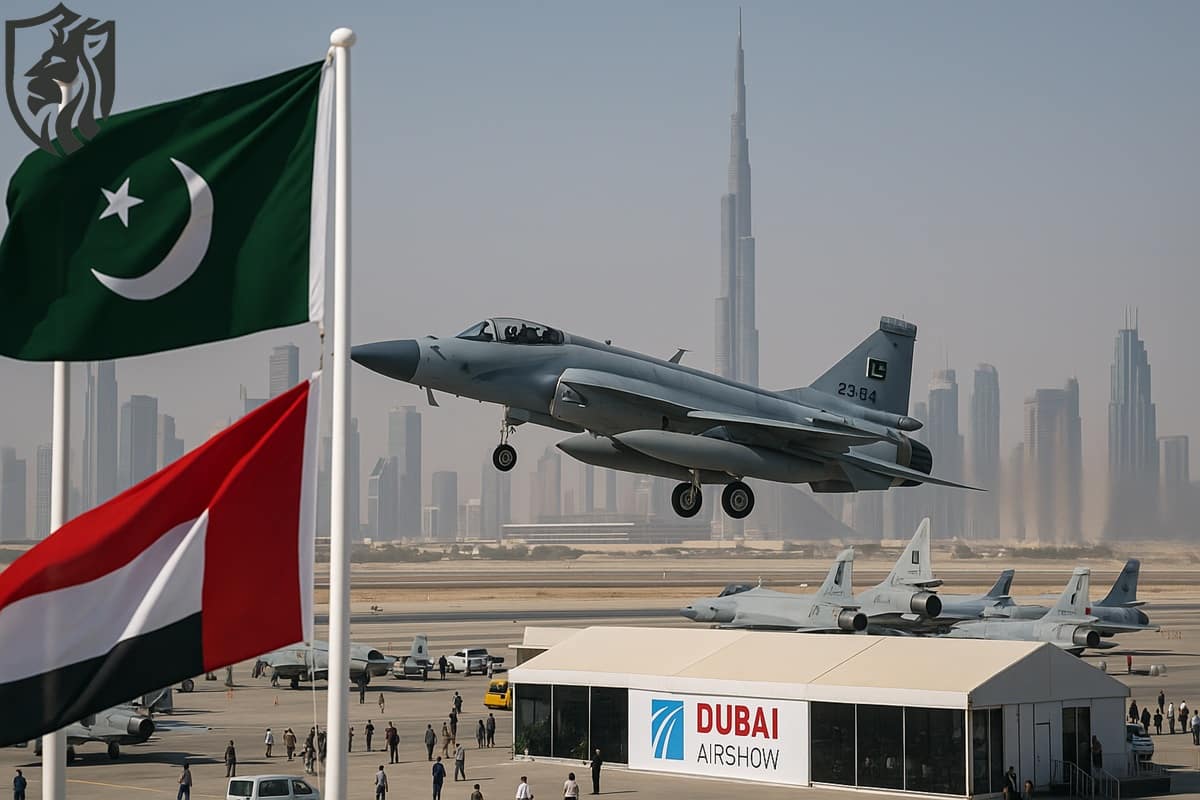
JF-17 at Dubai Airshow 2025 — New export MoUs
JF-17 New Export order at Dubai Airshow 2025
Pakistan’s JF-17 Thunder did more than impress crowds at Dubai Airshow 2025; it also anchored new political and industrial momentum around JF-17 procurement. On the sidelines of the show, the Pakistan Air Force (PAF) secured a memorandum of understanding with at least one friendly state, signalling a fresh demand for multirole fighters.
For defence planners, the MoUs signed for JF-17 procurement at Dubai Airshow 2025 matter because they convert years of marketing, exercises, and combat experience into tangible export pathways. They also show how Pakistan now sells not just an aircraft, but a complete package of training and maintenance.
Air Chief’s high-level diplomacy
Air Chief Marshal Zaheer Ahmed Baber Sidhu used Dubai Airshow 2025 as a high-tempo engagement platform rather than a simple shop window. He met air chiefs from several partner nations and held detailed talks with Lieutenant General Pilot Ibrahim Nasser Al-Alawi, UAE Undersecretary of Defence, and Major General Rashid Mohammed Al-Shamsi, Commander of the UAE Air Force and Air Defence.
During these discussions, both sides focused on advanced training, emerging aerospace technologies, and tighter operational coordination. The UAE’s leadership praised PAF’s modernisation, especially its push for indigenous designs and integrated command networks. As a result, JF-17 procurement at Dubai Airshow 2025 sits inside a wider conversation about how middle powers can co-invest in affordable, networked combat air fleets.
Additionally, this diplomatic activity fits into a larger trend in the defence relationships between Pakistan and Gulf countries, which Defence News Today reports on in its coverage of security cooperation and airpower developments in the Gulf (check out the site’s section on geopolitics and strategy).

Block III and Super Mushshak showcase
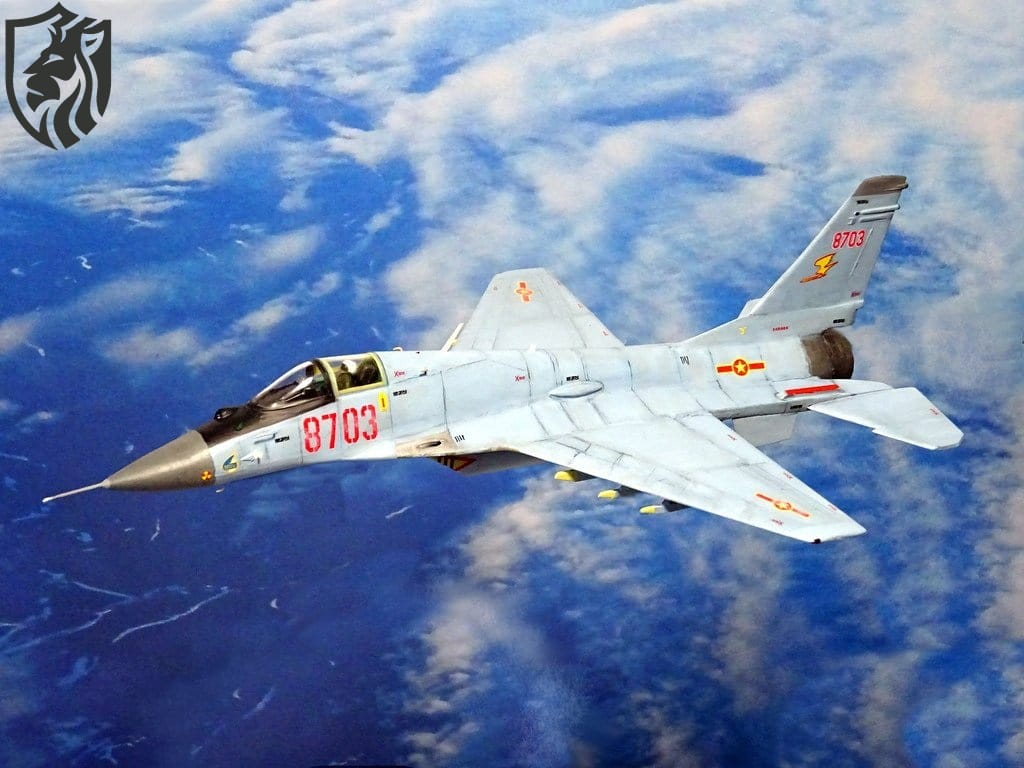
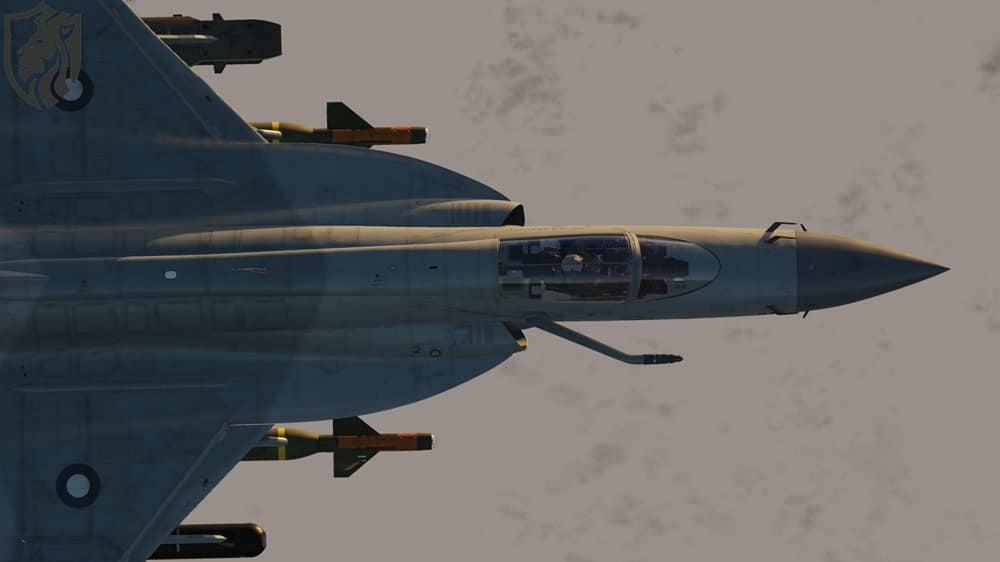
The PAF contingent at Dubai showcased the JF-17 Block III and the Super Mushshak trainer together. They presented a compact yet coherent snapshot of Pakistan’s indigenous aviation story. Block III carries a new active electronically scanned array radar for sharper, more resilient situational awareness.
An upgraded cockpit adds a modern glass layout and refined ergonomics for pilots. It also integrates a helmet-mounted display and sight for faster detection of weapons. The jet is compatible with long-range PL-15 beyond-visual-range air-to-air missiles. Together, these features give the aircraft reach, awareness, and credible electronic warfare options. It delivers that package in a price band well below many comparable Western fighters.
Official and industry sources increasingly describe the JF-17 Block III as the most export-ready variant. It targets air forces seeking fourth-generation-plus performance without the budget shock of heavy twin-engine designs. The Super Mushshak complements it as a proven basic and intermediate training platform. The trainer has built a quiet but solid export record across several partner air forces.
Together, JF-17 Block III and Super Mushshak offer a layered capability ladder. That ladder runs from basic flight training through to fully combat-ready frontline operations. MoUs signed for JF-17 procurement at Dubai Airshow 2025 therefore sit within this broader portfolio.
Combat credibility from Marka-e-Haq
Prospective buyers increasingly look beyond brochure specifications and ask how a jet performs under fire. In that respect, the JF-17’s operational record in Pakistan’s Marka-e-Haq campaign gives it credible combat experience that many export rivals still lack.
Export MoUs for wider JF-17 market
ISPR confirmed that a friendly nation signed an MoU to procure the JF-17 during the show. It chose not to publicly disclose the customer’s identity at this initial stage. In export practice, such MoUs usually open structured talks on configuration and financing. They also cover potential industrial offsets and the full training pipeline for pilots and ground crews.
Each new agreement strengthens the aircraft’s credibility among other interested states. Several countries already operate the jet or have evaluated it in detail. For smaller air forces, the JF-17 offers a single engine and relatively low operating costs. It also supports a mix of Chinese, Pakistani, and selected Western munitions.
Consequently, MoUs signed for JF-17 procurement at Dubai Airshow 2025 bolster Pakistan’s role in non-Western fighter markets. Here, Chinese, Turkish, and Russian aircraft all compete for the same limited defence budgets. In this crowded arena, the JF-17 promotes itself as a flexible, upgradeable platform with custom avionics and data links.

Who Could Be the Next JF-17 Operator?
Defence circles increasingly see Bangladesh as the frontrunner to become the next JF-17 export operator, following reports of advanced negotiations that would make it the fourth foreign customer after Uzbekistan, Myanmar, Nigeria, Azerbaijan, and, reportedly, Iraq.
Iran also sits in the potential buyers’ column, signalling interest in the fighter’s fleet recapitalisation, but neither appears close to a signed contract. The unnamed “friendly country” behind the new Dubai Airshow MoU could be one of these states, but until details emerge, Bangladesh still looks like the most plausible next operator on probability alone.
Implications for South Asia and the Gulf
At a strategic level, fresh MOUs around JF-17 procurement at Dubai Airshow 2025 signal that Pakistan’s defence industry is moving from licence production to sustained export design. This shift has implications for South Asia, where airpower balances already involve Rafale, Su-30, F-16, and J-10 families, and for the Gulf, where states weigh Western fifth-generation jets against more affordable fourth-generation-plus options.
If even some of the current interest turns into contracts, Pakistan Aeronautical Complex can look forward to producing more planes, having more influence with parts suppliers, and working more closely with the industries of its export customers. That, in turn, may accelerate upgrades and joint R&D in sensors, electronic warfare, and weapons integration.
Ultimately, Dubai Airshow 2025 has shown that the JF-17 is no longer simply Pakistan’s budget fighter. It now stands as a central pillar in Pakistan’s push to become a recognised airpower supplier. The JF-17 offers capable, combat-proven solutions for cost-conscious air forces. MoUs signed for JF-17 procurement at Dubai Airshow 2025 mark the latest step on that path.
References
- https://defensenewstoday.info/category/air-power/
- https://defensenewstoday.info/category/geopolitics-strategy/
- https://www.pac.org.pk/jf-17
- https://gulfnews.com/world/asia/pakistan/pakistans-jf-17-thunder-fighter-jet-draws-crowd-at-dubai-airshow-2025-1.500350549
About the Author