Japan Wide-Area UAVs Replace Apache Fleet
Japan’s move to wide-area unmanned aircraft is now real. The Tokyo government set aside ¥11.1 billion in the 2026 budget for five GSDF wide-area UAVs. That line in the budget is Japan’s first clear step toward moving important missions from attack helicopters to drones. The requirement is broad, but it is not vague. The Japanese Ministry of Defense says that the system needs to help commanders make decisions and direct firepower.
The request for information on January 30, 2026, provides additional information. It defines a multi-purpose UAV as a platform for operations that last a long time over Japanese airspace and nearby waters. The platform needs to be able to do intelligence, surveillance, warning, and attack missions. It also needs to be able to support electronic warfare.
Why Japan Is Moving Past Apaches
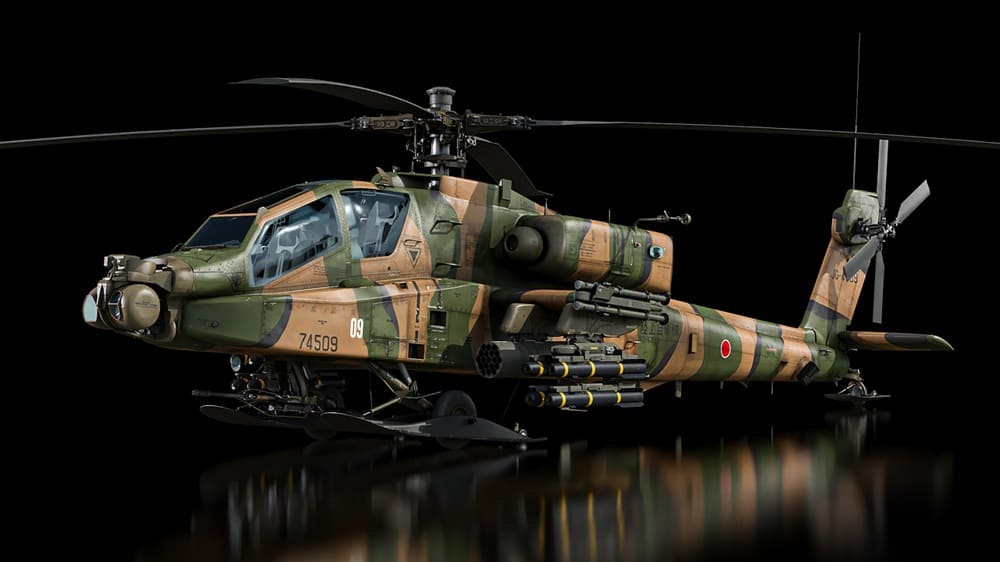
Japan’s Defense Buildup Program was approved in December 2022, which started the strategic logic. That plan supported the faster use of unmanned systems and named multi-purpose UAVs as a key area of capability. At the same time, official planning documents showed that Japan would gradually retire older platforms, such as the AH-1S Cobra and AH-64D Apache fleets, as it rebalances its equipment and personnel for a new operating environment.
This change is similar to what we’ve learned from recent wars. Drones are cheaper than many crewed combat aircraft and can stay in the air for longer, have less risk of failure, and carry a wider range of payloads. Japan’s own planning documents say that unmanned assets can be bought more quickly, used in more dangerous places, and deployed in larger numbers than traditional crewed platforms. So, Japan’s wide-area UAVs are beneficial for both modern battlefields and budgetary reasons.
Top UAV Contenders
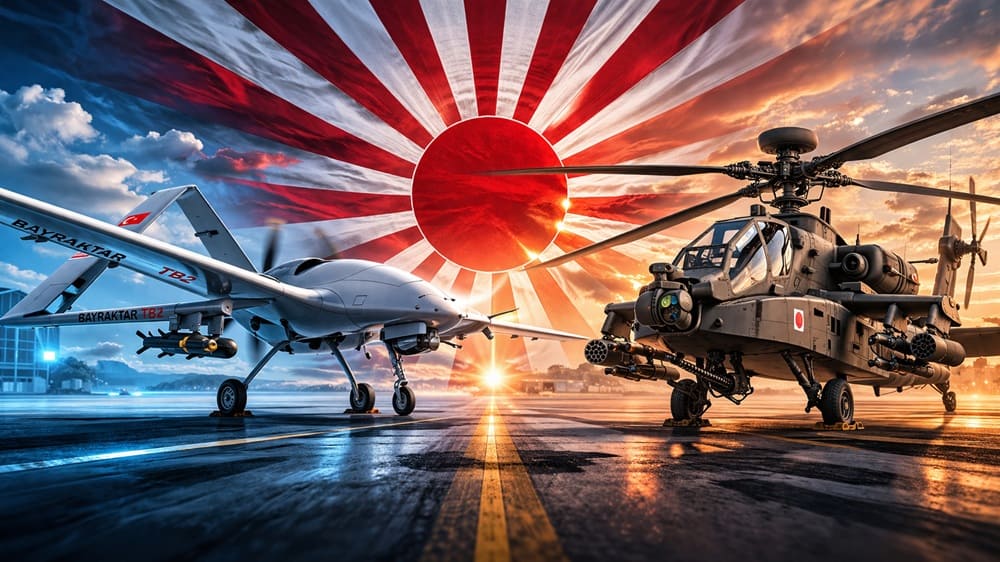
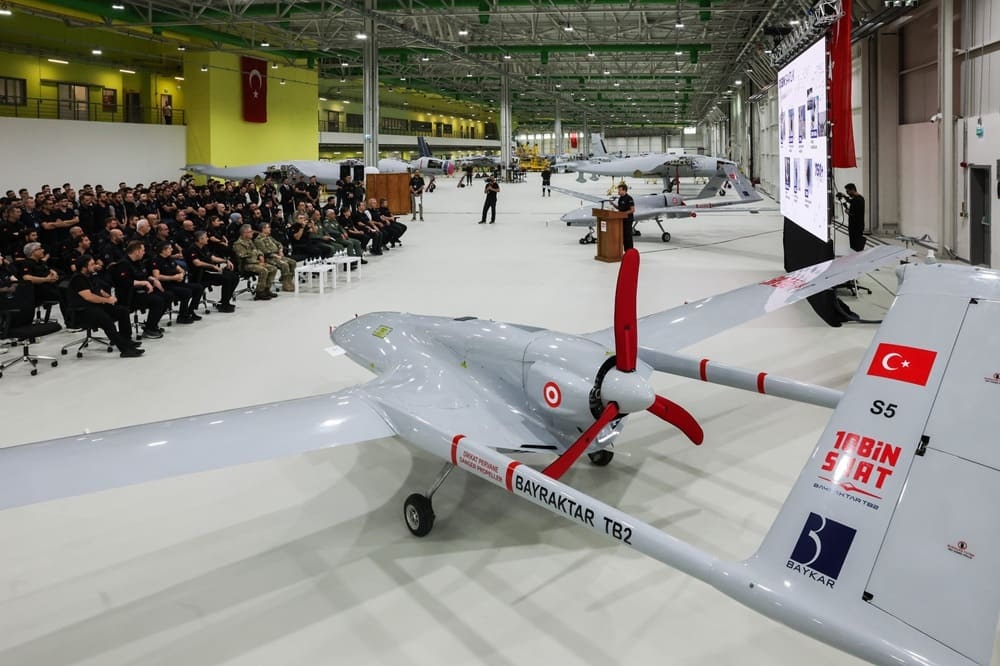
Baykar’s Bayraktar TB2 family and IAI’s Heron Mk II are two platforms that stand out. Defense reporting has linked both to Japanese testing and evaluation. Tokyo hasn’t picked a winner yet. But now the contest is all about planes that can meet the needs of endurance, surveillance, and mission flexibility. The Baykar TB2 is still a strong candidate because it has a long range and a relatively low-cost airframe. Baykar says the platform can carry 150 kilograms and has been in the air for 27 hours.
Furthermore, coverage of Japan’s evaluation has mostly been about the SATCOM-equipped TB2S variant. That version is beneficial for Japan’s long maritime approaches because operators can control it even when they can’t see it. The Heron Mk II has a different balance. IAI sells it as a high-tech surveillance drone that can fly for up to 45 hours. It can also go as fast as 150 knots. If maritime surveillance becomes the most important thing, that might interest Japan. But a bigger and better system might cost more to buy and run. So, the final choice could be based on the price and support from local businesses.
What Comes Next
The ministry’s second RFI ended on March 12, 2026, and officials are now looking over the submissions from companies. Tokyo also plans to change its three main national security documents before the end of 2026. If that review makes drone-based warfare even more important, Japan’s wide-area UAVs could be the first step in a bigger buying cycle instead of just a one-time purchase.
The story goes deeper than just the technical side. The GSDF scouts, tracks, and strikes from a distance in a different way when they use unmanned systems instead of piloted attack helicopters. It also has an effect on logistics, training, basing, and command networks. In other words, Japan is not just buying five planes. It is testing a future combat model in which unmanned systems that stay in the air do more of the dangerous and time-consuming work that helicopters used to do.
This is one of the most significant changes in Japan’s ground forces’ aviation in decades. The post-Apache era has begun. Money has been set aside, requirements have been set, and doctrine has moved from policy to procurement. The only question left is whether Japan will get wide-area UAVs. It is these planes that will shape the next chapter of the GSDF.
References
- https://www.mod.go.jp/en/d_act/d_budget/pdf/fy2026_20260302a.pdf
- https://www.mod.go.jp/gsdf/assets/pdf/procurement/20260130.pdf
- https://baykartech.com/en/uav/bayraktar-tb2/
- https://www.iai.co.il/product/heron-mk-ii/
About the Author