
Japan–China Radar Lock Incident — Airpower Risks Explained
Radar Lock Over Okinawa
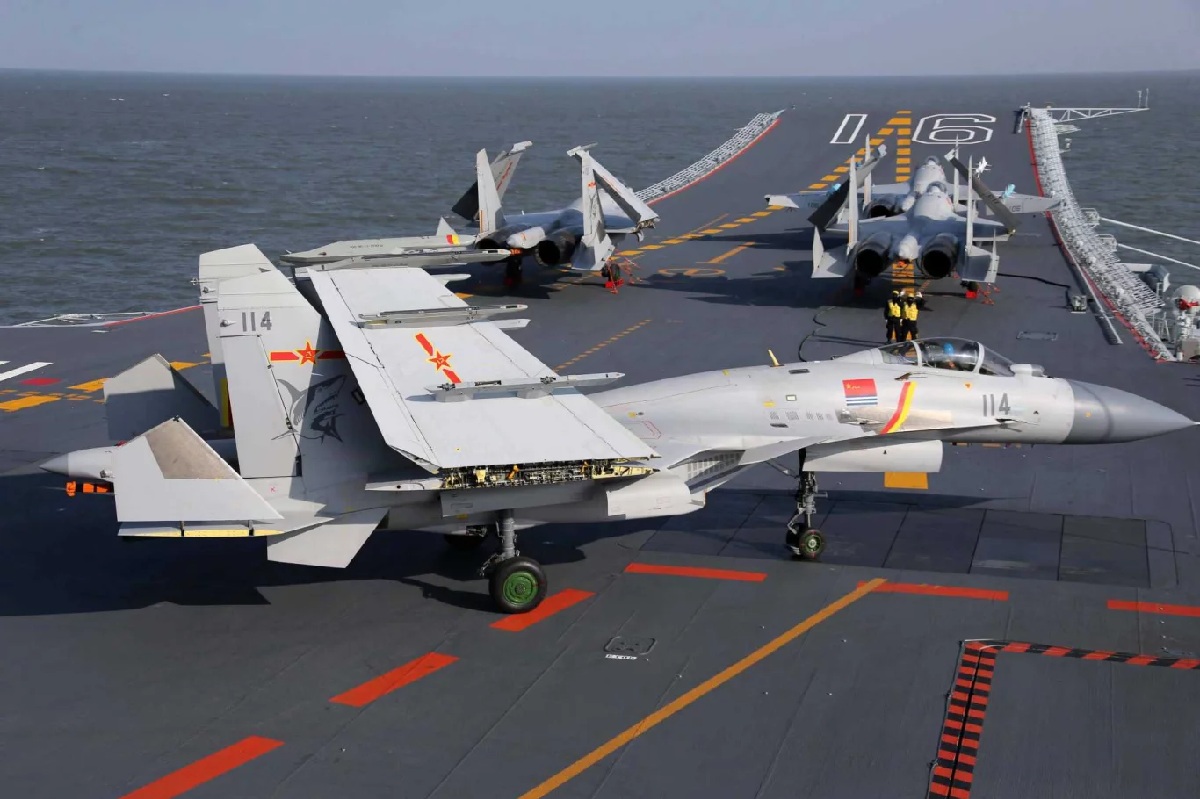
On 6 December 2025, a radar lock near Okinawa turned a routine shadowing mission into a sharp warning. Japan says a Chinese J-15 from the carrier Liaoning twice used fire-control radar on JASDF F-15s. The Japanese fighters were flying over international waters south of Okinawa when the incident unfolded.
According to Japan’s Defence Ministry, the first lock lasted about three minutes. The second lock then continued on and off for roughly 30 minutes. Several F-15s kept monitoring the carrier group at what Tokyo calls a safe separation. No aircraft were damaged and no crew were injured during the radar lock near Okinawa. However, officials stressed that the real danger came from the radar mode, not from close physical maneuvers.
Tokyo believes this is the first radar confrontation between Chinese and Japanese military aircraft. However, the pattern echoes a 2013 incident near the Senkaku/Diaoyu Islands. At that time, a Chinese frigate reportedly locked its weapons radar on a Japanese destroyer.
Fire-Control Radar: Why It’s So Risky
For aircrew on both sides, the radar lock near Okinawa is more than a technical detail. Pilots normally use search or track modes to build a picture of busy airspace and maintain safe separation. Once a fighter shifts into fire-control mode and locks onto a specific target, the opposing crew must assume a missile could follow within seconds.
A sustained fire-control lock effectively acts like a virtual trigger pull. In the crowded skies around Okinawa, Japanese, Chinese, and US aircraft often share the same airspace. A sudden radar lock compresses reaction time and can force abrupt defensive maneuvers. Those maneuvers then increase the risk of collision or dangerous miscalculation.
The danger grows if a future radar lock near Okinawa happens during bad weather or complex formations. It becomes even worse when multiple aircraft types are operating at the same time. This is why Japan describes such use of fire-control radar as “dangerous” and “extremely regrettable,” and why even previous naval radar incidents prompted immediate diplomatic protests and battle-station alerts on Japanese ships.
Taiwan Politics and Military Signalling
The radar lock near Okinawa did not occur in a political vacuum. In early November, Prime Minister Sanae Takaichi said Japan’s Self-Defense Forces could act if Chinese moves against Taiwan directly threatened Japanese security. Beijing condemned the remark and denounced what it portrays as a new, more interventionist Japanese line on Taiwan.
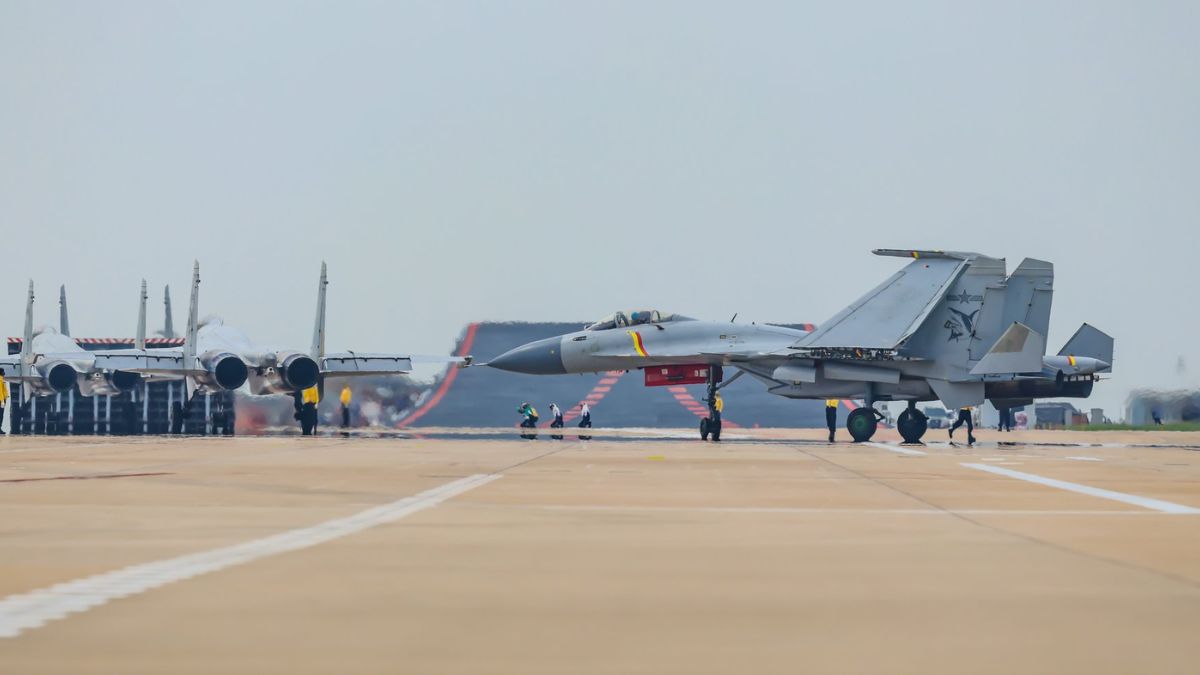
Since then, China has stepped up naval and air operations around Japan’s southwestern island chain, including the Miyako Strait and waters east of Okinawa, while insisting that all activities remain lawful and routine. During the Liaoning deployment linked to the radar lock near Okinawa, Chinese crews reportedly executed around 100 J-15 take-offs and landings as they practiced blue-water operations and coordination with escorting destroyers.
From Beijing’s viewpoint, such drills normalize Chinese carrier presence along critical sea lanes and test how far Japan will shadow them. From Tokyo’s perspective, pairing high-tempo carrier operations with a fire-control radar incident looks like deliberate pressure on Japan’s air defense network and, indirectly, on the US–Japan alliance.
Grey-Zone Pressure from Okinawa to the South China Sea
The radar lock near Okinawa also has a wider pattern of gray-zone signaling. Over the South China Sea, a Philippine government patrol aircraft on a fisheries mission recently reported that Chinese forces fired three flares from the direction of Subi Reef as a close warning. The flares did not damage the aircraft, and the crew completed their task, but Manila labelled the move part of a broader harassment campaign.
Taken together, warning flares and fire-control radar locks point to a Chinese playbook of carefully managed risk. Beijing appears to use these tactics to push back foreign aircraft while still avoiding outright kinetic action. If similar steps accompany another radar lock near Okinawa, coercion against Japan and Taiwan could look easier and cheaper. Yet every new incident raises the chance that a pilot misreads events, overreacts, or suffers a critical technical failure.
Chinese Airpower and Alliance Response
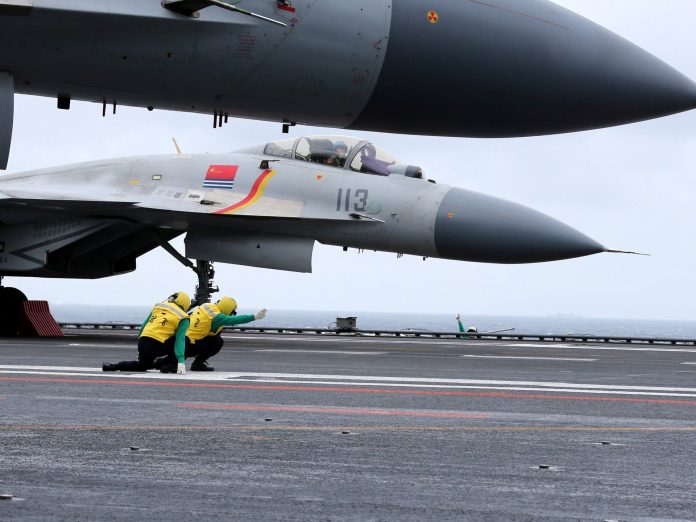
For defense professionals, the radar lock near Okinawa highlights how hardware, doctrine, and politics now intersect in East Asian aviation. China is not only flying carrier-based J-15s near the first island chain; it is also testing land-based fighters like the J-10C with very long-range PL-17 air-to-air missiles, reshaping beyond-visual-range engagement zones across the region.
Readers interested in the long-range trend can revisit the article “China tests J-10C with PL-17 missile for long-range use” on Defense News Today, which explains how the extended missile reach alters air-battle geometry for Japan, Taiwan, and US forces. Likewise, China’s growing military role in Mali raises security risks and shows how Beijing uses distant theaters to refine power-projection tools that eventually feed back into the western Pacific competition.
Tokyo, for its part, pledges a calm but firm response to the radar lock near Okinawa. Officials promise tighter surveillance, refreshed rules of engagement, and closer coordination with allied aircraft around the Ryukyus. Early statements from Australia and other partners already cast the episode as a test of regional norms. They perceive the incident as more than just a bilateral dispute; they perceive it as a signal regarding the management of the Indo-Pacific region.
After the Okinawa Radar Lock: What’s Next
Chinese crews may escalate their response or instead ease back towards more conservative intercept profiles. Analysts will also track whether both sides put fresh air-safety rules in place between Tokyo and Beijing. These could mirror naval hotlines and codes of conduct already used in other tense regions.
If radar locks and flare warnings stay rare, leaders may keep them within the bounds of sharp diplomacy. If they become routine, however, they will signal a region settling into constant grey-zone pressure, where every patrol over Okinawa or the South China Sea doubles as both a military mission and a political message.
References
- https://www.reuters.com/world/china/chinese-fighter-jets-directed-radar-japanese-aircraft-japan-says-2025-12-06/ Reuters
- https://apnews.com/article/japan-china-military-fighter-jets-pacific-25017ddbec3afd6bf9e6da4b8516b90a AP News
- https://www.armyrecognition.com/news/navy-news/2025/defense-alert-chinese-j-15-fighter-jets-from-aircraft-carrier-liaoning-lock-radar-on-japanese-aircraft
- https://www.wsj.com/world/china/chinese-jets-locked-radar-on-japanese-fighters-16576128
About the Author