
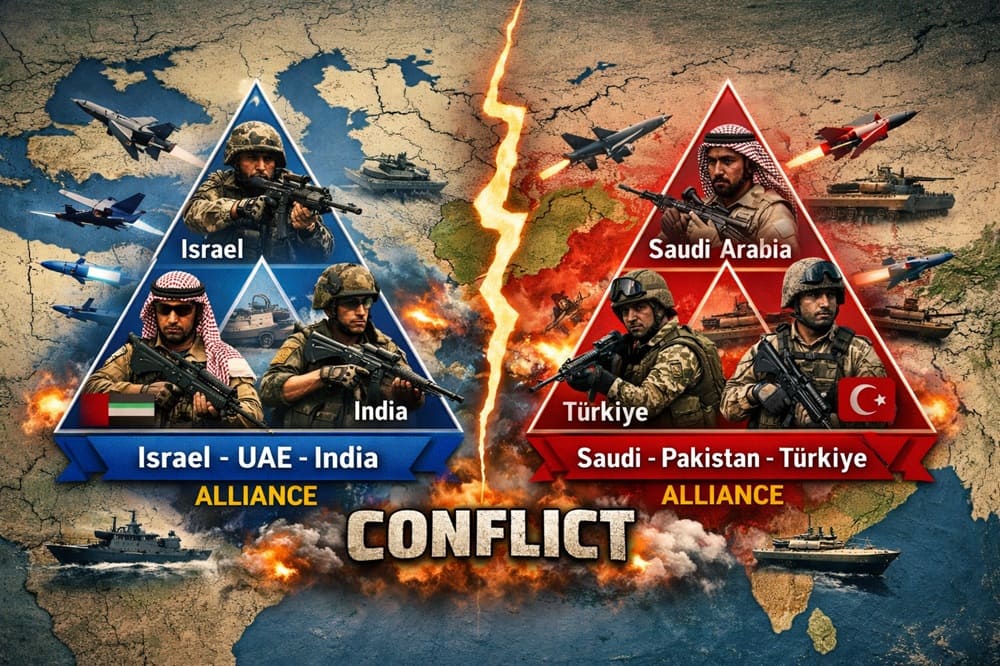
Israel–UAE–India vs a Saudi–Pakistan–Türkiye Triangle
What is unfolding across South Asia and the Middle East right now is neither routine diplomacy nor a collection of isolated bilateral deals. It is a deliberate reconfiguration of the balance of power. The real game has already begun through a quiet yet organized strategic triangle—Israel, the United Arab Emirates, and India—where each party has different motivations but a single objective: to weaken the collective political and strategic standing of the Muslim world while redistributing regional influence.
Not Speculation—A Structure
At the core of this alignment lies a dangerous ideological imbalance. Israel—a non-Muslim security state—has historically viewed the Muslim world as both a buffer zone and a potential threat environment. India, under an aggressive Hindu nationalist ideology, has not only institutionalized anti-Muslim politics at home but is also exporting coercive diplomacy abroad. However, the most destabilizing element is the United Arab Emirates—a Muslim state gradually positioning itself alongside actors whose strategic vision clashes with broader Muslim political interests.
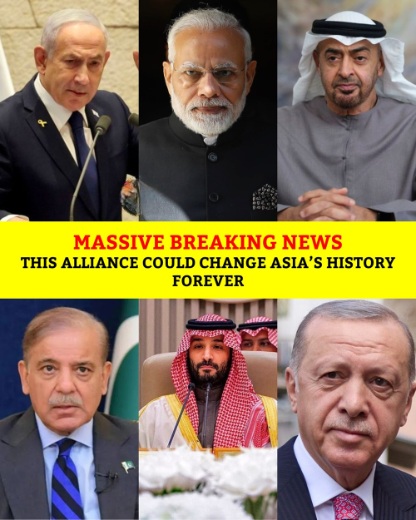
The Triangle’s Destructive Contradiction
The roots of this crisis are embedded in an earlier precedent. Pakistan’s limited, defense-oriented framework-level cooperation with Saudi Arabia unintentionally became a model. Today, that same model is being replicated—and expanded—by India, Israel, and the UAE, not only as a partnership but also as an aggressive agenda involving intelligence-sharing, security coordination, and regional containment.
A question that once belonged to academic debate—whether the primary threat would emerge from an Israel–UAE alignment or from an India–Israel axis—is now irrelevant. The reality is far more serious: all three are now moving together, in coordination.
Actors React to Pressure Points
India wants a counterweight to Turkey’s growing geopolitical role and its clear stance on Muslim causes. The UAE is recalibrating its position in light of Saudi Arabia’s evolving regional strategy. Israel has long regarded Pakistan as a strategic variable, not as an immediate enemy but as a future obstacle that requires management. The current partnership facilitates this process.
These developments have not caught Pakistan, Turkey, or Saudi Arabia off guard. For more than a year, quiet intelligence assessments have been pointing in this direction. That is why Turkey’s foreign minister publicly acknowledged ongoing consultations—it was not diplomatic courtesy but strategic signalling. At this stage, silence is interpreted as consent.
The Chessboard Enters a Decisive Phase
If the Israel–India–UAE arrangement is formalized openly, the response will not remain informal or ambiguous. It will provide Pakistan, Turkey, and Saudi Arabia with a clear legal, political, and strategic basis under which covert coordination can evolve into open and institutional cooperation.
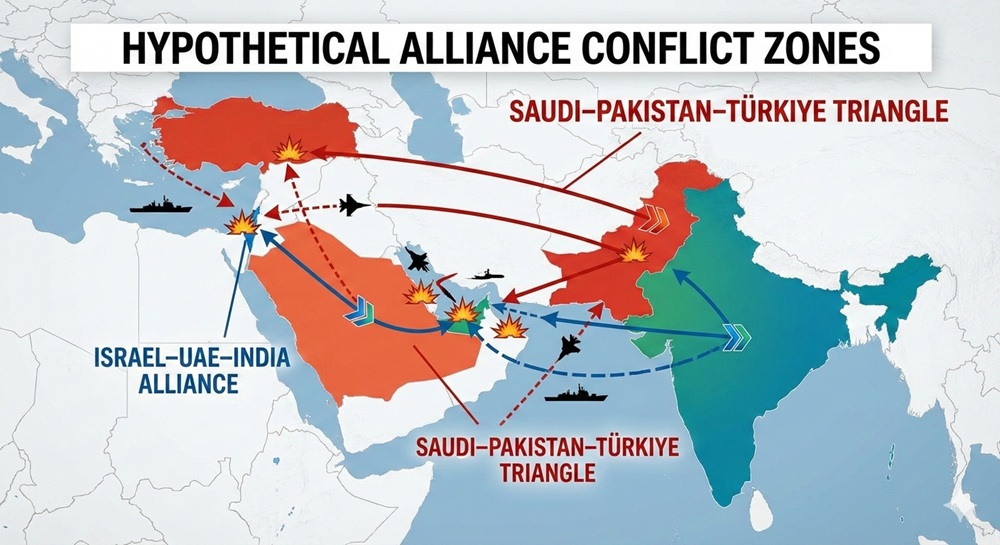
This is why the UAE regional playbook finds itself at a critical strategic juncture. A transparent, balanced recalibration could preserve stability. Secret forward movement will not. In this context, secrecy will only accelerate bloc formation and deepen fractures.
Beyond Alliances: Direction, Legitimacy, Balance
History shows that regions do not collapse in a single day—they unravel when silent understandings replace collective red lines. When the camel ultimately selects a direction, it permanently alters the landscape. And that shift—from the Gulf to South Asia—will define the next phase of power politics across the region. Undoubtedly, Pakistan, through the lens of the GCC, once viewed as a peripheral player in regional politics, is rapidly becoming a dominant force.
References
- I2U2 Joint Statement (MEA, 14 July 2022)
- Abraham Accords Peace Agreement PDF (15 Sept 2020)
- IISS Analysis: The Minilateral I2U2 Group (11 Nov 2022)
- Reuters: UAE “red line” warning on West Bank annexation (3 Sept 2025)
About the Author