
IRGC Hadid-110 Drone: Iran’s Fast Stealth Threat
This article uses Hadid-110 as the most commonly reported name because most open-source reporting refers to the system as the Hadid-110, not “Hadid 101.” Additionally, Iranian reports describe the drone as a one-way attack UAV created for the IRGC Ground Force and associate it with the name Hadid-100 Dalahu. This is important because correctly classifying this aircraft helps distinguish it from the larger and sometimes perplexing family of Iranian drones and loitering munitions.
Why the Hadid-110 is important
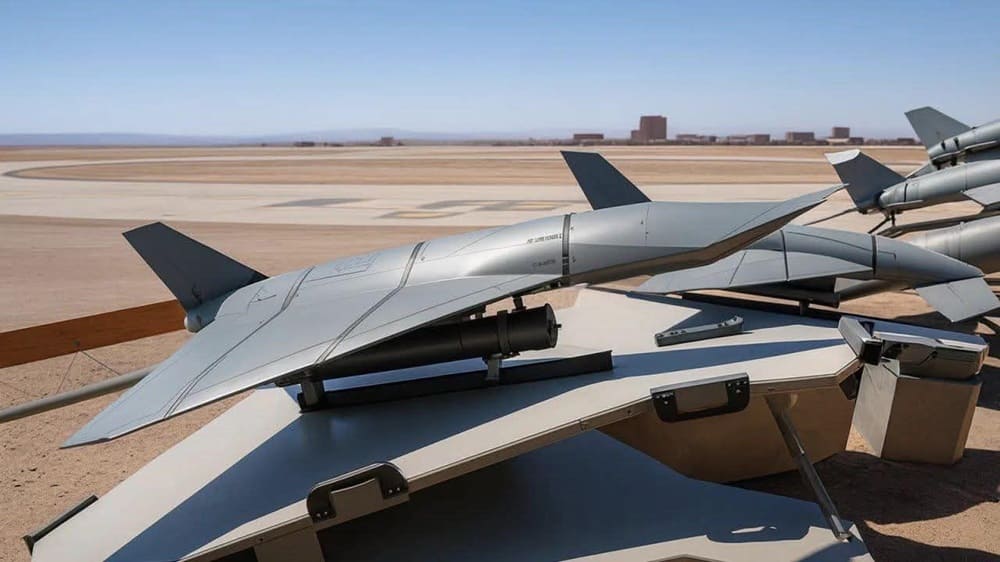
The IRGC Hadid-110 stealth kamikaze drone is important because it seems to move Iran away from the slower propeller-driven one-way drones that gave it a bad name in the past. Sources linked to the Iranian government say the drone was made to get past protected airspace and hit important targets. Some of these targets are command posts, radars, and important infrastructure. The Hadid-110 isn’t just another drone for big attacks. It looks like a more specialized platform instead. Its goal is to shorten the time between warnings and put pressure on enemy air defense networks.
Drone’s public appearance
According to reports in the news, the Hadid-110 first showed up during military drills in Iran in early 2025. Al-Monitor said that Iran showed off the Hadid-110, a jet-powered plane, during military drills and said it could take off from underwater. But analysts should be careful with that claim about launching from underwater because there isn’t much independent confirmation yet. The Tehran Times later said that Iran gave the IRGC Ground Force the first group of Hadid-110 drones on December 6, 2025. I can also change this to only active voice or make all the sentences short. This shows that the weapons were no longer just for display and testing but were now ready for use in the field.
Different design and different philosophy
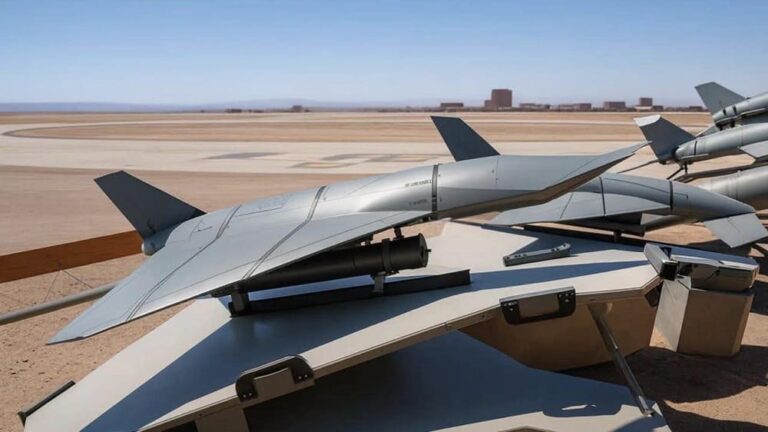
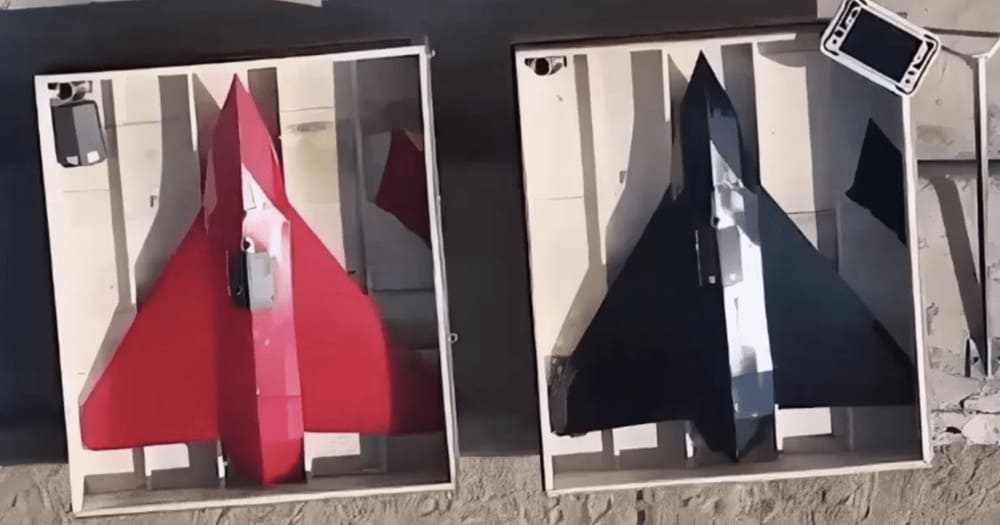
The IRGC Hadid-110 stealth kamikaze drone seems to have a different design logic than systems like the Shahed-136. It doesn’t use a piston engine and a long, loud flight path. Instead, it has a small jet engine and a faceted airframe that is supposed to make it harder for radar to see. The Tehran Times also says that it is launched with help from rockets, which means it doesn’t need a runway and can be deployed in different places. So, the design combines mobility, shorter reaction times, and lower observability into a package that is meant for harder targets.
Modest specifications but meaningful
According to open-source information from the U.S. Army’s ODIN database, the Hadid-110 has a top speed of about 510 km/h, a range of about 350 km, a ceiling of 30,000 feet, an endurance of about one hour, and a warhead that weighs 30 kg. Those numbers don’t make the drone a replacement for a long-range cruise missile. Even so, they are important because the system is much faster than the slow one-way drones that many air defense operators are used to tracking. So, the Hadid-110 might be a better weapon for Iran to use against targets that are time-sensitive or not well-protected.
Speed is the real operational advantage
The IRGC Hadid-110 stealth kamikaze drone’s best feature is how fast it is. Iranian news stories make it clear that the jet engine is meant to fix the problem of older propeller-driven suicide drones flying for a long time and not going very fast. In real life, a faster target gives defenders less time to find, identify, track, and attack it. So, even a drone with a small warhead can be more dangerous if it gets to the target area quickly enough to throw off the defender’s decision-making process.
Careful use of “Stealth”
The word “stealth” still needs discipline, though. The reports we have show that the radar signature is lower, not that the object is invisible. The faceted shape and simple lines suggest that Iranian designers wanted to lower radar cross-section and shorten engagement windows. However, analysts should describe it as a low-observable system, not as an all-aspect stealth aircraft. Therefore, defenders should treat the Hadid-110 as harder to hit, not impossible to defeat. This point applies especially to modern air-defence systems with strong sensor coverage and fast battle management. This assessment partly relies on the drone’s published design and intended role. It does not rely on an independently proven combat result.
Hadid-110 in combat
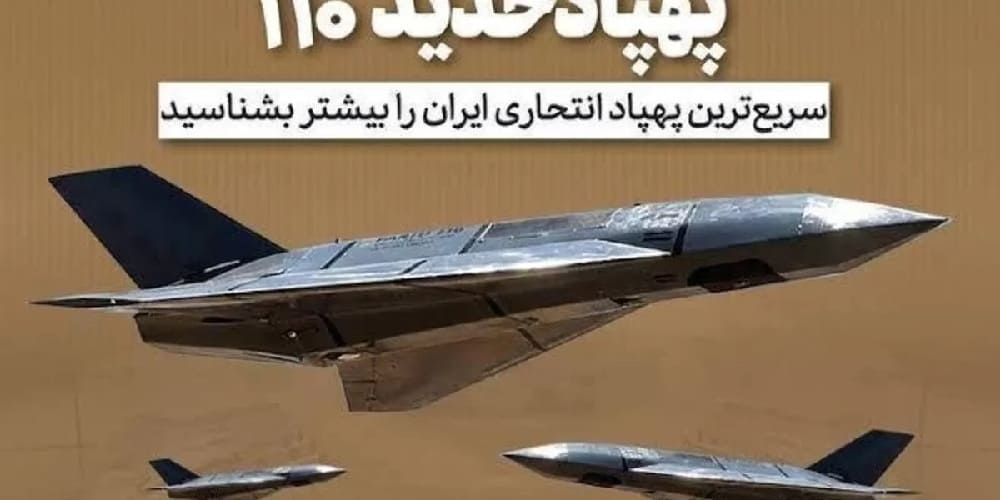
The IRGC Hadid-110 stealth kamikaze drone is best for opening up paths for strikes. Iranian news says it is meant for air-defense sites, radars, command nodes, and important infrastructure. This type of drone can do that mission well. A 30 kg warhead might not be able to break through tough buildings. But it can still hurt radars, antennas, launch support vehicles, and control nodes that aren’t very well protected. Using the drone in coordinated attacks makes it more useful. For instance, Iran could send Hadid-110 drones along with slower drones or missiles. That mix could throw off the defender’s timing. It could also make defenders spend more on interceptions.
New drone and its raw specs
The Hadid-110 is important because it shows that Iran is getting more drones. Recent reports from Reuters and the Associated Press show how important drones have become to Iran’s military pressure. Threats and attacks all over the Gulf region and the Strait of Hormuz are part of that pressure. With that in mind, the Hadid-110 looks less like a showpiece and more like a signal for action. It seems like Tehran wants cheap mass drones and faster one-way strikes with less time to prepare. That change is important from a strategic point of view because it makes the difference between easy-to-kill loitering munitions and harder-to-kill precision systems smaller.
Conclusion
The IRGC Hadid-110 stealth kamikaze drone doesn’t change air warfare on its own. But it does show that the way the Iranian military thinks has changed. It looks like Tehran has put together a system that includes a lot of things that are already known. Some of these strengths are mobility, one-way attack economics, and the ability to launch from different places. It also makes things go faster and harder to see on radar. There is still not a lot of public information about the drone. Also, a lot of strong claims still come from Iranian or open-source news. There is still no independent operational proof. Still, the Hadid-110 is worth paying close attention to. It looks like Iran is putting together a more layered and flexible drone strike plan.
References
- Tehran Times. “Hadid-110: IRGC Ground Force fields new jet-powered suicide UAV.” Published December 6, 2025.
- Al-Monitor. “Iran unveils new drones in military drill: What to know.” Published in February 2025 coverage of Iran’s drone unveiling during exercises.
- U.S. Army ODIN (Worldwide Equipment Guide). “Hadid 110 (Dalahu) Iranian Unmanned Aerial Vehicle (UAV).” Technical reference page listing the drone’s reported role and specifications.
- Reuters. “Iran could disrupt the Strait of Hormuz with drones for months.” Published March 4, 2026; useful for broader context on Iran’s drone warfare posture.
About the Author