
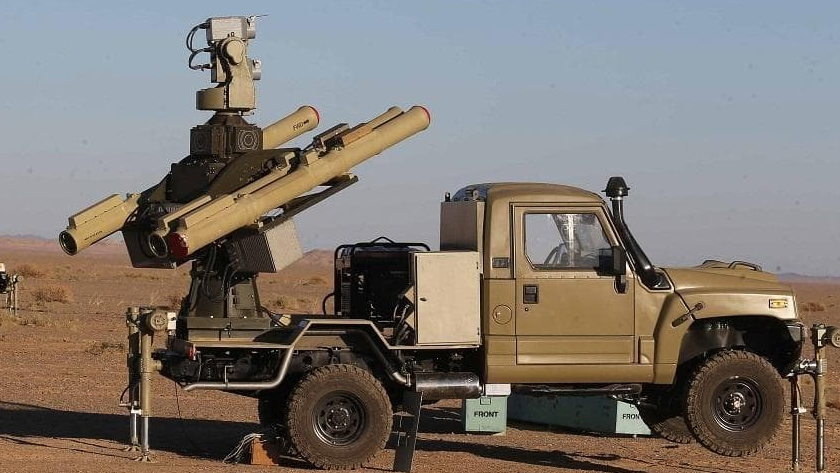
Iranian Majid air defense system
A report circulated by Clash Report on X claims Iranian forces shot down an Israeli-made Heron UAV (serial number 298) near the Iran–Iraq border using the Majid short-range air-defense system. If accurate, the incident adds a sharp new data point to the long-running Iran–Israel shadow contest, where surveillance, strike enablers, and counter-surveillance tools constantly race each other. Even one successful intercept can matter. It signals that the airspace is no longer permissive for “routine” collection flights. It also underlines a wider trend: drones keep spreading, and so do affordable counters designed to break their advantage.
Strategic Impact of the Shootdown
Israel has leaned heavily on unmanned systems for years. They provide persistence, wide-area sensing, and lower political risk than crewed missions. Iran, meanwhile, has poured resources into layered air defense to harden key sites and reduce adversaries’ freedom of action.
An IAI Heron loss would not be a war-changing event on its own. However, it can shift behavior. Israel may alter routes, altitudes, timing, or payload choices. Iran can point to the intercept as proof that sanctions did not stop domestic development. In a region already primed for escalation, even a single shootdown can feed deterrence messaging, retaliation planning, and technology investment.
Majid system overview
Majid is described as a mobile, quick-reaction air-defense system mounted on an Aras tactical carrier. Compared with heavier Iranian systems, it is built to move fast, set up quickly, and protect mobile forces or sensitive points against low- and medium-altitude threats.
Key points as commonly described in reporting and discussions:
- Missile: AD-08
- Range: roughly 8–10 km
- Guidance: electro-optic support with radar cueing/assistance (as described)
- Engagement ceiling: up to around 6 km altitude
- Role: point defence and short-range coverage within a layered network

That combination fits the modern counter-UAV problem. Many drones are not swift. They also tend to fly predictable tracks during collection. A compact SHORAD system can exploit those traits, especially when it can relocate and appear where the drone operator did not expect it. Still, limitations matter.
Systems built under sanctions may face constraints in seekers, processors, materials, and sensor quality. That can reduce performance against more advanced targets, heavy jamming, or low-observable designs. Therefore, Majid’s value may lie less in achieving “perfect” capability and more in its ability to create risk and uncertainty for the drone operator.
Heron’s Value and Vulnerabilities
The IAI Heron (also known as Machatz-1 in some contexts) is often described as a workhorse MALE platform: long endurance, high-utility sensors, and strong communications. It is typically associated with:
- Endurance: up to about 45 hours (often cited)
- Operating altitude: commonly referenced around 30,000 ft
- Sensors: electro-optical payloads, radar options (including SAR), and relay capabilities
- Export footprint: sold to multiple countries in different configurations
- Design emphasis: persistence and coverage, not sheer speed or stealth
That design trade-off is important. A platform optimized for long loiter time often flies slower and shows a larger signature than stealthier systems. If it enters contested airspace, a competent SHORAD battery can exploit its predictability.
The reported Israeli position is also typical: acknowledge the loss, but claim no sensitive data exposure. Israel Defense Forces messaging in these moments usually aims to limit the propaganda benefit for the defender while avoiding escalation pressure from domestic audiences.
Plausible Engagement Sequence
Picture a clear night along the Iran–Iraq border. A radar cue appears. Operators treat it as unknown at first, then classify it as a UAV-like track based on speed, altitude, and flight profile. Majid’s crew deploys quickly. Radar provides the initial track and a firing solution. Electro-optic sensors help confirm the target in the last stages, especially if the drone’s silhouette or thermal signature is visible against the sky.
The Majid system launches an AD-08 interceptor. With the drone traveling relatively slowly and holding a stable line, the missile’s job becomes easier. A proximity burst or direct hit breaks up the airframe, scattering debris across the border area. This scenario highlights the basic logic of modern counter-UAV warfare: detection plus rapid kill-chain execution can beat endurance-focused drones, even without peculiar technology.
Iran–Israel Escalation Backdrop
This reported intercept sits within a pattern of action and counteraction across the region, including surveillance flights, strikes, sabotage, and information campaigns. Israel has long tried to disrupt Iranian military entrenchment and constrain nuclear progress, particularly through activity linked to theaters such as Syria and Iraq.
Iran has responded by expanding air-defense coverage, improving mobility, and publicizing indigenous systems. According to reports from Reuters, Iranian missile strikes occurred in October 2024. If that reference is accurate, it reinforces the escalation backdrop and the way discrete events connect to a broader signaling cycle.

Post-Shootdown Shifts
If Majid genuinely downed a Heron in operational conditions, several second-order effects become more likely:
- More point-defense deployments. Iran would have an incentive to spread Majid units around high-value sites.
- Israel adapts its drone playbook. Expect changes in routes, timing, altitude bands, and stand-off sensing.
- A push for survivability. That could mean stealthier drones, higher-altitude options, decoys, or heavier electronic warfare.
- Global lesson: counter-UAV is no longer optional. Even “modest” air defenses can deny intelligence collection.
The bigger theme is the technology race. As drones get better, air defenses sharpen their sensors, tracking, and response times. Then drones evolve again. That loop now shapes doctrine worldwide, not just in the Middle East.
Conclusion
A reported Heron shootdown near the Iran–Iraq border, allegedly achieved by the mobile Majid SHORAD system, is more than a tactical headline. It illustrates how quickly the drone advantage can erode when a defender builds a responsive, layered counter-UAV posture. For Iran, it supports a narrative of resilience and domestic capability under pressure.
For Israel, it is a reminder that endurance platforms face real risk in contested airspace, pushing adaptation in tactics and design. In today’s battlefield, control of the sky is no longer only about fighters and long-range missiles. It is increasingly about who can see drones first, process faster, and shoot before the mission is complete.
References
- https://x.com/clashreport/status/1938110237736898577
- https://www.iai.co.il/p/heron
- https://www.unmannedairspace.info/counter-uas-systems-and-policies/iran-unveils-ad-08-majid-c-uas-system-with-15km-range/
- https://www.reuters.com/article/world/factbox-the-global-hawk-drone-shot-down-by-iran-idUSKCN1TL29K/
About the Author