

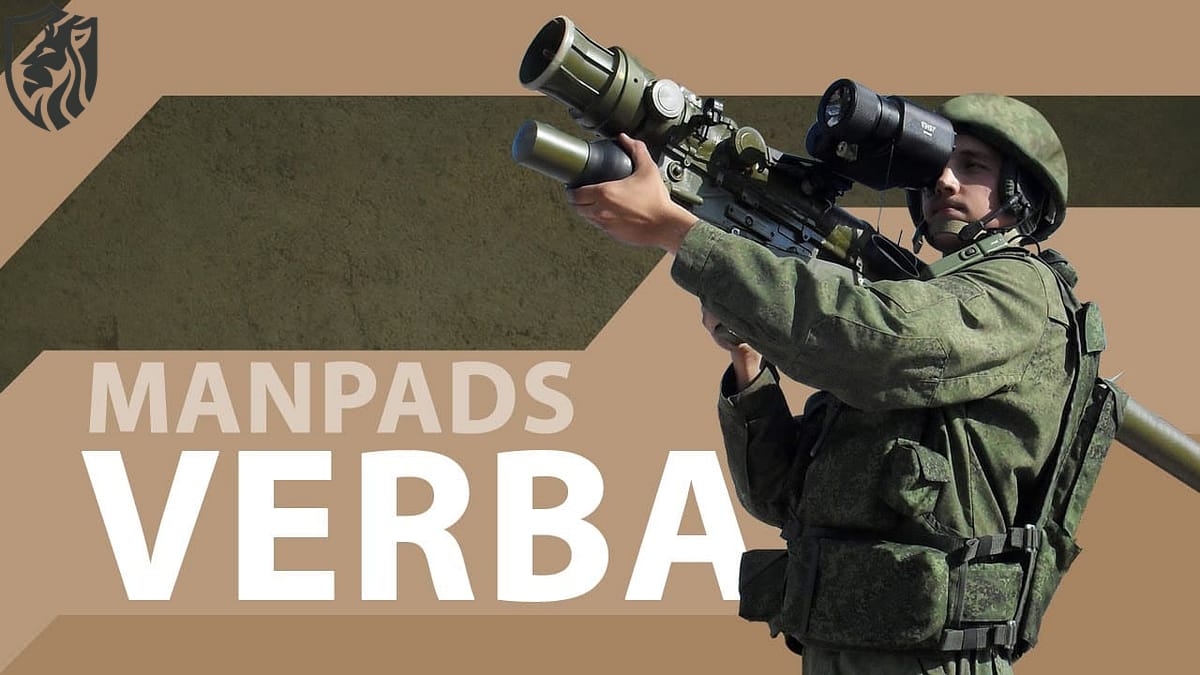
Iran-Verba Tri-Seeker Surface-to-Air Missile System
Iran Reinforces Layered Air Defense
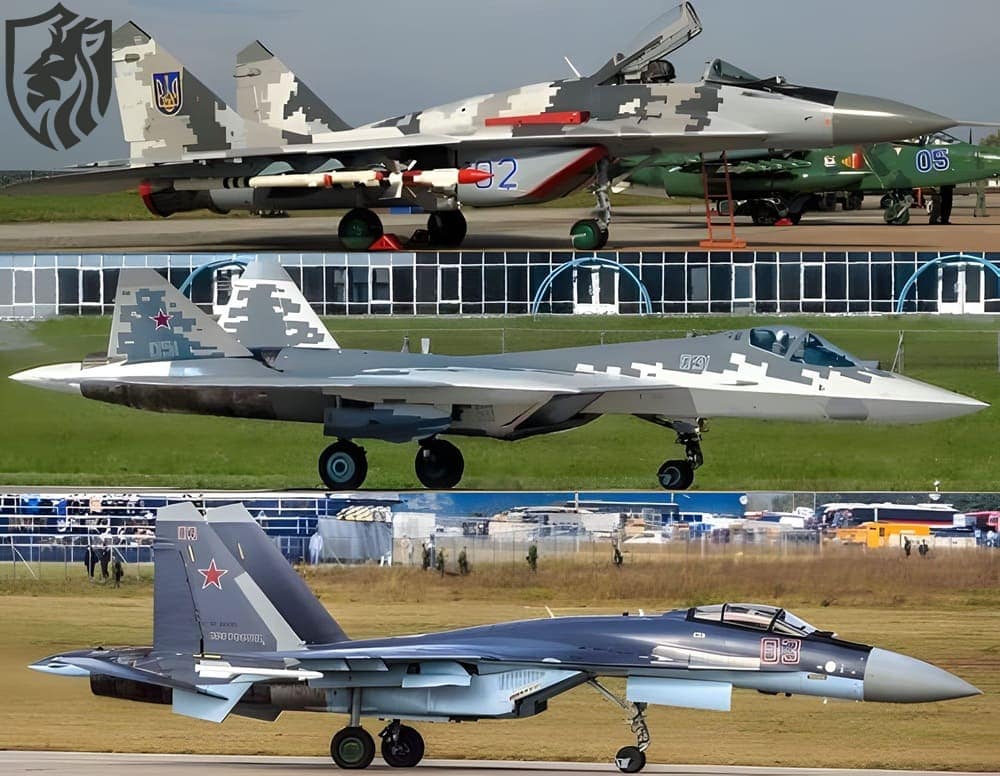
One of the biggest recent additions to Tehran’s short-range air defense system is the Iran-Verba air defense agreement. Iran and Russia’s state exporter, Rosoboronexport, signed a $589 million contract for 500 9K333 Verba MANPADS launchers and 2,500 9M336 missiles over a three-year period, according to leaked Russian government documents. Additionally, Iran’s Ministry of Defense and Armed Forces Logistics, via its Moscow office, reportedly participated in the negotiations. Many analysts think Iran might use defense exports to Russia, especially the Shahed-136 loitering munitions, which are currently licensed to be produced in Russia, to offset payments. The agreement between Iran and Verba for air defense also comes after Iran previously purchased Su-35 fighters and Mi-28 attack helicopters, indicating a larger modernization drive.
Verba’s Edge
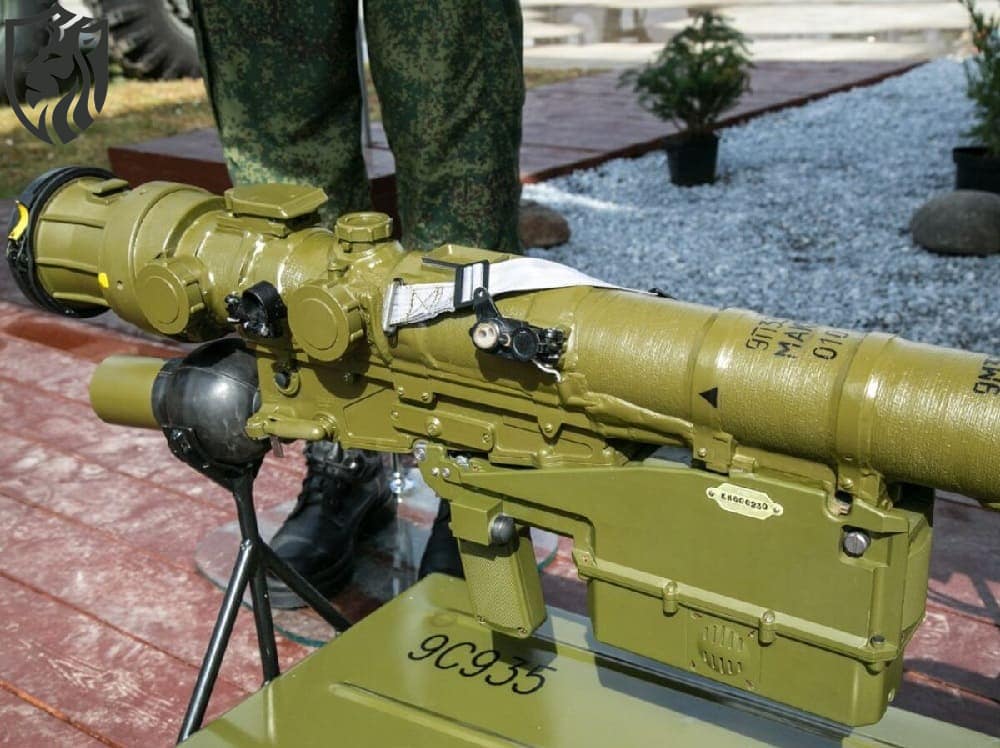
The main focus of the air defense agreement between Iran and Verba is the 9K333 Verba, which Russia put into service in 2014. Defense experts often refer to it as the most advanced air defense system that an individual can carry.
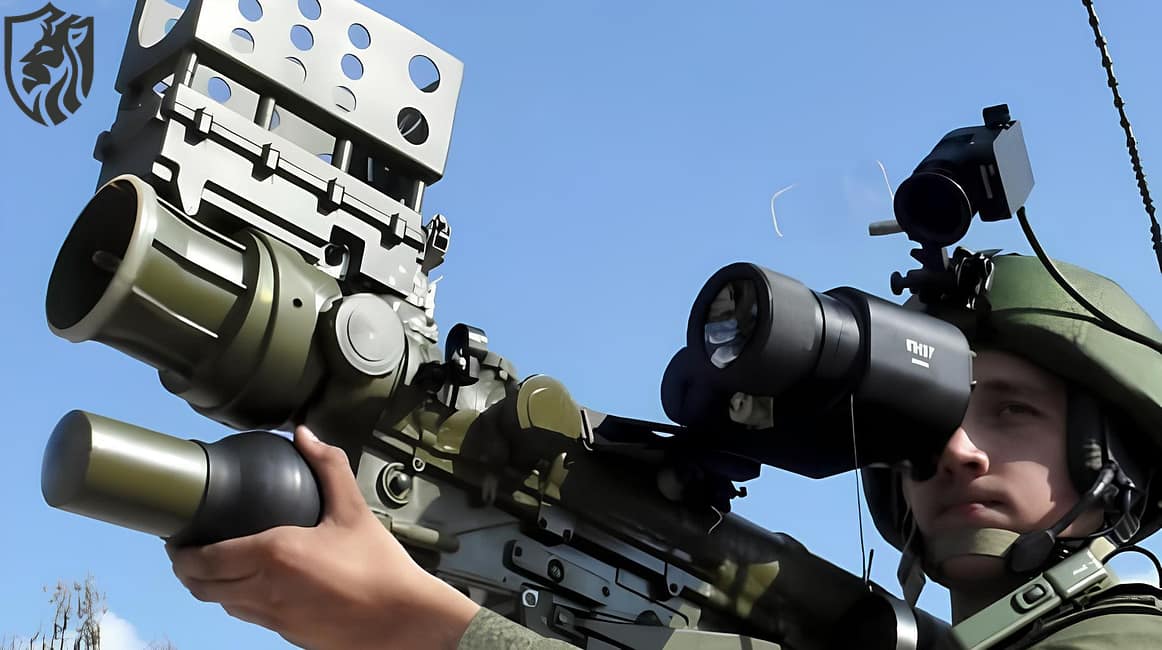
Verba uses a tri-spectral seeker, which is different from older systems.
- Sensing ultraviolet light
- Near-infrared tracking
- Detection in the middle infrared
Because of this, the missile is much better at telling aircraft apart from background heat sources than earlier Igla or Stinger models. This multi-band tracking makes it much harder for flares and Directional Infrared Countermeasures (DIRCM) to work. The missile can hit targets up to 6.5 km away and 4.5 km high, which is better than most known handheld SAMs.
From Launchers to Networks
Not only the missile but also its command architecture are crucial parts of the Iran Verba air defense deal. The system has an automated control terminal that can share target data between units that are far apart. So, each infantry team works as a node in a coordinated defensive network. The system can get information from radar data or sensors on planes, which could include:
- Radars on Mi-28 helicopters
- Su-35 systems for watching from the air
- Tracking assets on the ground
The network automatically assigns engagement tasks to the best-positioned launcher team as soon as sensors detect an aircraft. According to Russian sources, this automation makes things happen almost ten times faster. Even with these features, a loaded launcher weighs only 17.25 kg, which helps keep infantry mobile, an important aspect of Iran’s decentralized defense strategy.
A Western Air Power Problem
The Iran Verba air defense deal makes it harder for the West to carry out operations to suppress enemy air defense (SEAD). The EA-18G Growler and other planes are proficient at finding radar emissions. But systems that use infrared guidance, like Verba, don’t send out radar signals. Because of this, electronic warfare planes have a difficult time finding them or targeting them ahead of time. Verba was also made to protect against modern threats:
- Cruise missiles that are hard to see
- Drones that are small and unmanned
- Targets with low heat signatures
Its advanced fuse is said to allow near-miss detonations, which makes it more deadly against moving or swift targets.
Costs and Industrial Logic
The financial details give us more information about the air defense deal between Iran and the Verba. Reports say that Iran bought:
- Each launcher costs about $47,000.
- 9M336 missiles cost about $200,000 each.
These numbers show that there is a plan behind them. Iran seems to prefer dense, distributed defense layers that can fill up low-altitude airspace over expensive long-range systems. Also, Moscow and Tehran’s collaboration on defense in a barter-like way signals a new military economy that has emerged due to sanctions. In this economy, equipment exchanges take the place of some traditional financial transfers.
Vulnerabilities and Risks
Despite its careful planning, the Iran Verba air defense deal still carries some risks. Previously, Russia sent Verba systems to Syria. Turkish-backed forces reportedly gained access to captured weapons stores after the Syrian government collapsed in December 2024. Analysts think that Western engineers may have already looked at parts of the system because Türkiye is a NATO member. So, Russia might have added seeker upgrades before sending units to Iran. Still, being able to see NATO analysis always speeds up the development of countermeasures.
Lessons From Ukraine
Lessons learned from Ukraine since 2022 make the Iran Verba air defense deal more relevant. Ukraine had a lot of 9K38 Igla and FIM-92 Infantry units directly integrated with Stinger missiles. These portable systems showed that they had several important benefits:
- No radar signals
- Very mobile
- Ability to surprise and engage
There are reports that a Soviet-made MANPADS shot down a Russian Su-34 strike fighter on March 5, 2022. Portable air defense fire also caused several helicopter losses. Even though confirmation varies, evidence from the battlefield shows that dispersed MANPADS units can make it very hard for modern air forces to do their jobs.
Surviving the First Strike
In the end, the Iran-Verba deal for air defense seems to be mostly about staying alive during the first air attack. Iran is adding a hidden defensive layer to its ground forces instead of relying only on strategic SAM systems that can be attacked before they can be used. Portable infrared systems are still hard to find, hard to destroy, and able to block airspace even after fixed radar sites have been shut down. Iran’s changing doctrine is similar to what is happening around the world: layered defense, distributed sensors, and mobile kill chains are replacing the old ideas of static Cold War air defense. If the deliveries go as planned, the Verba purchase could make any future Western air campaign against Iranian targets much more expensive.
Conclusion
The Iran Verba air defense deal is more than just a normal weapons purchase. It shows that the doctrine is changing to support advanced sensor fusion for networked, infantry-level air denial. Iran wants to make it harder for enemies to control the air from the lowest altitude up by using tri-spectral seekers, automated command systems, and battlefield mobility. As modern warfare moves toward more distributed defenses, portable systems like Verba may have a bigger impact than their size or cost would suggest.
References
- https://roe.ru/en/production/protivovozdushnaya-oborona/zenitnye-raketnye-kompleksy-i-ustanovki/zenitnye-raketnye-kompleksy-blizhnego-deystviya-pzrk-zenitnaya-artilleriya/verba/
- https://militarnyi.com/en/news/iran-secretly-purchased-verba-manpads-from-russia-for-589-million/
- https://www.janes.com/defence-news
- https://www.csis.org/programs/international-security-program
About the Author