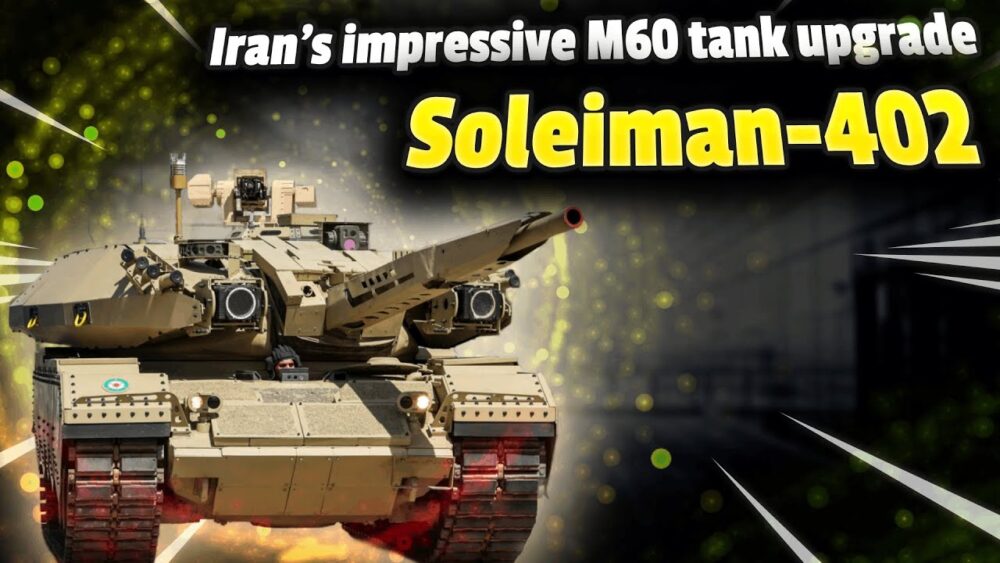
The Iranian Army has officially commenced the delivery of the Suleiman-402, an improved version of the American-designed M60 Patton tank. This modernization effort shows that Tehran is serious about improving its armored forces, even though it has to deal with Western sanctions and geopolitical problems. A formal ceremony in Tehran was held to show off the latest improvements to Iran’s defense capabilities. Senior military officials were there.
Suleiman-402 Tank Upgrade
The Suleiman-402 is a major upgrade from the M60A1, which the US gave Iran in the 1970s and used in the Cold War. The M60A1 base model had a 105 mm M68 rifled gun and could fire effectively up to 2,000 meters away. Its muzzle velocity was 1,500 meters per second. However, by the end of the 20th century, observers deemed its armor and firepower outdated in comparison to contemporary threats.
The Defense Industries Organization (DIO) of Iran has updated these tanks by adding better fire control systems that use thermal imaging and laser rangefinders to make targeting more accurate in low-light conditions. The main 105 mm gun is still there, but it can now fire locally made high-explosive anti-tank (HEAT) rounds, which make it better at getting through modern armored vehicles.
Suleiman-402 vs U.S. Assault
If the U.S. were to invade Iranian islands, the Suleiman-402 upgrade would be less useful as a weapon for winning the war and more useful as a way for older Iranian armor to stay alive. Iran’s islands are located along the Strait of Hormuz, which is a crucial chokepoint. On the other hand, littoral assaults require controlling the sea and exposing amphibious forces to threats concentrated along the coast.
Drones and anti-tank guided weapons are also becoming more dangerous to modern tanks. In that situation, Suleiman-402 tanks could hold off landing forces for longer, increase attrition, and make an assault more difficult if they had better protection, mobility, and tactical coordination. However, terrain, isolation, and precise fires would still limit their freedom on the battlefield.
Better Protection and Mobility
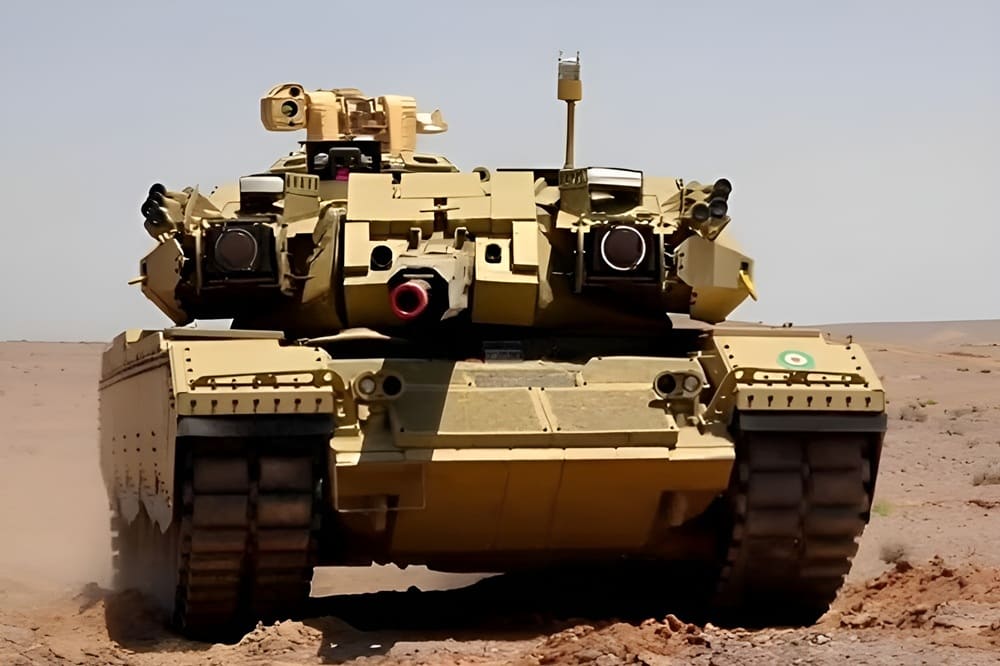
One of the most noticeable improvements to the Suleiman-402 is the addition of reactive armor panels, which are based on Russia’s Kontakt-5. These panels make the tank much safer against shaped-charge warheads, which greatly increases its chances of surviving in battle. Engineers made the torsion-bar suspension stronger so it could handle the extra armor weight, which brought the tank’s weight up to 55 tons.
Iran upgraded the Continental AVDS-1790-2A diesel engine so that it could make up to 900 horsepower. This kept the vehicle’s mobility. This engine boost makes the tank more agile and gives it more range, which helps it move quickly across Iran’s varied terrain. These changes guarantee that the Suleiman-402 stays a tough and dangerous force on modern battlefields.
EW and Tactical Coordination
The Suleiman-402 has a digital system that helps crews work together with other units in real time. This real-time link gives Iranian troops a big advantage on today’s battlefields, which are fast-paced and tech-driven. It has smoke launchers and an Iranian-made active protection system based on Russia’s Arena APS to keep it safe.
The APS stops threats like anti-tank missiles from hitting the tank before they do. The crew area now has better seating, controls, and night-vision tools for more comfort and awareness. With these improvements, the Suleiman-402 is now on par with tanks like Turkey’s modernized Leopard 2.
Regional Security Impact
The Suleiman-402’s release comes at a time when geopolitical tensions are high. Iran possesses over 150 M60 tanks that predate modernization. Instead of replacing them all, they have chosen to upgrade them because of budget constraints and limited access to foreign weapons markets. This plan fits with Tehran’s long-term goal of being able to make its own weapons.
Military experts, like Dr. Jeffrey Lewis from the Middlebury Institute of International Studies, agree that this modernization effort is important. Dr. Lewis wrote in an article for Military Watch Magazine in March 2025 that “The Suleiman-402 isn’t a brand-new tank, but it is a substantial upgrade that enhances Iran’s existing capabilities.”
Global Response and Regional Impact
People around the world have had different reactions to Iran’s latest military move. The US has said again that it is against Iran’s military growth. It has strict sanctions on Iran’s defense sector. A State Department spokesperson, speaking on March 2, 2025, reaffirmed Washington’s commitment to “monitoring and addressing Iran’s military advancements.” But no specific actions against the Suleiman-402 program have been made public.
Israel, a key adversary of Iran in the region, is closely monitoring these developments. Former head of Israel’s National Security Council, Major General Yaakov Amidror, stated in The Jerusalem Post, “Iran’s tank upgrades do not yet alter the regional power balance, but they clearly demonstrate a strategic intent.” “Turkey hasn’t said anything about it yet, but Saudi Arabia may see the latest news as a sign to speed up its investments in anti-tank defense systems.
Production and Deployment Plans
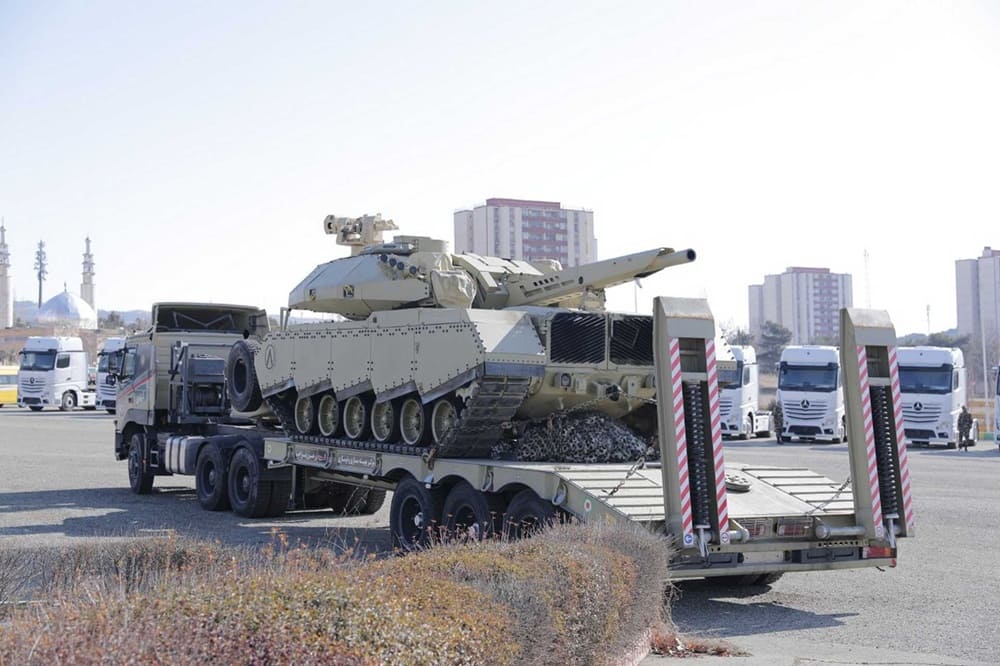
Iran wants to update at least 50 to 70 M60 tanks in the Suleiman-402 style by 2027. The process of modernization includes taking things apart at facilities in Shiraz and Tehran, putting in new parts, and putting them through tough field tests. Iran plans to send the first Suleiman-402 tanks to Khuzestan Province, which is close to its western border. These tanks will take part in military exercises to see how well they work in real-life combat situations.
How well Iran can keep the upgraded tanks in good shape will determine how well the Suleiman-402 does in the long run. Iran’s military has always had a challenging time keeping older armored vehicles running. Iran has to make its own key parts now that original M60 parts are no longer available. Local factories will need to make these parts to keep the fleet running in the future.
Conclusion: A Measured Modernisation Step
The Suleiman-402‘s debut shows Iran’s resolve to bolster its ground forces despite global pressure. It might not be as effective as the newest Western or Russian main battle tanks, but its upgrades make it a cheap way to keep it relevant on the battlefield. It is still unclear if this modernization will have a big effect on Iran’s military strategy, but it sends a clear message that Tehran is still committed to being able to defend itself and keep the region safe.
References
- Military Watch Magazine – www.militarywatchmagazine.com
- Army Recognition – www.armyrecognition.com
- The Jerusalem Post—www.jpost.com
- The Washington Institute—www.washingtoninstitute.org
- Defense News Today – www.defencenewstoday.info
About the Author