
Indonesia BrahMos Missile Deal — Strategic Reach
India and Indonesia have entered a more operational phase in their defense partnership. Prime Minister Narendra Modi and President Prabowo Subianto on Tuesday, 7 July 2026, signed a deal to allow Jakarta to buy BrahMos supersonic cruise missiles from India. The Indonesian BrahMos missile deal was one of more than a dozen agreements inked during Modi’s three-day visit to Indonesia, his first leg on his broader Indo-Pacific tour. The deal comes a day after China test-launched a long-range ballistic missile but is part of a longer trend in India-Indonesia defense cooperation. For New Delhi, the agreement is part of a broader drive to build an Indian weapons development capability for export. For Jakarta it gives a quick anti-ship and coastal-defense weapon for a sea-lane region.
BrahMos Deal Gains Pace
Modi met Prabowo at Merdeka Palace in Jakarta, Indonesia’s main presidential office. The visit was a historic milestone, Prabowo said, adding the two sides would boost cooperation in defense, security, trade, energy, health, education and cultural exchanges. Meanwhile, Modi said, ties had acquired new energy over the years. In 2018 India and Indonesia elevated their relationship to a Comprehensive Strategic Partnership. Since then, the two countries have been working to link their security interests across the Indian and Pacific Oceans. They are also both members of the G20 and BRICS, putting the relationship in a wider Global South context. The sale is not limited to weapons; Indonesia has also acquired the BrahMos missile. It also indicates rising maritime security cooperation along major shipping routes.
What BrahMos Gives Indonesia
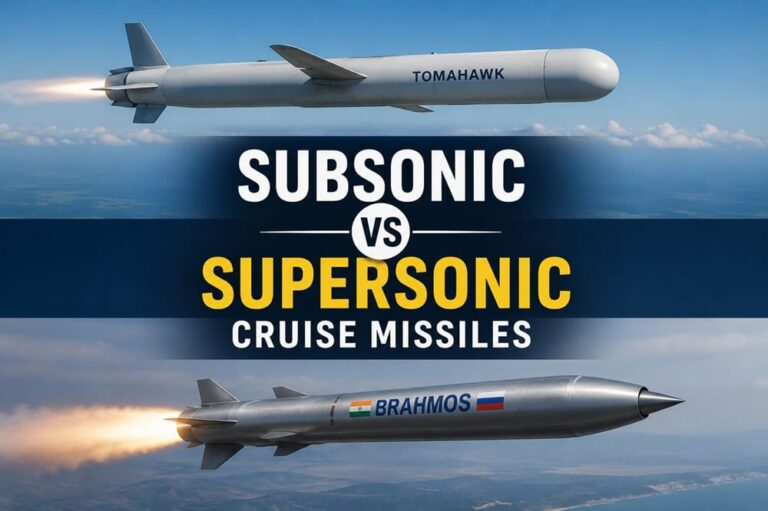
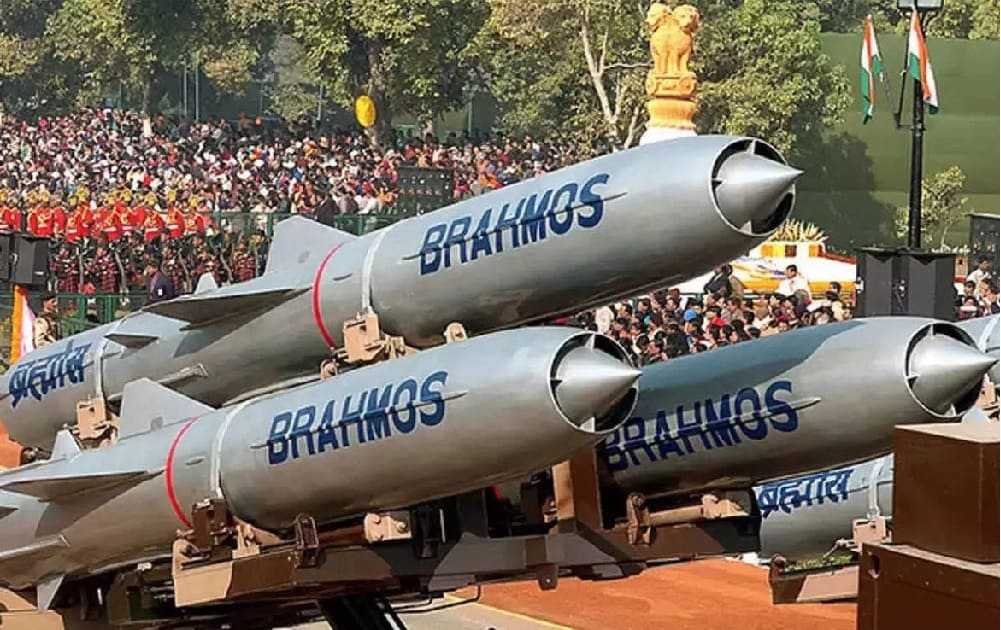
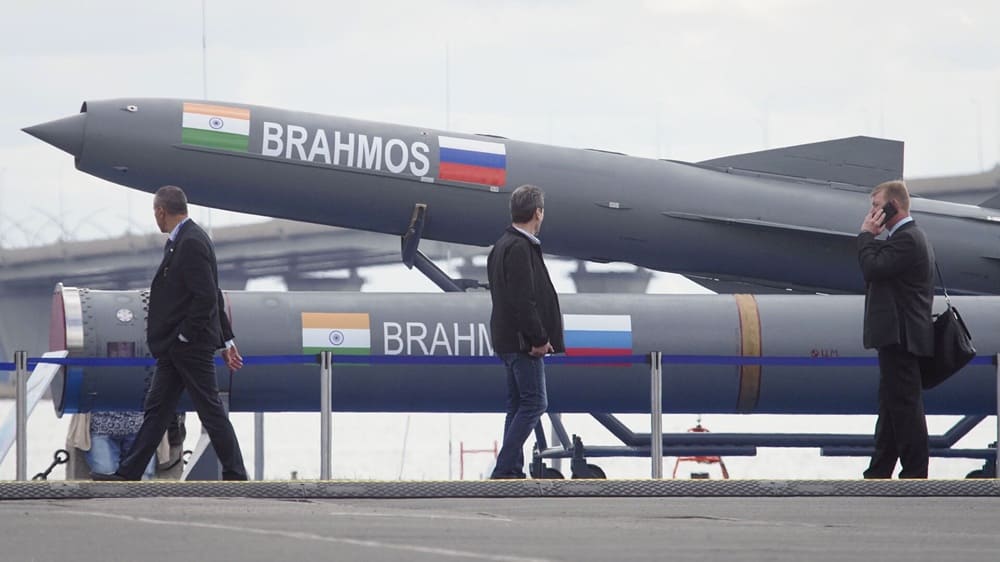
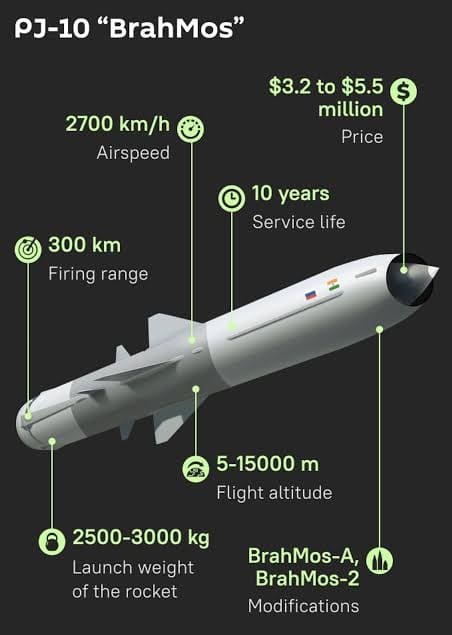
The missile is being developed by BrahMos Aerospace Private Limited, which is a joint venture between India and Russia. It was developed by India’s Defense Research and Development Organisation and Russia’s NPO Mashinostroyeniya. The missile can be fired from land-based batteries, naval ships, submarines and aircraft. BrahMos is a two-stage design. After launch, a solid-propellant booster gives the missile an initial velocity. Then a liquid-fuel ramjet takes over, keeping the speed supersonic. The BrahMos has a cruise speed of around Mach 2.8, or nearly three times the speed of sound, according to public data. That means less time for defenders to react. Subsonic anti-ship missiles might offer range and lower cost, but BrahMos gives up those for speed, kinetic impact and less time to intercept. These features complicate the planning of air defense on board ships against naval targets.
Defending Maritime Chokepoints
Indonesia is home to some of the world’s most important sea lanes. Its geography links the Indian Ocean, the South China Sea and the wider Pacific. As a consequence, the coastal defense networks have to cover large sea areas and defend chokepoints. BrahMos provides Jakarta with a weapon better suited to that environment. Land-based batteries threaten ships from hidden or dispersed positions. The naval launchers could push the anti-ship pressure further out to sea. Later, air-launched versions added a mobile strike layer. There is also a deterrence value in the Indonesia BrahMos missile deal. It requires opponents to have less warning time and more difficult terminal defenses.
India’s Export Drive
Indonesia is the third foreign buyer of BrahMos after the Philippines and Vietnam, according to regional reporting. The Philippines contract was a key step. Vietnam widened its Southeast Asian footprint. Now, Indonesia offers a better archipelagic-maritime context for the system. The deal further reinforces India’s “Act East” logic, but without making the relationship a formal alliance. New Delhi could use precision-strike systems to help friendly regional powers without permanent basing commitments. It provides Jakarta, meanwhile, an alternative non-Western supplier for advanced missiles. The agreement could also foster future links between industry and training. Missile procurement is generally associated with the need for infrastructure, maintenance, training and doctrinal integration.
Diplomacy Beyond Weapons
When Modi flew to Jakarta on Monday afternoon, three fighter jets escorted his plane into Indonesian airspace. Jakarta’s political interest was evident in Prabowo’s greeting at Halim Perdanakusuma Air Force Base. “It’s crucial for the present geopolitical climate that the two leaders of the Global South have closer ties,” said Indian Ambassador Sandeep Chakravorty. Modi was also to address Indonesia’s Parliament and meet the Indian community. Modi was due to visit Yogyakarta on Wednesday. There he could announce an Indian-sponsored restoration project at Prambanan, a major Hindu temple complex. He is then to fly to Australia to meet prime minister Anthony Albanese.
Conclusion
What makes the Indonesia BrahMos missile deal important is that it is a cocktail of technology, geography and diplomacy. It provides Jakarta with a high-speed anti-ship missile suited to archipelagic defense. This is yet another milestone for Indian defense exports. Moreover, it enhances maritime cooperation between two major democracies on vital Indo-Pacific routes. However, the real impact will depend on the timing of deliveries, the types of launchers used, training, integration, and Indonesian doctrine. A networked, integrated system with surveillance and command and control assets changes the risk calculus of an adversary. In short, Indonesia’s BrahMos missile deal is more than a bilateral arms sale. It’s a sign of India’s growing defense-export ambitions and Indonesia’s desire for more sea-denial options in a more contested Indo-Pacific.
References
- https://defensenewstoday.info/missiles/
- https://defensenewstoday.info/brahmos-crisis-indias-missile-output-halves/
- https://defensenewstoday.info/subsonic-vs-supersonic-cruise-missiles/
- https://www.reuters.com/world/asia-pacific/indias-modi-meet-indonesias-prabowo-talks-defence-food-security-2026-07-07/
- https://www.brahmos.com/page/brahmos-missile
About the Author